Commercial Cool Roof Installation in Menifee, CA
Home / Commercial Roofing Services / Commercial Cool Roof Installation in Menifee, CA
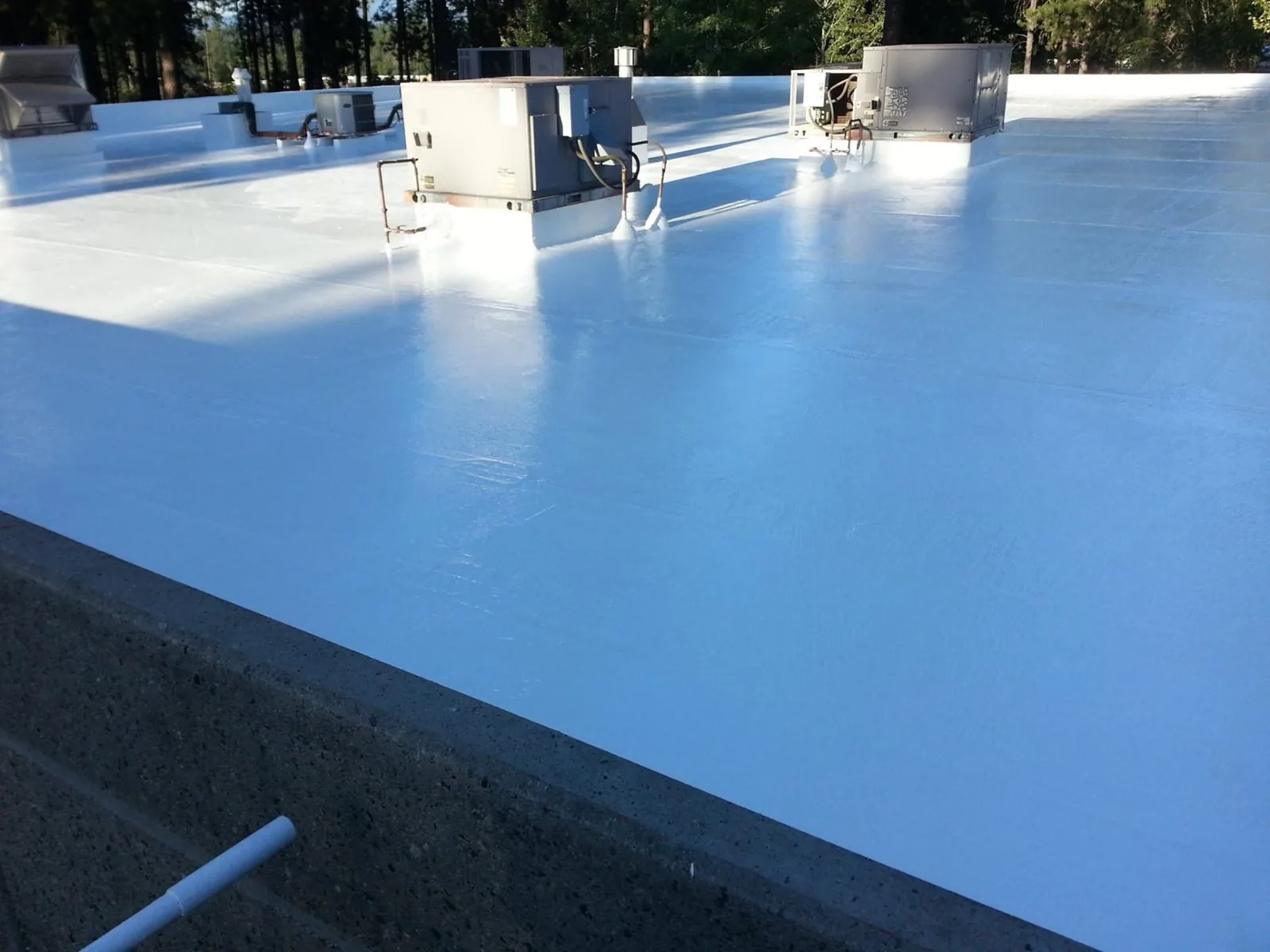
A bright roof surface does not fix wet insulation, weak seams, or a drain that sits below the finished plane. We check the assembly first, then compare a reflective membrane or coating with the roof’s condition and operating needs. The survey records surface preparation, slope, penetrations, edge details, and any moisture evidence that could affect adhesion. A coating restoration assessment can determine whether the existing roof is a suitable base or whether a new membrane is the better scope.
Test the Roof Before Choosing a Reflective Finish
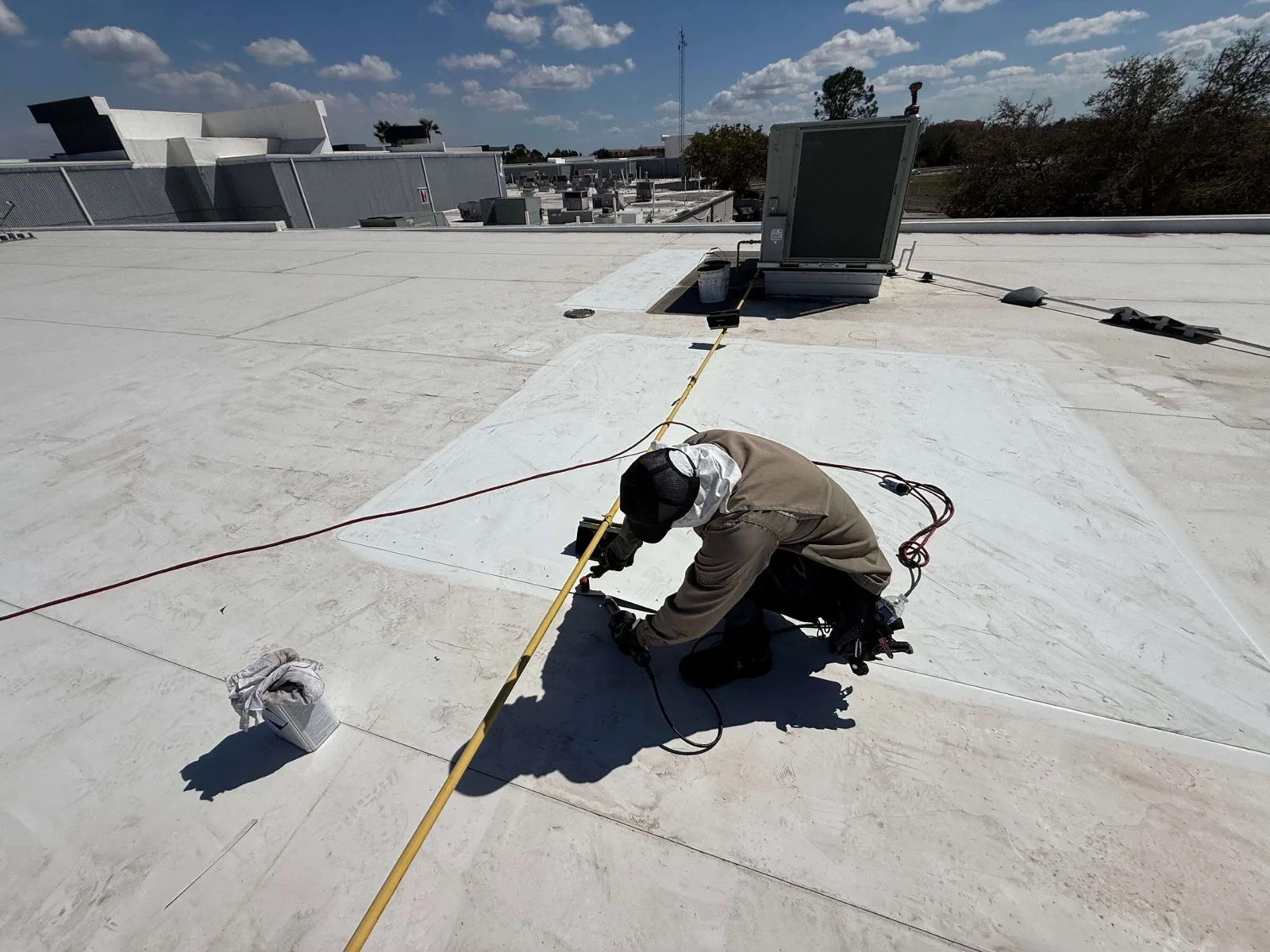
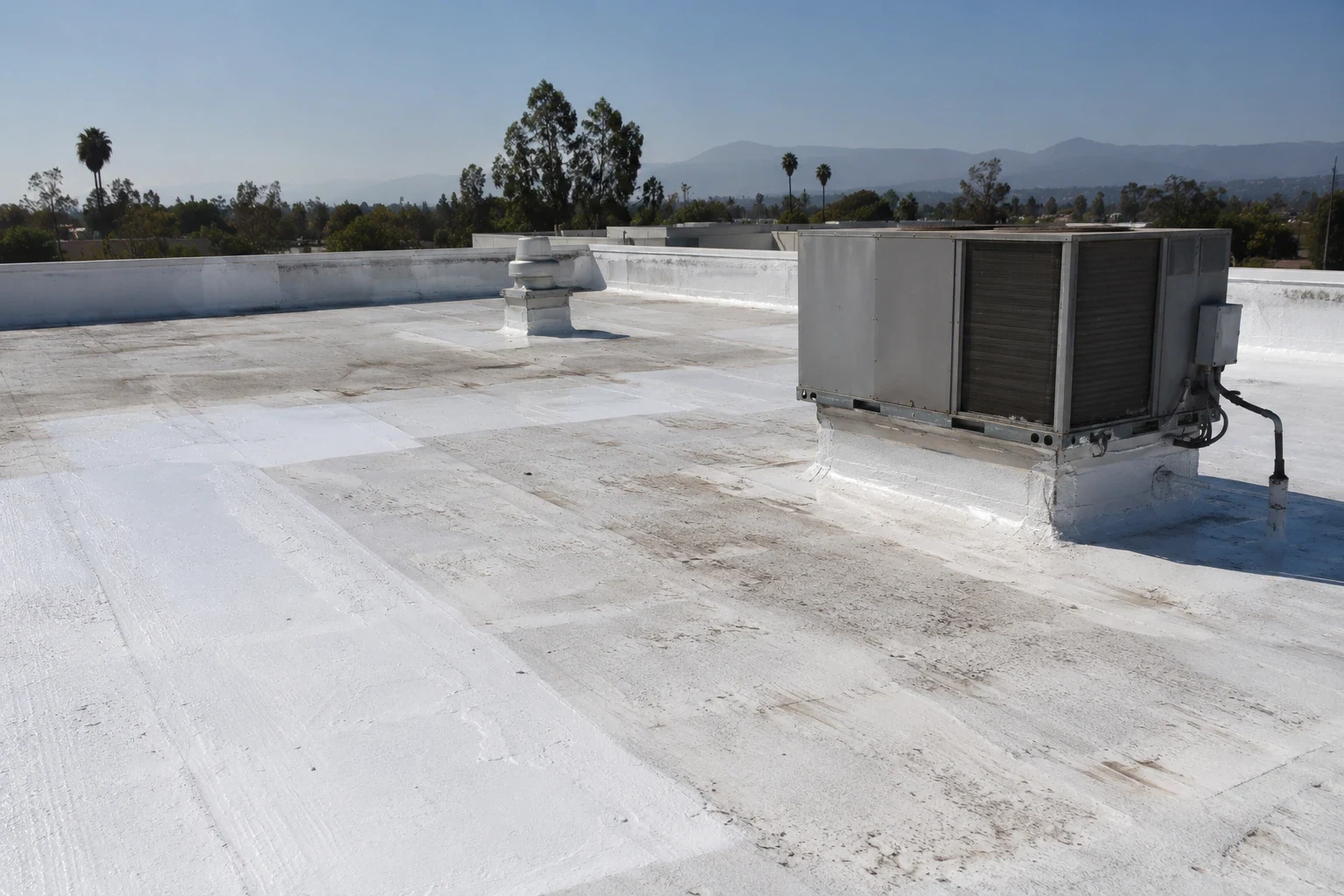
A cool-roof decision begins with the surface, not the color chart. We inspect adhesion, chalking, contamination, seams, patch history, and standing water. Coatings need a compatible substrate and a preparation plan; a membrane replacement needs an attachment and flashing design. Where a roof has multiple repairs or uncertain layers, a test area can establish how the selected system bonds before the full quantity is ordered.
We separate reflectance goals from waterproofing repairs. The silicone coating assembly and acrylic coating system differ in chemistry and performance conditions, so selection follows project requirements and manufacturer instructions. Neither finish should cover a detail that is still open or a wet layer that needs removal.
Consider Solar Exposure in the Scope
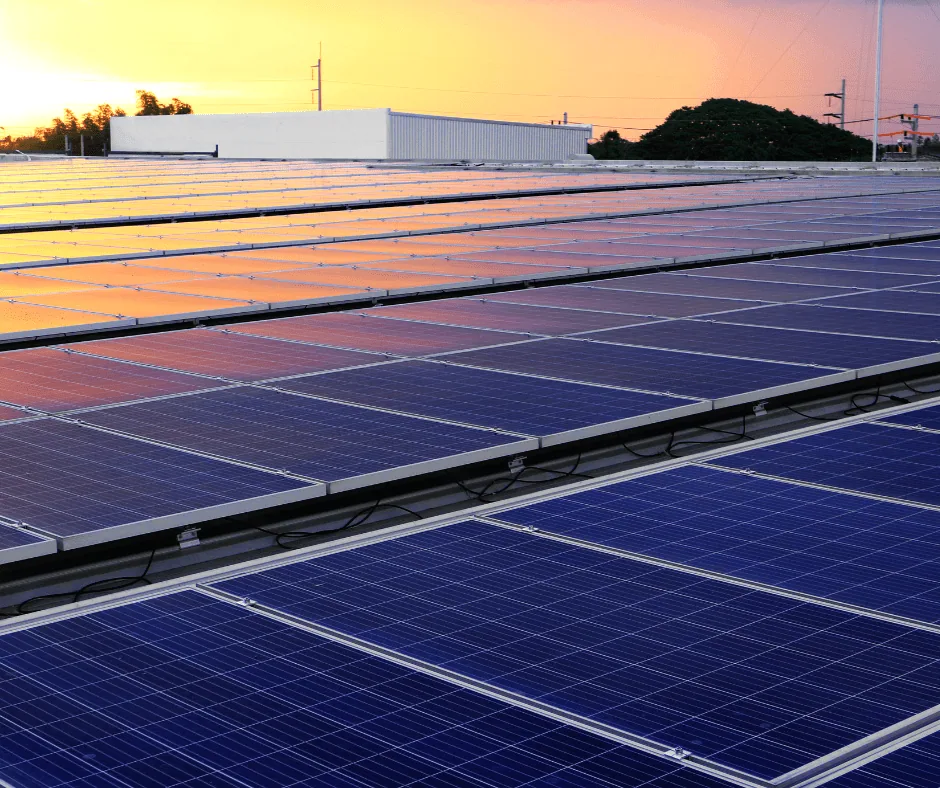
Menifee’s inland, naturally dry climate and city-identified increase in average temperatures make roof exposure a reasonable design consideration. We still evaluate the building’s existing assembly, insulation, ventilation, and roof use rather than promising a utility result from surface color alone. The proposal can state the specified product properties and maintenance needs without projecting savings that have not been modeled.
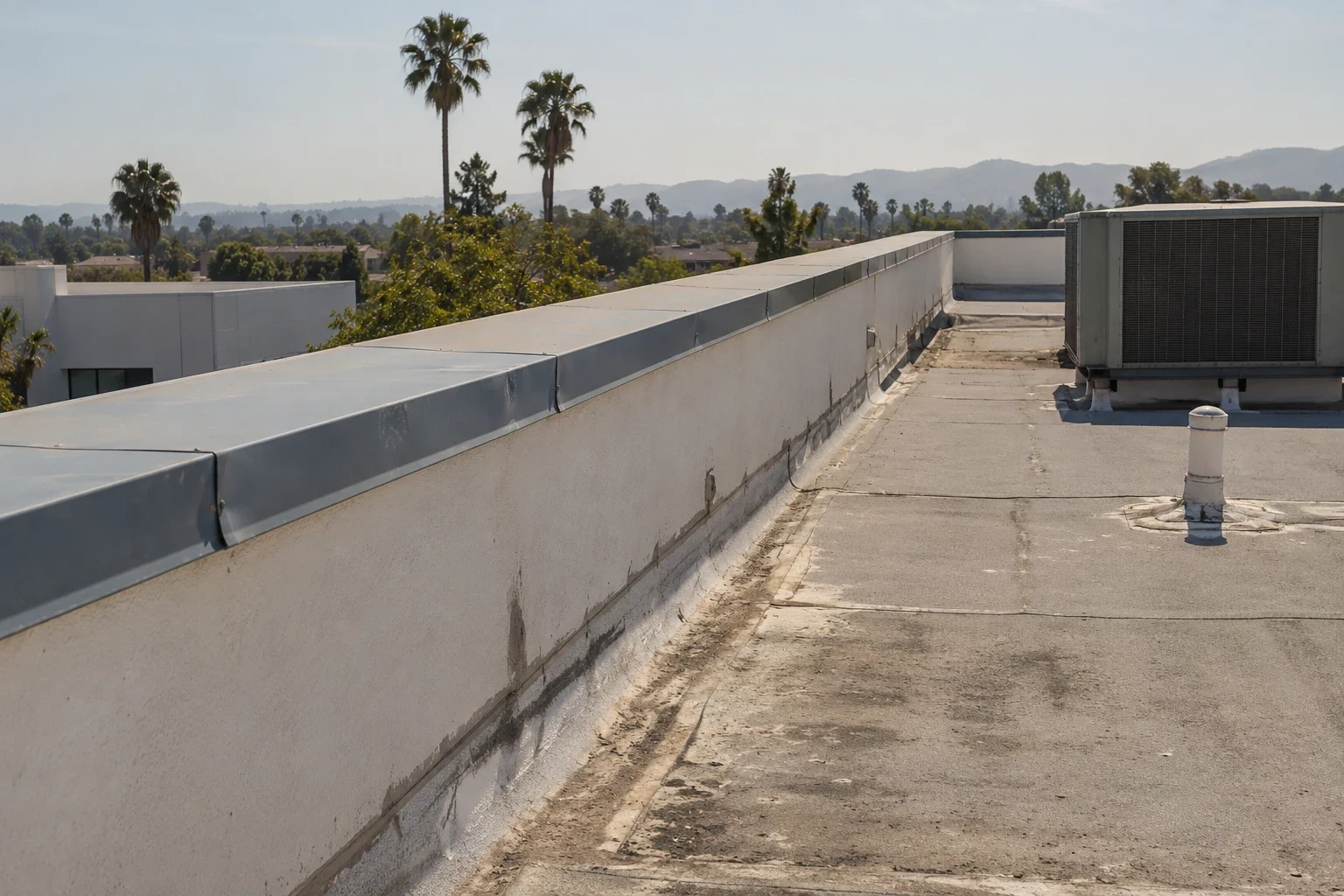
Edges and penetrations remain the details most likely to interrupt a reflective system. We inspect metal terminations, pipe boots, skylight curbs, and equipment bases, then plan compatible transitions. A perimeter metal review can expose loose attachments or open joints before coating begins. The finished system should leave owners with a maintenance plan for cleaning, seam checks, and repair, not only a bright surface on day one.
Keep Drainage Ahead of the New Surface
A reflective system cannot correct a roof that retains water because of slope, deflection, or an obstructed outlet. We note ponding depth and duration where known, clear accessible debris, and inspect the route from high points to drains. Before a coating is applied, the roof should be clean and dry enough for the specified preparation and cure requirements. A low point that remains wet needs a separate correction decision.
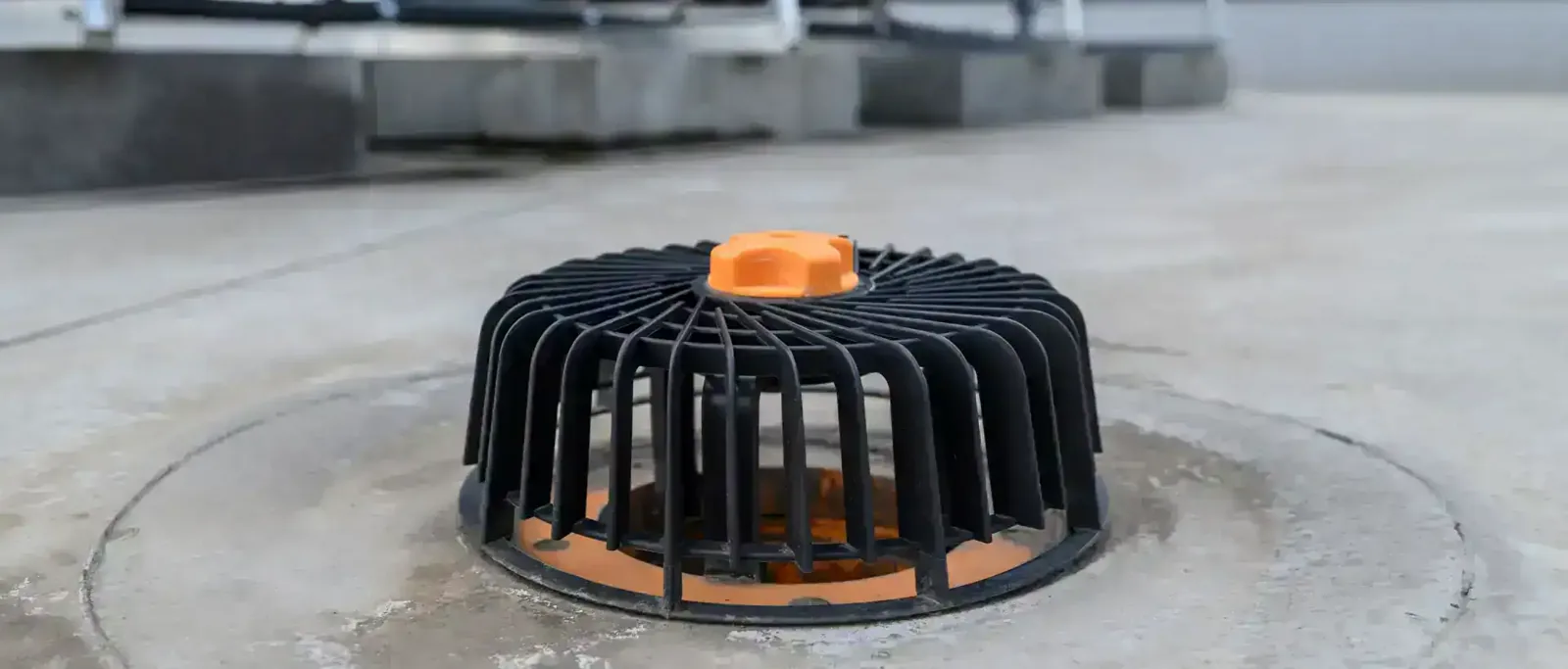
When the drain bowl, scupper, or overflow detail is part of the work, the drainage scope should match the new membrane or coating thickness. Tapered insulation can change the flow path, while a simple coating pass cannot create slope. The repair plan shows which defects are addressed before reflective material is installed and which areas remain outside the work boundary.
Compare Coating, Recover, and Replacement
A coating may preserve a serviceable roof when the substrate is dry, the seams can be corrected, and the surface meets adhesion requirements. A recover adds a new assembly over an eligible existing roof, while replacement exposes more of the deck and insulation for evaluation. We compare these paths against moisture findings, attachment, edge condition, drainage, and future access. The estimate names its assumptions so an owner can see what changes if a test reveals more damage.
For a single-ply replacement, the TPO assembly option can be considered alongside a coating where its specified properties fit the project. If widespread moisture is found, a cover-board and insulation scope may be needed before the finish is selected. The useful comparison is the total work required to restore a reliable water-shedding assembly.
Check Local Criteria and Project Documents
In Menifee, the Community Core Economic Development Corridor is designated as the city’s primary activity center and gathering place. The Southern Gateway Economic Development Corridor has a different plan, with a business-park and office focus that includes technology and healthcare ambitions while retaining rural character. Those descriptions do not establish a building’s coating eligibility. We inspect the roof surface, test adhesion, and review the specified reflectance and attachment criteria before selecting the system.
Control Preparation and Weather Windows
Surface preparation sets the pace for a coating or membrane installation. We sequence cleaning, drying, detail repairs, primer where required, and field application so exposed areas are not left open. Weather windows must fit the selected product’s temperature, moisture, and cure instructions. If a forecast changes, the crew protects unfinished terminations and resumes only when the assembly can be prepared correctly.
For a building that remains in service, we divide the roof into work zones, coordinate roof access, and identify where noise or odor could affect occupants. Material staging and removal routes need to avoid rooftop equipment and the drainage system. The work log records completed areas, remaining detail work, and any condition that moved the plan. A defined sequence helps the facilities contact plan around the roof without promising a fixed duration before access and substrate are confirmed.
At a repair seam, we test the preparation method before coating the full field. The crew records the cleaner, primer, cure time, and adhesion result that apply to the selected product. A failed sample sends the scope back to substrate diagnosis rather than a heavier coat. For membrane work, the same control comes from checking seams and flashing before closing each zone. The project contact receives a daily record of weather, work limits, and unfinished details. That creates a usable release point if a shift stops early or the weather window closes.
We keep an open punch list for each zone, including small pinholes, unsealed laps, and terminations that need a second look after cure. The owner receives the release status before roof access is handed back. If the finish fails a test or the moisture window closes, we stop at a protected edge and record the reason. That gives the next shift a clear restart point instead of a hidden change in application thickness.
Price the System and Its Future Care
Cost depends on roof area, substrate preparation, repair quantity, coating thickness or membrane assembly, access, edge work, and the condition of drains and penetrations. A proposal should list the specified system, included repairs, test areas, and exclusions. If the existing roof contains wet insulation or incompatible coating, those findings may change the approach. We show how a change would be approved and priced before expanding the scope.
After installation, maintenance protects the reflective finish and the waterproofing beneath it. The maintenance program can track seam condition, surface wear, drain performance, and repair history. A roof capital plan can compare the current restoration with future replacement needs. Menifee’s heat context makes repeat observations useful, while measured roof condition sets the next action.
Commercial Roofing Questions
Can a cool roof coating go over any existing membrane?
No. We test the surface and confirm compatibility, adhesion, moisture, seam condition, and preparation requirements. If the assembly is wet or unstable, coating over it can preserve the defect rather than correct it.
Will a reflective roof lower this building’s energy use?
That outcome depends on the full building, insulation, HVAC, controls, and operating schedule. We specify the roof system and its tested properties; an energy estimate needs a separate building analysis.
What can delay coating work?
Moisture, temperature, surface contamination, repairs, and cure windows affect preparation and application. We plan around the selected product’s instructions and protect open details if weather changes.
How do you compare coating with replacement?
We compare substrate condition, wet areas, seams, drainage, attachment, edges, and remaining service needs. The proposal lists assumptions and what a test or opening could change, so the owner can compare scopes against the same findings.
Related Roofing Work
Check the Substrate Before Selecting a Cool Roof
Request a Roof Assessment
Set a roof review around moisture, seams, drainage, and surface preparation. We will compare reflective coating and membrane options against the existing assembly.
Service area
Menifee, Perris, Murrieta, Temecula, Hemet, Lake Elsinore and nearby Inland Empire communities
Quick contact
[email protected]
555-555-5555