
Cold Storage Roofing in Menifee
Home / Property Types We Roof / Cold Storage Roofing in Menifee
A roof leak above a cold room can travel through insulation before it appears inside, while a condensation problem may leave a similar stain. The first step is to compare temperature conditions, the vapor-control layers, drainage, and the roof surface. We coordinate with the facility team before opening a zone so stored product, refrigeration, and access controls remain part of the repair decision.
A cold-storage roof scope must preserve the thermal and moisture-control design as well as the weathering surface. We verify the existing roof assembly, identify wet insulation or separated seams, and map rooftop refrigeration equipment and penetrations. The report separates immediate leak control from corrections to insulation, flashing, or drainage, then gives the owner a work sequence that can be handed back zone by zone.
Distinguish Condensation From Rain Entry
Water can form where warm, moist air reaches a colder surface or where a roof opening allows liquid water into the assembly. We compare the time and location of interior moisture with refrigeration cycles, weather, drain routes, and roof defects. A roof stain alone does not distinguish those sources. When the evidence is unclear, a limited test opening and interior review can show whether insulation is wet or a vapor-control layer has failed.
We map the moisture path before recommending a membrane patch. If water is trapped in insulation, sealing the top surface may not restore the roof assembly. The report notes where samples were taken, what they show, and what remains concealed. At a curb, the repair must reconnect the roof and thermal layers rather than leave a cold bridge at the opening.
Protect Insulation and Vapor Control
A cold-storage roof depends on continuous insulation and carefully managed air and vapor movement. Gaps at curbs, roof edges, or panel joints can create condensation pathways, while wet insulation loses its intended performance. We identify the insulation type and facer where accessible, note thickness changes, and check whether a repair can reconnect the existing layers without creating an abrupt thermal transition.
Where a test shows wet material, we define a removal boundary and the replacement insulation needed to restore the intended assembly. The roof membrane, vapor retarder, and interior liner may be part of the same decision. A proposal states what layers are removed and how the new work ties into retained material, so a surface patch does not conceal a moisture problem.
Plan Around Menifee Heat and Temperature Control
Menifee is inland with a naturally dry climate, and the City identifies higher average temperatures and more extreme-temperature days as risks. Those conditions inform roof work windows and product handling, but they do not confirm any cold-storage building or its refrigeration load. We measure the actual roof and coordinate curing, ventilation, and interior protection with the facility operator.
Menifee zoning distinguishes business-park and heavy-industrial designations. The Southern Gateway Economic Development Corridor is planned for a mix of light-industrial, office, and commercial opportunities; the McCall Boulevard Economic Development Corridor includes office and medical uses. These broad planning descriptions do not establish refrigeration at a specific parcel, so verify the address and actual building use before setting work limits.

Coordinate Refrigeration Equipment and Roof Access
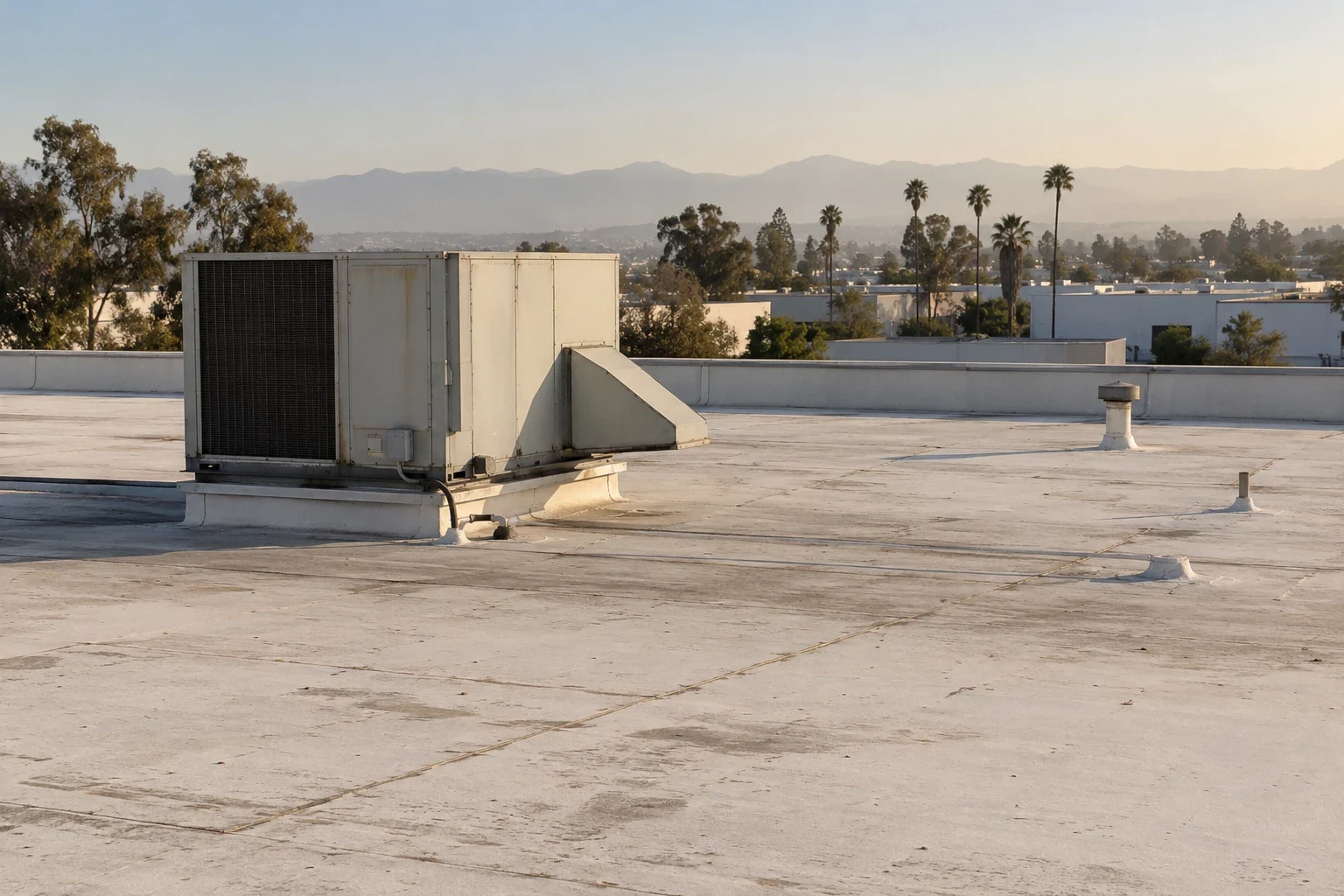
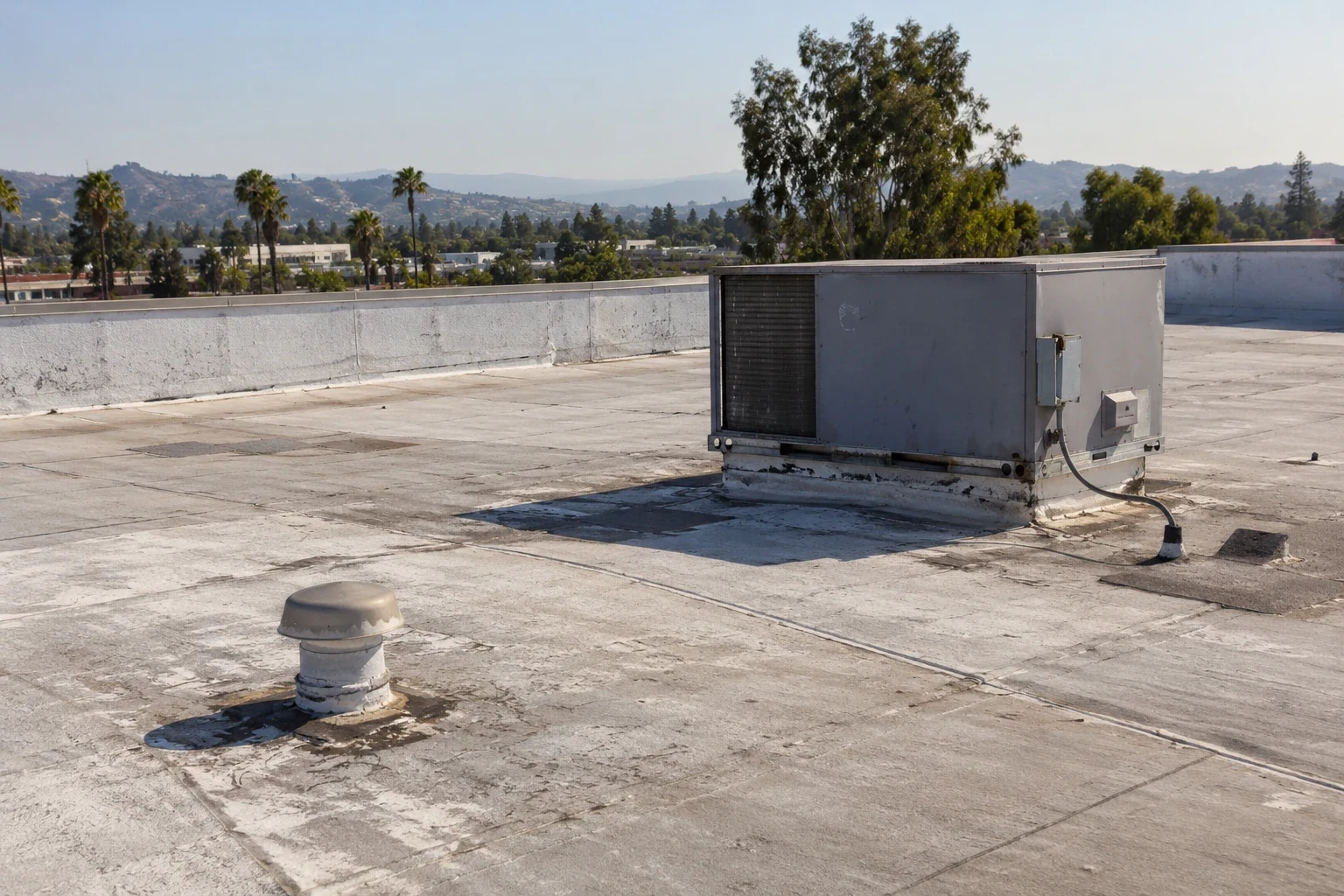
Condenser lines, refrigerant piping, exhaust, walk pads, and electrical feeds can crowd the roof around each unit. We identify which service paths must remain open and who can isolate equipment before a flashing repair. A moved condenser or replaced curb changes the connection detail, so the new footprint needs to be checked against the membrane and insulation below.
Staging cannot block a refrigeration intake, service route, or emergency access point. We set material and debris routes with facility staff, then mark areas that can be entered by roofing crews. At a rooftop unit, a curb flashing scope should preserve insulation continuity and make the exterior seal visible for later inspection.
Choose a Scope That Controls Moisture
A focused repair may work when the water route is limited and surrounding insulation is dry. A broader removal may be needed when moisture has moved through multiple bays or when the vapor-control layer cannot be restored locally. A recovery is considered only after retained layers and attachment are confirmed. We list the evidence that supports each option and identify the test results that would change the boundary.
The building’s operating temperature and product requirements shape sequencing. A localized repair can address an isolated seam, while a replacement project may be more practical if moisture or attachment issues are broad. A warehouse roof plan shares access concerns, but the thermal and condensation controls differ.
Hand Back Work Zones Without Product Exposure
Before a section is opened, we agree on product protection, interior barriers, refrigeration status, and a stop condition for each shift. The zone is kept small enough to close or cover before the facility returns it to normal operations. Any interruption is communicated to the contact responsible for temperature-sensitive inventory and process controls.
The daily log records insulation removed and replaced, membrane closure, temporary protection, and cure restrictions. We keep drains and emergency routes clear and identify any section that cannot be released. If weather or refrigeration operation changes the plan, the crew stops at a sealed boundary rather than leaving a hidden layer exposed.
Compare Cost Drivers With Temperature Risk
Access hours, refrigeration shutdown needs, insulation depth, removal extent, disposal, equipment details, and interior protection affect cost and schedule. We identify those items in the scope and state whether the building remains operational during each phase. A roof condition report should separate confirmed moisture from a suspected condensation route so owners do not pay for removal without a documented reason.
The McCall planning corridor includes medical and office uses, while Southern Gateway planning anticipates light industrial and commercial activity. Neither establishes the use of a specific property. A photo-backed report can tie defects to a zone, and capital planning can separate immediate moisture control from a later reroof. Follow-up should preserve the same temperature and equipment records.
A follow-up inspection returns to the same drains, curbs, seams, and test locations shown in the closeout map. The facility can compare a roof mark with refrigeration alarms, maintenance events, and interior humidity records. Those connections help distinguish a fresh entry path from condensation or equipment discharge. We note when areas were inaccessible so the next visit can finish the check.
A maintenance program should include walk paths and repair edges that refrigeration vendors use. The roof report records changes to equipment, support frames, and conduit after each service visit. If new insulation or membrane is added, the documented boundary shows where future testing can occur without reopening sound sections.
Where operating continuity is the primary concern, compare the equipment routing in data-center roof access and continuity planning and the long-run access controls in warehouse roof sequencing for broad operating areas. A Southern Gateway plan area is not itself a service-coverage statement.
Commercial Roofing Questions
How do you tell roof leakage from condensation?
We compare weather, refrigeration operation, interior moisture patterns, roof seams, and test openings. The evidence may require a limited opening before the source is assigned.
Can a small roof repair protect freezer operations?
It can when the defect and repair boundary are limited and the insulation and vapor-control layers remain sound. We coordinate the work zone and interior protection with the operator.
Why are rooftop refrigeration curbs important?
A curb ties equipment access to the roof membrane and thermal layers. If equipment or curb dimensions changed, the flashing and insulation connection need to be checked.
What does a cold-storage closeout record?
It maps removed and retained insulation, repaired membrane, test openings, equipment access, cure restrictions, and each zone released back to operations.
Related Roofing Work
Arrange a roof condition review
Request a Roof Assessment
Set an inspection around building access and operating hours. We will map the roof condition, explain repair boundaries, and document the options that fit the assembly.
Service area
Menifee, Perris, Murrieta, Temecula, Hemet, Lake Elsinore and nearby Inland Empire communities
Quick contact
[email protected]
555-555-5555