
Commercial Wind-Damage Roof Repair in Menifee
Home / Roof Damage Repair / Commercial Wind-Damage Roof Repair in Menifee
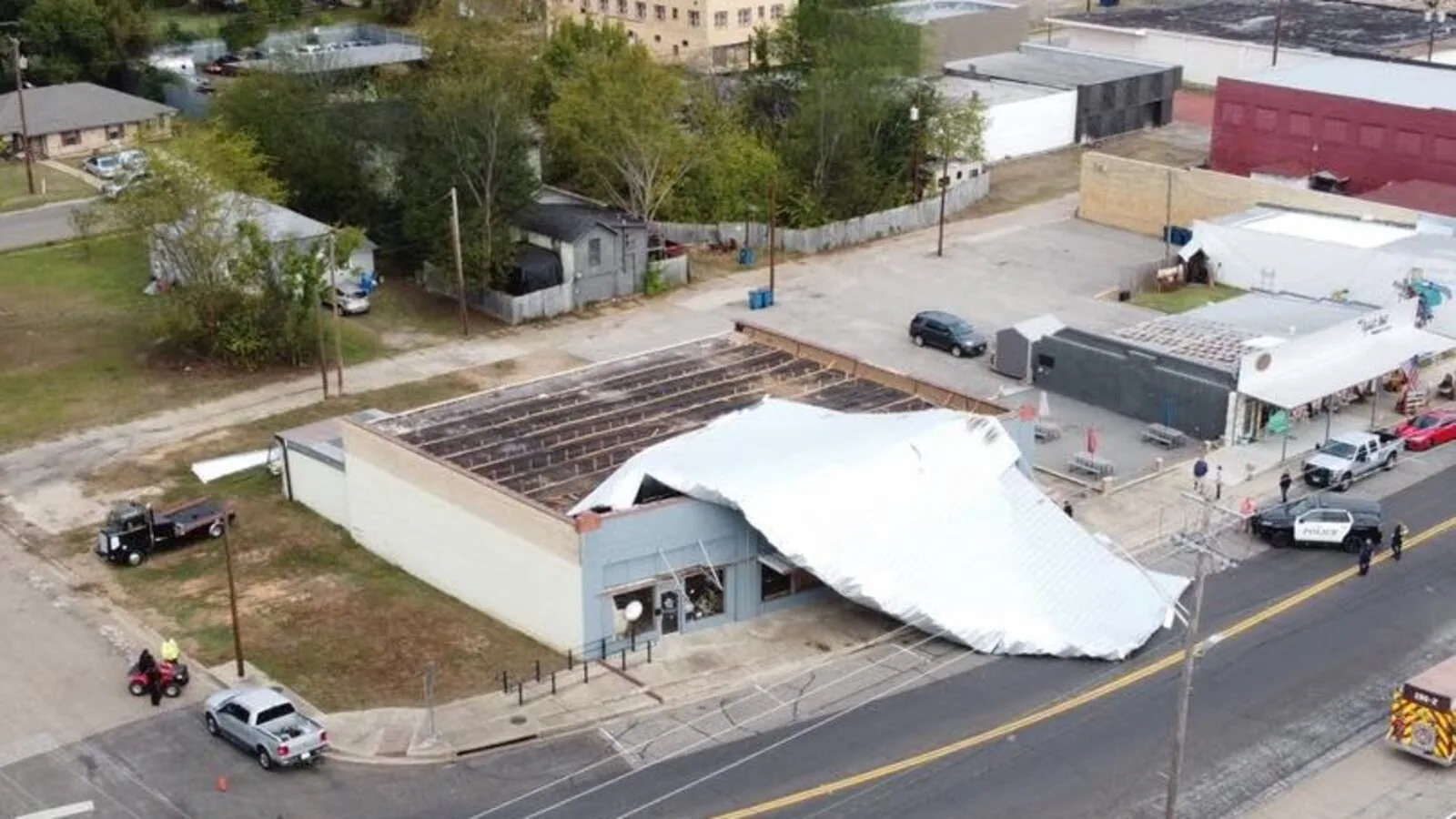
A lifted edge-metal cleat or a membrane flap after a windy day is a starting clue, not a complete damage map. We secure safe access, photograph the roof before moving loose material, and check whether the edge, seam, flashing, or attachment has separated. Then we trace the water route to the room below and record whether the interior mark appeared during the same event. The report separates visible wind-related conditions from older wear or damage that cannot be dated from appearance alone.
Do not climb onto a wet or unstable roof to inspect a suspected blow-off. The property contact should secure the interior, protect people and equipment, and arrange safe access. A temporary measure may be needed before a full estimate, but it must not trap water or conceal the affected boundary. The roofer identifies the next test, repair material, and monitoring step after documenting what was observable.
Secure the Property Before Roof Access
Start with the building and ground conditions: fallen metal, loose flashing, water near electrical equipment, ceiling sag, or an unsafe access point. The owner decides whether to close an area or call emergency services. A roofing visit records conditions without disturbing debris until photographs establish position and scale. If a component could fall, isolate the ground below and use a qualified team with an approved method for retrieval.
At the roof, photograph each edge, corner, parapet, curb, and seam that shows movement. Note whether fasteners are missing, metal is bent, membrane is stretched, or a patch has lifted. A single loose piece can expose a larger attachment failure, so inspect adjacent sections without declaring the whole perimeter damaged. Identify areas that could not be reached and the equipment or weather condition that prevented inspection.
Inspect the Connected Wind-Load Path
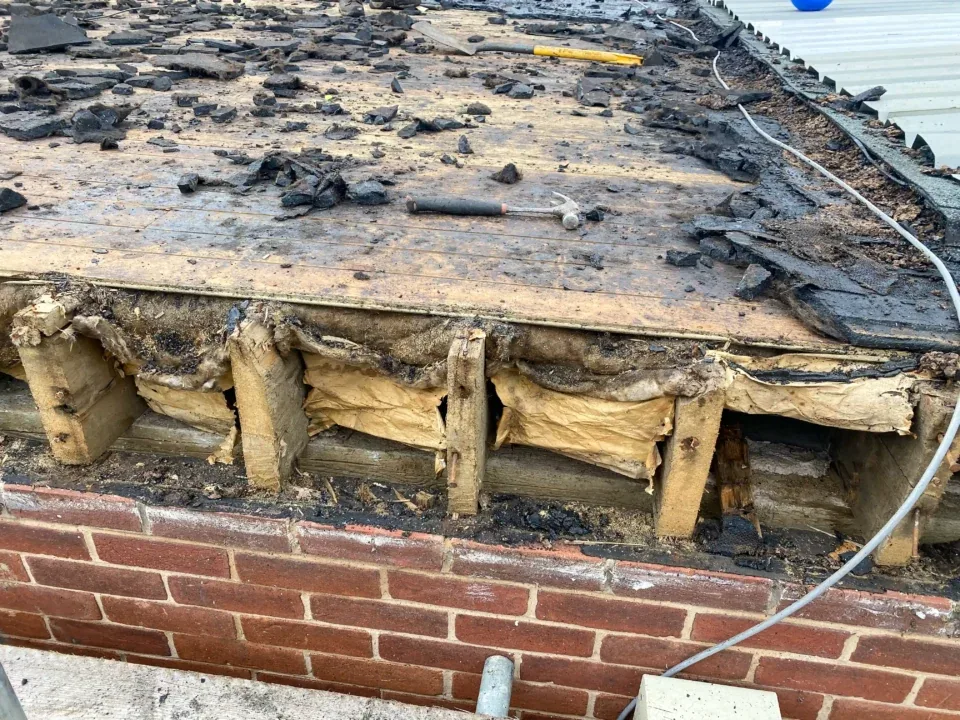
Wind forces act through connected roof components. Edge metal, cleats, fasteners, membrane attachment, substrate, and deck form a load path. If the metal edge shifts, inspect the termination and underlying attachment rather than resealing the visible lip alone. For a membrane system, examine seams and perimeter securement for peel, displacement, or a change in tension. The repair scope should name the specific assembly and detail that failed.
The City’s January 2026 code-adoption sheet lists Exposure Category C and different basic wind speeds by risk category. Those citywide figures are not a substitute for an engineer’s criteria or the design basis for an existing roof. Confirm the project’s risk category, approved drawings, and applicable code with the design professional. A post-event repair can restore a verified detail; it should not be described as an upgraded wind design unless an engineered scope supports that claim.
Trace the Water Route
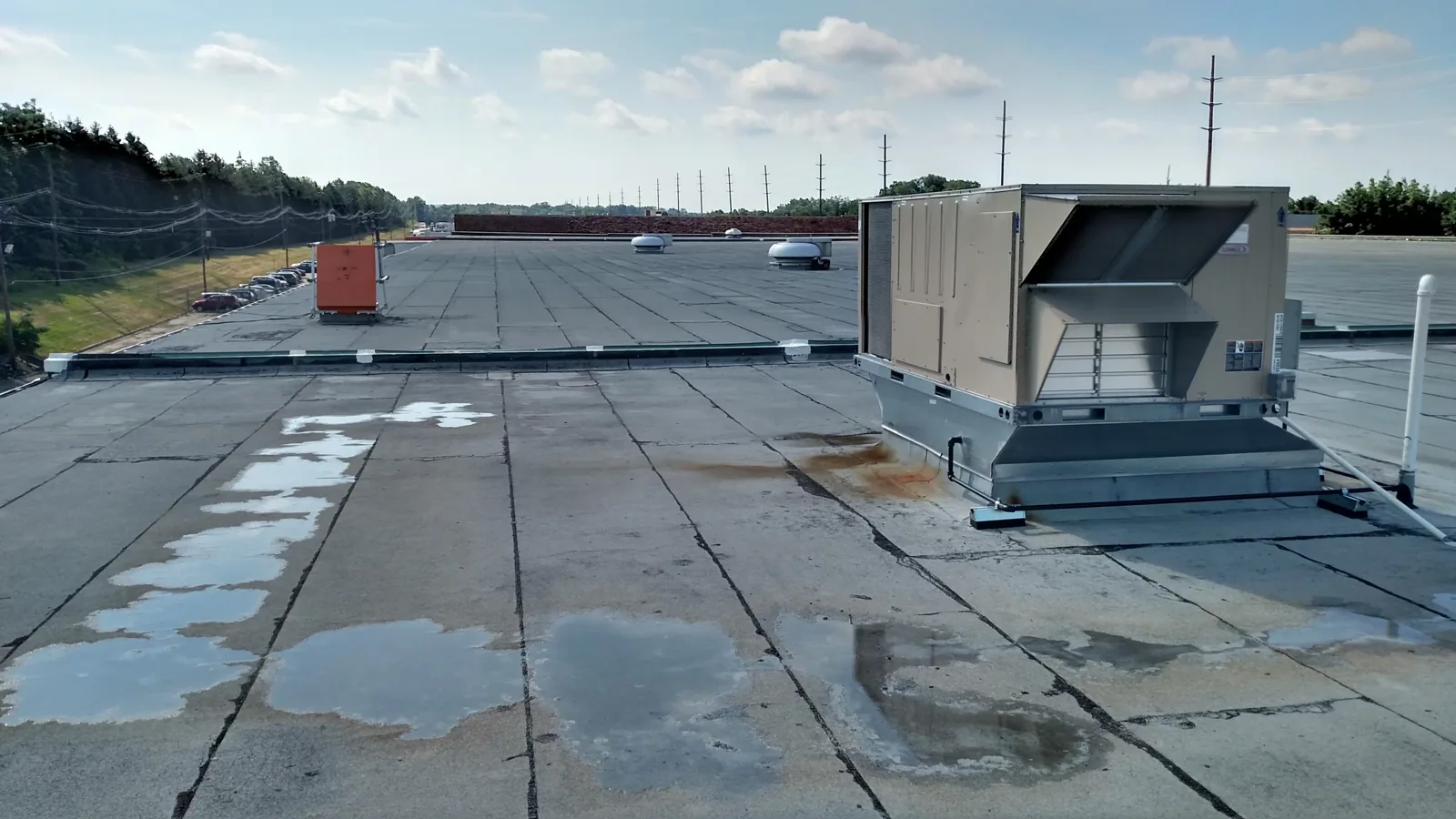
Once access is safe, compare the interior stain with the roof detail above. Water may track beneath the membrane before appearing indoors, so inspect nearby penetrations, wall terminations, drains, and seams. Record what is wet and what has dried. If the building manager knows when the stain appeared, preserve that chronology alongside the roof photos. A controlled test may help, but only after the owner approves the location and the system can be protected from added water.
Temporary covering should match the observed opening and leave drainage paths working. Avoid placing a tarp where it can lift and create more wind load, block an overflow, or divert water toward another assembly. Mark the boundary and recheck its attachment according to the approved plan. If a permanent repair cannot occur before another weather window, state that limitation clearly and tell the site contact what to monitor inside.
Set the Permanent Repair Boundary
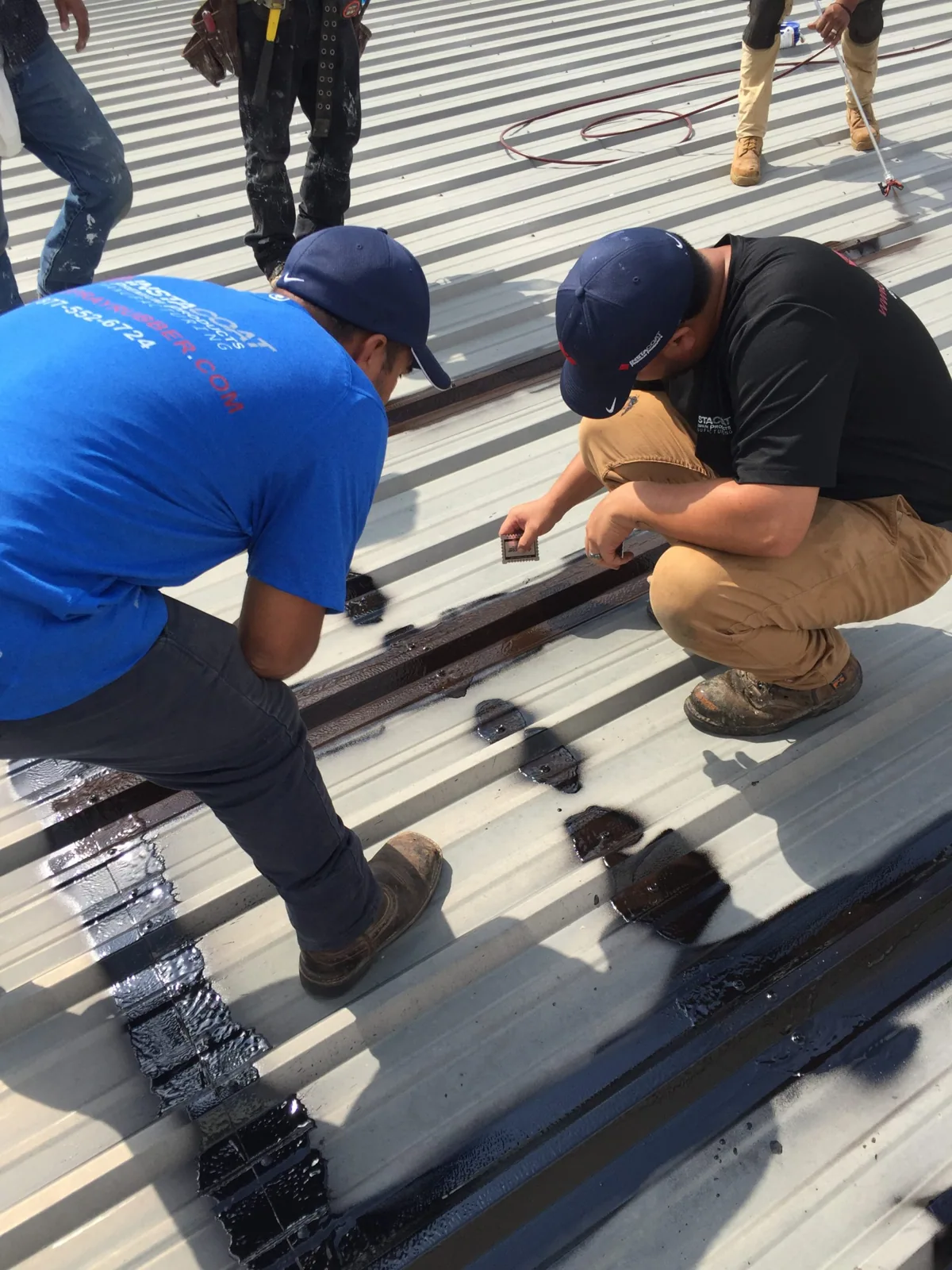
A permanent repair begins with substrate and membrane compatibility. Remove only the approved damaged area, expose enough stable material for the selected detail, and photograph each layer. If insulation is wet or the deck is corroded, stop and document the dimensions before extending removal. The owner receives a change proposal with the new boundary, measured quantity, material, price basis, and schedule effect. No concealed condition should be treated as verified until opened and recorded.
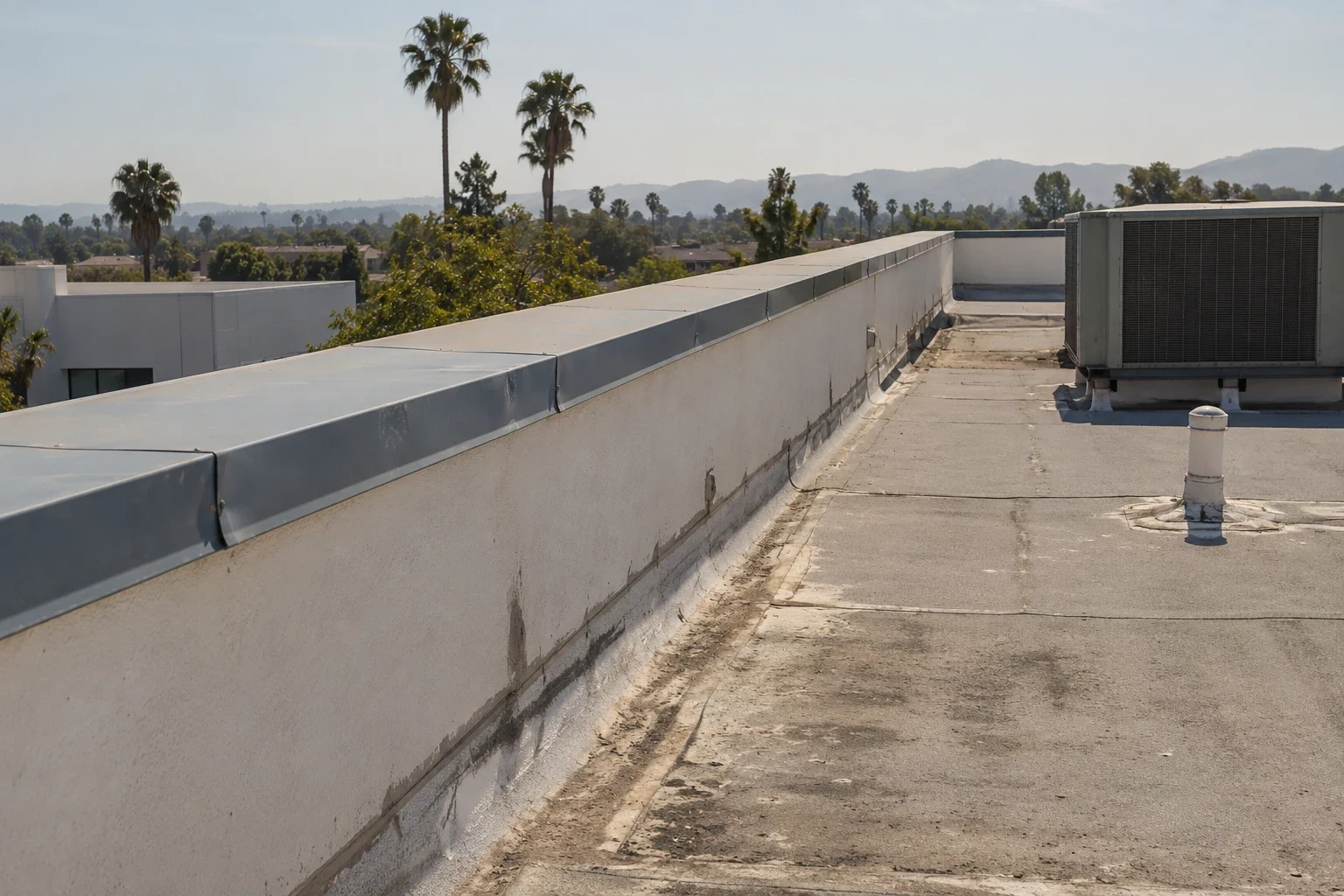
At edge metal, confirm the cleat and fastener spacing against the applicable assembly detail rather than relying on added sealant. At seams, prepare the surface and complete the repair with compatible material and required overlap. Check terminations and corners, where wind can concentrate movement. Edge-metal and coping repair addresses perimeter components while keeping structural assessment with the appropriate professional.
Menifee Climate Context
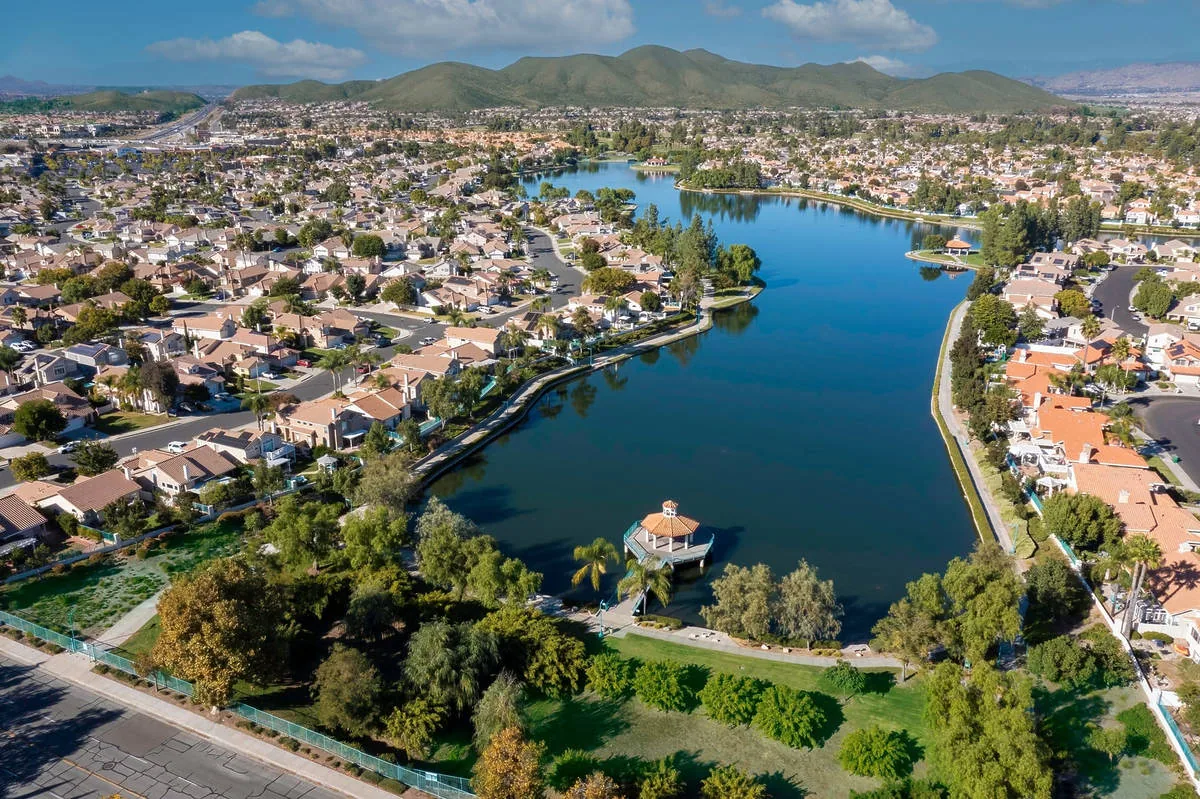
Menifee is inland and naturally dry according to the City, which identifies more extreme-temperature days as a climate risk. That context can influence scheduling and material handling, but it does not establish that a particular gust or roof failure occurred. For an event file, use verified weather records, the property’s own chronology, and observations from the roof. A wind report should not turn a general city fact into proof of cause or coverage. For a Menifee roof, verify access authority and the assembly before setting a repair boundary. McCall Boulevard Economic Development Corridor and Community Core Economic Development Corridor are city-planning references, not evidence of the wind conditions or damage at a specific roof.
The City zoning map shows varied commercial and industrial land uses across Menifee, and the economic strategy describes planned commercial and mixed-use corridors along I-215. That is broad land-use context only. It does not identify a damaged facility or a service boundary. Before any work, confirm the property address, roof owner, authorized contact, and safe access. If the building lies near the McCall Boulevard corridor, treat that as orientation rather than a finding about the site.
Check the Repaired Area
After repairs, inspect the specific details that moved: edge securement, corner transitions, seams, curbs, penetrations, and nearby drainage. Record whether fasteners were replaced, metal reset, membrane patched, or wet insulation removed. If the repair does not include engineering review, state that limit. A water test should be controlled, approved, and restricted to the repair area; passing it does not establish the condition of the entire roof.
Review indoor areas after the next relevant rain or at a planned interval. The site contact can report whether the same stain returned or whether another area changed. If water persists, reopen the diagnosis rather than repeatedly applying surface sealant. A follow-up roof inspection can compare the same photos and location labels to the earlier record.
Preserve Records and Set the Next Check
Keep the event chronology, site access record, pre-repair photographs, inspection limits, temporary protection, approved changes, material details, and post-repair images together. Identify the person who approved each scope decision. If a third-party engineer evaluates deck or attachment capacity, retain that report separately from the roofer’s field observations. This distinction helps the owner understand which issues were repaired and which require an additional professional.
A sound next step is specific: monitor a ceiling area, schedule an edge inspection, or have an engineer review an attachment condition. Avoid an unsupported promise that a patch will withstand every future storm. The owner can use the record to prioritize maintenance and decide whether broader replacement or redesign should be evaluated through a separate project.
Related details are covered in flashing-failure investigation. Related details are covered in seam-failure repair. Related details are covered in permanent commercial repair.
Commercial Roofing Questions
Can a roof inspection prove when wind damage occurred?
Appearance alone may not date a condition. A report can document observed displacement, available chronology, and what further evidence or review may help.
Is extra sealant enough for a lifted edge?
Not necessarily. Inspect the edge-metal cleat, fasteners, membrane termination, and substrate to find the failed part of the assembly.
Can temporary protection stay through another storm?
Only if the property approves a safe, secured method with functioning drainage and a defined recheck. Temporary cover is not a permanent repair.
Does the city wind-speed table determine an existing roof repair?
No. Confirm the project criteria and design basis with the appropriate design professional. The city sheet is not a site-specific engineering determination.
What if the deck is damaged under the membrane?
Stop at the approved opening, photograph and measure the condition, protect the roof, and obtain direction and authorization before expanding the scope.
Related Roofing Work
Coordinate a commercial roof review
Request a Roof Assessment
Arrange a safe post-event inspection with the property contact. We will photograph displaced details, trace any water path, document temporary protection, and price only the verified repair boundary.
Service area
Menifee, Perris, Murrieta, Temecula, Hemet, Lake Elsinore and nearby Inland Empire communities
Quick contact
[email protected]
555-555-5555