
Commercial Roof Flashing Failure Repair in Menifee
Home / Roof Damage Repair / Commercial Roof Flashing Failure Repair in Menifee
A split at a wall termination or a gap at the corner of a curb can admit water without making the whole roof assembly defective. We photograph the transition, test how the flashing meets the field membrane, and trace any water path below. The inspection records whether metal has shifted, a sealant joint has separated, or the membrane termination has lifted. The repair plan follows the verified interface instead of covering the visible gap with an untested bead.
Before access, confirm who controls the roof, whether equipment must be shut down, and whether a test opening is allowed. Protect rooms below and identify any sensitive equipment beneath a suspected entry point. A stain can be offset from the roof detail. Wind-related movement is one possible condition to document, but appearance alone does not date the failure or establish cause.
Inspect Transition
Map the flashing assembly: wall or curb material, membrane type, termination bar or counterflashing, sealant, fasteners, corners, and nearby seams. Note gaps, corrosion, loose fasteners, cracks, and patches that bridge a moving joint. A close photo should show the defect; a wider image should locate it relative to drains or equipment. This record prevents a follow-up crew from treating a different curb or wall as the original repair point.
Check both sides of a parapet transition where accessible. Water may move behind metal or beneath the roof membrane before appearing inside. If interior testing is approved, name the room and the exact roof area being tested. Do not pour water across a large section and assume that the first stain identifies the opening. Claim documentation can preserve observations without making a coverage decision.
Movement
Flashing often connects materials that move differently as temperatures change. Inspect corners, terminations, expansion joints, and penetrations for splits or loss of bond. If the joint is designed to move, a rigid patch can fail again when the assembly cycles. The repair should follow the existing system’s approved detail or a design professional’s direction when the original detail is unclear.
Identify whether the substrate is sound and dry enough for adhesion. Loose coating, wet insulation, corroded metal, or a deteriorated wall surface may prevent a patch from holding. If layers need to be exposed, stop at the approved boundary, photograph what appears, and request direction before removing additional material. A repair to the membrane cannot correct movement in a structural or cladding component.
Water Route
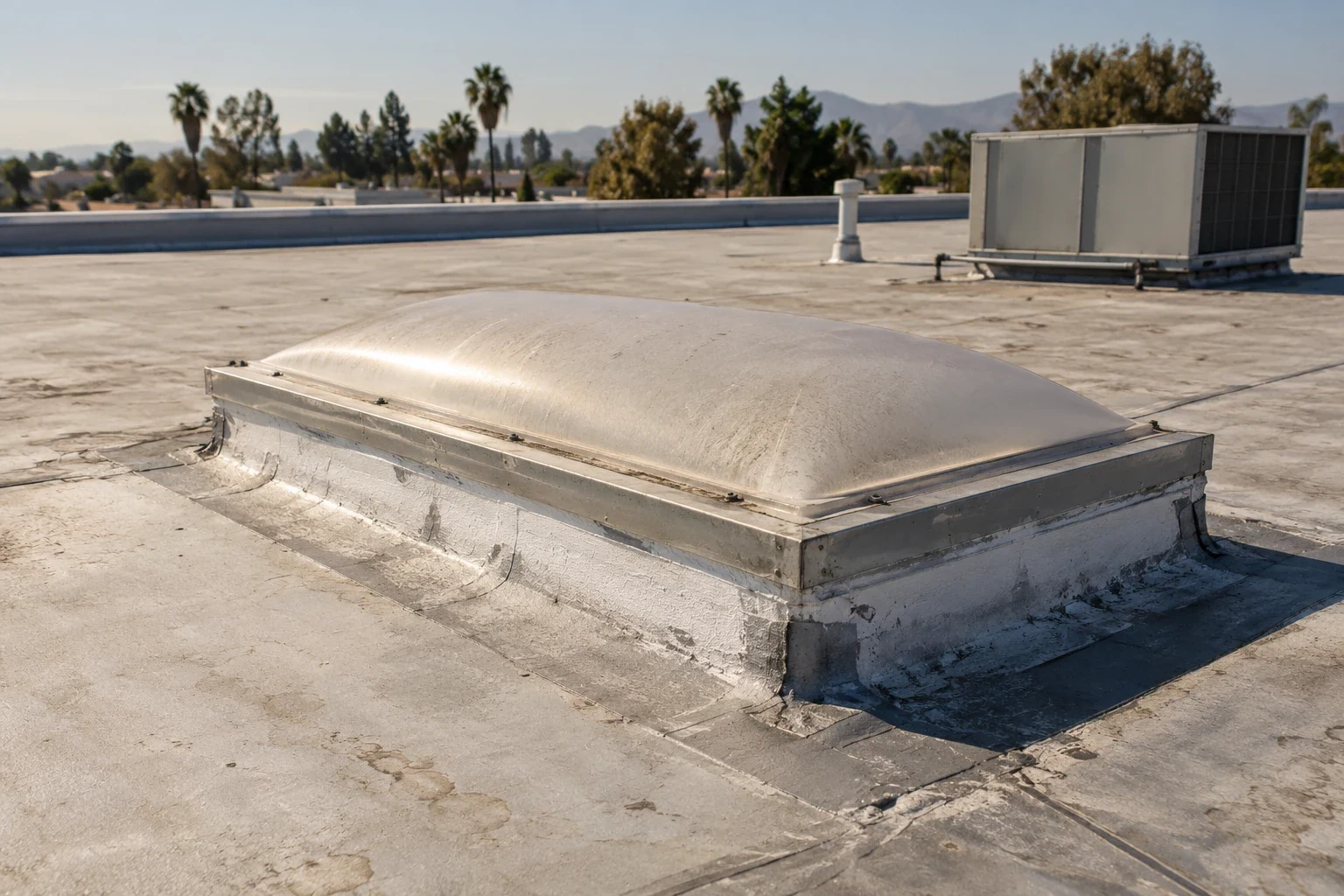
A roof penetration may have a separate sleeve, boot, curb, counterflashing, and equipment support. Record each component so the scope does not confuse the roofer’s weathering detail with a mechanical vendor’s connection. Check whether a pipe or conduit is moving and whether the boot can accommodate it. Do not tighten, brace, or relocate equipment without authorization. The work order should name the trade expected to complete each part of the assembly.
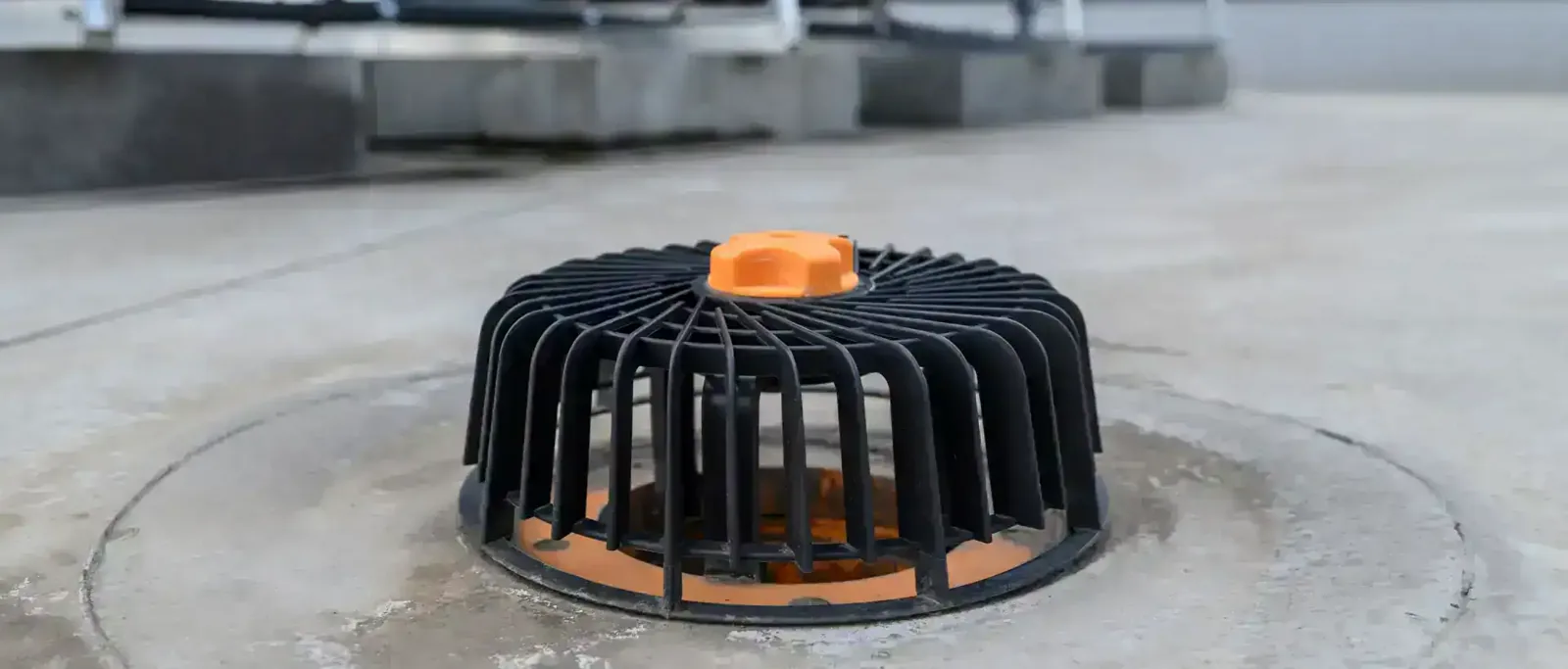
At roof-wall transitions, look for a continuous route from the termination into the field membrane. A gap at the top of counterflashing is different from a failed membrane weld at the base. Nearby drainage details should be inspected independently so water is not redirected toward the flashing after repair. If the drain itself has failed, capture both findings in separate scope lines.
Repair
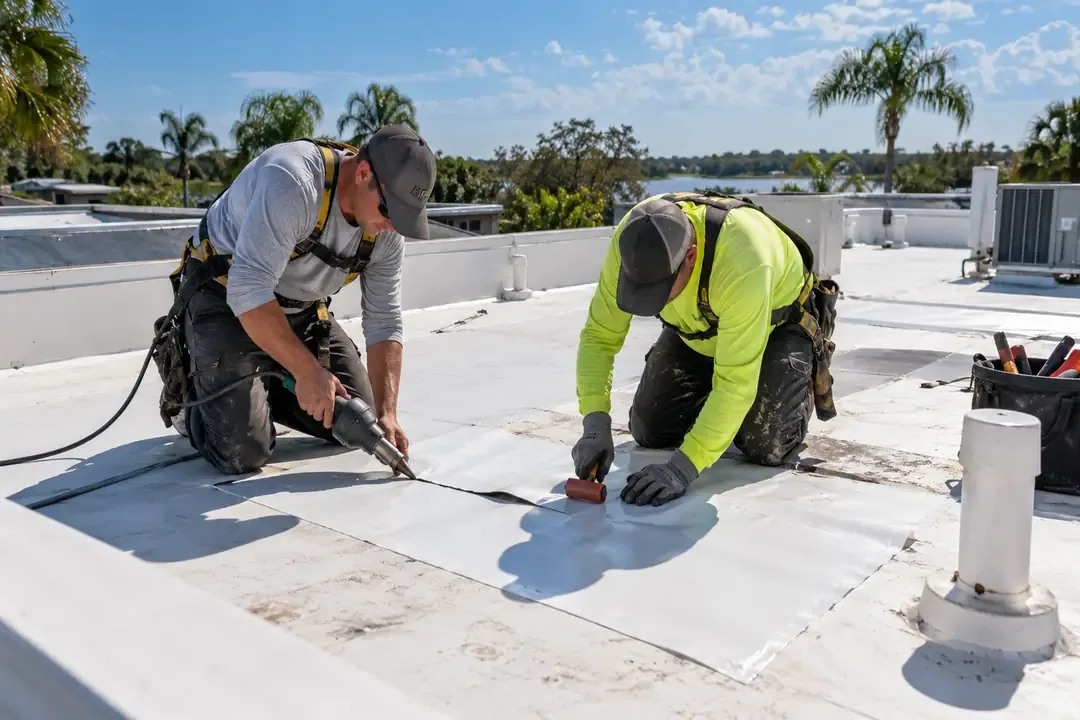
Prepare the surface using the system’s required cleaning and primer, then install compatible flashing with the specified overlap and termination. The proposal identifies material, corner treatment, fastening, sealant use, and any curing or inspection requirement. A patch that ends at the defect without stable material around it may not restore continuity. If the assembly includes metal counterflashing, list its replacement or reset as a separate operation.
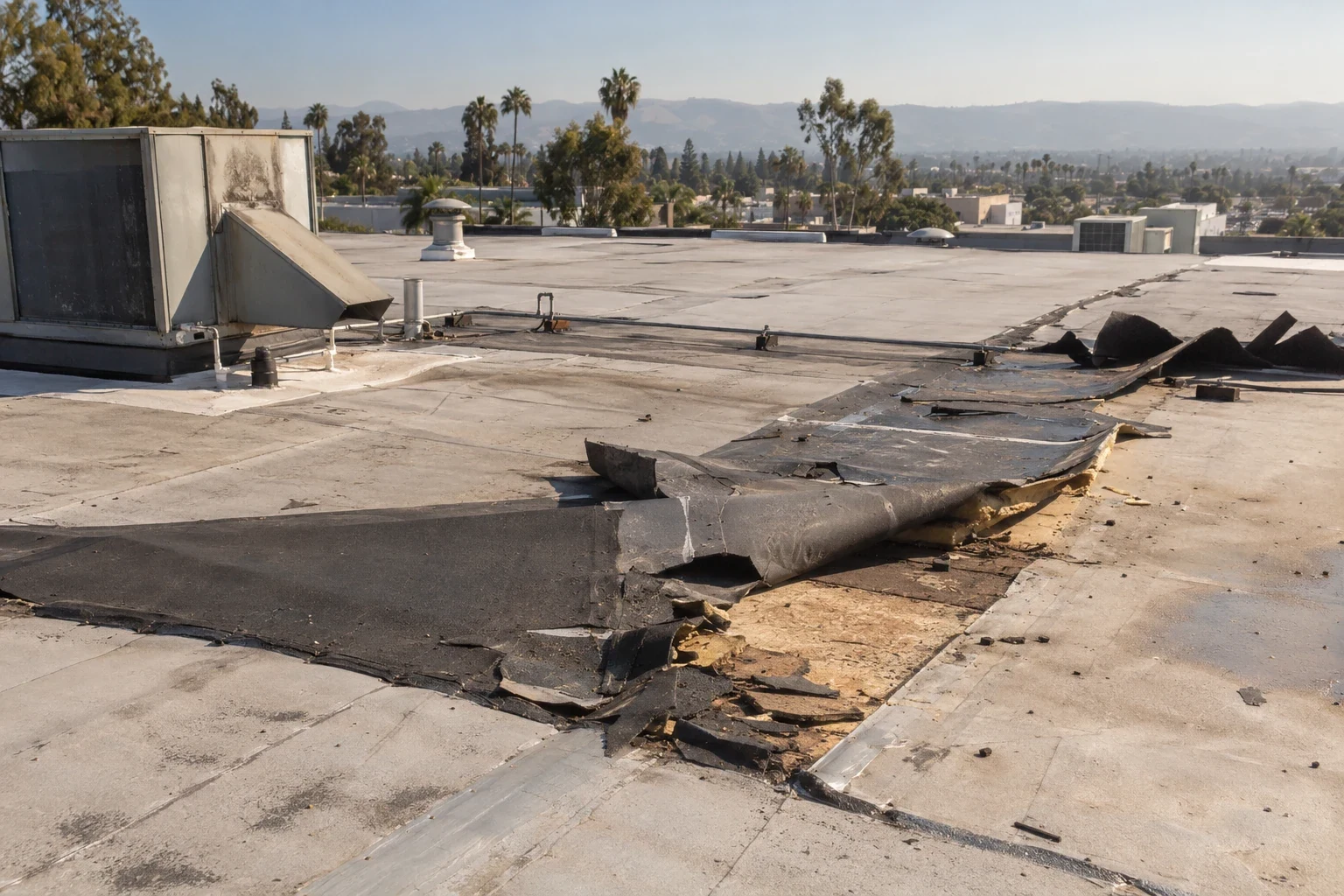
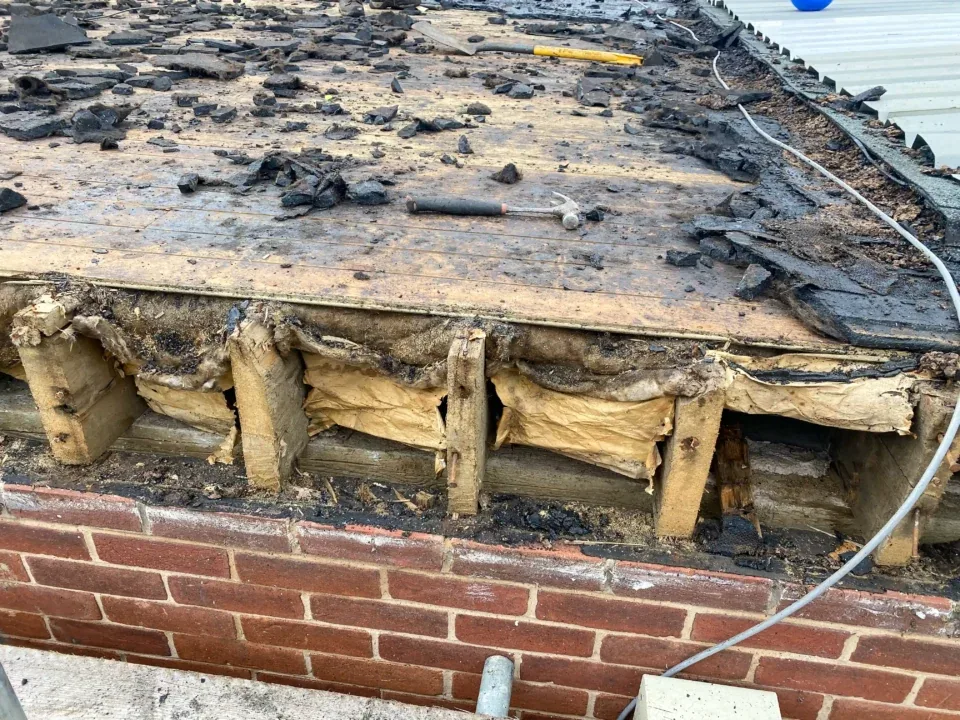
A test opening may reveal wet insulation or a failed substrate beyond the initial photograph. Measure and document the finding, protect the opening, and obtain written approval before extending removal. The owner can then compare a limited flashing repair with a broader replacement of the transition. A seam repair can be scoped separately if the field membrane shows another failure point.
Menifee Context
Menifee’s climate-planning materials describe an inland, naturally dry setting and identify hotter average temperatures as a risk. That context may affect when a surface is inspected or prepared, but it does not prove that heat caused a flashing split. The field report should note the actual metal and membrane condition, installation layers, and whether movement is visible. Confirm project criteria before specifying a replacement detail. Community Core Economic Development Corridor and Newport Road Economic Development Corridor are planning areas, not inspected roof locations.
Newport Road Economic Development Corridor and McCall Boulevard Economic Development Corridor are named planning areas in Menifee. Those references help orient a municipal discussion; they are not a list of flashing failures or an approved contractor territory. Confirm the building address and access authority for each scope. City planning information does not replace the roof manufacturer’s detail or the project engineer’s direction.
Verification
After installation, inspect corners, terminations, fasteners, overlap, and the tie-in to the field membrane. Record the surface preparation and any test performed. A controlled water test may be useful if approved, but state the limits: it evaluates the tested detail under those conditions and cannot establish the condition of every roof transition. If the assembly needs cure time, tell the site contact when access can resume.
Check the interior after the next suitable rain or at an agreed date. If water returns, trace the path again and compare the photos instead of applying sealant to the interior mark. The same labels should appear on the original and follow-up map. This makes it clear whether the repaired transition moved, another flashing failed, or moisture remained from an earlier event.
Handoff
The owner receives a detail-level map, before-and-after photos, material and preparation notes, work boundary, test results, warranty conditions, and remaining exclusions. Name the mechanical or structural trade if a component remains outside the roofing scope. If the wall itself has deteriorated, note that separate correction is still needed. A thorough handoff prevents later maintenance staff from relying on a vague invoice description.
Set the next check based on the finding: inspect a repaired curb after rain, monitor a room below, or ask the engineer to review movement. A routine roof walk can include the repaired area but should not be represented as proof that other details are sound. The roof record should say which detail was corrected and what condition would trigger renewed investigation.
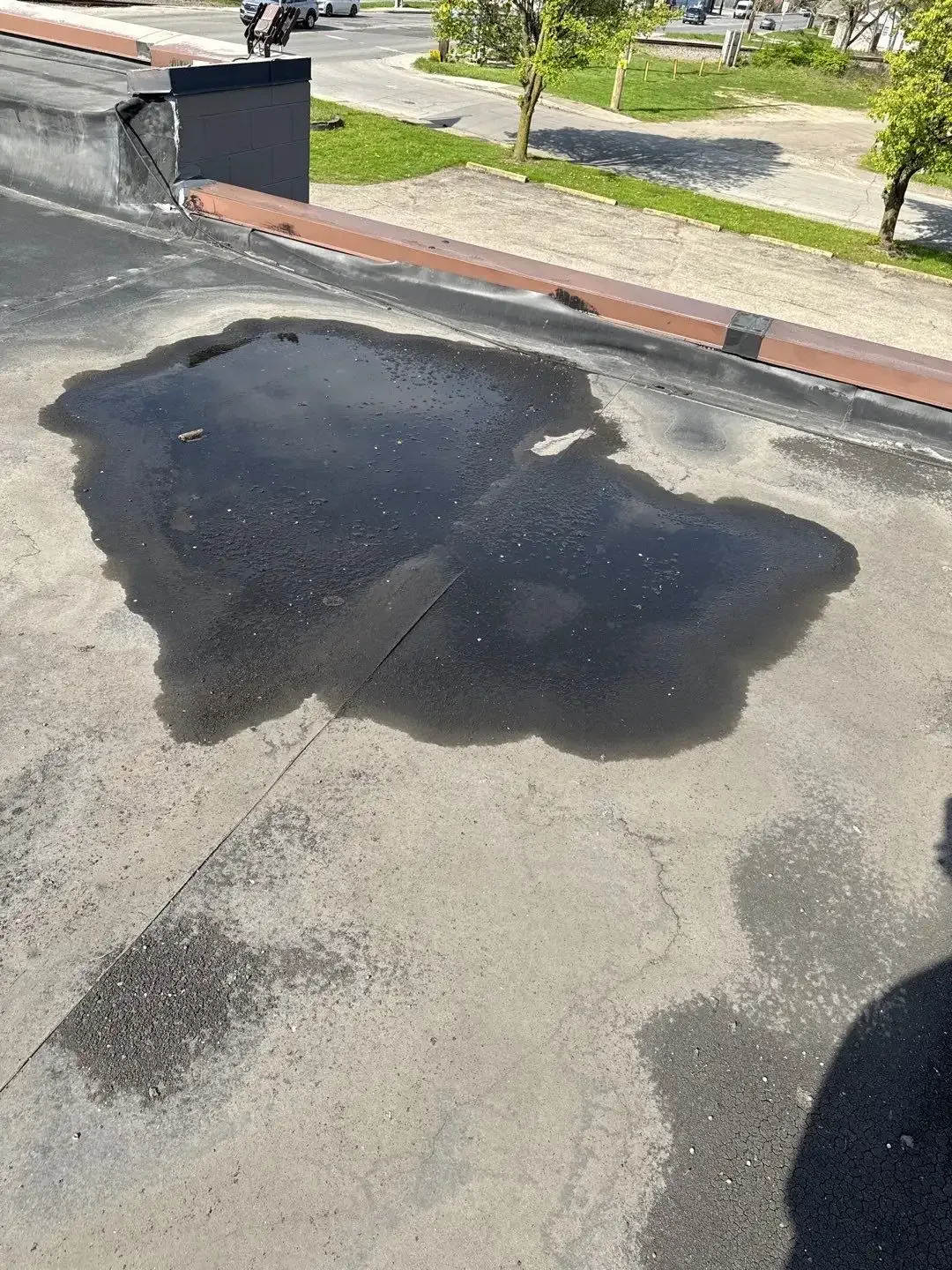
A transition survey may lead to drainage diagnosis or puncture repair; the McCall planning area remains geographic context only.
Commercial Roofing Questions
Which flashing details should the inspector photograph?
Capture the curb or wall transition, corners, termination, fasteners, counterflashing, and nearby membrane. Include both close and location views.
Can a bead of sealant close an open termination?
Only a compatible, specified repair can restore the detail. First identify movement, substrate condition, and whether the joint is designed to flex.
Does a ceiling stain show where flashing failed?
Not necessarily. Trace the water path and inspect the roof above and around the stain. Water may travel before reaching the interior.
What if the wall surface is damaged too?
List that condition separately and identify the trade or design professional who must review it before the roof tie-in is closed.
How do we check the completed transition?
Review the installed overlap, corners, fastening, tie-in, and any approved test. Note any section that could not be reached.
Related Roofing Work
Coordinate a commercial roof inspection
Request a Roof Assessment
Arrange an inspection with the property contact. We can trace the reported condition, record the observed roof detail, define a repair boundary, and state what remains untested.
Service area
Menifee, Perris, Murrieta, Temecula, Hemet, Lake Elsinore and nearby Inland Empire communities
Quick contact
[email protected]
555-555-5555