Commercial KEE Roofing in Menifee, CA
Home / Roof Systems / Commercial KEE Roofing in Menifee, CA
A KEE designation describes a membrane formulation, not a complete roof assembly. We review product submittals, seam method, flashing accessories, attachment, and the surface beneath the sheet before comparing it with an existing roof. If the property already has a membrane, a test weld and field inspection help establish whether a repair can bond. The roof survey documents the assembly and the questions that need a design answer.
Confirm the Exact Product and System
KEE membranes are not interchangeable by name alone. Product construction, thickness, reinforcement, accessories, and warranty terms vary by manufacturer. We read the approved submittal and confirm that the field sheet, flashing material, adhesive or weld procedure, and edge details belong to the same system. If labels are missing, a visual guess is not enough to identify the formulation.
The project specification sets the required performance and exposure criteria. We compare those requirements with product data, then identify any unresolved substitution or compatibility question before ordering. The PVC system comparison may help a buyer understand the broader thermoplastic category, while TPO membrane selection remains a separate product decision. We do not promise a service life or chemical resistance outside the approved documents.
Before full production, we can assemble a representative mock-up with the specified field sheet, flashing, seam, and edge connection. The owner or design contact reviews the detail against the approved submittal, then records acceptance before the crew repeats it across the roof. If a field condition changes the mock-up, we document the revised detail and obtain approval. This step makes the final installation easier to compare with the issued drawings.
Test Welds at Field and Flashing
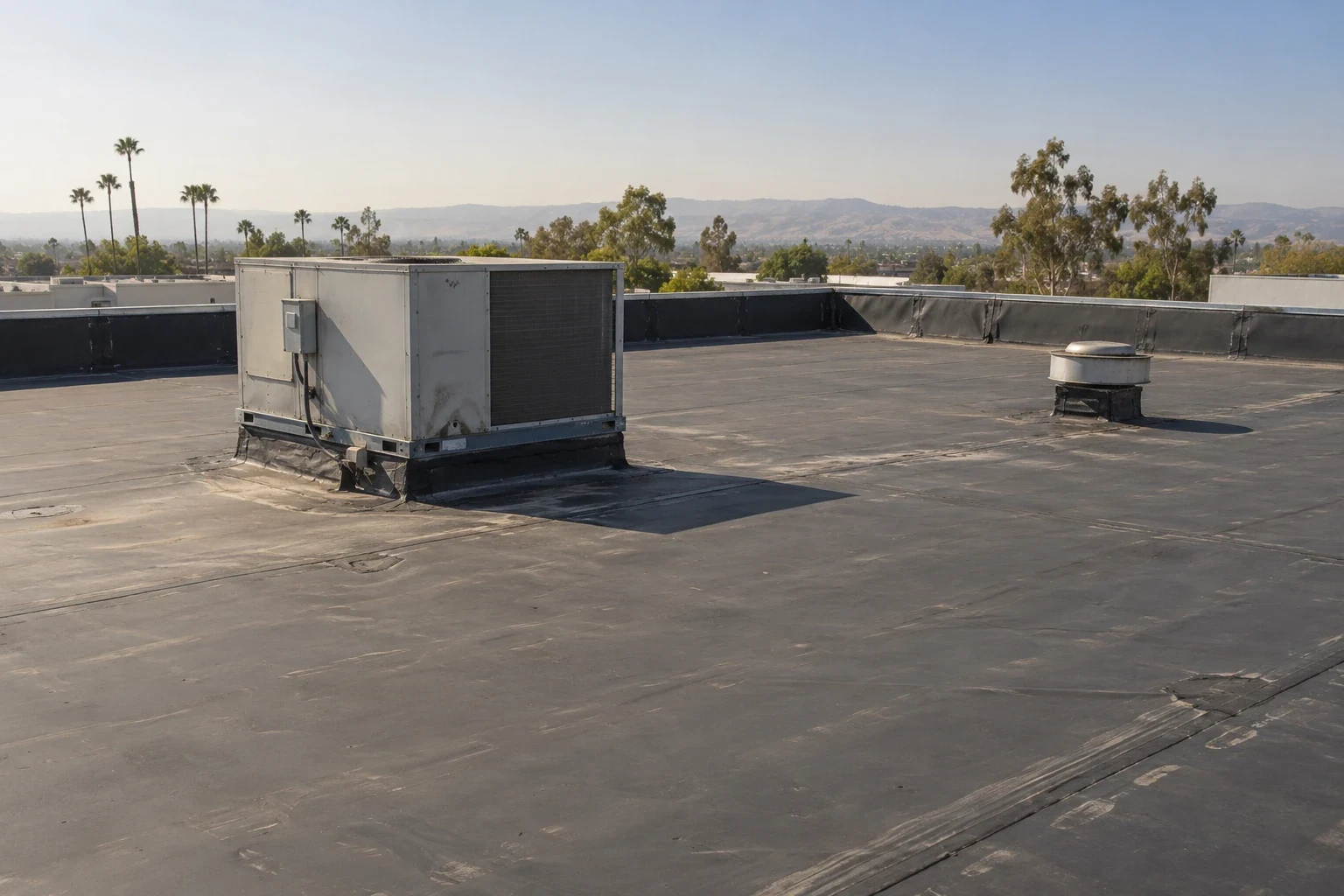
Where the approved KEE system uses heat-welded seams, we test settings on the actual sheet under the site conditions. The operator adjusts temperature, speed, and pressure to produce a consistent bond without scorching or thinning the membrane. We probe the cooled weld and record the test before production continues. Corners, T-joints, and patches receive the same attention as long field laps.
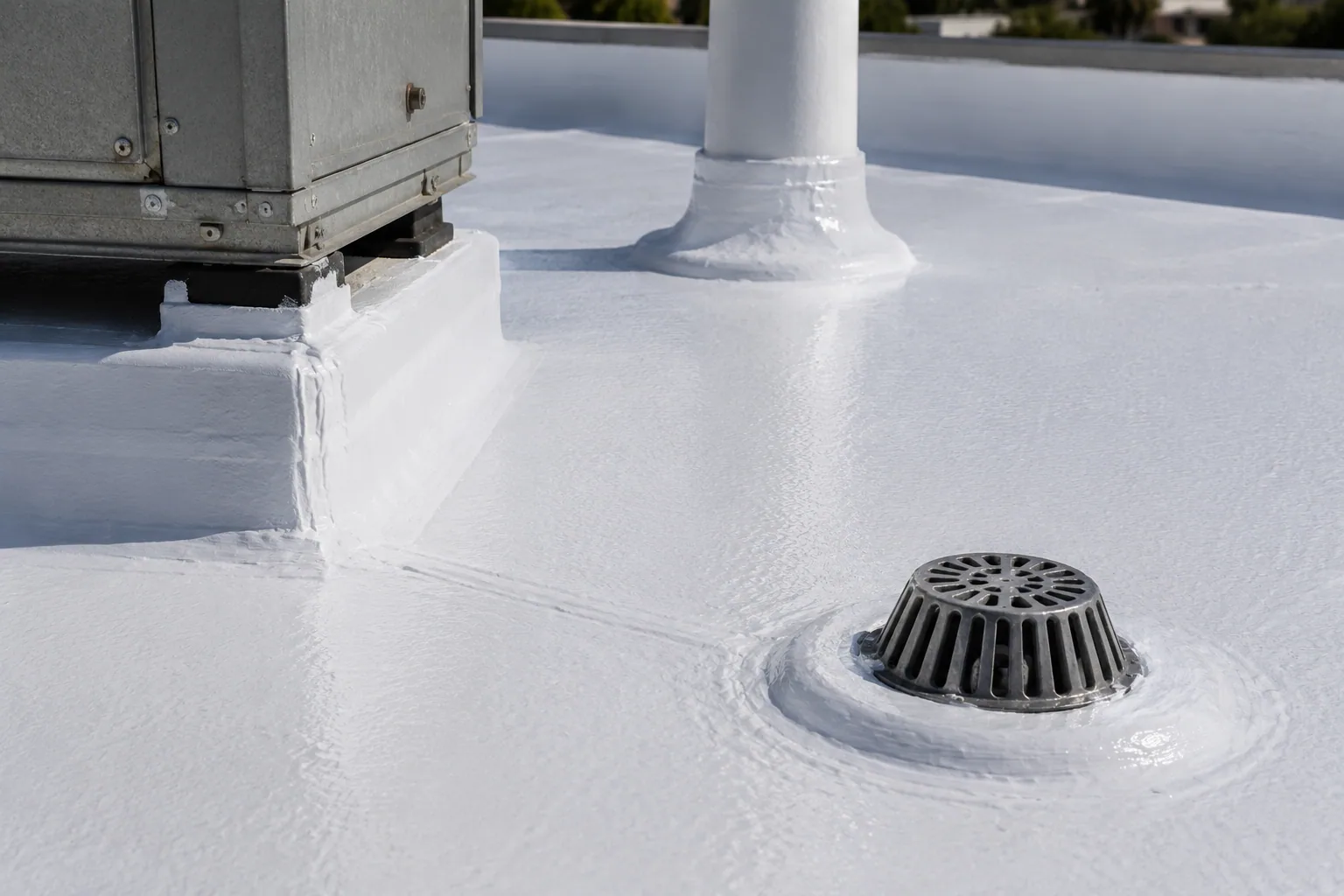
A flashing that looks smooth can still have a skipped weld at its edge. We inspect the transition from field sheet to curb, pipe, drain, and wall, then document each completed detail. If existing membrane is being tied into new KEE, a compatibility test is necessary before work expands. A drain detail review checks the clamp or outlet connection, while the roof record identifies which seams were actually tested.
We keep the weld-test sample or its documented result with the project file when the contract requires it. The record names the membrane and conditions at the time of testing, then ties the setting to the installer and work zone. If a later sheet has a different finish or reinforcement, we run a new test rather than carry the previous setting forward. That makes the seam check specific to the product actually placed.
Match Exposure to Product Data
Facility operations can expose a roof to grease, exhaust, cleaning agents, or repeated foot traffic. The project team identifies those conditions and compares them with the membrane manufacturer’s published data. In Menifee, the Northern Gateway Economic Development Corridor is planned with an industrial emphasis over office use relative to Scott Road. The McCall Boulevard Economic Development Corridor instead pairs office, medical, and residential uses compatible with the Regional Medical Center. Neither planning description proves a tenant’s process or a roof’s exposure; the building operator supplies that information.
Connect Attachment to the Perimeter
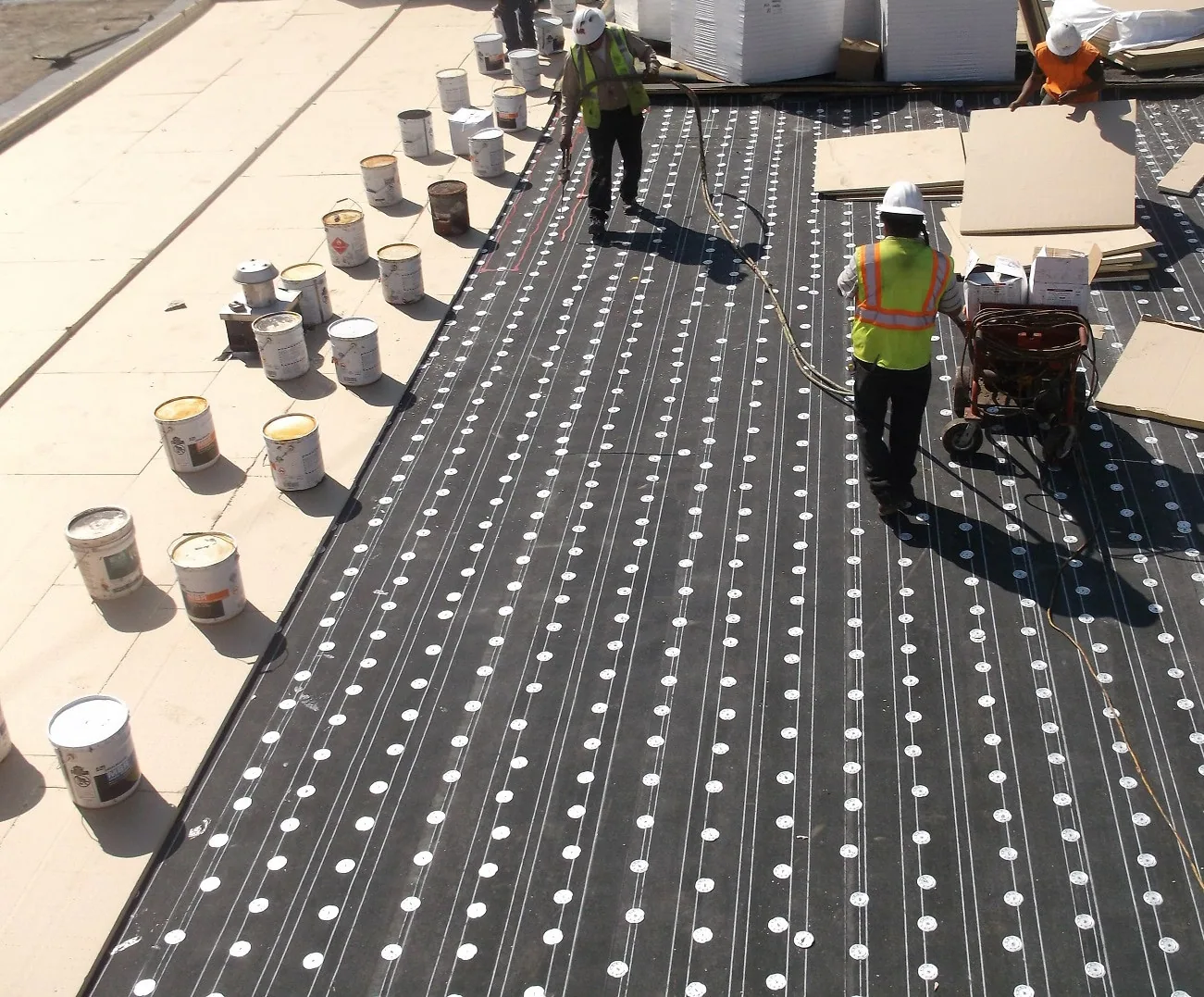
A KEE system can use different attachment approaches depending on the roof, building, and specification. We inspect deck and insulation where accessible, check the existing fastener layout or adhesive evidence, and review perimeter details. The wind design and project risk category drive the approved attachment schedule. A field sheet repair cannot compensate for a loose edge or an unverified substrate.
Menifee’s adopted code sheet includes category-specific wind-speed entries, but the designer confirms the criteria for the actual building. We install to the issued documents and record deviations for approval. The edge-metal scope checks coping, cleats, and terminations at the perimeter. If wet insulation changes the fastening base, a substrate review identifies the repair boundary before the new sheet is installed.
Compare Repair with Full Replacement
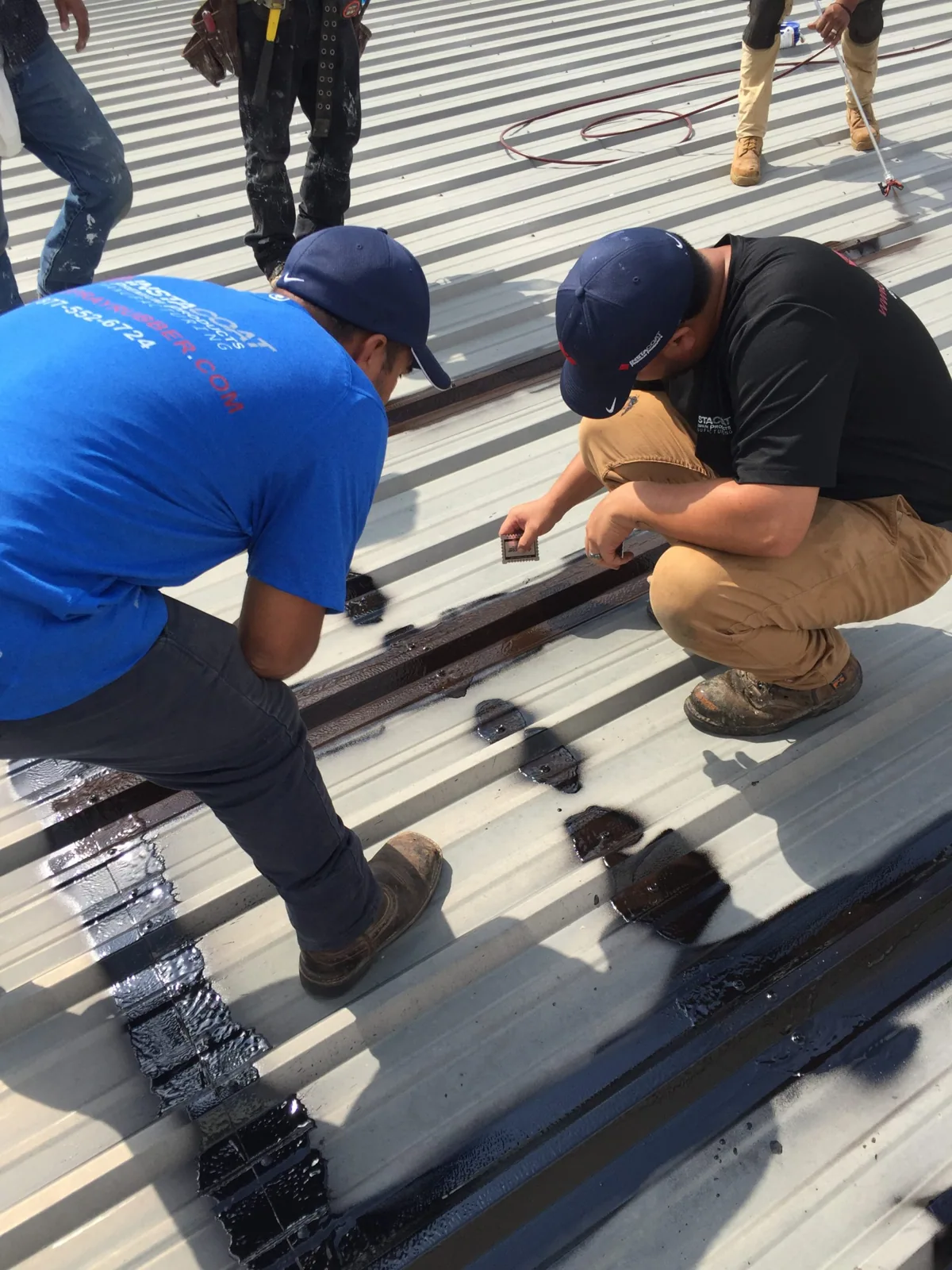
A local KEE repair may be the right path when seams accept a test weld and the surrounding sheet remains stable. Repeated separation, widespread moisture, or poor attachment may call for a larger scope. We map test locations, check prior repairs, and identify the evidence that separates a patch from replacement. Where no product record exists, the proposal states what test or documentation is needed before a system is specified.
Replacement includes removal assumptions, insulation, perimeter metal, penetrations, and closeout records. A replacement assessment compares that work with a targeted repair. If the existing roof may accept a compatible restoration, a coating review still requires substrate and adhesion checks; a KEE label alone does not make a coating suitable. The owner receives the limits and cost drivers for each option.
Keep City Planning Separate from Product Choice
The City Development Code treats the Community Core Economic Development Corridor as a transition from existing rural lots toward denser retail and office development moving east to I-215. At McCall Boulevard, the Code envisions offices, medical uses, and housing compatible with the Regional Medical Center. Those are distinct land-use directions, useful only for setting access questions with a facility contact. They do not tell us which KEE membrane or attachment is present. We match the product to the approved submittal and the measured roof condition.
Carry the Product Record into Maintenance
The closeout file identifies the manufacturer, exact product, sheet thickness, lot or batch documentation when required, seam test settings, repair locations, approved details, and maintenance instructions. We include marked plans and before-and-after photos for drains, edges, and penetrations. If a required inspection point was inaccessible, the record says so and identifies the follow-up window.
Maintenance checks seams, flashings, rooftop traffic, and drainage without assuming the product label promises performance. The roof maintenance schedule follows the installed system’s instructions and preserves dated observations. If the owner later compares KEE with EPDM, the decision should start with system compatibility, operating exposure, and the existing deck rather than a generic product ranking.
During turnover, we review the approved submittal with the maintenance contact and point out the locations where a future repair must use the same material family. The roof map shows accessible seams and any area covered by equipment. If a crew cannot inspect a detail without a shutdown or lift, the owner receives that note and can arrange access before the next maintenance visit. This prevents an inaccessible curb or covered lap from being counted as checked. The record also identifies the party responsible for authorizing a temporary equipment move and restoring the roof protection afterward.
Commercial Roofing Questions
Is KEE the same as every PVC roof?
No. KEE describes a formulation used in some membranes, while product construction, accessories, and installation requirements vary. We verify the specific submittal before discussing compatibility or repair.
Can you weld new KEE to an older thermoplastic membrane?
We identify the existing sheet and run a controlled compatibility test before committing to a field tie-in. If the materials or condition do not support a reliable bond, the detail needs another approved solution.
Does KEE make a roof chemical-proof?
No membrane is universally resistant. We compare the actual chemical and exposure with the manufacturer’s published data and the project requirements, then select protection only where supported.
What should a KEE replacement record include?
Keep the exact product and thickness, approved details, test weld results, attachment schedule, flashing locations, and maintenance instructions. Those items help future crews identify the installed system correctly.
Related Roofing Work
Check the KEE Submittal and Weld Plan
Request a Roof Assessment
Arrange a survey that identifies the existing membrane, test-weld results, attachment, and exposure requirements. We will document the approved KEE system and repair boundary.
Service area
Menifee, Perris, Murrieta, Temecula, Hemet, Lake Elsinore and nearby Inland Empire communities
Quick contact
[email protected]
555-555-5555