Commercial Roof Repair in Menifee, CA
Home / Commercial Roofing Services / Commercial Roof Repair in Menifee, CA
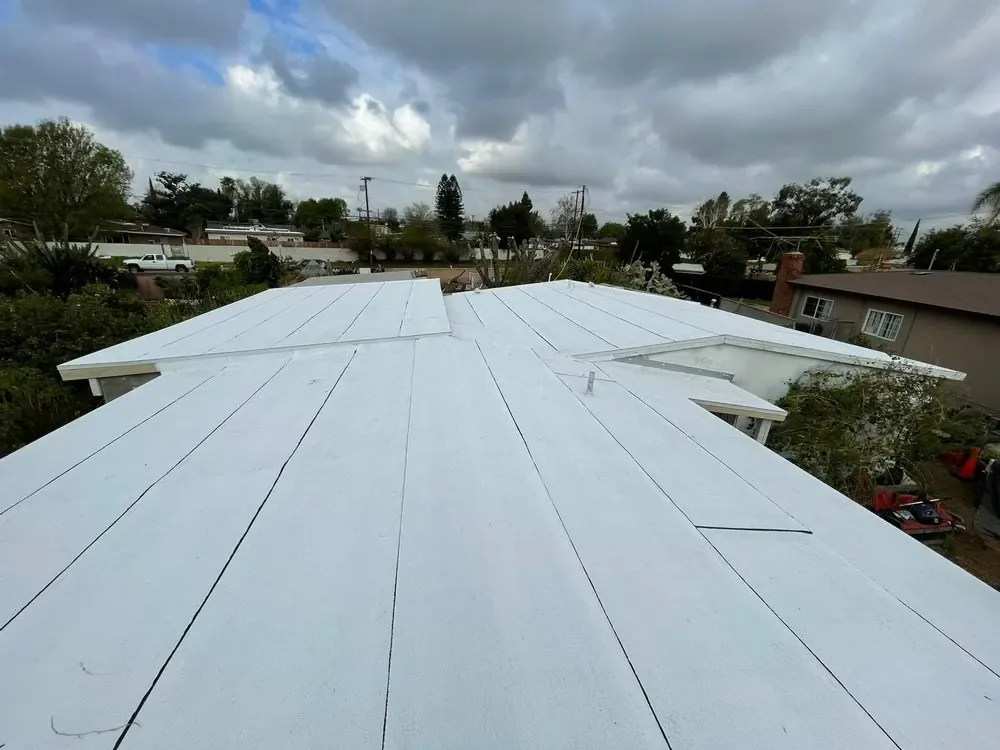
A repair holds when it closes the path that failed, not merely the spot where water became visible. We begin at the roof detail nearest the report, then trace seams, penetrations, drains, and transitions that could have carried water. Menifee's inland, naturally dry climate and increasing temperature risks make repeated movement at membrane laps and exposed flashing worth watching, but we document only what the roof shows. The facility director receives a repair boundary, a photo record, and any condition that remains outside the approved work. That gives operations a useful next check instead of a patch with no history.
Trace the first weak point
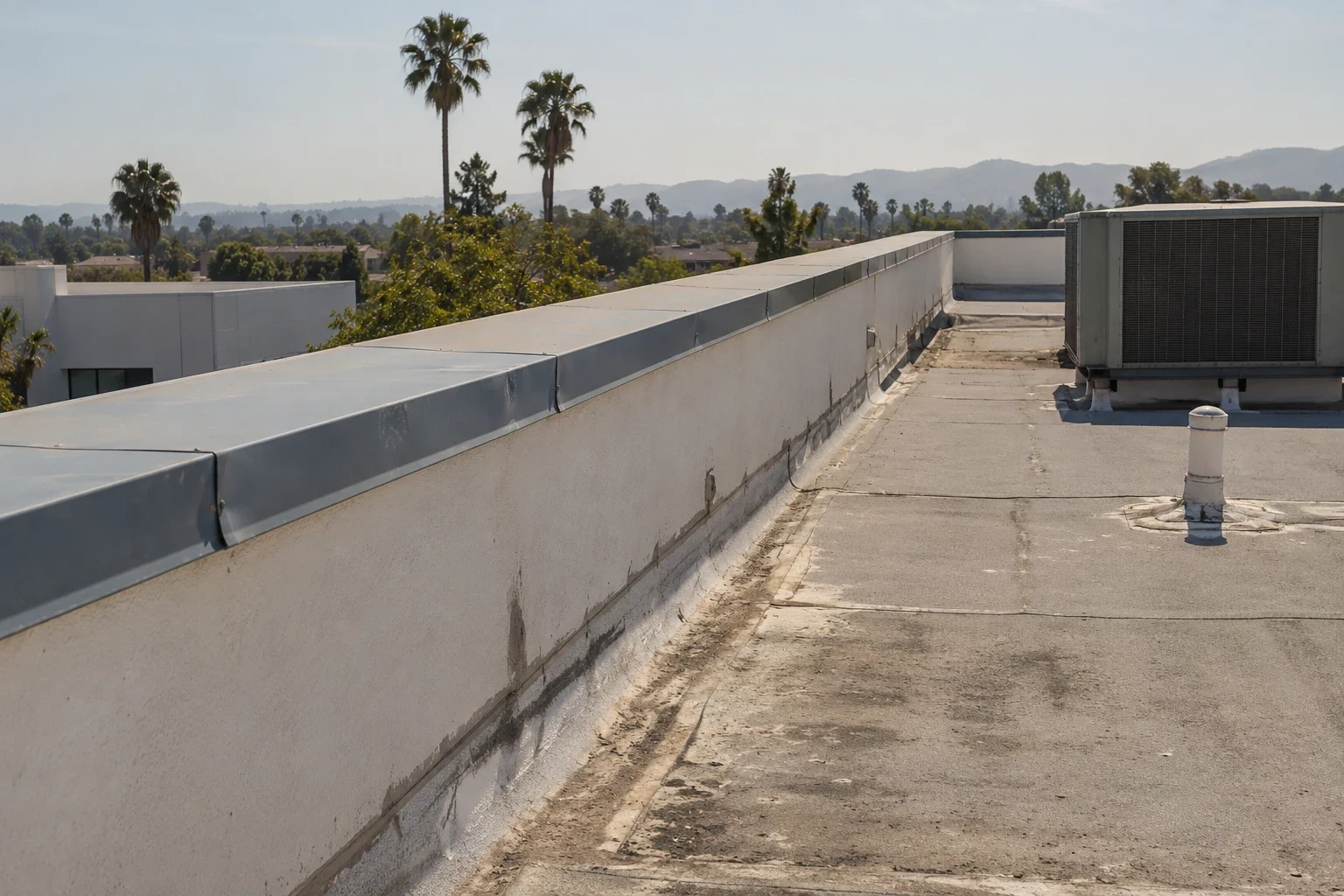
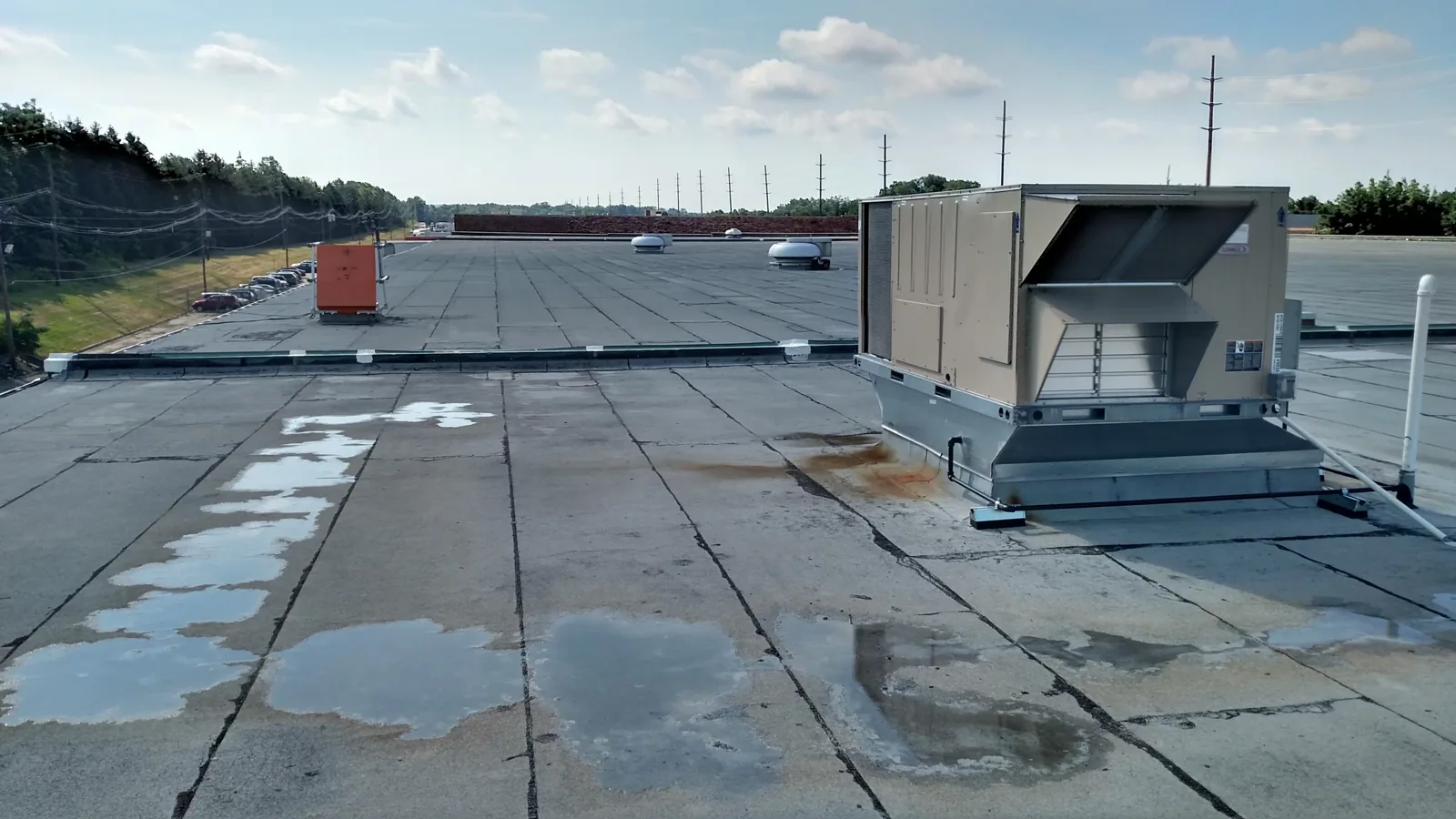
A ceiling mark can sit below a drain path, a curb, or a seam several feet away. We compare the stain location with roof observations and note how water might travel through insulation or along the deck. At a membrane roof, we check lap edges, penetrations, patches, and transitions to metal. At a metal assembly, fasteners, panel joints, and closure details can change the route. A seam-failure review helps distinguish an open lap from a different source. The report separates what is visible from any testing that could change the repair limit.
Name the assembly before selecting material
Repair materials need to match the existing roof system and its surface condition. We identify whether the area is TPO, PVC, EPDM, modified bitumen, built-up roofing, metal, foam, or coating before preparing a patch. A repair that bonds to one membrane may not suit another. We also check if a prior coating or incompatible patch affects adhesion. Where the building has TPO, a TPO system review helps keep the patch compatible with the installed membrane. Where a penetration or wall transition is involved, the flashing detail may matter more than the field membrane. A flashing repair review follows that connection, while an inspection can document related areas before work begins. A repair scope also records the substrate preparation and edge treatment expected for the selected product. If the existing surface is damp, dusty, or coated, those conditions can alter adhesion and cure time. We schedule the work when the detail can be prepared properly and explain if weather exposure changes the sequence. A material name alone does not show whether the patch is right; the roof surface and transition have to support it.
Keep a patch inside sound material
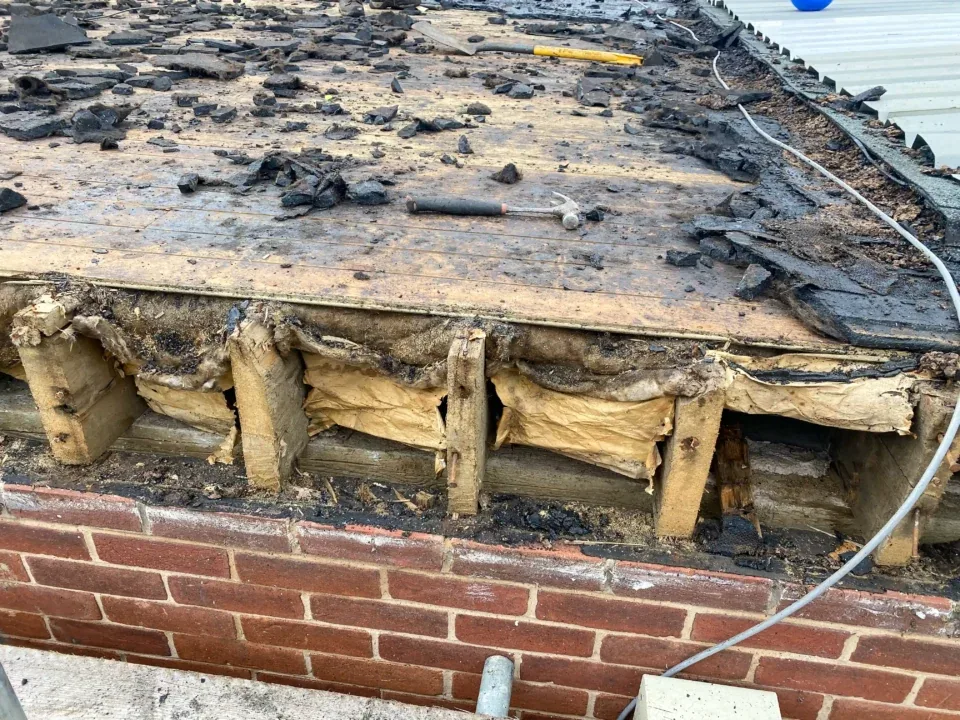
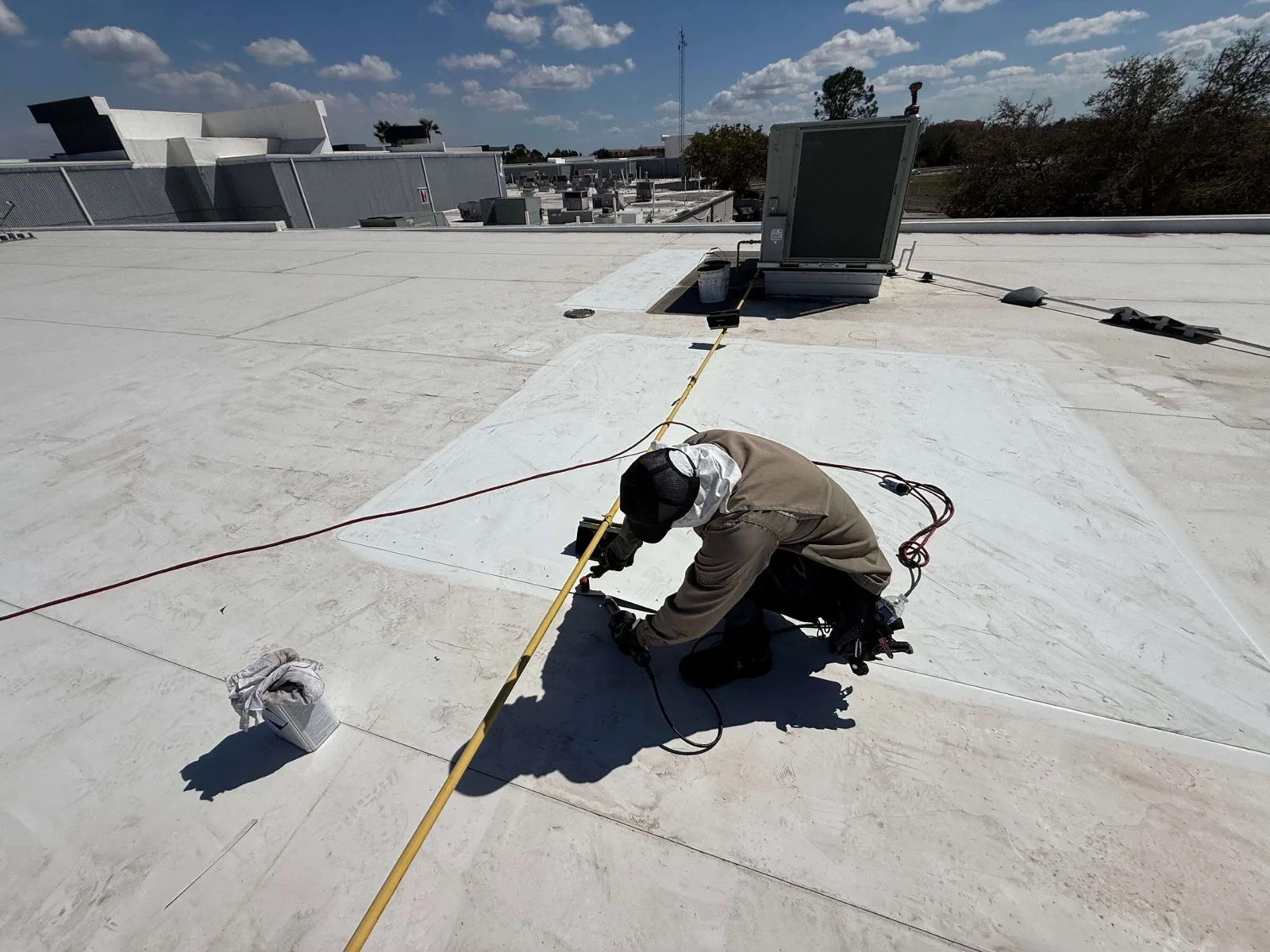
A contained repair needs a clean boundary and enough sound material around it to hold the new detail. We remove loose or failed material only within the approved limit, prepare the surface, install a compatible patch, and inspect its edges. If wet insulation extends beyond the visible split or more than one zone shows repeat failure, another patch may hide the pattern. We mark what is confirmed and identify a test only when its result could change the scope. A commercial leak repair addresses active entry; a separate maintenance visit can track the next condition rather than widening today's repair without evidence.
Plan for Menifee’s building context
Menifee’s City strategy identifies a planned east-west connection at Garbani Road and I-215 to improve access among neighborhoods, commercial areas, and future development sites. Project timing remains subject to City updates. Before repair, we verify the current approach and roof entrance with the property contact rather than relying on a map. A different access window may be needed when loading or tenants use the same path.
Menifee also describes Haun Corridor Parkway as a planned connection within the Community Core Economic Development Corridor. That planning context helps orient the market, but it does not identify a roof assembly or service record. We confirm the building’s actual use and then document the failed seam, flashing, or drain that defines the repair. Conditions outside the approved boundary remain separate until the owner authorizes more work.
Protect operations during the repair
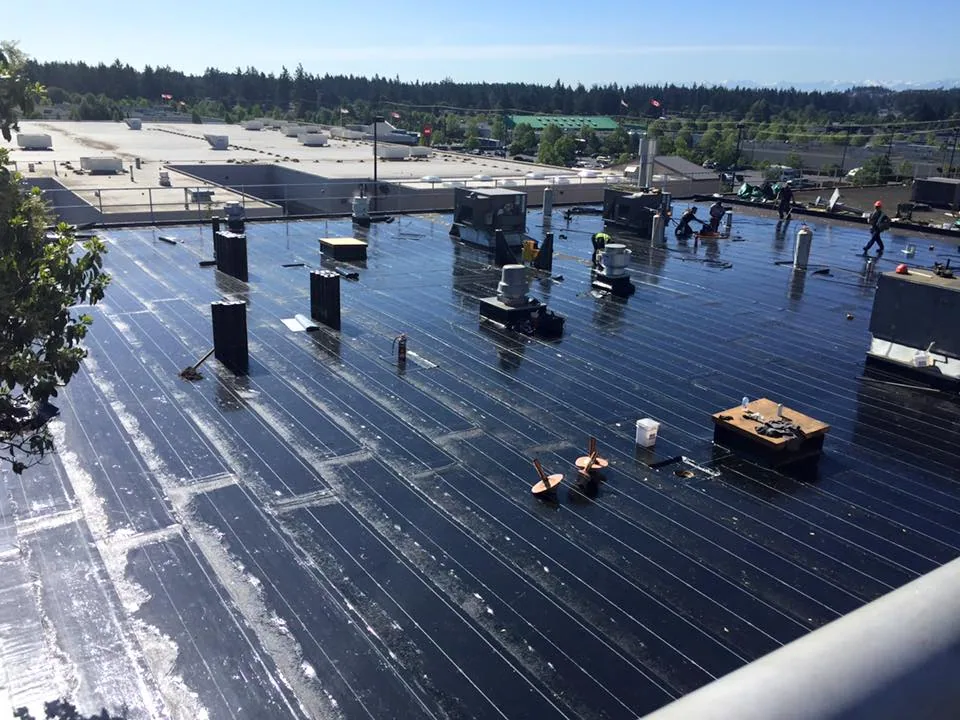
Before material reaches the roof, we confirm access, loading, lift placement, interior protection, and any areas that must stay open. A short repair can still affect a tenant entrance, receiving bay, or equipment zone, so the work window and notice plan belong in the scope. If a weather event has left an opening, temporary protection can control exposure while the permanent detail is prepared. We identify what the temporary measure will address and when the final repair can occur. The crew records the completed area and tells the facility contact which roof zone to watch after the next rain or service visit. Facility staff can identify sensitive rooms, active work areas, or equipment that needs a clear path before we stage. We include those constraints in the arrival plan and tell the contact which activities may create noise or temporary foot traffic. If a repair needs more access than expected, we stop at the agreed boundary and request direction before opening another area. That keeps the repair scope and the operating plan aligned.
Know when repair is not enough
Repeated patches, separated seams across the field, moisture at multiple points, or a deck that cannot hold the detail may move the decision beyond a local repair. We compare repair, restoration, recovery, and replacement only after the assembly and drainage are understood. Cost and timing reflect access, roof height, system type, equipment, wet insulation, and operating hours. Menifee’s adopted code sheet lists the 2025 California Building Code and project-specific wind criteria; the actual risk category and design requirements must be confirmed for a capital scope. A code reference does not tell us whether this repair is adequate. We explain the observed limit and the next evidence needed before a larger recommendation.
Record what changed on the roof
The closeout names the roof zone, condition found, repair boundary, material installed, and any remaining question. Photos taken from repeatable viewpoints help a maintenance contact compare the detail later. If another facility in Menifee’s Community Core Economic Development Corridor needs review, we start with that property’s own surface and operating plan. For ongoing checks, preventive roof maintenance can track drains, seams, and equipment transitions on a schedule. Arrange a visit around the access window, and we will leave a written finding your team can use. A good Diligence Notes preserves both the initial symptom and the correction. We record what the ceiling area looked like before work, where the roof detail was found, what material was installed, and whether water was observed below the assembly. That timeline helps the facility director compare a future drip with the earlier condition instead of starting a new review from memory. When a second visit is needed, the report names its purpose and the condition that should trigger it.
Commercial Roofing Questions
Why does a ceiling stain appear away from the roof opening?
Water can travel along insulation, deck flutes, or seams before it reaches the interior. We compare the stain with roof details and record the likely route separately from anything still unconfirmed.
Can a patch be made during the first visit?
When the failed detail is visible, conditions allow safe access, and compatible material is available, we can define a focused repair. A concealed condition may require a second step.
What if the roof has an older coating?
We identify the surface and check adhesion before selecting a repair. A coating or prior patch can change what material will bond.
How do we know a repair boundary is sound?
The boundary should reach material that remains stable and can accept the selected detail. We inspect adjacent seams and document any moisture that extends farther.
When should we compare repair with replacement?
Recurring failures in separate zones, broad moisture, or an unstable base can support a larger comparison. We explain the finding that changes the choice.
Related Roofing Work
Arrange a roof repair inspection
Request a Roof Assessment
Share the leak location and operating window with our team. We will trace the roof condition, define the repair boundary, and document any follow-up that could change the scope.
Service area
Menifee, Perris, Murrieta, Temecula, Hemet, Lake Elsinore and nearby Inland Empire communities
Quick contact
[email protected]
555-555-5555