Manufacturing Plant Roofing in Menifee
Home / Property Types We Roof / Manufacturing Plant Roofing in Menifee
A drip near a production line can be a roof defect, a condensate route, or a pipe penetration that changed after equipment work. We trace the water path before choosing a repair and coordinate with the plant contact before opening a roof section. The project plan identifies sensitive processes, shift changes, exhaust equipment, and any space that cannot accept dust, odor, or an unplanned shutdown.
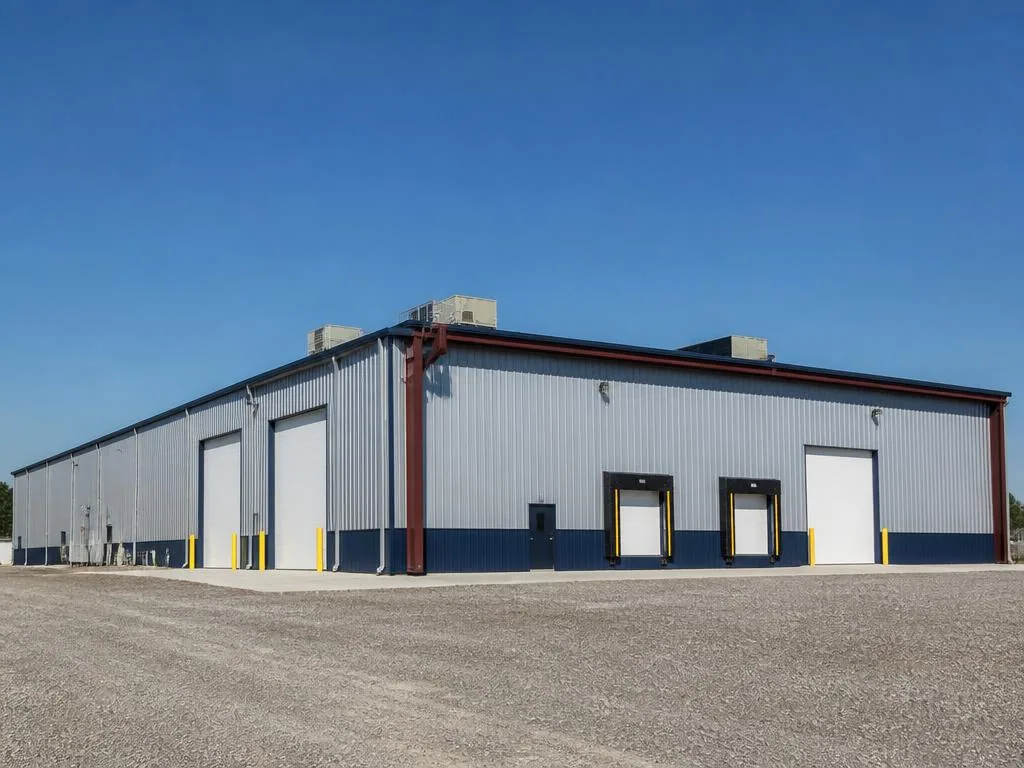
Manufacturing roof scopes require the same attention to seams and drainage as any low-slope roof, with added coordination where equipment or process lines cross the deck. We map rooftop assets, verify what remains in service, and separate immediate water control from long-term replacement needs. A written plan identifies the material assembly, each work zone, and the conditions that could expand the repair boundary.
Separate Roof Leaks From Process Moisture
A stain below a production area does not prove that rain entered above it. Condensate lines, washdown, steam, and HVAC drainage may create a similar mark. We compare timing, weather, equipment operation, and roof observations with the plant maintenance log. If the water source remains uncertain, a controlled test or limited opening can distinguish a roof path from an interior system issue.
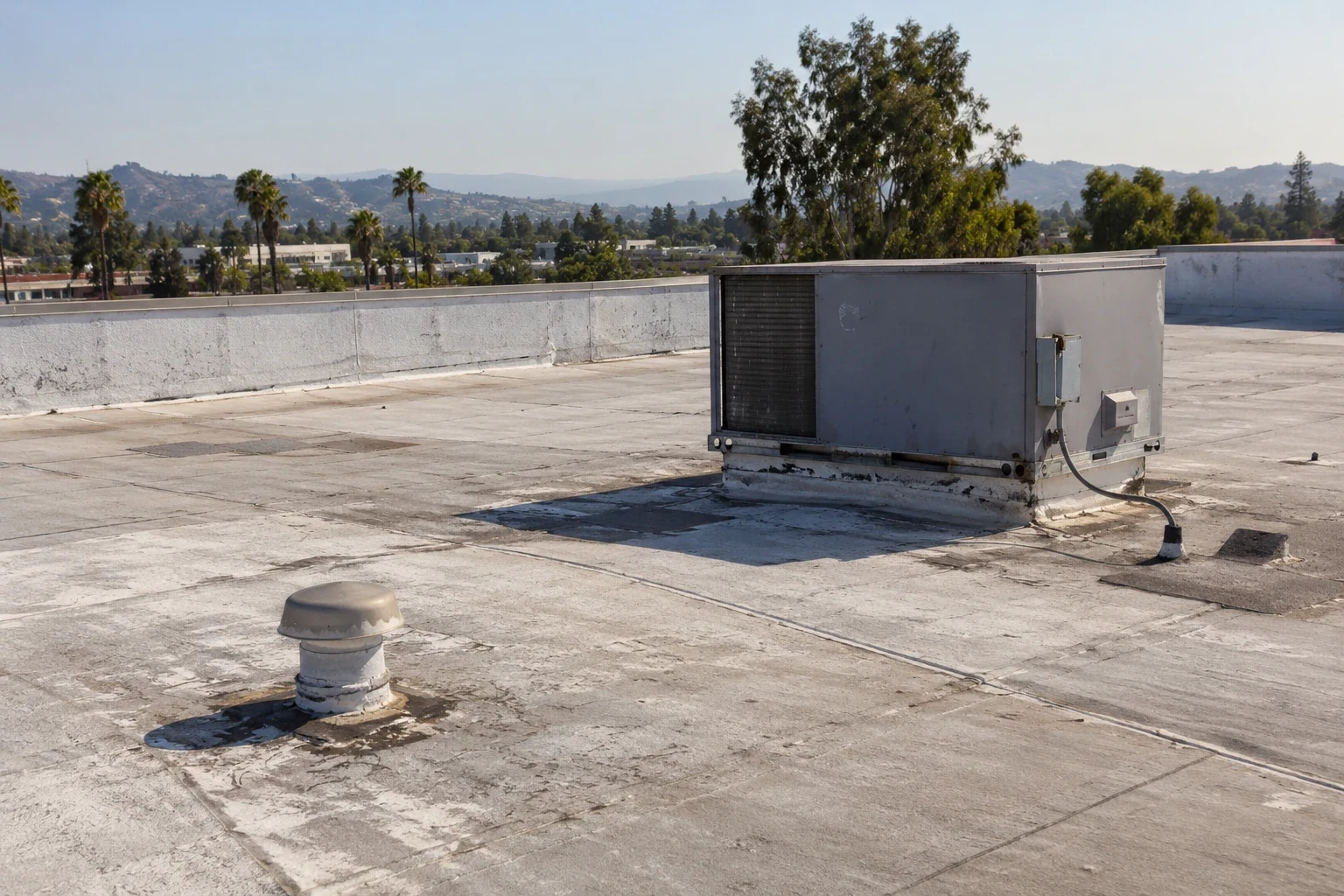
At the roof, we look at seams, flashings, drains, and the base of any pipe or exhaust curb. A wet insulation area may extend beyond the visible leak. We photograph the route and identify how a repair ties to stable material. If a roof detail is the source, repair work at the confirmed boundary should not disturb process equipment or leave an unprotected transition at shift end.
Coordinate Roof Work With Equipment
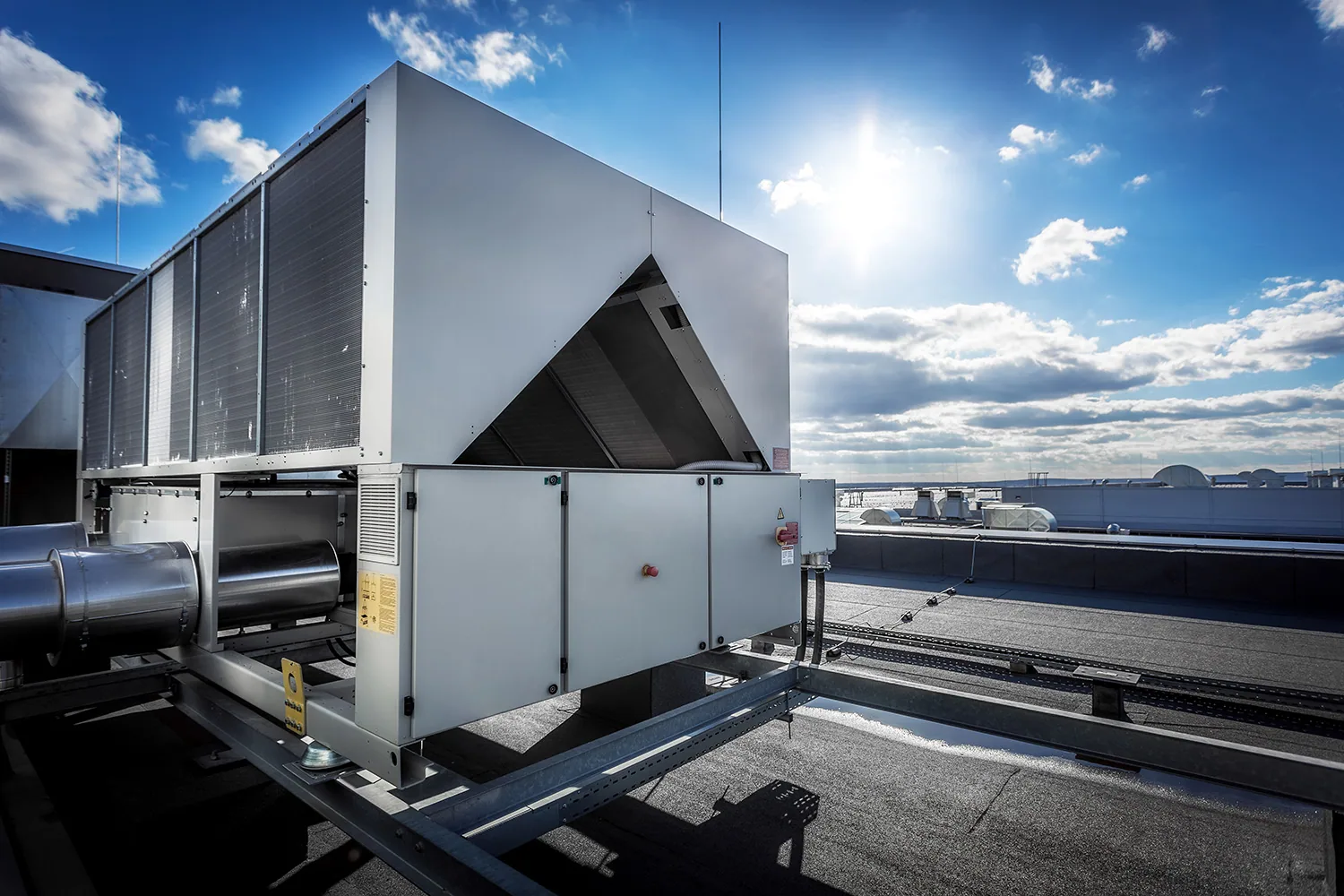
Manufacturing roofs may carry exhaust fans, make-up air equipment, process lines, duct supports, conduit, and service walk paths. We identify which units can be isolated and which must remain online, then set access limits with maintenance staff. If a unit has changed since the curb was installed, its footprint and flashing connection need to be checked before new membrane is placed.
A rooftop equipment schedule also informs safe material staging. We avoid placing rolls or debris where they obstruct a fan discharge, drain, or service route. For a new or relocated unit, curb and support flashing needs a defined connection to the roof assembly. A drain review keeps debris and repair material from affecting the flow path.
Use Menifee Industry Plans Precisely
Menifee zoning distinguishes Heavy Industrial/Manufacturing and Business Park/Light Industrial areas from office and retail uses. The distinction supports different building-use planning, not a count of active plants. City economic materials identify manufacturing among emerging sectors associated with industrial development and note that several industrial buildings were under construction or recently entitled at the time of the 2026 strategy. A specific facility still needs an address-level review.
City planning describes the Southern Gateway Economic Development Corridor as a business-park setting that can accommodate light industrial, office, and commercial uses. The Northern Gateway Economic Development Corridor has a stronger business-park and industrial orientation than Scott Road. These are planning contexts, not claims about a particular parcel or roof. For a plant in Southern Gateway or Northern Gateway, we confirm real access, production hours, and roof condition with the site team.
Inspect the Assembly Around Process Loads
Vibration, heat, grease, or chemical discharge can affect the condition of a local roof detail, but the inspection must tie each effect to an observed material change. We check the membrane and flashing near exhaust outlets, pipe supports, and equipment rails, then compare the surface with the actual process. We do not assume a coating or membrane is chemically suitable without confirming the selected product and exposure.
A test cut or pull check should be placed where it can answer a question about adhesion, moisture, or deck condition. The report records the sample point and closes the opening with a repair that restores the assembly. For a metal roof, panel attachment and movement also matter; a metal retrofit option requires structural review rather than a field-only decision.
Compare Focused Repair With Replacement
A localized seam or curb failure may be repaired while production continues in other bays. Widespread wet insulation, repeated failure across multiple zones, or uncertain attachment can support a larger replacement scope. We separate confirmed conditions from assumptions and show what a test opening may reveal. The owner can then compare a repair that restores a detail with a replacement that addresses the full assembly.
A replacement plan should account for equipment curbs, interior protection, and tie-ins that will stay exposed between shifts. A warehouse roof sequence may share lift and staging needs, but a plant can have additional process constraints. The schedule follows the site contact’s approved work window.
Set a Protected Stop Point for Every Shift
We identify where work begins, what must be isolated, and how the assembly is protected if the shift ends before the full zone is complete. For hot work, the scope includes fire-watch procedures and a review of nearby process hazards. For adhesive or coating application, the plan accounts for ventilation, curing, and protection of intakes. The plant manager gets an update before any control or route changes.
The daily log lists area completed, material installed, open terminations, and equipment routes that remain restricted. If production needs the roof zone sooner, the supervisor can see which details remain incomplete and what must be protected first. That reduces the chance of a worker entering a zone with an unfinished edge or a process unit returning before the work is released.
Use Roof Evidence for Capital Decisions
Manufacturing budgets compete with equipment and process investments, so the roof report should state what failed and why the proposed scope addresses it. We note the condition of each field, drain, edge, and curb. Cost drivers include access, removal depth, the number of equipment details, disposal, and the hours available for protected work. Those items make a phased scope easier to compare.
The City describes Menifee corridors along Interstate 215 as planned areas for commercial, office, and mixed-use activity; this is not evidence of a specific plant location or access route. A condition report and capital plan can sequence repairs by documented risk and plant downtime. A maintenance schedule then returns to the same details.
At closeout, we identify the repaired areas, test openings, retained layers, and every item that remains for follow-up. The plant team should know when a fan or service path can return to normal access and whether any coating or adhesive still needs cure time. Photos are organized by roof zone so the maintenance lead can compare later findings with the original route.
If the same ceiling mark returns, the record shows whether the prior repair, a nearby curb, or a different water source deserves the next test. A TPO assembly or other system should be named only when the field condition confirms it. We tie the inspection to the asset record, not a generic assumption about all manufacturing roofs.
For a building with controlled product temperatures, compare the moisture controls in cold-storage roof moisture and temperature controls and the handback requirements in distribution-center roof access and staging. A Southern Gateway planning context does not substitute for a site review.
Commercial Roofing Questions
How do you protect production during a roof repair?
We coordinate the zone, interior protection, equipment isolation, and shift handback with the plant contact. The work sequence includes a protected stop point if production or weather changes.
Could a roof leak be caused by process equipment?
Yes, water may come from condensate or a process line. We compare operating records, interior clues, and roof details before assigning the source.
Can you work around an exhaust unit that must stay online?
We identify its access and discharge requirements, then define a protected work area and a compatible flashing sequence. The unit is not moved or shut down without site approval.
What makes a replacement different from a repair?
A repair addresses a verified local defect. Replacement removes or covers a broader assembly and needs a plan for equipment details, drainage, staging, and the areas that stay open between shifts.
Related Roofing Work
Arrange a roof condition review
Request a Roof Assessment
Set an inspection around building access and operating hours. We will map the roof condition, explain repair boundaries, and document the options that fit the assembly.
Service area
Menifee, Perris, Murrieta, Temecula, Hemet, Lake Elsinore and nearby Inland Empire communities
Quick contact
[email protected]
555-555-5555