Commercial Roof Coating Restoration in Menifee, CA
Home / Commercial Roofing Services / Commercial Roof Coating Restoration in Menifee, CA
A blistered coating does not make wet insulation dry, and a fresh layer cannot reconnect a loose edge by covering it. In Menifee, where exposed roofs face sustained heat, the first decision is whether the existing assembly is stable enough to receive another layer. We inspect the membrane, test adhesion, map moisture, and check the details that will remain beneath the finish. If those conditions support restoration, the scope can define cleaning, repairs, reinforcement, application, and verification. If not, a coating proposal would hide the problem instead of solving it. A careful roof inspection separates a sound field from areas that need opening, drying, or replacement before any coating work is priced.
Test the Existing Roof First
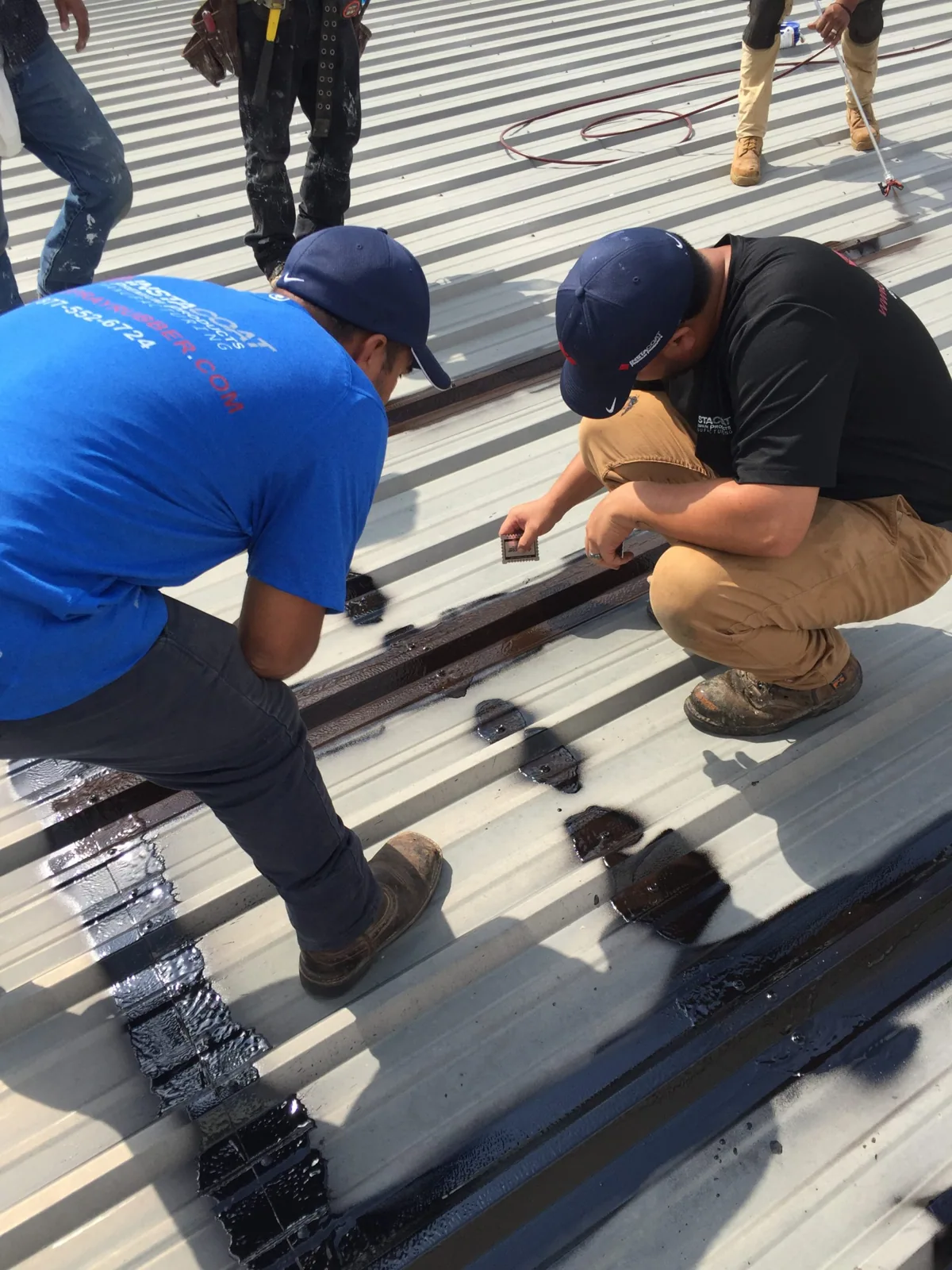
Before a restoration scope is selected, we identify the current roof system and how it is attached. A membrane may look continuous from the walkway while seams are separating near a curb or moisture is trapped below the surface. Adhesion tests show whether a coating will bond to the prepared substrate; targeted cuts or other moisture checks help reveal conditions that a surface view cannot. We record where each test was taken, what layer it reached, and how the result affects the work area. If there is extensive wet insulation, active corrosion, or loose material that cannot be stabilized, we compare the repair boundary with a recover or tear-off option. Coating belongs in the estimate only when the roof conditions and system requirements support it.
Prepare More Than the Open Field
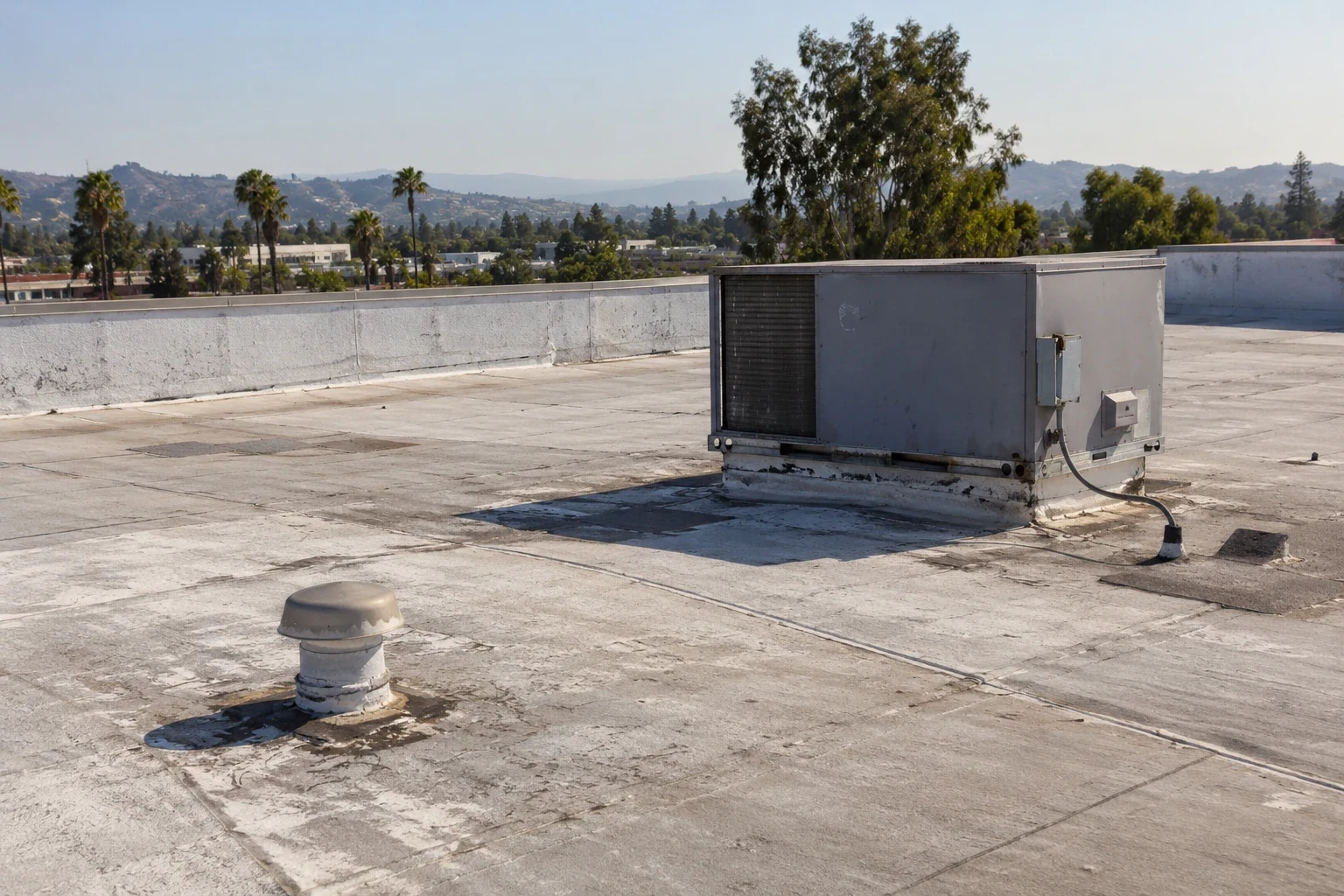
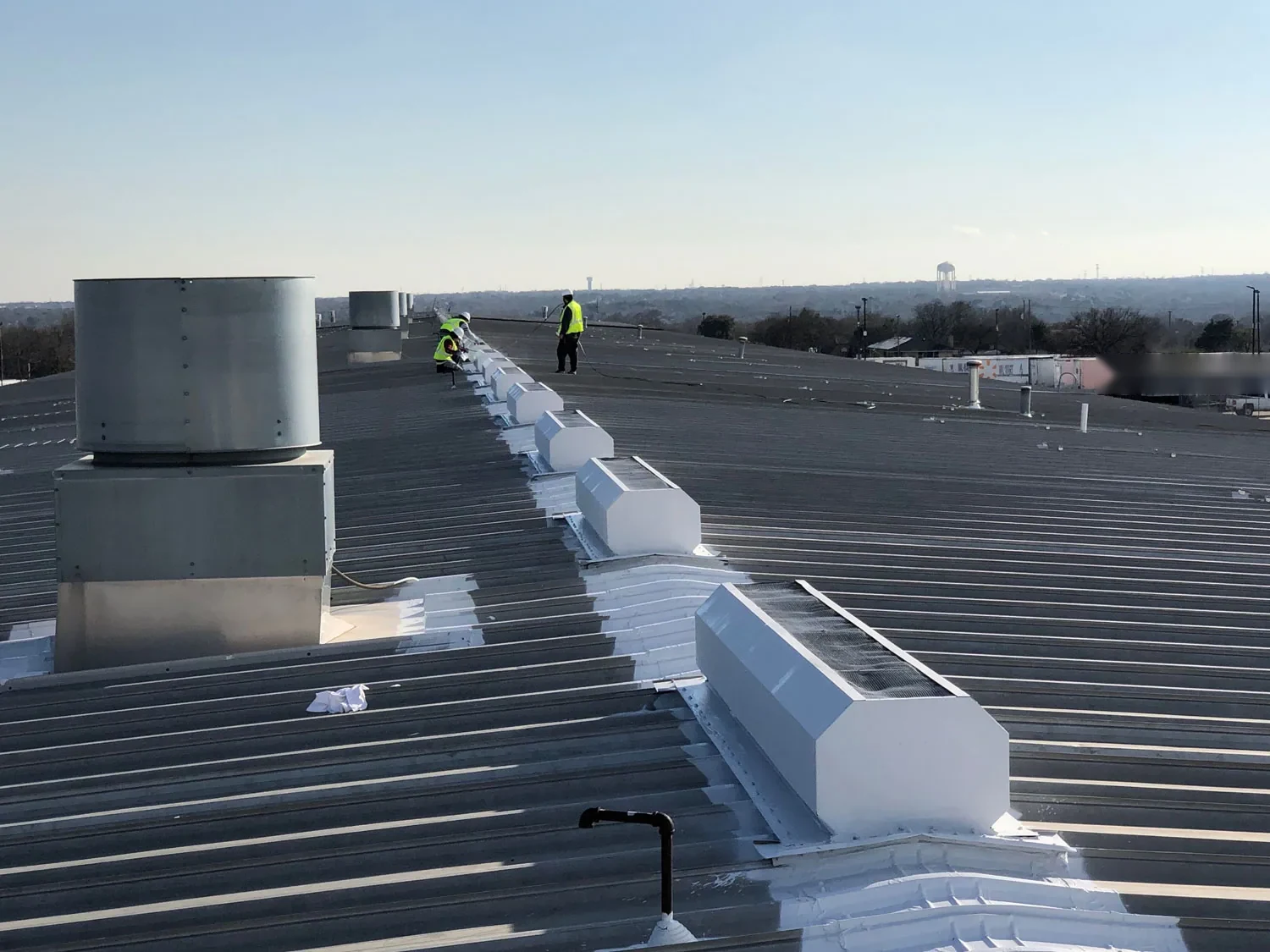
Surface preparation sets the bond and the detail work that follows. Loose dirt, chalk, biological growth, and incompatible residues must be removed by a method suited to the substrate. The roof must reach the required dryness before product is applied. Seams, penetrations, wall transitions, drains, and metal edges need their own inspection because a smooth field cannot compensate for an open flashing or unstable termination. We define which areas will be cleaned, repaired, reinforced, or excluded, then protect drains and sensitive equipment from debris or overspray. The sequence should also allow the substrate to dry and the repair materials to cure. If that window is compressed, adhesion and finish quality become harder to verify.
Match the Coating to the Assembly
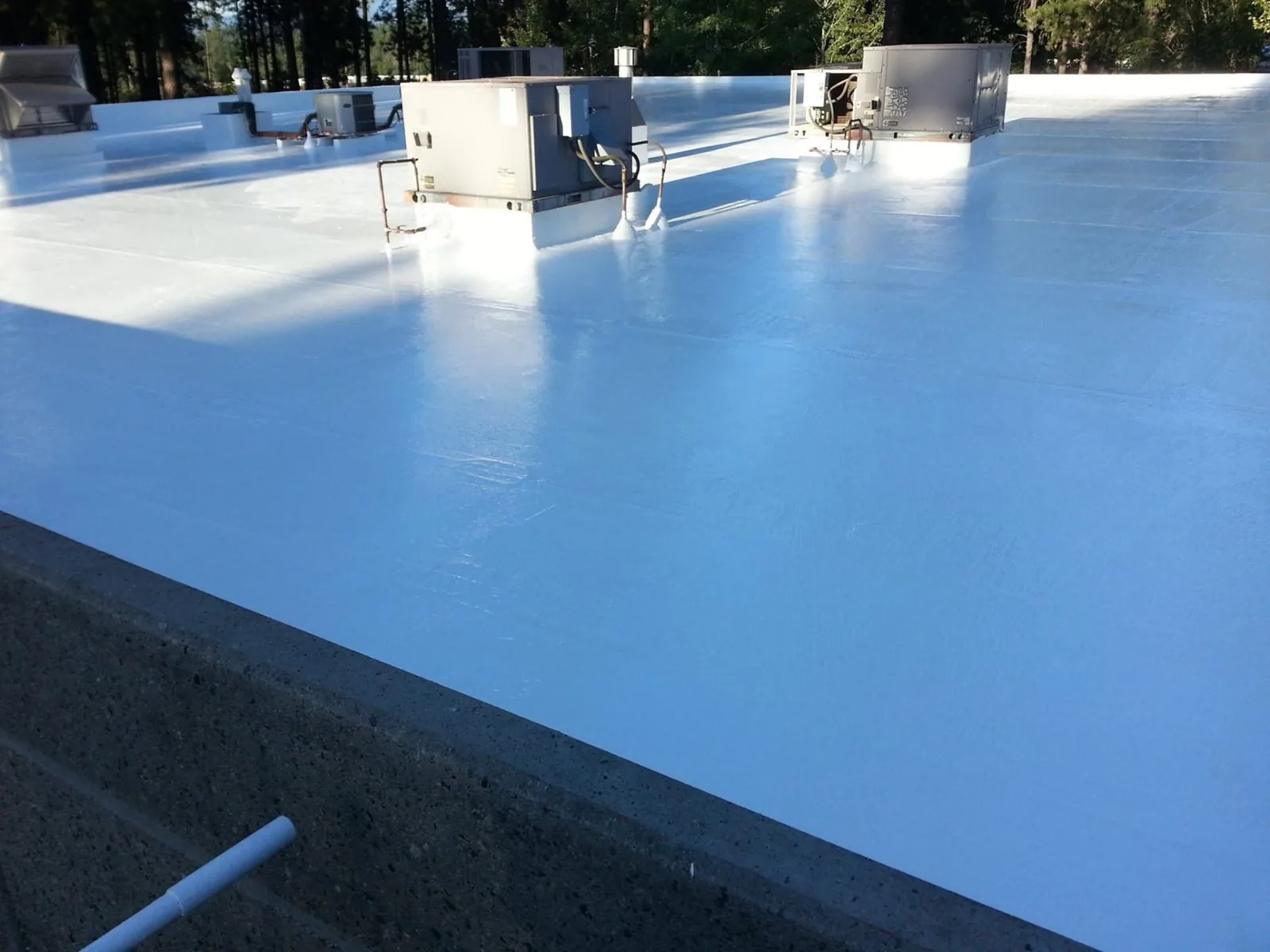
Silicone, acrylic, and other coating chemistries do not behave the same way on every existing membrane. We review compatibility, ponding exposure, substrate condition, expected movement, and the manufacturer's published application requirements before settling on a system. A silicone roof coating and an acrylic coating assembly each need suitable preparation and detail treatment; neither is a blanket answer for every low-slope roof. The scope should state the selected materials, reinforcement at seams or transitions, and target application thickness. It should also identify which areas will not receive coating. That record lets a manager compare proposals by preparation and performance requirements rather than by a single label on the product pail.
Close the Water Paths Before Application
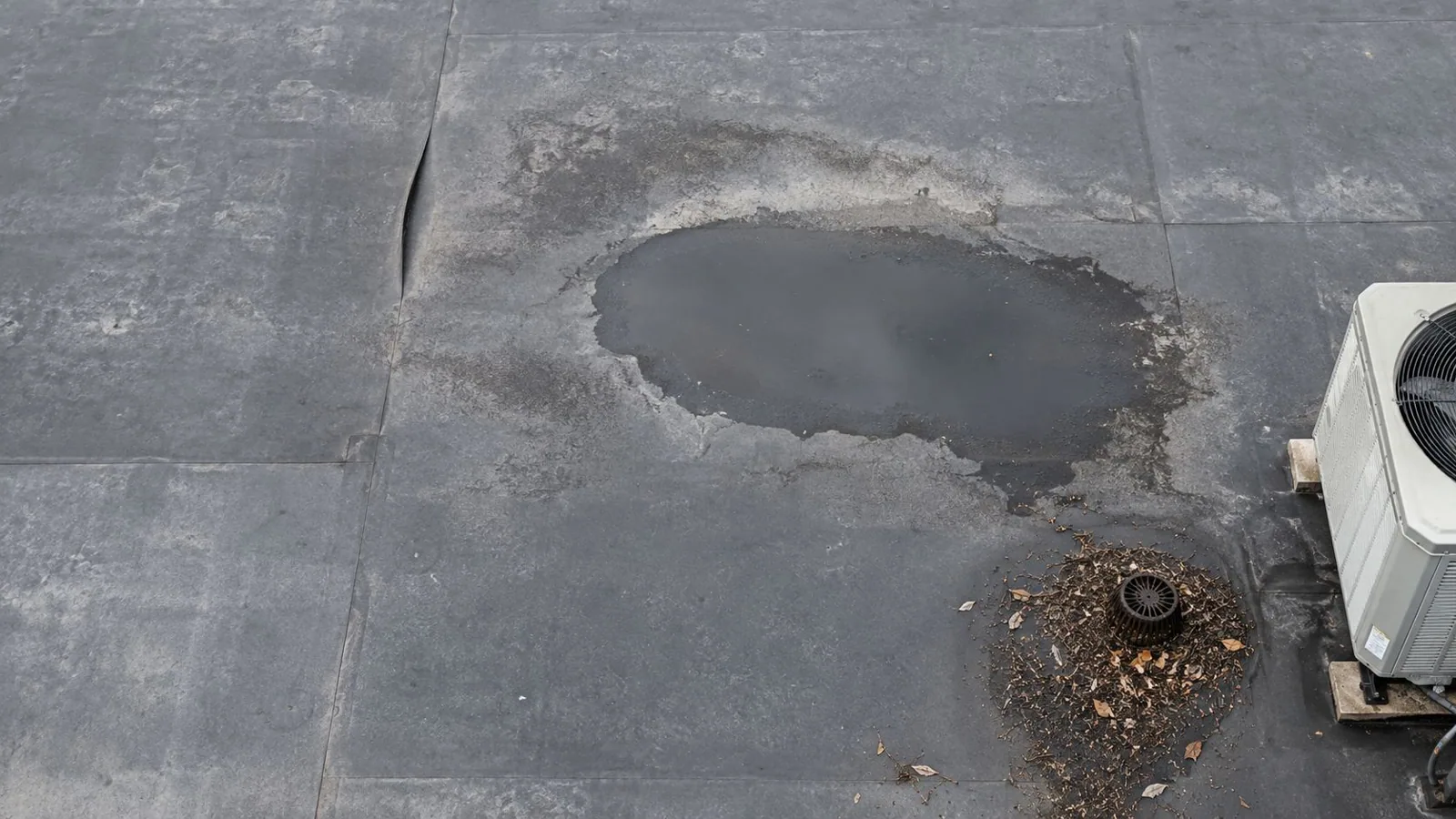
A roof coating is not a substitute for repairing a split seam, open curb flashing, corroded metal, or failed drain connection. We mark those defects before the coating crew mobilizes and assign each one a repair detail. Where the substrate is sound, localized repairs and reinforcement can prepare an area for a continuous finish. Where the repair exposes wet material or a deteriorated deck, the work must pause for a broader decision. We also inspect termination bars, counterflashing, coping joints, and equipment supports, because those transitions move differently from the main roof field. A separate repair scope should price those corrections clearly, while a roof recover assessment can test whether an added assembly is a better fit.
Plan for Menifee's Heat
Menifee's hotter days make application timing and surface condition part of the restoration plan. We check the roof temperature, wind, moisture, and forecast window against the selected system's instructions, then schedule a section size that can be completed and protected within those conditions. The city-designated Northern Gateway Economic Development Corridor plans more industrial than office use, while the Southern Gateway Economic Development Corridor combines business-park, office, light-industrial, and commercial uses with rural character. Those area-scale plans do not identify any roof's material or condition. The field survey does. We record the actual assembly and exposure, then tie the coating choice to its surface preparation, drainage, and details.
Verify the Work as It Progresses
Application quality is easier to manage when the roof is divided into marked work areas. The crew can document substrate preparation, repairs, reinforcement, and coating passes before the next layer covers them. Wet-film readings, consumption records, or other checks required by the selected system help show whether the specified build is being reached. Edges, penetrations, and transitions need close attention because material can thin or pull away where the surface changes plane. We keep an application log with locations, conditions, and any area held for correction. If a test or inspection identifies a thin spot, the record should show the repair and retest rather than leave a manager to infer coverage from a completed surface. At each transition, a coating edge may meet parapet metal or a change in substrate. We mark those boundaries on the work drawing and inspect them after the required cure period. A test patch can show whether the selected material bonds and develops a consistent finish on that exact surface. If the finish bridges a crack that remains active or skips an edge, visible coverage can mask a defect without restoring a reliable tie-in. Corrective work belongs in the closeout record.
Compare Restoration with Replacement
Restoration timing depends on access, cleaning, dry time, repair volume, weather, and the number of details that need reinforcement. A roof with isolated defects and a stable substrate can move through preparation and application in smaller zones. Widespread moisture, repeated bond failure, or extensive edge corrosion can change the scope before materials are ordered. We compare the coating option with repair, recover, or replacement using the same roof map and inspection evidence. That comparison should include the remaining assembly, drainage corrections, equipment bases, and future rooftop work that may disturb the finish. A written Southern Gateway roof assessment can organize access and operating constraints for a Menifee property without assuming that its location determines the correct system. A site walk can also confirm whether rooftop work, access staging, or tenant operations will interrupt preparation or the cure window; those constraints belong in the schedule before the finish materials arrive.
Commercial Roofing Questions
When should a coating proposal be rejected?
If moisture, poor adhesion, unstable material, or unresolved leaks remain across the proposed work area, a coating can cover evidence without correcting the underlying condition. We map the affected sections and compare localized opening, replacement, or another assembly before recommending an application.
Does a roof need to be completely dry before coating?
The substrate and surface must meet the selected system's application requirements. We check moisture and weather conditions before work proceeds, then hold an area if it is not ready. Applying material over damp or contaminated surfaces can compromise the bond and requires correction.
What drives the cost of restoration?
Preparation, access, moisture findings, repair quantity, reinforcement, selected coating chemistry, and required application thickness all affect the scope. We price those items separately where practical so a manager can see whether proposals include comparable surface work and detail treatment.
How can the building keep operating during coating work?
We coordinate access, noise, odors, equipment protection, and work zones with the facility contact. The schedule can sequence roof sections around deliveries or sensitive operations, but the actual restrictions and product requirements determine which areas can proceed at a given time.
Related Roofing Work
Check the Existing Assembly Before Coating
Request a Roof Assessment
Arrange an inspection with the roof system, leak history, and access requirements available. We will map moisture and adhesion findings, then compare restoration with other practical scopes.
Service area
Menifee, Perris, Murrieta, Temecula, Hemet, Lake Elsinore and nearby Inland Empire communities
Quick contact
[email protected]
555-555-5555