
Commercial Roofing for School Districts in Menifee
Home / Industries We Serve / Commercial Roofing for School Districts in Menifee
A school district may manage classrooms, gyms, kitchens, administrative buildings, and support facilities on different calendars. A roof leak above a classroom or library requires more than a patch location: we map the roof detail, the room below, access restrictions, and the next test if the source is uncertain. The district identifies who can authorize the visit and which spaces must remain unavailable to the crew.
Student routes, athletics, meal service, summer programs, and public events can affect the work window. A roof repair at an occupied school needs a campus-specific barrier and handback plan approved by the district, not a generic schedule copied from another building.
Organize the District Roof Inventory
For each school, we record available roof plans, system history, leak reports, prior work orders, and access limits. The map identifies assembly changes, drains, penetrations, and sections that could not be reached. Districtwide labels make reports easier to compare, while building-specific photos and repair boundaries keep one campus from inheriting another's assumptions.
High-priority findings can be grouped by active water, safety exposure, and test requirement. A roof-age table alone does not show moisture or deck condition. A district-wide roof condition program can organize visits and budget updates without treating every school as the same scope.
Facilities staff may also review portfolio records for public properties with the district calendar and campus route checked.
Separate Students From the Work Zone
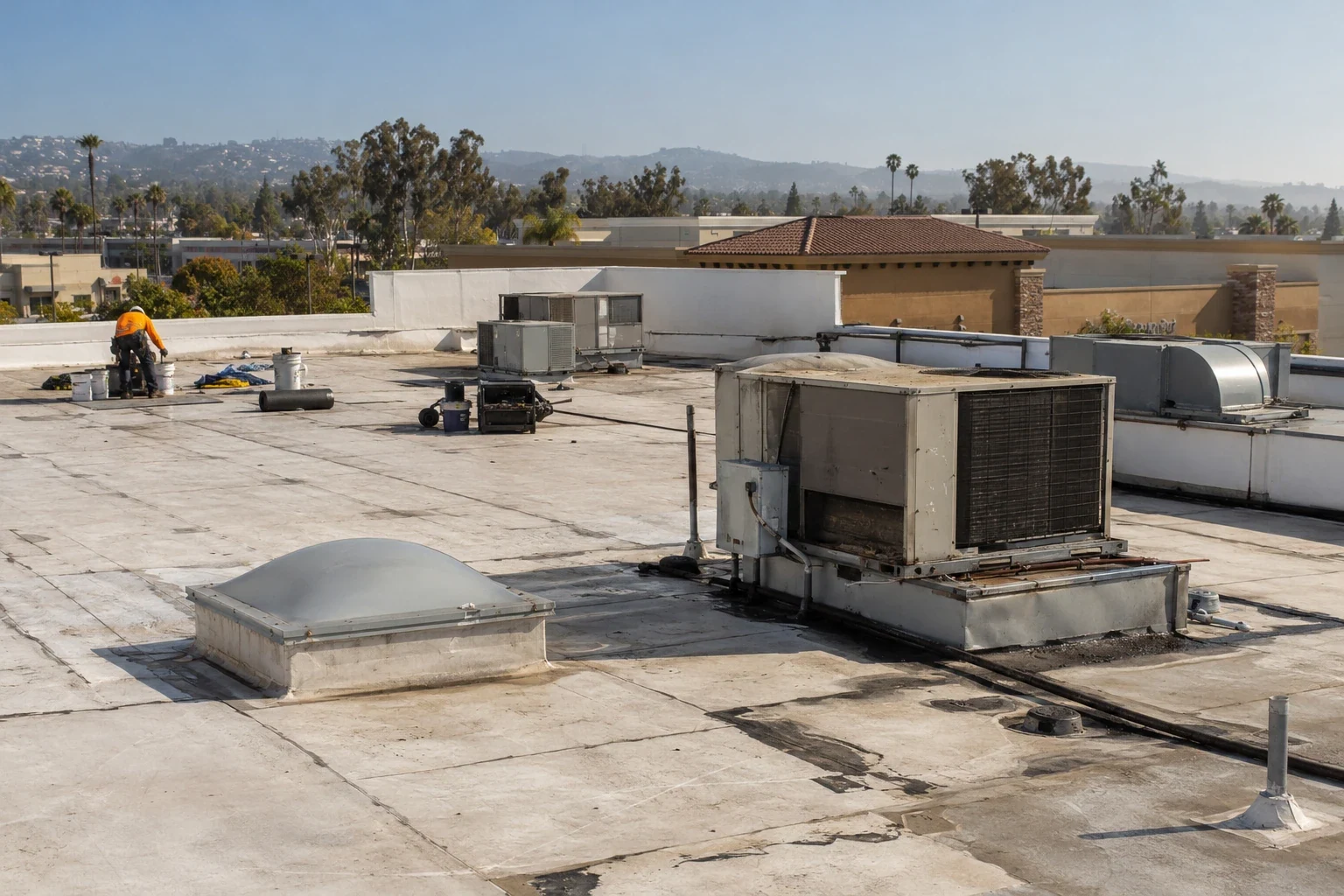
Before mobilization, the facilities contact confirms student entrances, bus paths, accessible routes, fire lanes, playgrounds, and areas used for after-school programs. We mark lift movement, debris handling, and the perimeter below roof work. No active overhead zone should overlap a student route. If the campus schedule or entrance changes, the district updates the plan before the crew returns.
Interior testing requires an approved room, staff contact, protective covering, and a time when students are absent. Work can be phased by wing and stopped at a secured dry-in point. Phased school roof work keeps the daily release and barrier inspection visible to facilities staff.
Protect Classrooms, Kitchens, and Equipment
A test opening above a classroom, kitchen, library, or technology room requires an interior plan. Staff identifies books, computers, food-service equipment, and HVAC controls that could be affected. We mark the opening on the roof plan, note the protective cover, and record when district staff clears the room. The district may choose to move supplies or close a small area while the roof detail is examined.
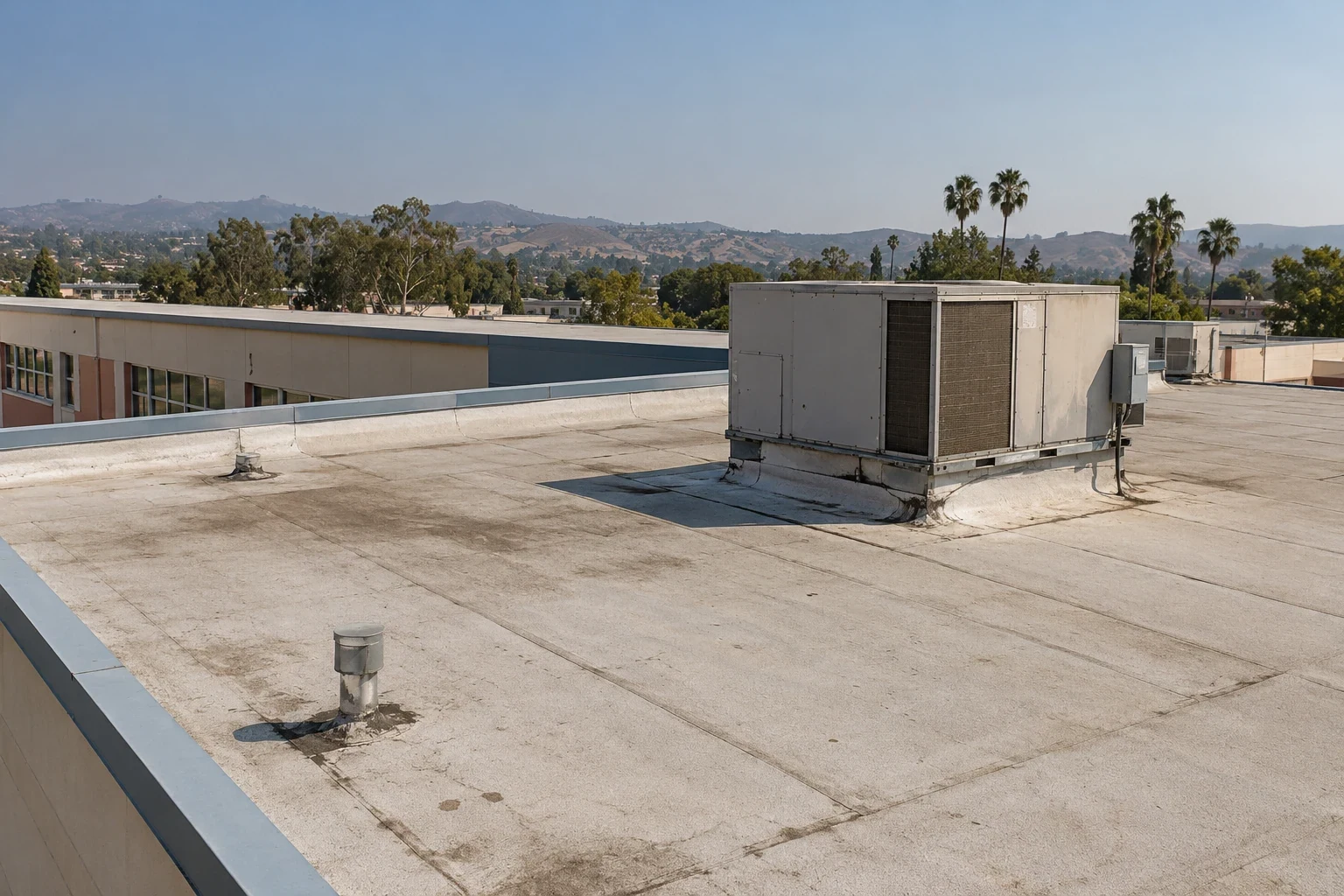
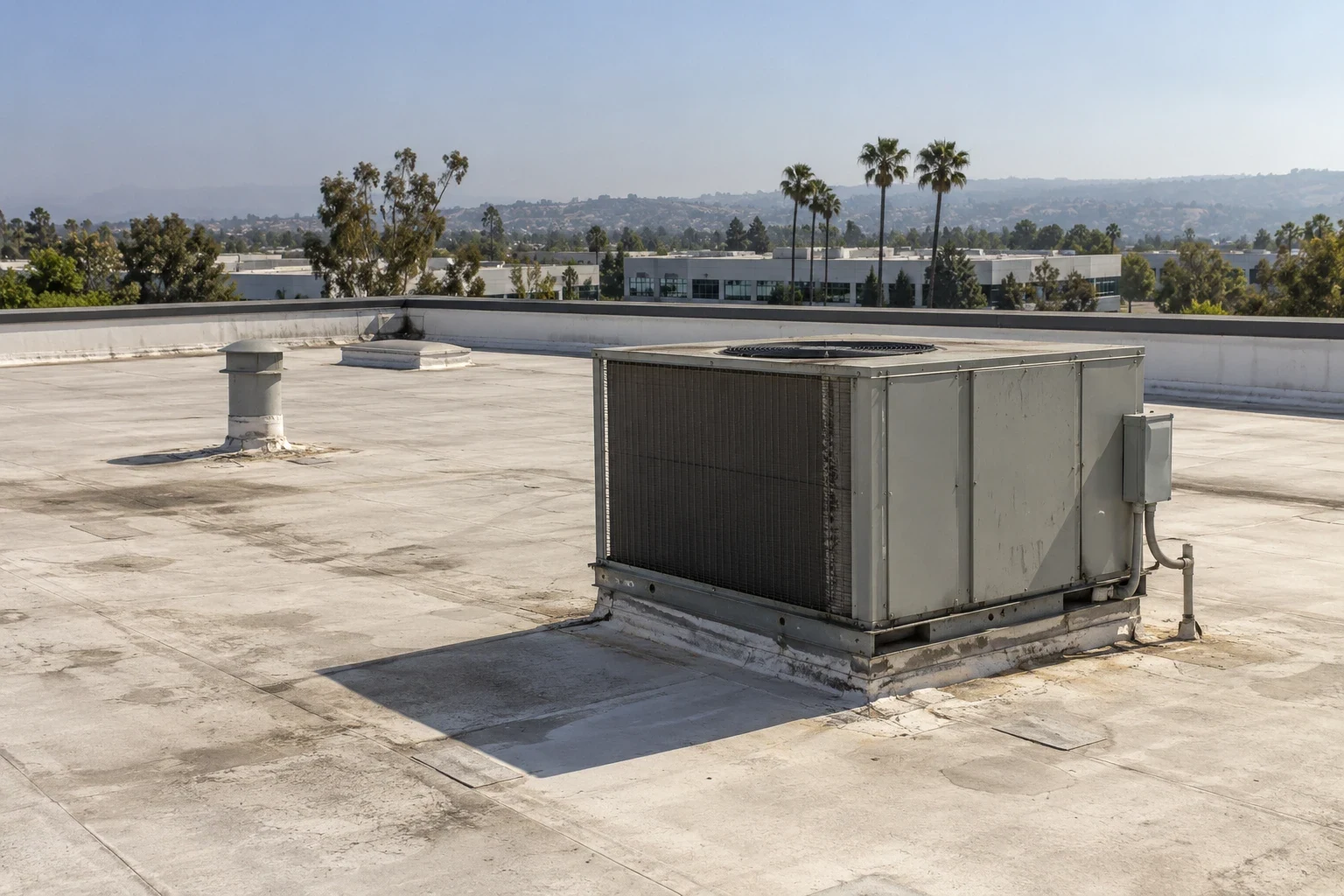
At rooftop units, exhaust, and kitchen vents, we inspect the curb and flashing and coordinate service access with the responsible trade. A drain and overflow review can be planned alongside the work while keeping equipment and plumbing scopes distinct.
Use District and City Context With Care
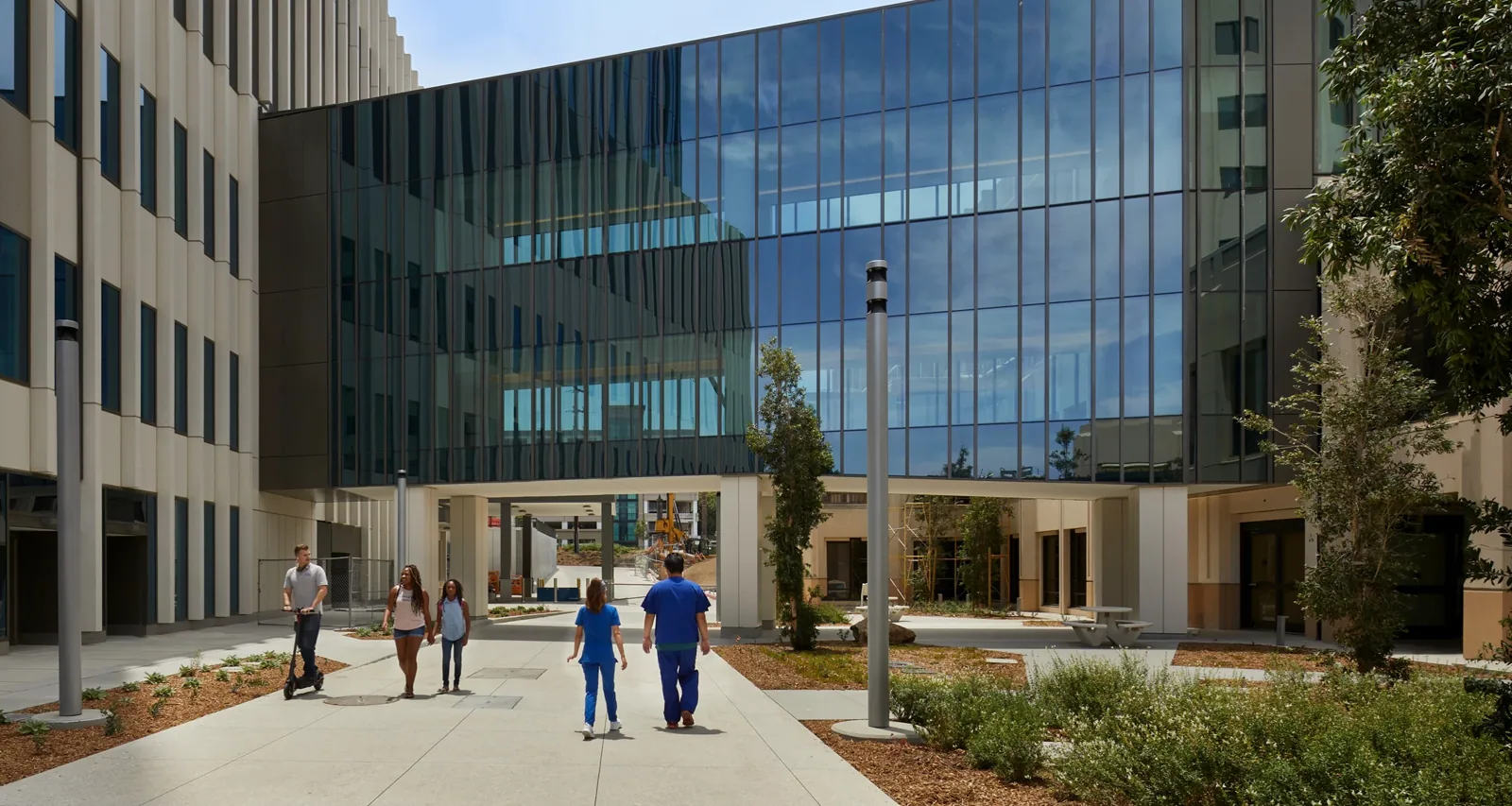
Menifee’s General Plan identifies enhanced wildfire severity as a climate-related risk and calls for outreach about heat, severe rain, and potential wildfire conditions. Those are city hazard-planning topics, not a finding of school damage. The district provides current campus safety rules and chooses the response for each building. Roof materials and repair methods depend on the inspected assembly and project specification.
The city’s General Plan lists Community Core Economic Development Corridor as a mixed-use area. Newport Road Economic Development Corridor receives its own neighborhood-commercial planning description. The Community Core planning area is broad land-use context, not a school list or service boundary. The district confirms each property and authorized route.
Select a Work Window and Repair Scope
A summer break may provide more access but still include camps, maintenance, or public events. We compare the district's calendar with roof findings and specify which rooms, routes, and utilities are affected. A repair to one seam can be scheduled separately from broader removal if testing confirms stable adjacent material. When moisture extends farther, the plan shows the test result and revised boundary before the work expands.
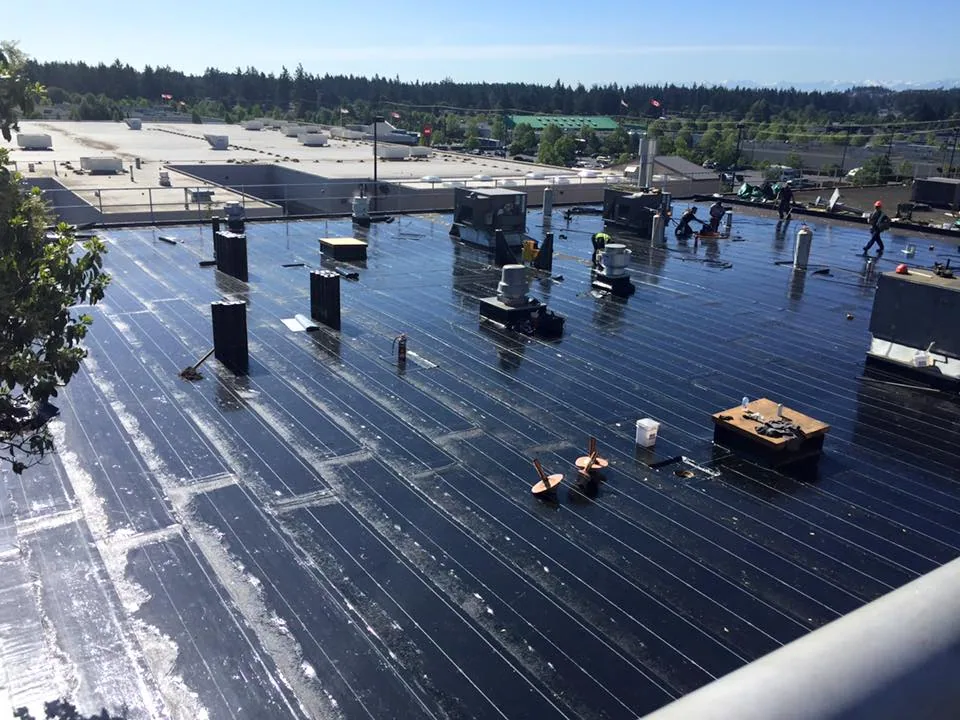
Replacement estimates identify tear-off depth, equipment handling, temporary cover, debris route, inspection, and classroom release. Replacement by classroom and roof zone gives the district an orderly sequence and an explicit reopening check.
Check Drainage and Weather Readiness
School roofs may have gutters, scuppers, internal drains, and overflow paths that serve multiple wings. We record each outlet and nearby membrane condition rather than treating ponding as one condition. Before a weather event or school reopening, the facilities contact can use the map to identify temporary covers and areas needing a recheck.
Menifee planning also recognizes hotter average conditions and more extreme-temperature days. Application windows are determined by measured surface conditions and product instructions. An inspection before summer scheduling can locate work that requires a longer closure and distinguish it from routine maintenance.
Reopen the Campus With a Documented Check
The closeout lists roof zones, repairs, photographs, test areas closed, drainage checked, remaining restrictions, and the staff member who accepted the campus area. It notes when barriers moved and which entrances, rooms, or play areas returned to use. Any follow-up test receives a date and responsible contact. Student names and education records are not needed in the roof file.
A consistent district form can preserve roof history across schools while keeping each assembly and campus route distinct. Occupied-facility coordination uses similar access discipline, but school calendar and student-safety rules remain district-specific.
District facilities can group inspections ahead of annual budgeting while recording a separate condition and access plan for every campus. The review can identify roof areas above classrooms, kitchens, libraries, gyms, and administrative offices; it should also note where plans or previous work records are missing. Summer access is useful only when it aligns with camps, maintenance, deliveries, and planned building use. A district may choose to complete urgent water control during the school year, then schedule removal after staff confirms a longer closure. For any interior test, the campus contact approves the room, covering, and return-to-use check. The crew should close each shift with a secured edge, clear ground route, and contact who accepts the space. If weather or an unexpected assembly changes the plan, the district receives the new boundary before work continues. A documented map and dated photographs help the next facilities manager compare the same drains and seams without including student names or education records in the roofing file.
For a project that crosses the start of a term, the district can identify a milestone for completing noisy removal, a separate milestone for reopening an interior area, and a final inspection after the first significant rain. The contractor records those dates by building. Facilities staff can then update the campus calendar and notify school leadership about any residual access limit. This avoids treating contractor demobilization as the same thing as a fully accepted school space.
A district can also retain the authorized test location and the person who approved access in its facilities record.
Commercial Roofing Questions
Can roofing work happen while students are on campus?
The district decides by building and route. Work can be isolated only with approved barriers, access control, room protection, and a secure release.
When should a district schedule roof inspections?
A survey before budget and calendar planning helps identify testing, urgent repairs, and work that needs a longer closure.
How do you protect classrooms during a test?
Staff approves the room, covering, access time, and return-to-use check; the opening is tied to a roof-grid reference.
Can the district inspect several schools in one program?
Yes. A shared schedule can cover multiple sites, with separate roof maps, findings, access rules, and closeout for each school.
Does city hazard planning prove a campus has roof damage?
No. Citywide hazard context is not a property condition. The roof and campus need a separate inspection and district decision.
Related Roofing Work
Coordinate a commercial roof review
Request a Roof Assessment
Coordinate an inspection with district facilities and the campus contact. We can document roof conditions, student-safe work zones, and reopening steps.
Service area
Menifee, Perris, Murrieta, Temecula, Hemet, Lake Elsinore and nearby Inland Empire communities
Quick contact
[email protected]
555-555-5555