
Commercial Roofing for Property Management Companies in Menifee
Home / Industries We Serve / Commercial Roofing for Property Management Companies in Menifee
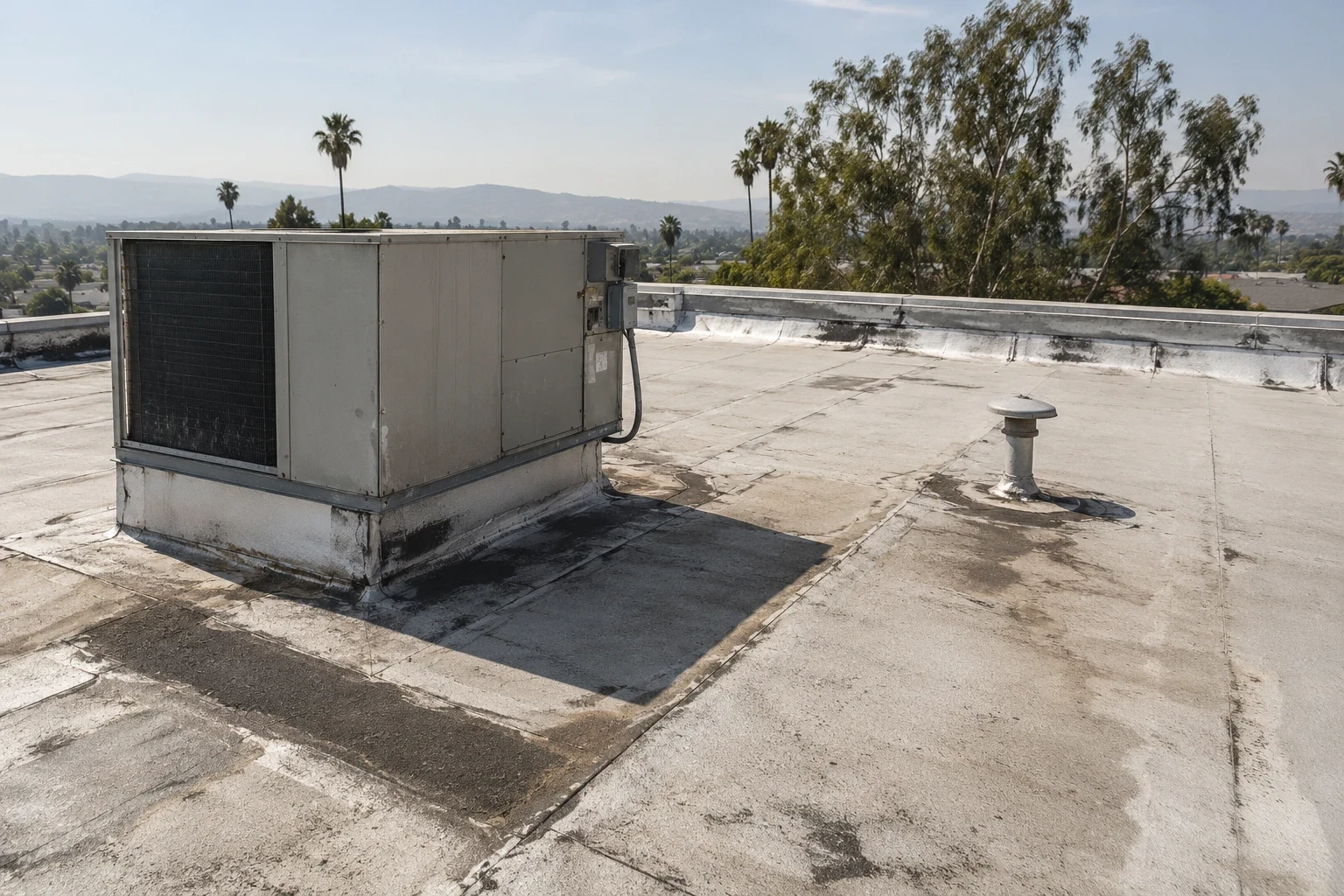
Property managers often inherit roof plans, repair invoices, tenant reports, and equipment changes from different owners or vendors. Before recommending work, we compare those records with the actual assembly, leak location, drainage, and prior patches. A building-specific map separates confirmed defects from conditions that need testing. This makes it easier to set expectations with the owner and avoid carrying one property's repair history into another.
Tenants may have different operating hours and notice requirements. The manager identifies contacts, restricted areas, and any route that needs to stay open during staging. For a shopping property, roof work in a multi-tenant retail building needs a separate access plan for shared entrances, deliveries, and customer paths.
Create a Roof Record for Each Asset
A portfolio review starts with a list of buildings, roof areas, known systems, prior repair dates, and the party responsible for access. A missing drawing is recorded as a gap, not replaced with a guess. We use consistent labels while preserving each building's unique assembly, drainage, equipment, and edge details. The owner can then compare roof conditions without assuming every property has the same remaining life.
For a multi-site owner, portfolio-level roof review for property investors can connect inspection findings to reserve planning. We identify which documents support a condition, which locations are inaccessible, and what test would improve the next budget decision. A verified roof map remains more useful than a spreadsheet that records only an estimated replacement year.
The owner may also want to compare a multi-building inspection schedule with the same building-level record but a separate scope.
Manage Tenant Communication and Access
Before work begins, the property manager confirms notice timing, tenant hours, delivery paths, interior protection, and the contact who can approve a temporary route change. We identify the roof zone and the space below it, then lay out lift access and material staging. If a tenant's use changes, the manager can update the sequence before the crew resumes. A daily release point helps keep entrances and shared corridors predictable.
Occupied work can be divided into short phases, each with a protected edge and a time for handback. The plan lists which suites can remain open and where barriers go. Phased work in occupied properties makes the notice, protection, and final room check part of the same sequence rather than a separate verbal promise.
Turn Tenant Reports Into a Testable Scope
A ceiling spot is a useful observation but not proof of where water entered. We record when it appeared, recent weather, nearby HVAC work, and any prior patch. The roof review follows the slope, membrane laps, drains, wall transitions, and penetrations before selecting a test. The report distinguishes what was observed from what is inferred and names the location that could resolve an open question.
If active water requires immediate protection, the temporary dry-in and permanent work are listed separately. The manager can authorize containment while a test is scheduled. A leak scope with a documented boundary ties the estimate to the roof detail and identifies any adjacent area that remains untested.
Use City Planning Context Carefully
Menifee's economic strategy reports a shortage of office and commercial space suitable for expansion. The Community Core Economic Development Corridor and McCall Boulevard Economic Development Corridor are two distinct planning settings. These citywide facts may inform a manager's portfolio discussion, but they do not identify a specific property, tenant, roof system, or service boundary. Each managed asset still needs its own inspection and access approval.
When a building lies near the Community Core planning district, the property manager confirms loading, event schedules, and tenant routes on site. Planning maps help describe land use, not roof condition. We base repair recommendations on measured moisture, field seams, drainage, and verified assembly details.
Prioritize by Evidence and Consequence
Managers can group repairs by urgency, but the ranking should show the evidence behind each category. Active water, a confirmed open seam, wet insulation, and a monitor-only condition are not interchangeable. We describe the immediate protection needed, the permanent repair boundary, and the next test if a broader issue remains possible. The owner can then compare cost and disruption across assets without treating a single leak as proof of portfolio-wide failure.
A repair plan can also identify access restrictions, equipment handling, disposal, and the point when each area returns to tenants. Maintenance tied to prior repair records helps the next visit return to the same seam or drain and document whether the condition changed.
Keep Scope, Approvals, and Closeout Together
A clear work order names the authorized contact, roof zone, selected material, access path, work hours, and inspection point. Change orders show the new condition and its cost before the work expands. At closeout, the manager receives photographs, completed detail references, test openings closed, remaining restrictions, and the person who accepted the handback. That record supports owner reporting and gives a later vendor enough context to inspect without repeating the same discovery.
For a hospitality asset, schedules may include guest turnover, kitchen operations, and quiet periods. Roof coordination for hospitality operators can complement the manager's portfolio controls while leaving property-specific details in the site work order.
Set a Follow-Up That Uses the Same Map
A follow-up inspection should return to the repaired edge, curb, drain, or seam that prompted the original work. We note whether the area is dry, whether a temporary detail was replaced, and if another trade has changed the roof since closeout. Any cure period or access limit is carried into the schedule. The next visit can then answer a specific condition question instead of producing another unlinked photo set.
Managers may use one report format across sites, but the maps and observations stay separate by address and building. Building-level condition reports connect repair evidence to future budget decisions and preserve the distinction between a documented finding and an estimate.
A practical triage log can separate active water, a confirmed open detail, an area that needs moisture testing, and a condition suitable for the next maintenance visit. Each entry should name the affected building and roof grid, show the photograph date, and record who can authorize a test. The manager can then set a tenant message that states what area is affected and when access may change, without promising a cause before inspection. After repair, the same log records the boundary, materials, return-to-use check, and next review date. This creates a property record that survives a management handoff and gives the owner a clearer basis for deciding whether a repeat report involves the same detail. When several properties need work, group access and procurement by date only after confirming that each building's owner and assembly support the same approach. Standard forms help organize decisions, but separate maps prevent the service history of one building from being attributed to another.
Commercial Roofing Questions
Can a roof inspection cover multiple properties?
Yes. A portfolio schedule can use consistent fields, with a separate inspection, roof map, and condition summary for each building.
How should tenant leak reports be handled?
Record the room, date, weather, and visible condition, then compare it with roof details before assigning a source or repair boundary.
Can work proceed while tenants are open?
Often, when the manager approves notice, staging, barriers, accessible routes, interior protection, and a secure daily handback.
What information helps prioritize repair budgets?
Confirmed openings, moisture extent, active water, repair history, access limits, and the next test needed to reduce uncertainty.
What does a useful closeout include?
Completed zones, photographs, repaired details, closed test areas, remaining restrictions, the accepting contact, and a follow-up date.
Related Roofing Work

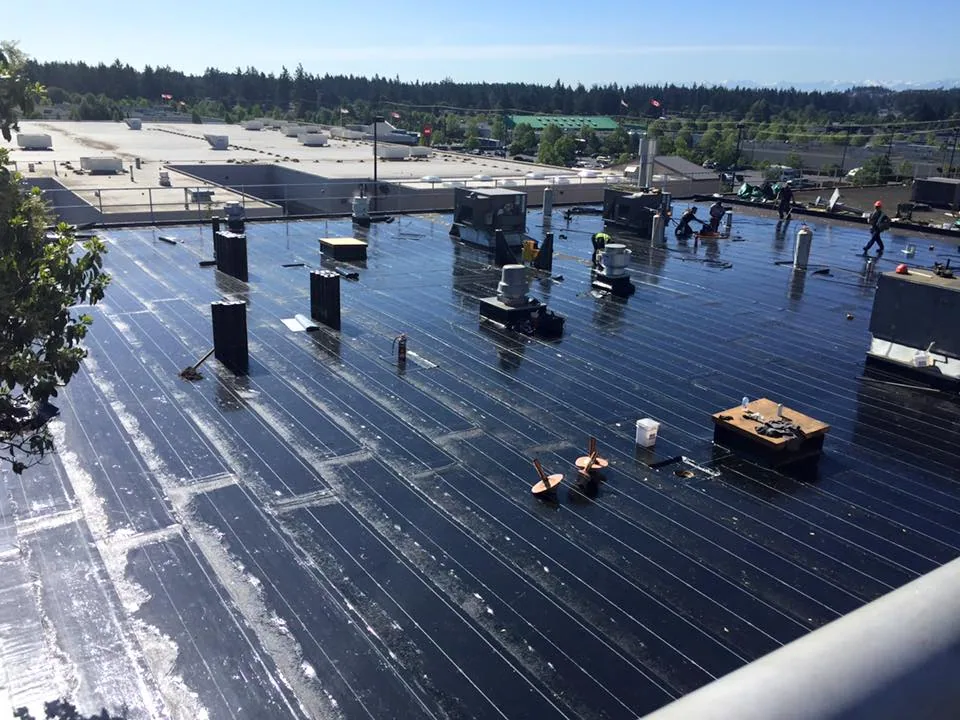
Coordinate a commercial roof review
Request a Roof Assessment
Arrange a building-by-building roof review. We can map conditions, coordinate tenant access, and separate confirmed repairs from items that need testing.
Service area
Menifee, Perris, Murrieta, Temecula, Hemet, Lake Elsinore and nearby Inland Empire communities
Quick contact
[email protected]
555-555-5555