
Commercial Roof Capital Planning in Menifee
Home / Roofing Capabilities / Commercial Roof Capital Planning in Menifee
A reserve line for “roof replacement” is not a project estimate until the roof condition, assembly, and work boundary are understood. Start with current inspection evidence, prior repairs, measured area where available, access, equipment, and interior constraints. Separate an active leak from a planned capital improvement. The owner can then compare an immediate repair, a larger restoration, and replacement without treating a rough age estimate as a confirmed failure.
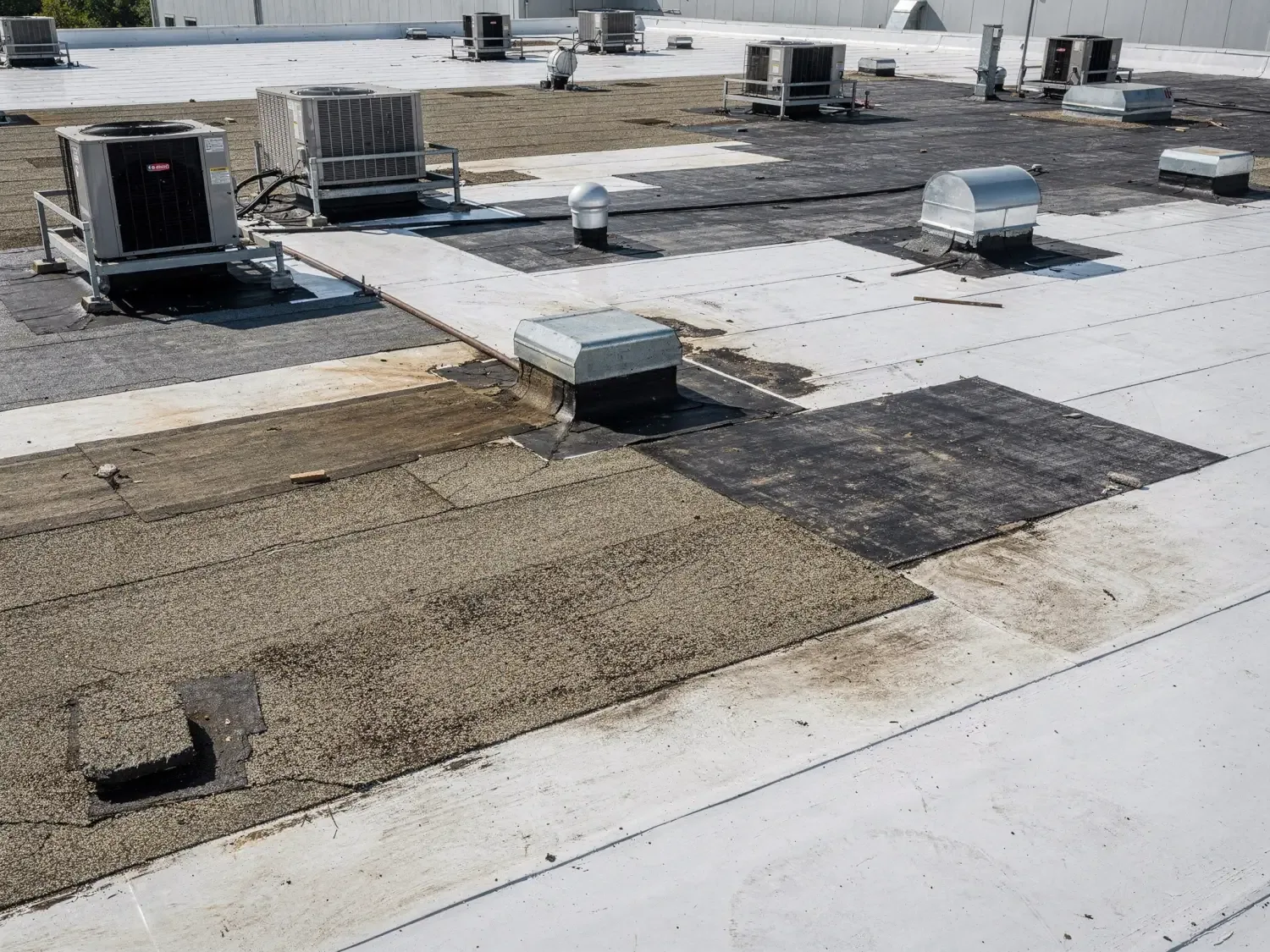
A capital plan should state assumptions and what could change the price. Tear-off depth, wet insulation, deck condition, crane access, tenant hours, disposal, and temporary protection can all affect a commercial roof project. If the roof has not been opened, identify concealed conditions as unknown and use a documented allowance rather than presenting a precise total. A dated roof condition report supplies the starting evidence.
Baseline
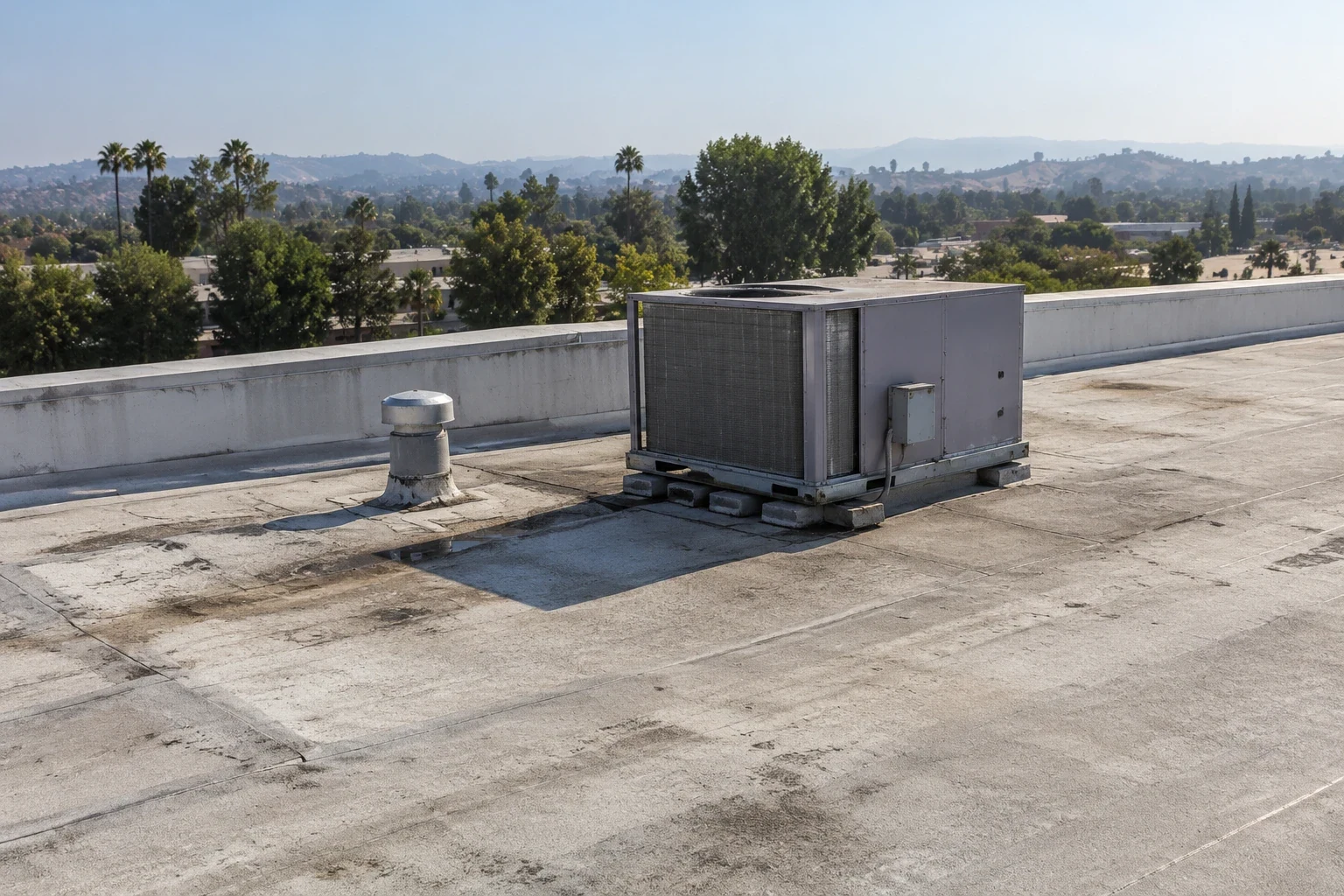
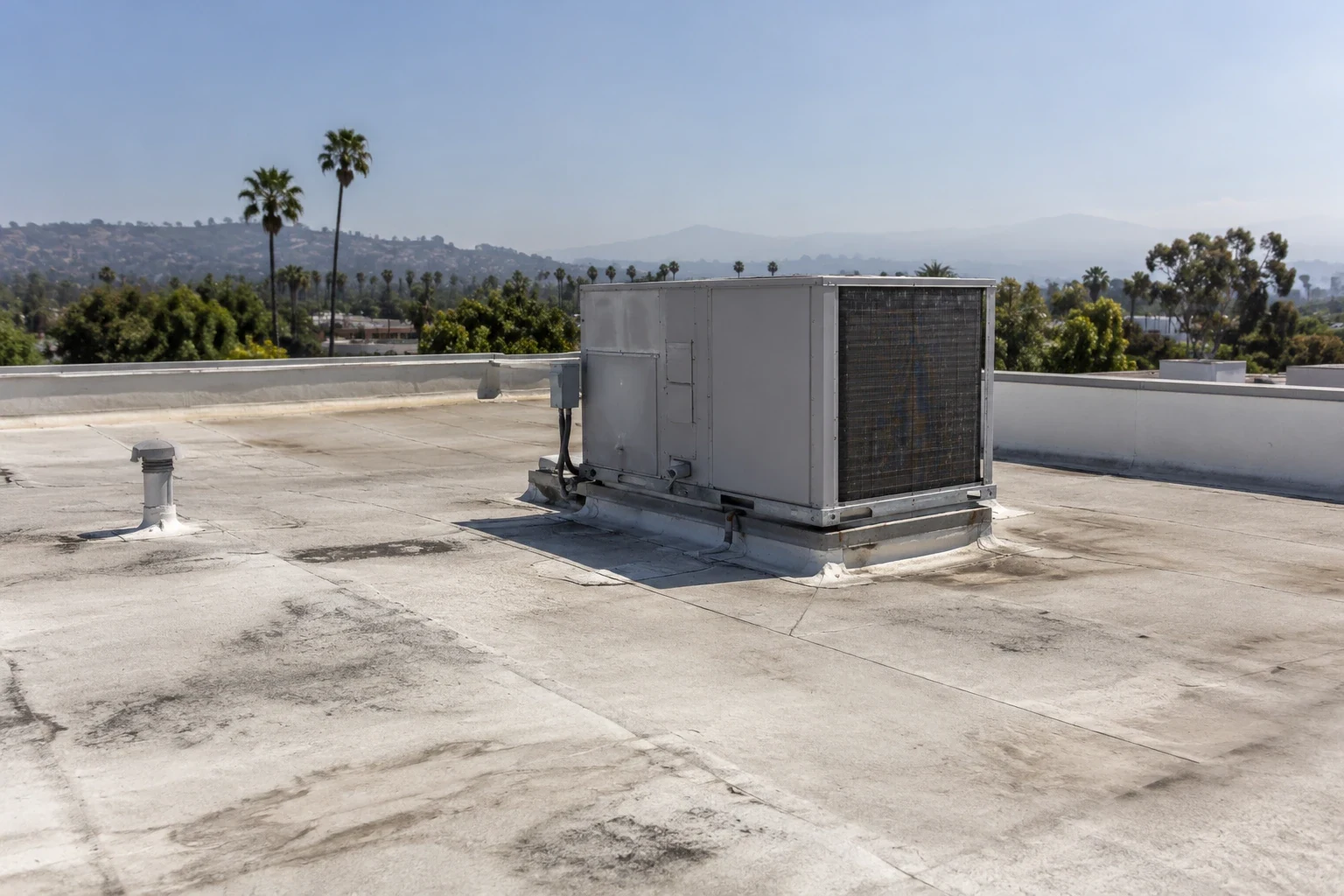
Define the asset boundary before comparing costs. A building may contain several roof systems or additions, each with separate drainage, warranty, and access. Mark the area included in each option and show excluded curbs, parapets, canopies, or tenant structures. If quantity comes from a plan rather than field measurement, label the source. This prevents bids with different roof areas from appearing comparable on a summary sheet.
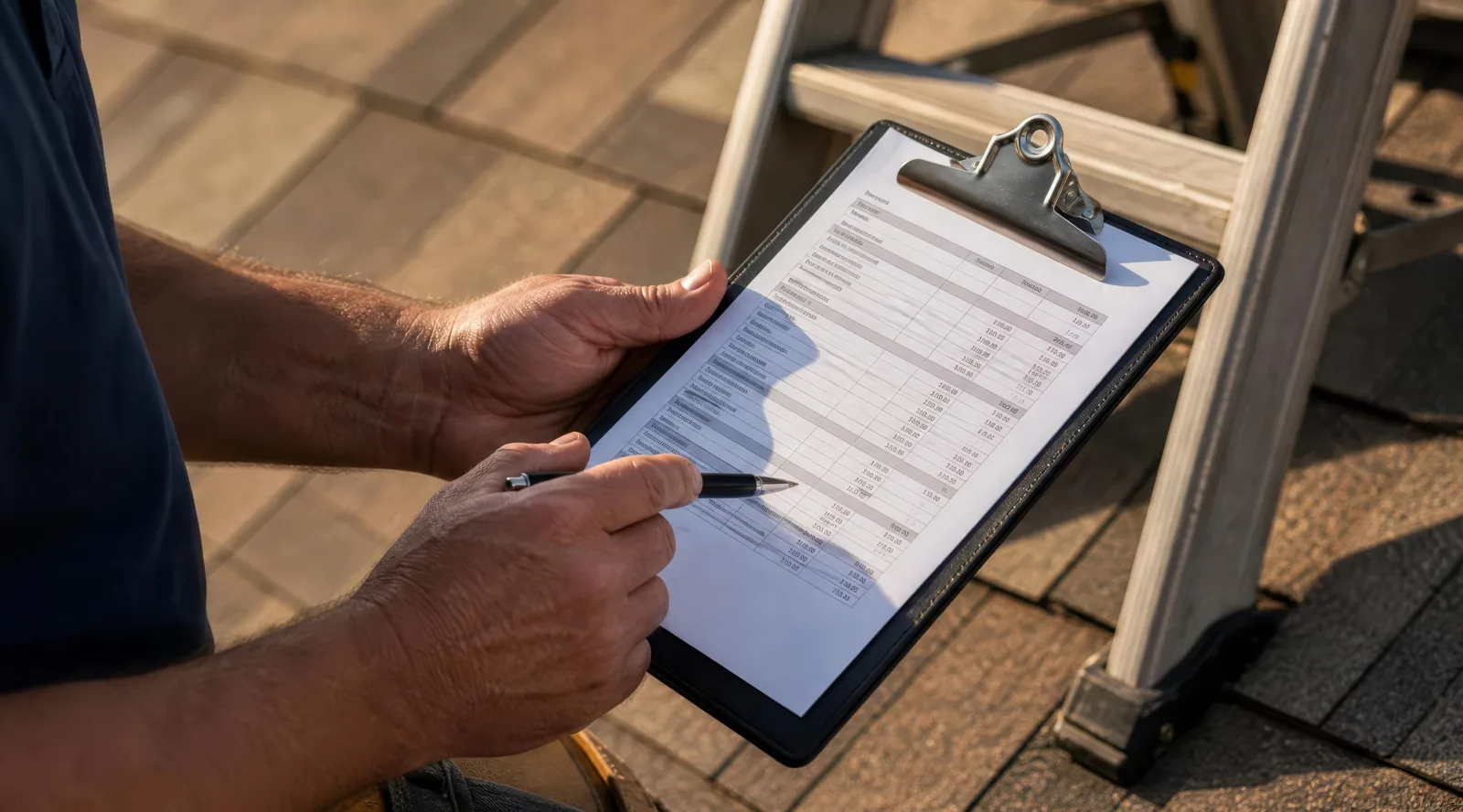
Review repair and inspection history by location. A recurring leak at one curb may support a targeted project; widespread wet insulation or failed attachment may prompt broader analysis. The report should explain what was inspected, the tests performed, and inaccessible areas. Do not use a condition score without describing its criteria. An asset register can organize the baseline across budget cycles.
Alternatives
A repair option should identify the confirmed defect, expected work, limits, and next check. Restoration may require preparation, test patches, compatible coating, flashing correction, and drainage work. An overlay changes the assembly and needs review of existing layers, structure, edge height, and drainage. Replacement can include removal, insulation, substrate repair, metal, safety measures, and warranty requirements. These alternatives answer different problems and should not be collapsed into a low-to-high price list without context.
For each option, identify what could cause a change order: concealed moisture, deck corrosion, additional penetrations, or a change in access. State the approval process and pricing method before mobilization. If an engineer or manufacturer must review the assembly, include that milestone in the schedule. A recover analysis should verify the existing assembly and loading before an overlay is proposed.
Prioritization
A portfolio ranking can consider active water, safety, business continuity, repairability, warranty status, and budget window. The owner chooses the weights; the contractor supplies observations and options. A small roof over critical equipment may need earlier review than a larger roof with a stable condition. Explain the reason for each priority so finance and facilities teams can challenge assumptions and reallocate funds transparently.
Separate mandatory work from optional improvements. A code or design requirement should be confirmed for the project, not inferred from a general planning document. An energy upgrade, solar preparation, or new drainage pattern may add value but requires its own design and coordination. A replacement scope can be evaluated alongside the immediate repair only when the inspection supports both.
Phasing
Phasing can reduce interior disruption or distribute spending, but it may also increase mobilization, temporary protection, and tie-in work. Show how each phase ends with a secure dry-in and how a later section will connect to existing roof. Identify access, equipment shutdown, noise, and occupied-area limits. If the owner delays a zone, record what condition would trigger an earlier start rather than implying that the roof will remain unchanged.
A phased schedule needs explicit handoff between budgets. The first year may address leaks and prepare a measured replacement package; a later year may replace another assembly. Keep the temporary repair map with the future capital plan so the eventual crew can verify what remains. Occupied-building planning helps coordinate work with business operations.
Menifee Context
The City describes Menifee as inland and naturally dry while identifying increasing temperatures as a planning risk. This context may inform inspection timing and crew scheduling, not a prediction of roof life. The actual budget should use measured condition, system requirements, and project criteria. The city’s zoning map includes office, retail, industrial, and business-park categories, which indicates diverse property settings rather than a count of roof assets. Riverside and Newport Road Economic Development Corridor are separate geographic contexts, not a substitute for a measured Menifee roof project.
The 2026 Menifee strategy describes Economic Development Corridors along I-215 as areas concentrating commercial, office, and mixed-use activity. The Garbani Road/I-215 connection is identified as a planned project; timing and funding depend on City updates. These broad facts do not establish site access or contractor coverage. Confirm each parcel and project scope. Newport Road planning context is not a service boundary.
Financial Model
When the owner compares lifecycle options, make the analysis inputs visible: expected maintenance, repair timing, warranty obligations, disruption, financing assumptions, and residual roof condition. Avoid presenting a single lifespan or savings claim without a project-specific basis. A coating might defer removal on a sound substrate but still require future flashing or drainage work. Replacement may reduce near-term repair exposure while requiring larger access and tenant coordination.
A budget forecast is more useful with a confidence band or allowance than false precision. Identify items not opened or tested, probable quantities, and conditions that could materially change the scope. The owner may request a second inspection or design review before final appropriation. A due diligence survey uses similar evidence discipline for a transaction timeline.
Handoff
A capital packet should include the roof map, condition evidence, scope alternatives, quantities and source, exclusions, schedule assumptions, approvals, and unresolved tests. A decision memo can identify the selected option and the reason. Keep repair work orders linked to the capital plan so later bids reflect what has already changed.
Before issuing a bid, verify that documents reflect the current property, warranty restrictions, and owner access requirements. At completion, compare installed work with the funded boundary and update the next-year forecast. A roof budget evolves as field evidence changes; the record should say when and why an estimate moved.
For the decision file, compare portfolio project coordination; Community Core planning context.
A board or ownership meeting benefits from a one-page decision table with scope area, evidence date, alternative, estimated cost basis, disruption, exclusions, and approval needed. Keep a separate technical attachment for photos and tests. If a project includes tenant relocation or equipment shutdown, name the party responsible for those costs. A roofing estimate is incomplete if operating impacts are silently treated as zero.
After a capital project is funded, reconcile the final contract and closeout to the forecast. Update actual quantities and note whether concealed conditions changed the work. If the project was phased, retain both the completed area and the remaining boundary. Future planning should use the verified closeout rather than the original preliminary budget.
For a roof that may remain in service through another budget year, define a monitoring action and the condition that would trigger earlier work. A date alone may not be enough if a leak or moisture extent changes. The facilities lead can report the evidence to finance before the project becomes an emergency request.
Commercial Roofing Questions
Can an age estimate set a replacement year?
Use documented age as one input. Current condition, testing, repairs, assembly, and access also affect timing.
How should unknown wet insulation be priced?
State the uncertainty and use an approved allowance or unit-price method with a stop-and-approve process.
What belongs in a capital comparison?
Map the scope, quantities, access, exclusions, options, schedule, and assumptions for repair, restoration, or replacement.
Can a coating correct ponding?
No. Evaluate drainage and substrate before pricing any surface treatment.
Who approves the selected budget option?
The property owner or designated decision-maker approves after reviewing evidence and project constraints.
Related Roofing Work
Arrange a commercial roof review
Request a Roof Assessment
Share the property records and operating needs. We can document roof conditions, identify open questions, and provide a practical next step for the facilities team.
Service area
Menifee, Perris, Murrieta, Temecula, Hemet, Lake Elsinore and nearby Inland Empire communities
Quick contact
[email protected]
555-555-5555