Preventive Commercial Roof Maintenance in Menifee, CA
Home / Commercial Roofing Services / Preventive Commercial Roof Maintenance in Menifee, CA
A clogged drain can turn a minor maintenance miss into hours of water sitting against seams and curbs. In Menifee, exposed roofs also cycle through hot days that work on laps, coatings, and metal transitions. A useful maintenance visit does more than sweep debris away. We inspect the membrane, drainage paths, penetrations, and edges, then rank the findings by water risk and repair scope. That gives a facility director a record of what changed, what remains sound, and which item deserves another look before the next weather shift. A written commercial roof inspection can establish the first condition baseline; recurring visits then compare the same details rather than treating every season as a fresh guess.
Set a Useful Visit Rhythm
A schedule should follow the roof and the building, not a calendar alone. A low-slope roof with mature trees, active rooftop equipment, recurring drain debris, or a history of repairs needs a different check interval from a clear roof with few penetrations. We begin with the last inspection, leak calls, warranty documents, and any planned work above the ceiling. Then we assign a practical return date based on the exposed weak points. After a storm or a trade project, an added check can make sense even when the routine visit is not due. The work plan records what changed and why the next visit is scheduled, giving the owner a decision trail instead of an arbitrary promise that every roof needs the same number of visits.
Walk the Same Details
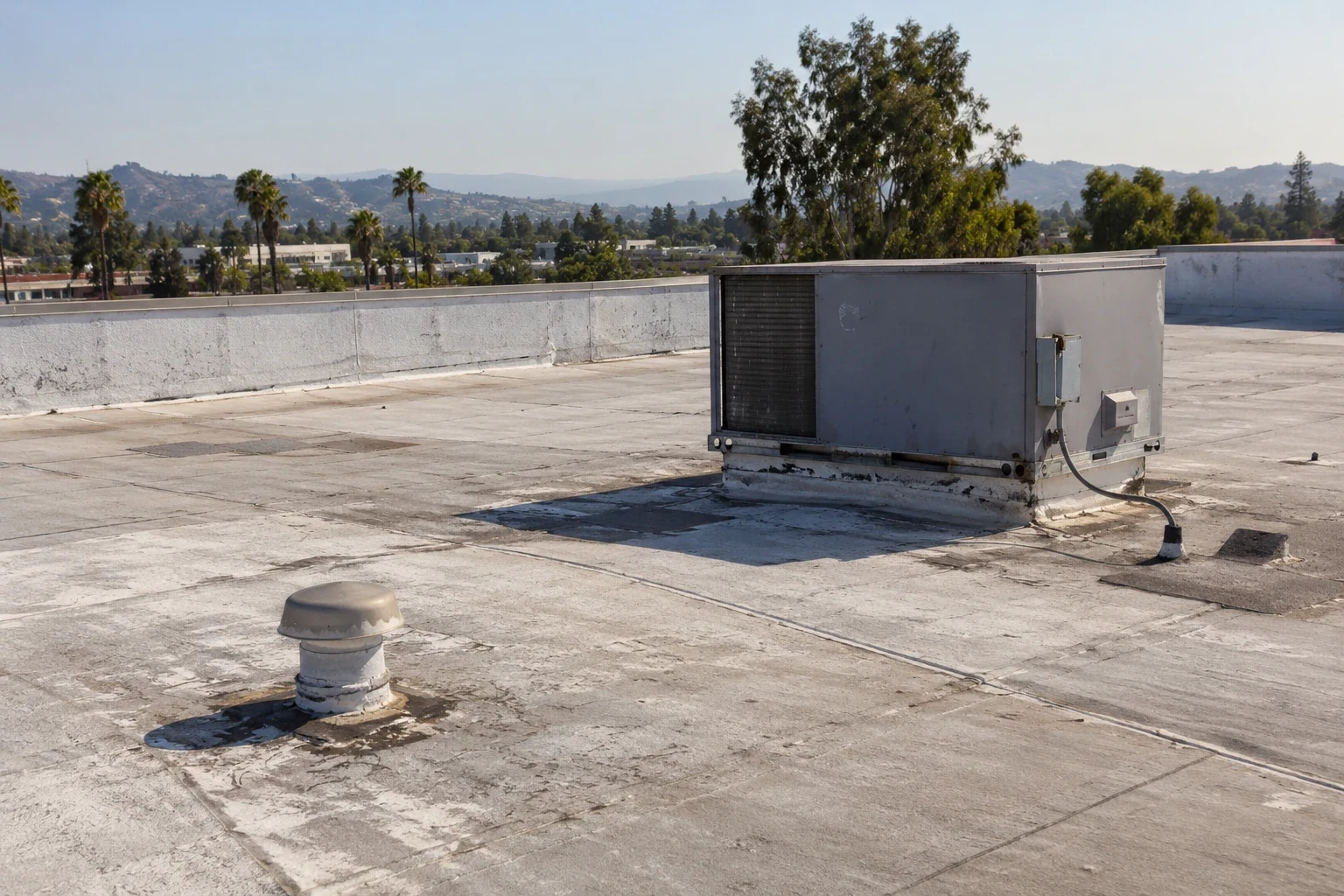
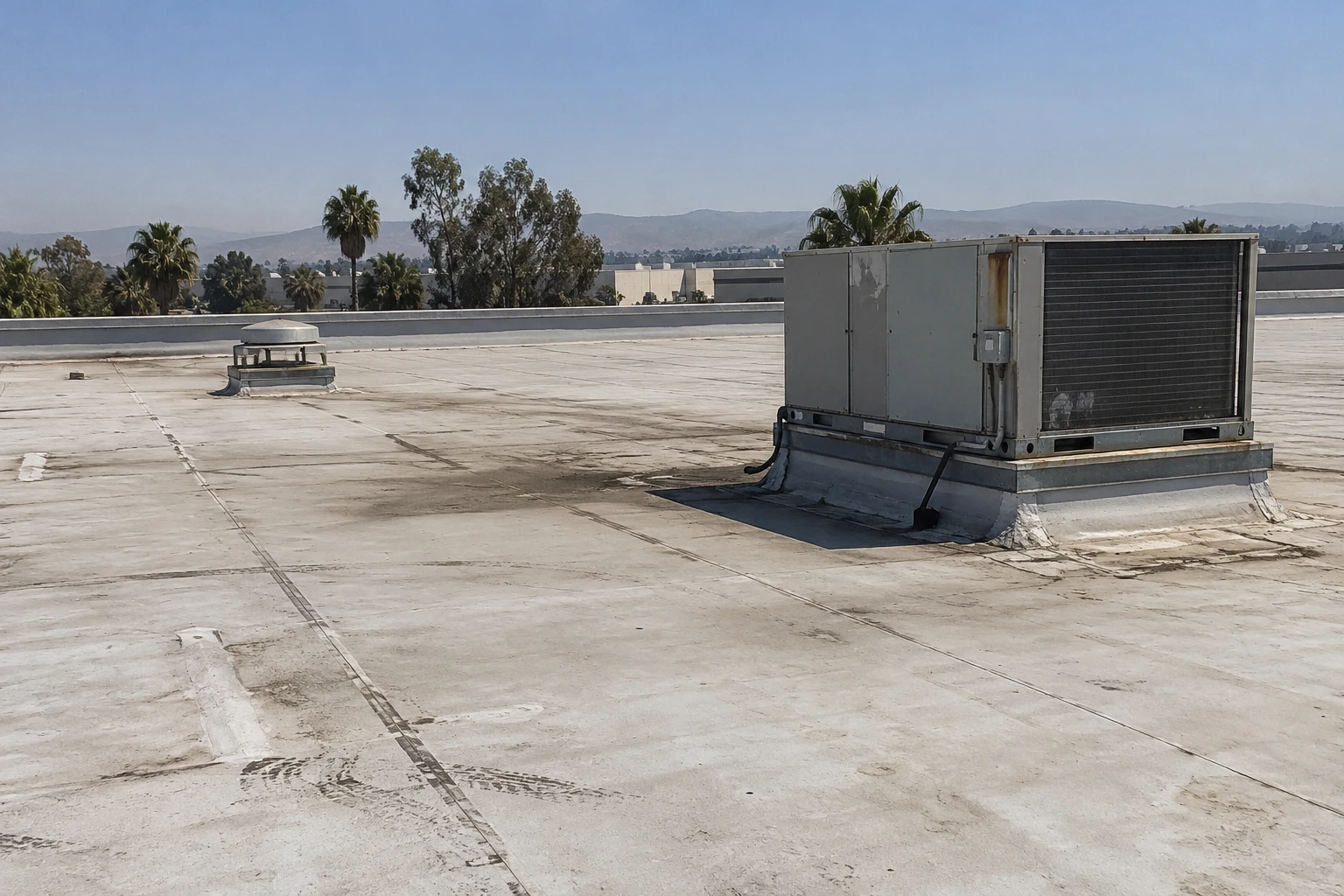
Consistency makes maintenance useful. We photograph seam intersections, perimeter terminations, roof-to-wall transitions, equipment curbs, skylight flashings, and each drain or scupper from a repeatable position. If a previous repair exists, the record notes its location, material, and present condition without assuming that it solved every nearby leak. The survey distinguishes surface wear from a separated lap, open flashing, puncture, or soft area that may indicate wet insulation. A marked roof plan helps the next person return to the same location and compare it with the prior report. That baseline also supports a separate commercial roof repair estimate when an inspection finds a condition that should not wait for routine maintenance.
Keep Water Moving
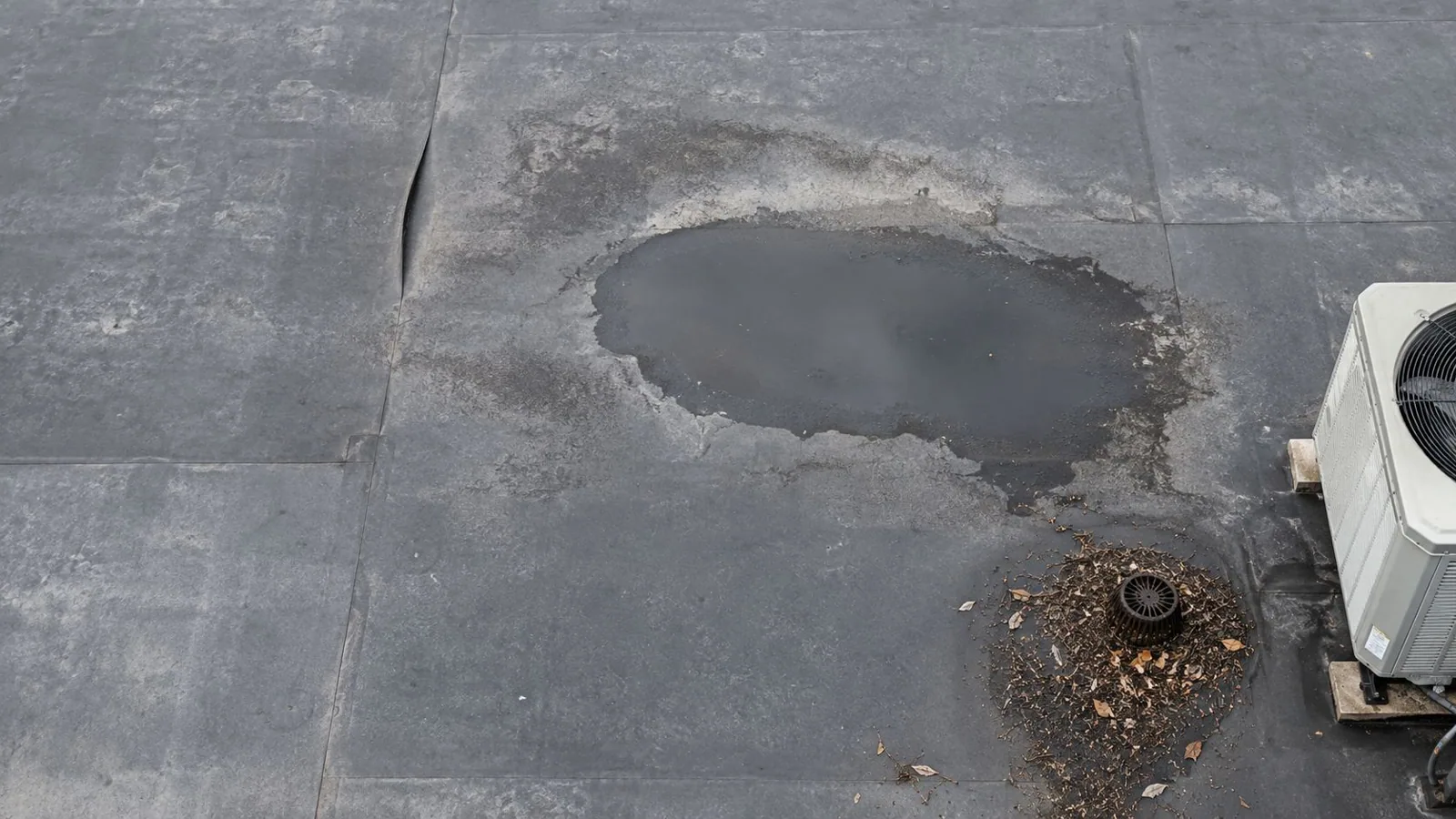
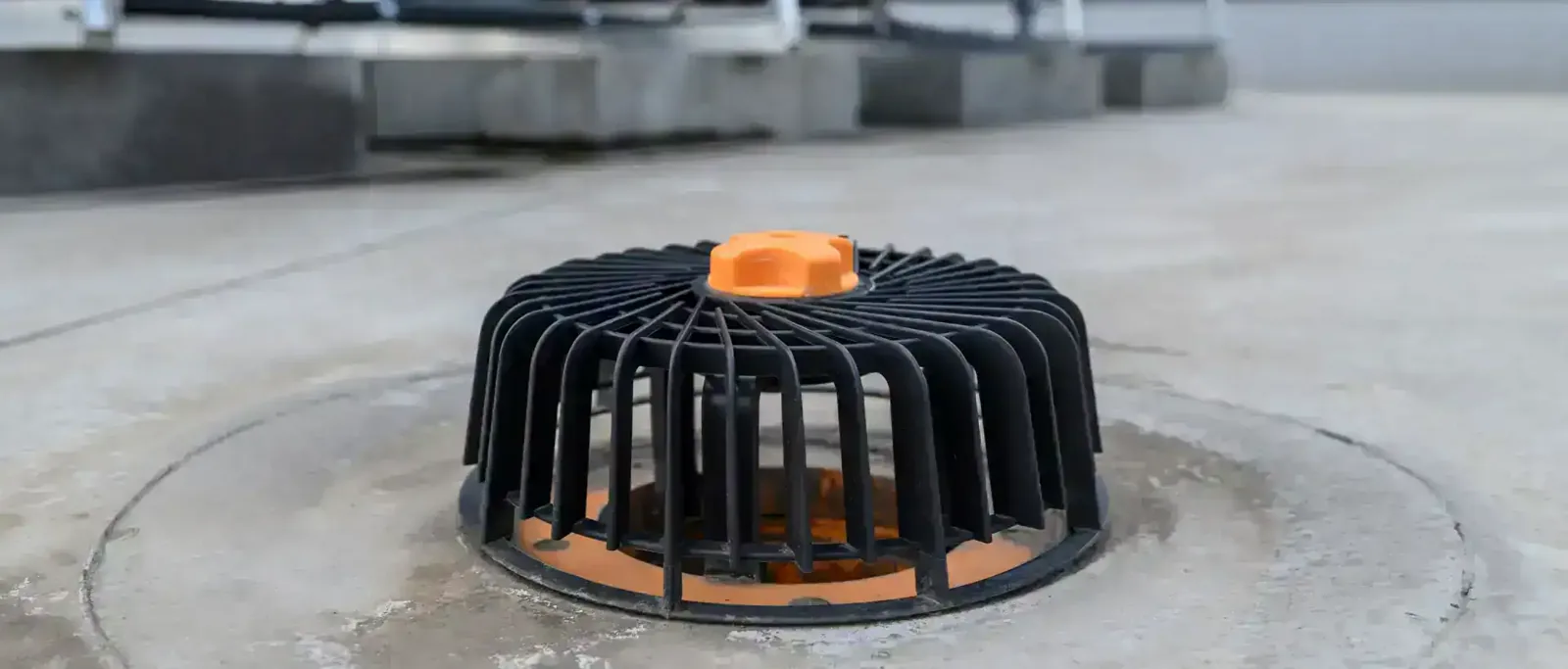
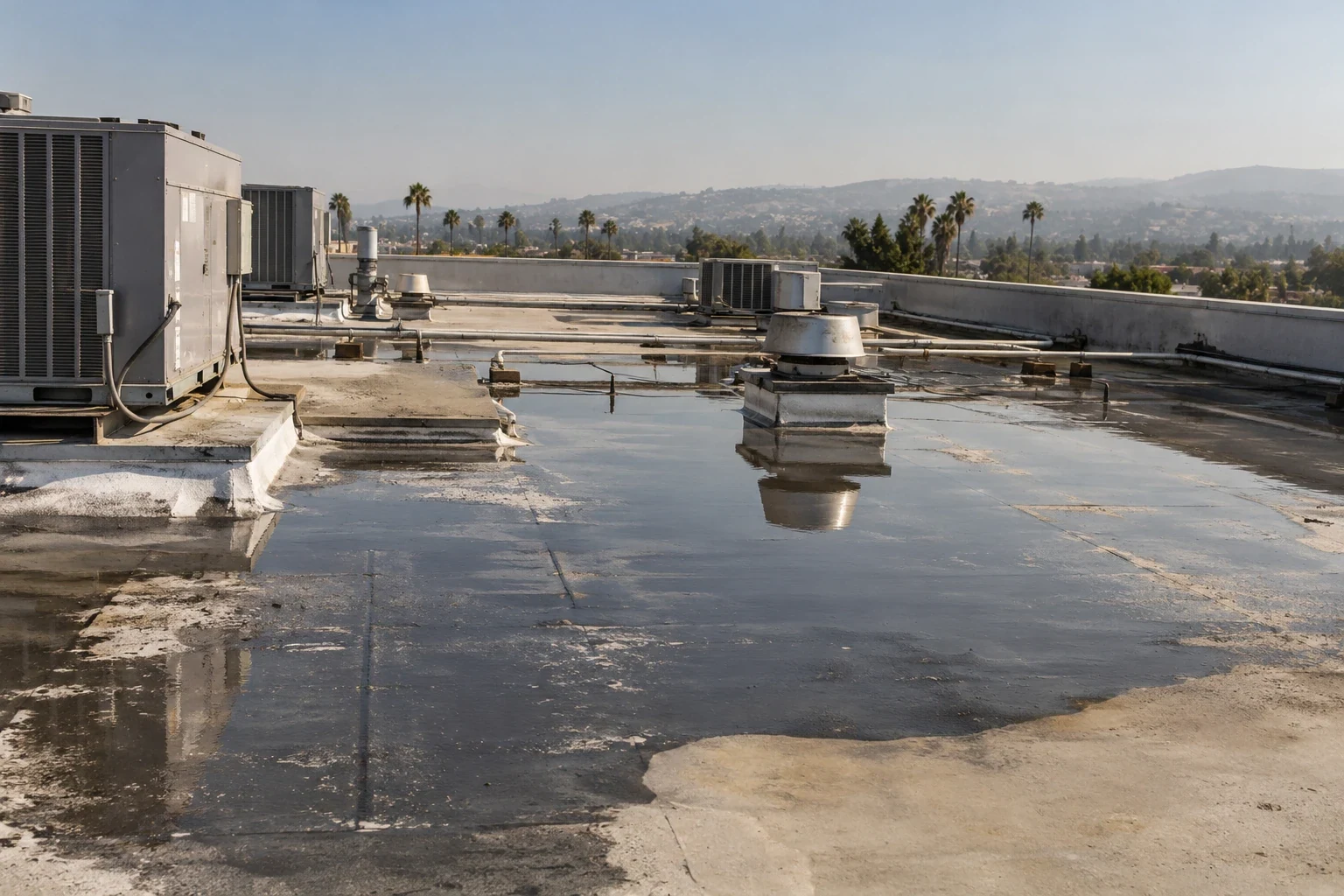
Drainage deserves its own line on the checklist because water can collect at a low point far from the room where a stain appears. We remove loose debris from accessible strainers and inspect the surrounding membrane, flashing, and sealant. Scuppers, conductor heads, downspouts, and overflow paths each need to remain open and attached. Ponding that remains after the system clears calls for a closer look at slope, deflection, or a blocked route below the roof surface. Clearing a drain does not correct a low spot or a failed connection. The report separates housekeeping from corrective work, and may identify a cricket or insulation adjustment for design review. A commercial drain and scupper review also checks the connection between the roof opening and the discharge path. When retained water marks a recurring low point, a focused ponding-water assessment can define the next test.
Repair Small Defects Before They Spread
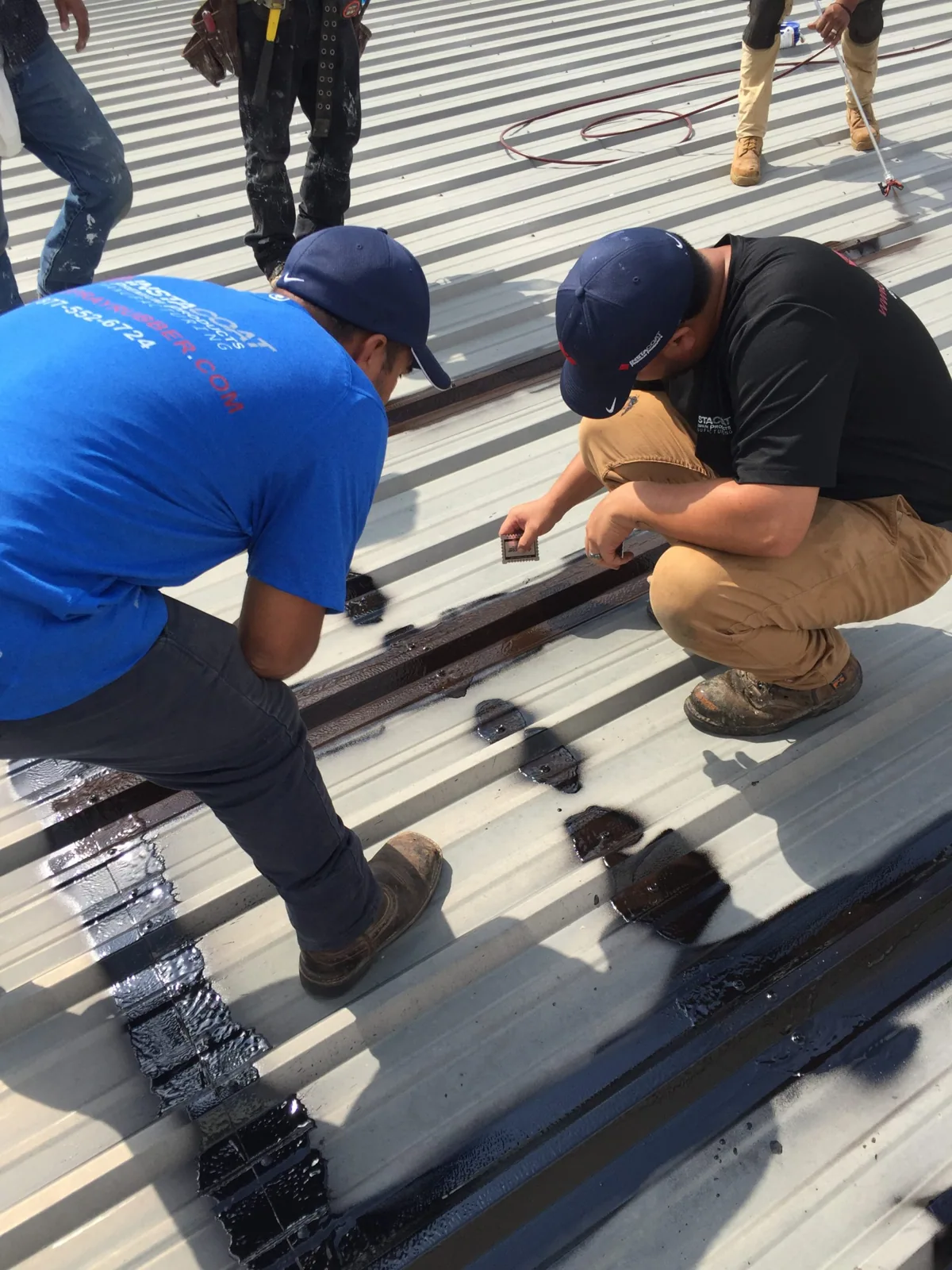
A repair note should describe the defect, the evidence around it, and the limit of the recommended work. A lifted termination, open lap, puncture, or split sealant joint is not the same repair, even if all appear near one leak report. We test adjacent seams, check the substrate where the detail allows, and mark whether moisture evidence continues beyond the visible opening. A patch can address an isolated failure while preserving a sound field; widespread bond loss or wet insulation may require a broader comparison. The maintenance record should distinguish work completed from items still under observation. On a confirmed single-ply roof, a TPO seam and flashing review must use compatible details and follow the system's actual condition, not its label alone.
Account for Menifee Heat
Menifee's inland heat makes exposed seams, coating edges, and metal transitions worth comparing from visit to visit. We look for a change in lap shape, a brittle or split bead, a loosened termination, and movement around a curb before those details become a water path. The Community Core Economic Development Corridor is planned for civic, entertainment, and retail uses, while the McCall Boulevard Economic Development Corridor pairs planned office and retail uses with nearby medical-center activity and homes. Neither role tells us a particular roof's age or assembly. The field record must do that work. We identify the system, note shade and rooftop equipment where they affect inspection, and keep the repair recommendation tied to the observed detail. Heat context helps set the questions; the roof surface, insulation, and drainage findings set the scope.
Separate Routine Care from Capital Work
Maintenance cost depends on access, roof area, equipment density, the number of penetrations, and how much cleaning or repair the inspection identifies. A visit that records conditions may be limited in scope, while clearing several drainage paths or correcting repeated flashing defects requires more labor and material. The report should separate inspection, routine cleaning, and repair quantities so a manager can compare proposals without blending them into one vague allowance. If repeated repairs are consuming time or disturbing operations, compare the current condition with a coating restoration, recover, or replacement assessment. That comparison should include substrate moisture, attachment, remaining life, and the condition of edges and penetrations. The lowest immediate task is not always the smallest total cost if a larger defect remains unmeasured. A useful ledger separates completed work, open recommendations, and observation items, then records the evidence and the planned return date beside each one.
Coordinate Access and Closeout
Before a maintenance visit, we confirm roof access, occupant schedules, equipment restrictions, and any areas that cannot be entered without an escort. A facility contact can flag deliveries, patient or customer hours, sensitive rooms, and active rooftop work so the inspection route avoids unnecessary disruption. After the visit, the closeout should state which drains were cleared, what details were photographed, what repairs were completed, and what still needs pricing or a return inspection. If a new stain appears, the next check can start with the recorded roof zone instead of repeating the entire search. Menifee's Community Core and Newport Road planning areas illustrate why site use matters, but each operating plan comes from the actual property contact and roof conditions.
Commercial Roofing Questions
What belongs on a maintenance report after a drain backs up?
Record the blockage, the water line or debris, the adjacent membrane and flashing, and the condition after the drain clears. We also note whether water remains at the low point. If standing water persists, drainage geometry or a downstream restriction needs review rather than another cleaning entry.
Can maintenance visits include repairs?
Yes, when the defect is defined and the repair method is suitable for the roof assembly. We document the approved work separately from the inspection findings, then photograph the repaired detail. A larger or concealed condition may need separate pricing before opening or replacing more material.
How does a manager compare two maintenance proposals?
Look for matching inspection points, cleaning tasks, repair quantities, access assumptions, and exclusions. We make the roof zones and follow-up items visible so a manager can compare like work. A low total is difficult to assess when the proposals describe different tasks.
What should happen after another trade works on the roof?
Document the work area and check nearby penetrations, walk pads, seams, and debris before the access route closes. A short post-trade review can identify a dropped fastener or disturbed flashing while the work location is still known. Add the findings to the roof record.
Related Roofing Work
Put the Next Roof Check on the Calendar
Request a Roof Assessment
Arrange a maintenance inspection around roof access and building hours. We will record drainage, seams, flashings, repairs, and the next condition that needs attention.
Service area
Menifee, Perris, Murrieta, Temecula, Hemet, Lake Elsinore and nearby Inland Empire communities
Quick contact
[email protected]
555-555-5555