Commercial Roof Seam Failure Repair in Menifee
Home / Roof Damage Repair / Commercial Roof Seam Failure Repair in Menifee
A seam that lifts under light hand pressure may be a local weld defect, a contaminated bond, a moving substrate, or a wider attachment issue. We mark the failed segment, inspect both ends, and compare the seam with nearby laps before choosing a repair. Water inside may appear away from the opening, so the map connects the roof detail to the room below without assuming that they line up. The estimate states how much seam is confirmed open and where testing stops.
Do not walk a questionable lap during rain or when the surface is unsafe. The property contact approves access and identifies the interior area to protect. If a test strip or destructive check is proposed, document the location and obtain authorization. A membrane puncture is a different failure mode, even if it lies near the same water stain.
Identify Seam
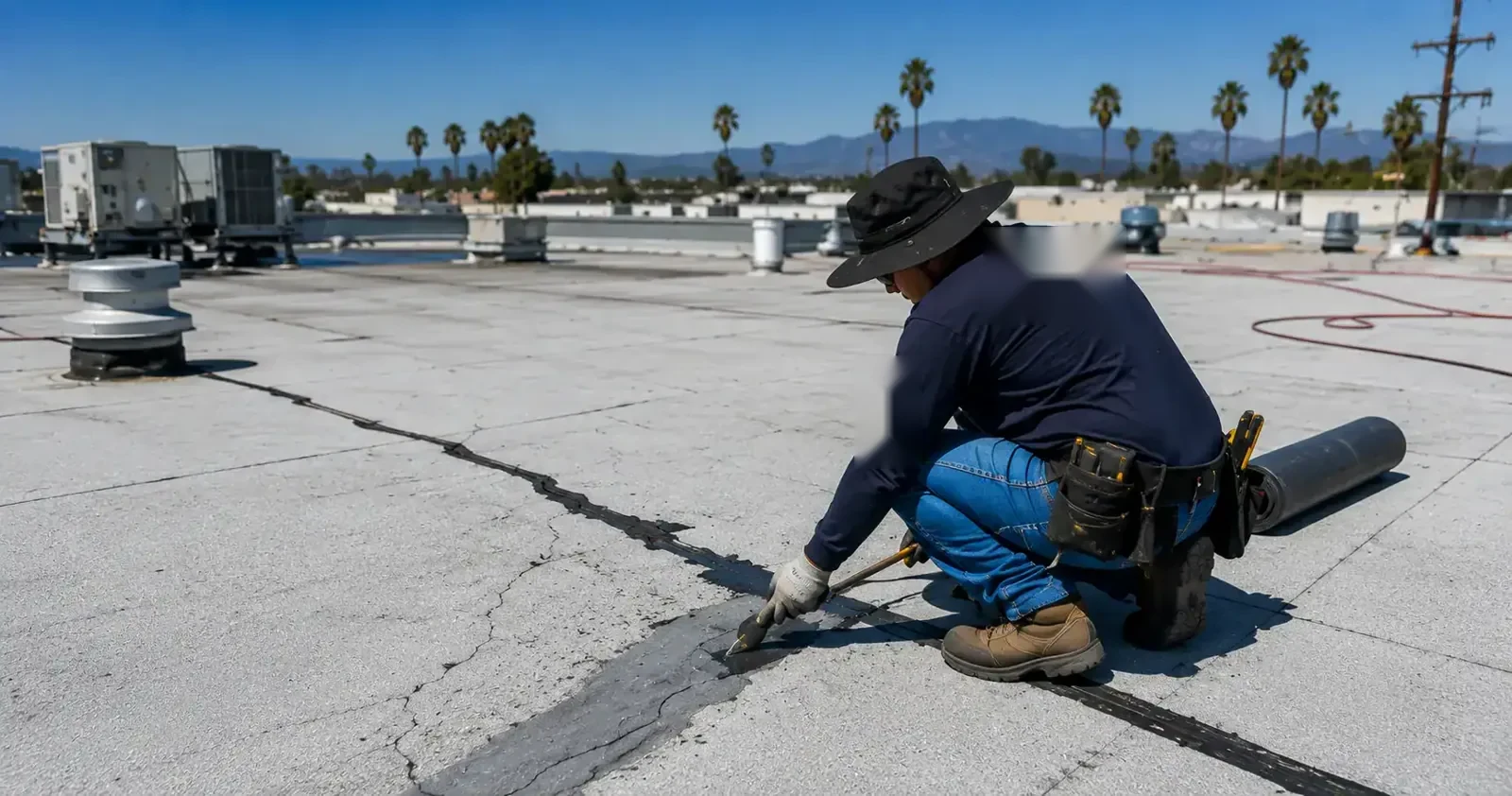
Record the membrane type when known, seam direction, width, condition, and any adjacent patch or change in substrate. For thermoplastic seams, note the weld edge, visible contamination, fishmouths, and whether the separation follows a straight line or changes near a curb. For adhered or asphaltic systems, describe the lap and material condition rather than applying a generic weld test. The repair method follows the actual assembly.
A seam can fail at one end while the remainder remains sound. Probe only with an approved method and record the tested length; do not convert a spot check into a whole-roof conclusion. Photograph the open section with a scale and reference point. If the seam crosses a drainage low point or equipment route, also inspect whether standing water or traffic contributed to wear.
Failure Mechanisms
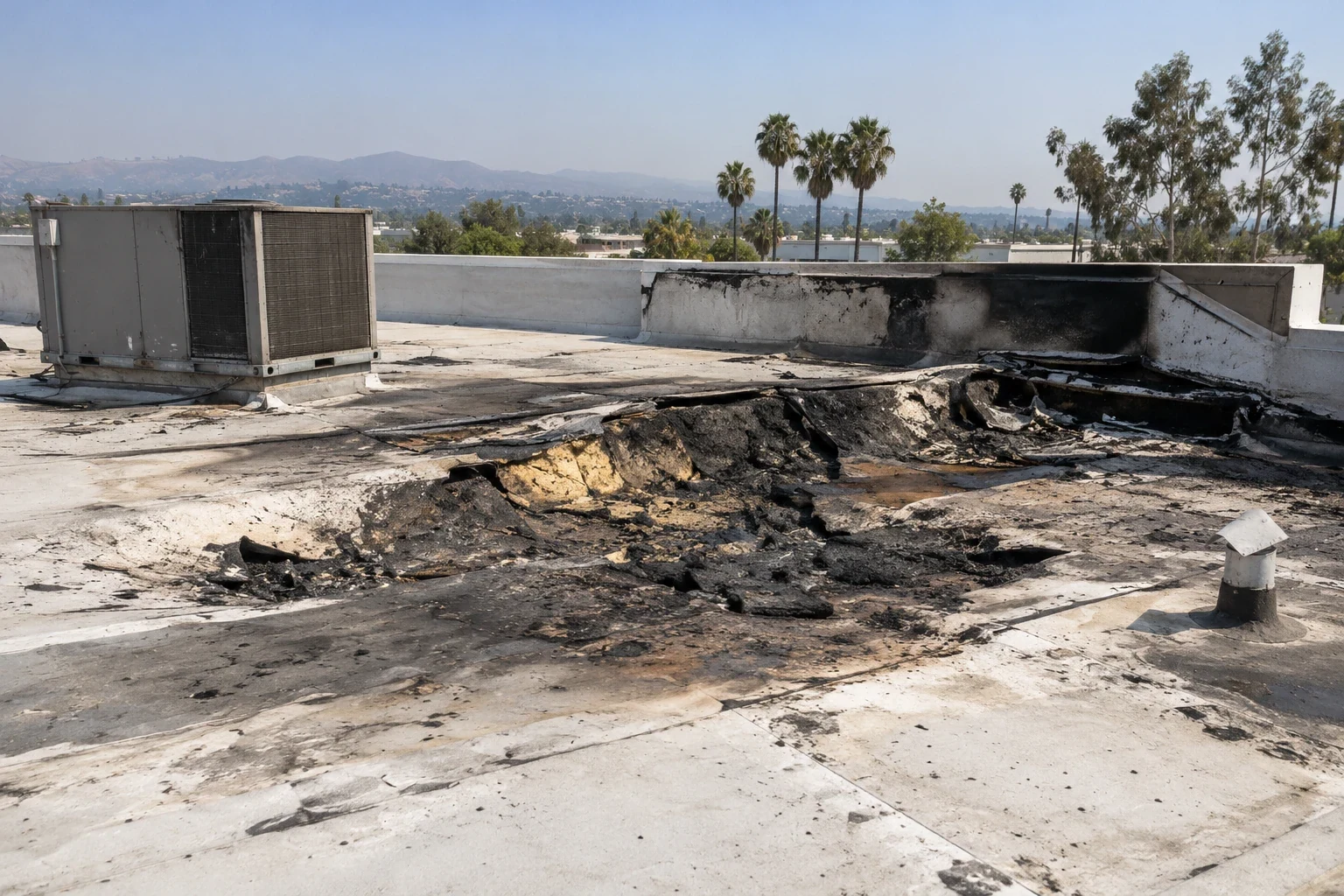
Possible contributors include poor preparation, unsuitable temperature at installation, contamination, movement, aging, fastener pattern, or repeated foot traffic. The inspection can describe evidence for each possibility but should avoid assigning cause without adequate history. Compare the failure with the installation detail and prior repair records. If the membrane is brittle or the substrate has shifted, a surface patch may not restore the assembly’s expected movement capacity.
At a test opening, check whether insulation is wet, whether attachment is intact, and whether the deck remains stable. Stop when the approved boundary is reached. If the observed layers differ from the documented assembly, photograph and measure them before proposing a change. An owner should receive the revised quantity, price basis, and sequence before the crew proceeds.
Repair Method
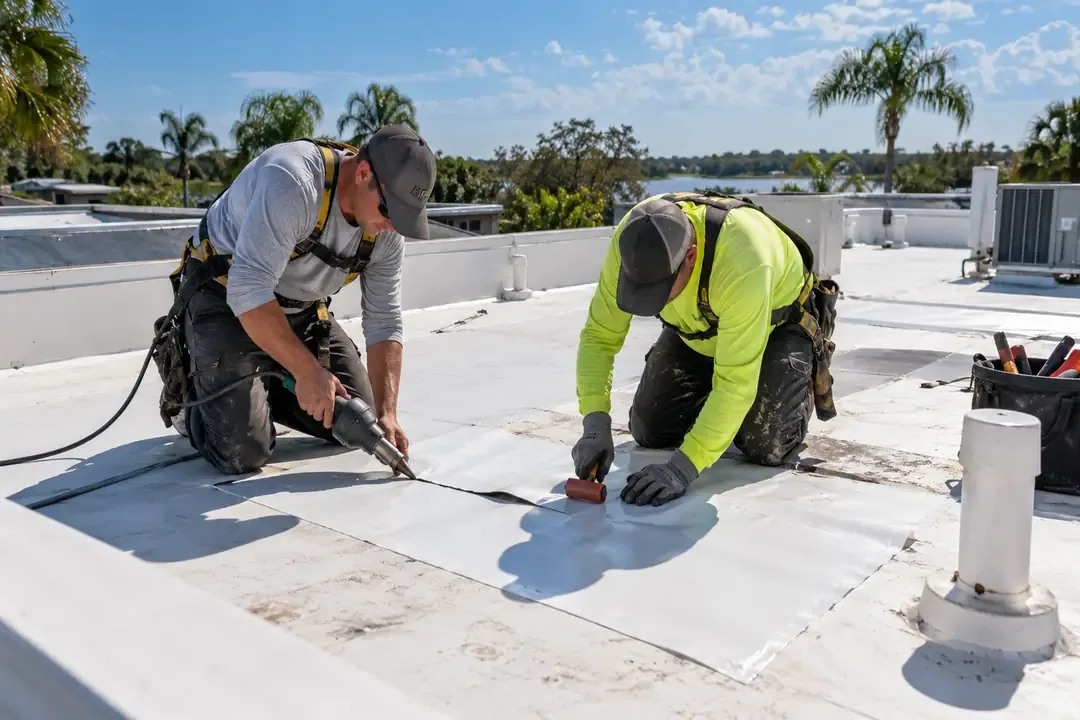
The repair may involve cleaning and re-welding, an approved cover strip, adhesive application, or replacement of a limited membrane section. Prepare the substrate as required and allow the specified cure before testing or foot traffic. A new strip should extend onto sound material by the manufacturer’s detail, with corners or intersections treated as separate workmanship points. The scope should identify which method is used and the reason it fits the assembly.
Do not bridge a moving joint with an incompatible rigid patch. If the seam is adjacent to edge metal, curb flashing, or an expansion joint, inspect that interface as well. TPO assembly requirements may help identify a compatible detail when the installed system is confirmed as TPO; verify the product before relying on that route.
Water Test
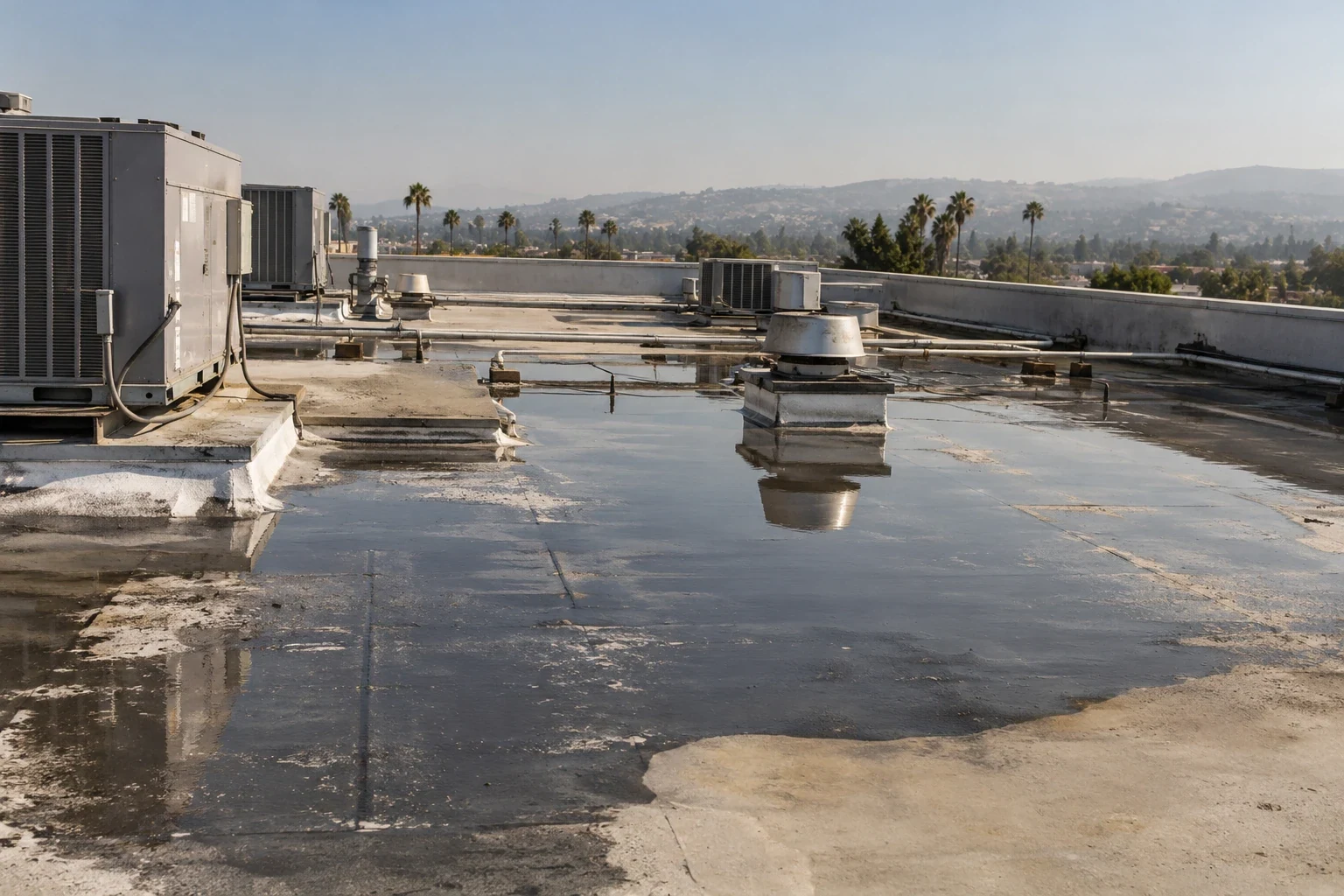
A controlled probe or test evaluates a limited section under defined conditions. Record the tested length, method, result, and any inaccessible segment. A broad flood test can create a leak elsewhere and should not be used without approval and a clear drainage plan. If the repair requires cure time, wait before testing. The property representative should know where water will be applied and how the interior is protected.
After repair, examine the seam edge and transitions for continuous bond and open points. If water entry is still suspected, isolate the test rather than applying water across the whole roof. A roof inspection record can preserve the baseline and show how later checks differ.
Local Context
Menifee’s zoning map distinguishes business-park/light-industrial, retail, office, and manufacturing uses. The City strategy describes commercial and mixed-use corridors along I-215, but these municipal materials do not identify roof seams or an individual project. For the property, verify the address, roof owner, assembly, maintenance history, and conditions during installation. Newport Road Economic Development Corridor and Northern Gateway Economic Development Corridor describe land-use planning, not a list of roof seam conditions.
The project team should follow the installed roof system’s documentation and approved repair requirements. The two named Menifee districts are broad planning context, not evidence that an individual seam has failed.
Prevention
After a seam repair, reduce uncontrolled roof traffic and mark a safe route where the owner’s system allows. Maintain walk pads, keep equipment service from dragging hoses across laps, and note any later penetration or modification. Seasonal inspections can compare the repaired length, adjacent seams, and roof transitions. If a contractor other than the roofer accesses the surface, record the date and area so a later condition can be traced accurately.
For a multi-building owner, log each seam repair by address and roof zone rather than storing one generic work order for the portfolio. Track material, length, test method, and next check. If nearby laps begin to separate, request a broader survey; do not extend the original repair automatically. Preventive roof maintenance can include seam observation and drainage checks.
Closeout
The repair packet should identify membrane type, tested seam length, preparation, installed material, cure requirements, photos, and the result of any approved validation. Mark adjacent failures that were not included and why they remain outside scope. If warranty notice is required, record who was contacted and what approval was received. This gives facility staff a useful record before another vendor walks or modifies the roof.
A seam record is most useful when it notes the exact start and stop points, the tool or approved method used to test it, and the condition at both ends. If the membrane crosses an equipment path, mark where service crews walk and whether walkway material is loose or missing. The owner can then correct access practices while the roofer restores the failed lap. Keep that preventive action separate from the repair warranty and schedule a comparison at the next inspection.
A return visit should follow the stated trigger, such as a rain event or scheduled maintenance date. If a stain returns, use the original map to check the seam’s endpoints and nearby penetrations. A completed patch and a dry interior at one moment do not certify every roof area. The handoff should say exactly what passed and what has not been inspected.
When seam testing finds another condition, compare the record with low-area drainage and heat-related surface wear. Community Core describes land use, not the tested roof.
Commercial Roofing Questions
How do you test a separated roof seam?
Use a method suited to the confirmed membrane system and test a defined length. Record the exact boundary, result, and any untested section.
Can a short seam opening require a longer patch?
Yes. The chosen repair must tie into stable material and meet the system detail. The measured patch limit should be included in the approval.
What if a seam opens near ponded water?
Inspect drainage and attachment independently. A low area and a weld defect may coexist, but neither finding automatically explains the other.
When should the roofer stop work?
Pause if the test reveals an unknown assembly, wet insulation, unstable deck, or larger defect than authorized. Secure the opening and request approval.
What belongs in seam closeout?
Provide seam location, tested length, repair method, preparation, photos, cure interval, and validation result when testing was approved.
Related Roofing Work
Coordinate a commercial roof inspection
Request a Roof Assessment
Arrange an inspection with the property contact. We can trace the reported condition, record the observed roof detail, define a repair boundary, and state what remains untested.
Service area
Menifee, Perris, Murrieta, Temecula, Hemet, Lake Elsinore and nearby Inland Empire communities
Quick contact
[email protected]
555-555-5555