
Commercial Roof Membrane Puncture Repair in Menifee
Home / Roof Damage Repair / Commercial Roof Membrane Puncture Repair in Menifee
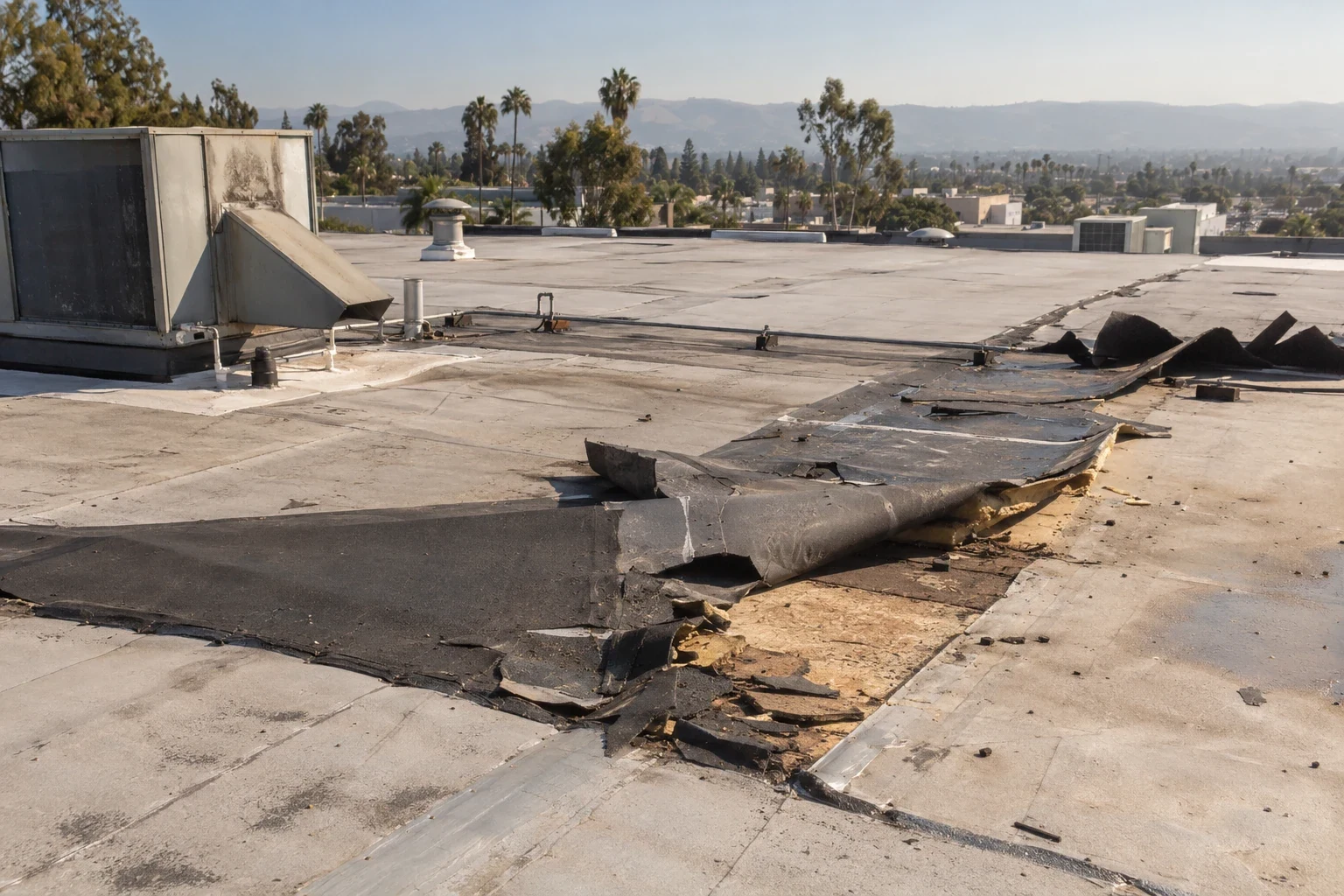
A pinhole or cut in a membrane can admit water while remaining difficult to see from the ceiling below. We inspect the reported room, map the roof area above, and look for punctures, scuffs, sharp debris, and recent service routes. The report marks each confirmed opening and distinguishes it from surface wear. If the source is uncertain, a controlled test plan names the boundary and protects the interior before water is applied.
Ask the property manager which vendors accessed the roof, what equipment work occurred, and whether materials or tools were staged there. That chronology can focus the search, but it does not assign responsibility. Seam separation and a puncture can look similar from inside; inspect each detail rather than treating the ceiling stain as the source.
Search Pattern
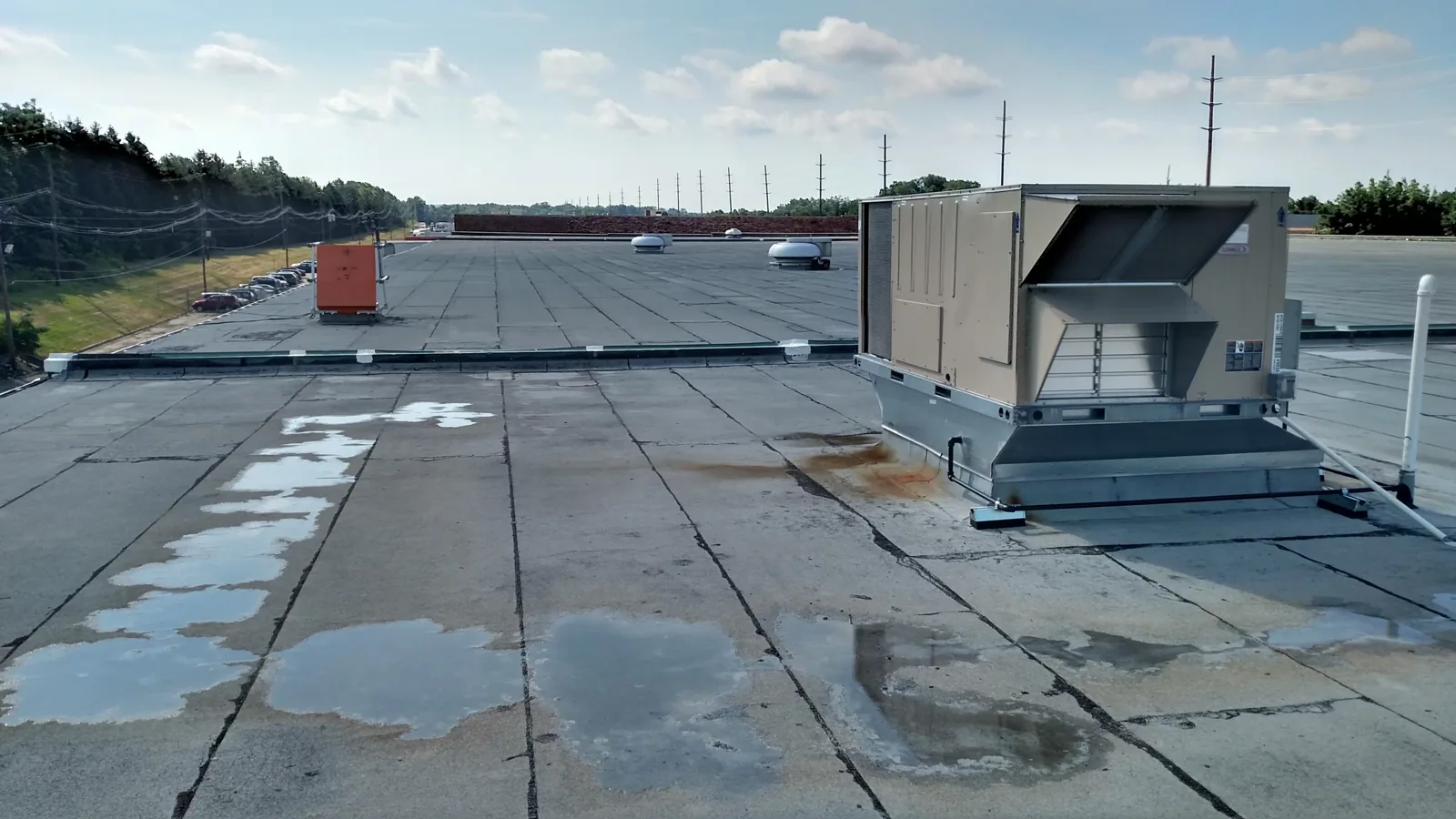
Start with a grid or roof-plan reference around the affected room and follow the most likely drainage direction. Examine corners, walk routes, equipment service areas, and the perimeter of recent work. A close photo should show the opening or abrasion; a wider photo locates it relative to a curb, drain, or seam. Do not mark an unverified scuff as a leak opening. Moisture mapping or a test opening may be needed if water traveled under the membrane.
If the roof has several layers or an overlay, note the surface and any underlying assembly visible at an authorized opening. A puncture through the top membrane may not penetrate all layers, while a fastener can create a hidden path. Record what is confirmed and what remains inaccessible. Wind-related movement may be another nearby concern, but document it separately from a cut or impact.
Cause And Access
Potential sources include dropped tools, fastener fragments, unprotected service traffic, sharp debris, or an equipment contractor’s work. The report should state the evidence and the timing supplied by the site, not identify a responsible party without proof. Review access logs and work orders with the property manager. If a vendor is still working nearby, coordinate a safe pause so no one covers or enlarges the suspected location before documentation.
A permanent solution may also require a walk path or protection plan. Mark the access route, install specified walkway material where appropriate, and explain which trades need permission to cross the roof. A repair cannot prevent a later puncture from an unprotected tool or new penetration. Ask the owner to notify roof maintenance before future equipment work begins.
Repair
Clean and prepare the membrane using the compatible system method, then install a patch with the required rounded corners or cover-strip detail. The patch should extend onto sound, dry material by the specified dimension. If moisture is trapped beneath the opening, remove only the approved area and replace affected insulation before closing. The estimate separates membrane patching from insulation or deck work so each quantity can be checked in the field.
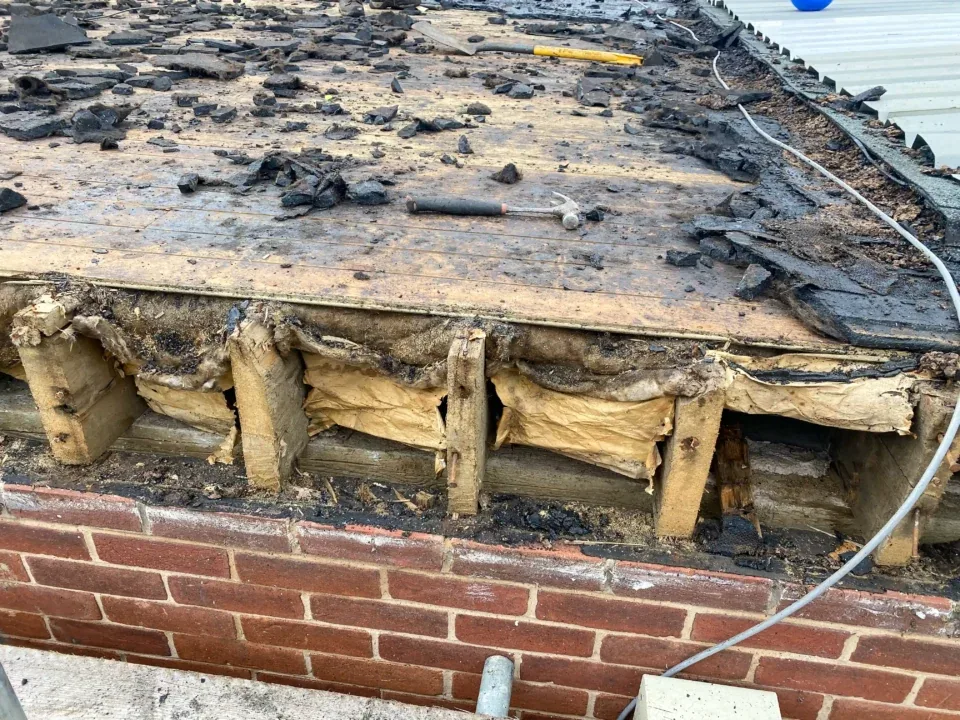
Before expanding a test opening, stop and get approval. Photograph each layer, measure wet material, and protect the exposed area. A larger repair boundary should follow the actual moisture extent and attachment, not an arbitrary square around the ceiling stain. A documented roof repair records the boundary and material so a future technician can distinguish it from another puncture.
Interior Protection
If the opening sits above a server, stockroom, clinic, or occupied office, the property contact decides whether to isolate the room and protect equipment. Use approved coverings and keep walkways open. The roof crew should not handle electronics, food, or tenant property. For a test opening, agree on a room contact, containment method, and cleanup check before work begins. If water has reached electrical equipment, involve the responsible electrician and follow the facility’s safety procedure.
Photograph the interior condition without including confidential documents, customer data, or personal information. The roof report needs the location and observed water, not the room’s business records. Record whether the ceiling dried and whether any new water appeared after repair. These observations can support a next check while avoiding the false conclusion that a repaired roof immediately resolves all residual interior moisture.
Menifee Context
The City describes Menifee as inland and naturally dry and identifies increasing temperatures as a planning risk. Such context can inform scheduling for exposed roof work; it cannot identify the source or date of a puncture. For a site-level diagnosis, rely on direct observations, maintenance history, and authorized tests. Northern Gateway Economic Development Corridor and McCall Boulevard Economic Development Corridor do not identify punctures at individual properties.
McCall Boulevard Economic Development Corridor and Northern Gateway Economic Development Corridor are municipal planning designations, not a list of roof failures or a service boundary. Confirm the address, property representative, roof access, and any vendor work at the building. The corridor names offer only broad geographic context for the city.
Validation
After patch installation, inspect adhesion or weld continuity, perimeter edges, corners, and adjacent seams. Record the material, preparation, cure time, and any test result. Test only the repaired boundary with the owner’s approval and a safe drainage plan. If the membrane is wet or contaminated, follow the system requirements rather than covering the surface. A passing spot test does not certify other roof sections.
The site contact should know when normal access may resume and which areas require a protected route. If a new puncture appears later, identify it as a separate condition and compare the photo scale. A condition report can keep distinct repairs visible across maintenance cycles.
The repair map can also note nearby access hatches, ladders, and service routes so the building team can reduce unnecessary crossings. If the puncture sits beneath a delivery or maintenance path, ask the property contact whether a protective walkway is allowed by the roof system. Do not place mats, pallets, or loose sheets without approval; an unsuitable cover can trap moisture or obstruct drainage.
Handoff
Provide a roof map, puncture location, close and context photographs, material details, moisture findings, test boundary, and any repair exclusions. Note whether a later vendor inspection is planned. Keep owner-approved access records with the work order so the next call can trace the sequence. If the puncture is near a seam or curb, note those features without merging their condition into the patch scope.
A useful maintenance response includes a post-rain interior check and a reminder to report future roof access. If the stain remains after the puncture is sealed, inspect for residual moisture or a second entry path rather than assuming the patch failed. The next check should identify the roof zone and observation date, allowing the property team to compare evidence over time.
For a nearby wall detail, refer to flashing repair; if the membrane is weathered, document surface aging separately. Northern Gateway is planning context only.
Commercial Roofing Questions
How can a puncture be found beneath an offset stain?
Map the room to the roof, then inspect likely traffic and equipment paths. Use approved moisture checks or a controlled opening if the source remains uncertain.
Does every scuff require a membrane patch?
No. Document whether the surface is cut through, abraded, or still intact. Treat only a verified condition using the system-compatible method.
Who should authorize opening the roof?
The owner or property representative approves the location, access, interior protection, and any removal beyond the planned test area.
Can the patch stop a later tool puncture?
A repair restores the documented area. Roof-access controls and approved walk paths help reduce future damage from service traffic.
What if water remains indoors after repair?
Compare the roof map and interior observations. Residual moisture or another entry route may need review before altering the completed patch.
Related Roofing Work
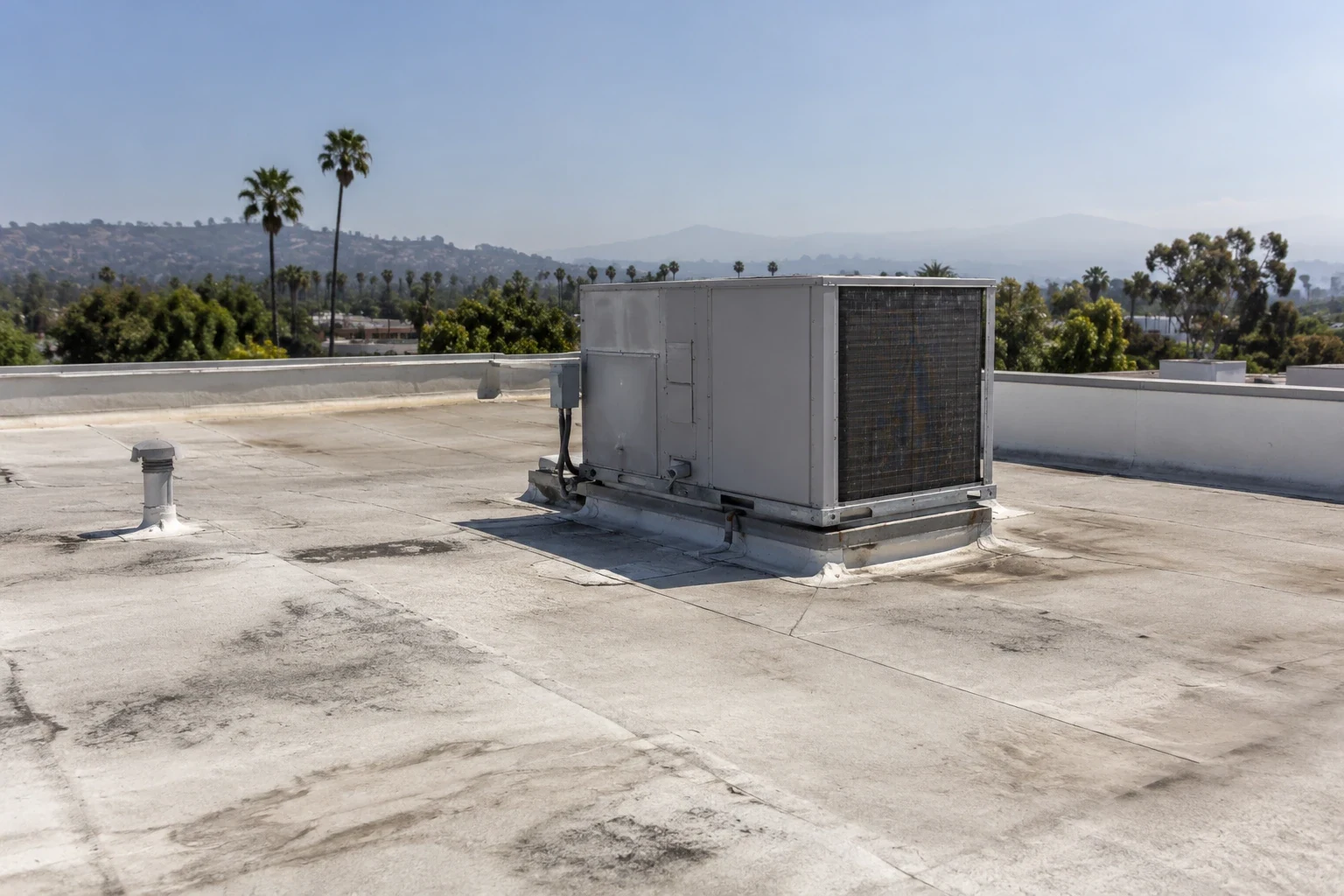
Coordinate a commercial roof inspection
Request a Roof Assessment
Arrange an inspection with the property contact. We can trace the reported condition, record the observed roof detail, define a repair boundary, and state what remains untested.
Service area
Menifee, Perris, Murrieta, Temecula, Hemet, Lake Elsinore and nearby Inland Empire communities
Quick contact
[email protected]
555-555-5555