Commercial Roofing for Logistics and 3PL Operations in Menifee
Home / Industries We Serve / Commercial Roofing for Logistics and 3PL Operations in Menifee
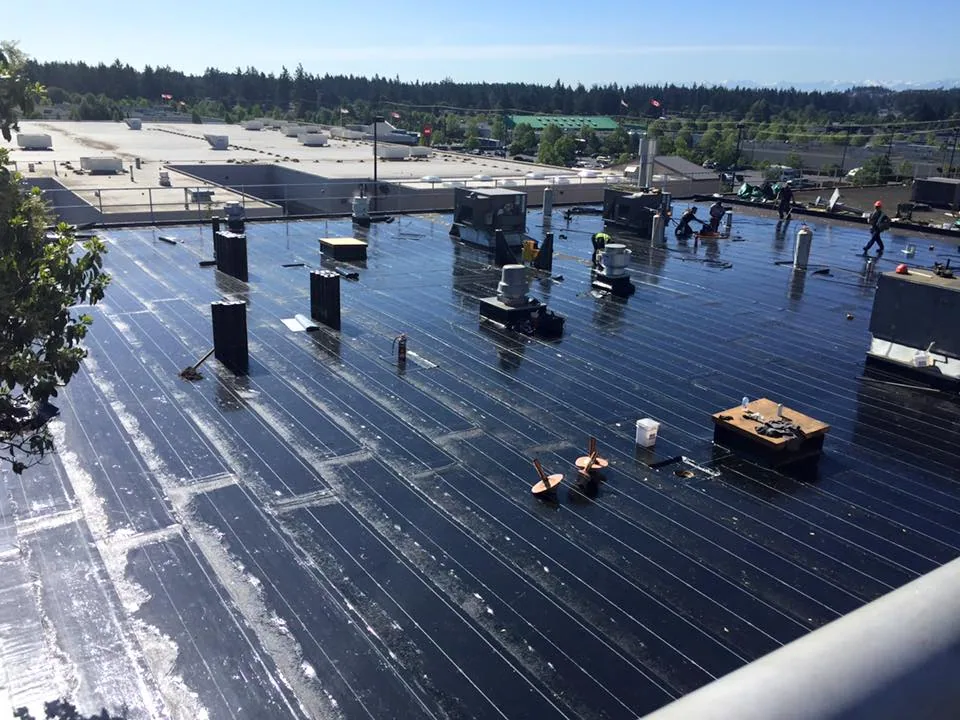
A distribution roof may cover long-span storage, dock offices, battery charging, conveyors, and rooftop units while trailers and inventory keep moving below. The first inspection connects the water report to the roof grid, drainage, penetrations, and the operating area. We identify a repair boundary, note any test needed, and let the logistics contact set lift access, dock closures, and temporary traffic routes.
Third-party logistics operators may work across shifts and tenant accounts. The roof plan keeps each building and customer area separate. For a single warehouse, roofing for a distribution building can address dock and high-bay sequencing, while the operator confirms its own inventory and security procedures.
Protect Dock and Trailer Movement
Before staging materials, the site contact identifies live dock doors, trailer queues, yard crossings, pedestrian walkways, and emergency access. A lift route should not compete with a truck turn or block a fire lane. We mark the area closed, alternate path, delivery window, and contact who can release the lane. If a load arrives outside the plan, the crew pauses at a safe staging point.
At shift end, barriers and materials are checked against the next shift's start time. A dock office beneath a roof opening may need interior protection even when the loading doors remain open. Phased work around active shifts defines the daily roof and ground release together.
The operations team may compare records for multi-site property managers with the dock and trailer route confirmed for that building.
Keep Inventory Dry and Traceable
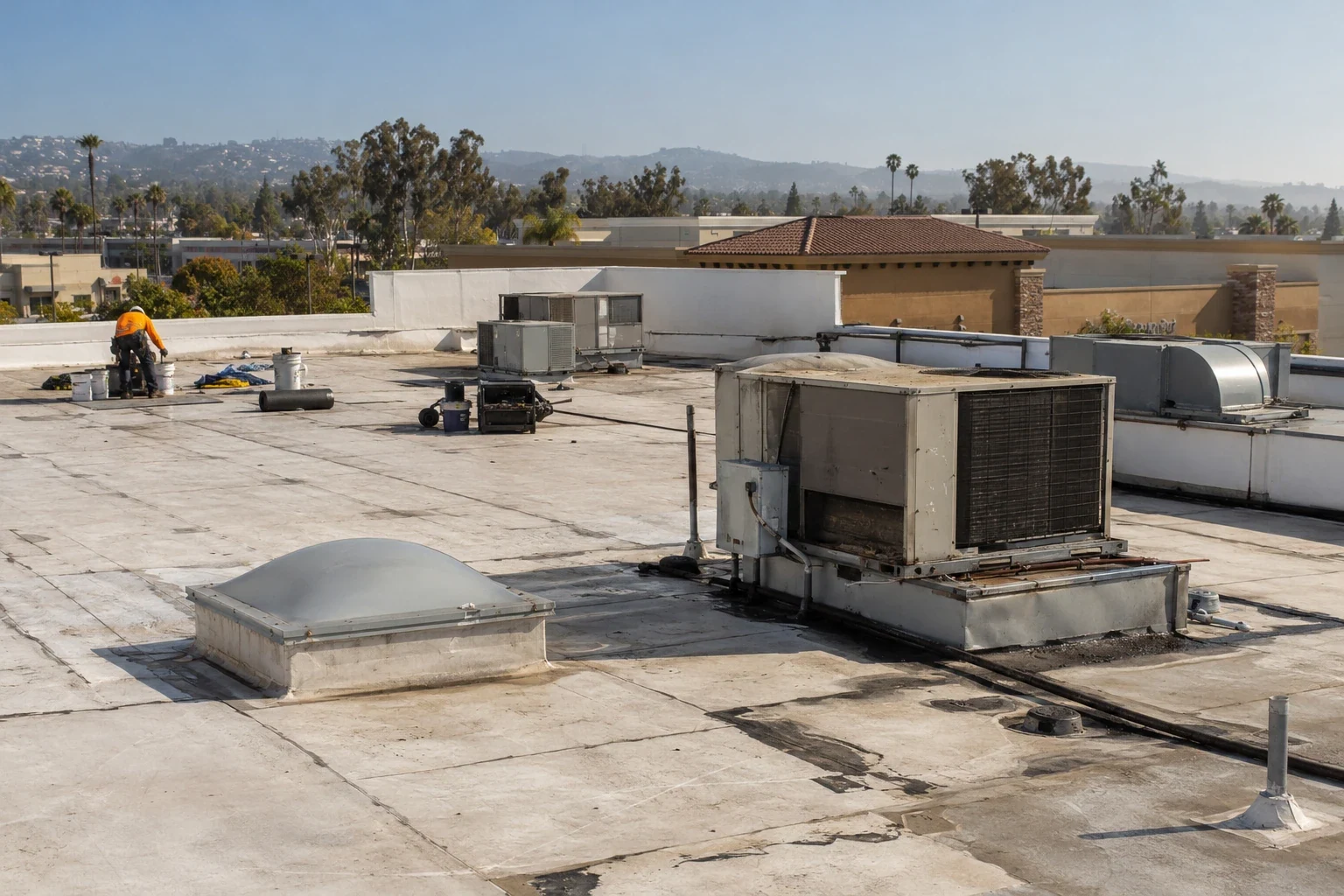
Inventory is often staged by account, order, or temperature requirement. The logistics manager identifies sensitive goods and the section below the proposed work. We map that roof zone, agree on covering or a temporary move, and record how the area is checked after rain. No product or customer information needs to appear in the contractor's public copy or general roof report.
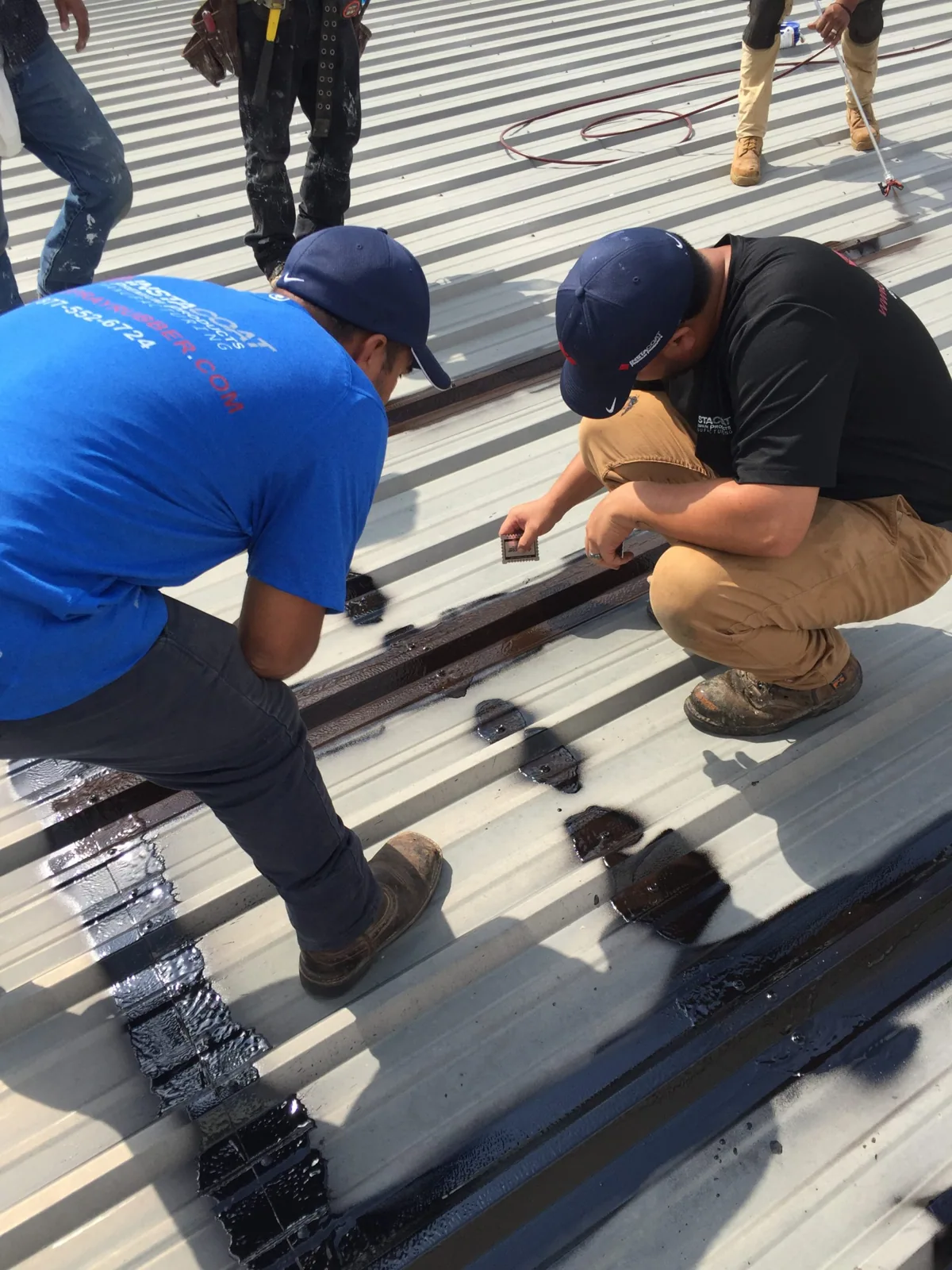
If the leak source is uncertain, we separate temporary containment from the permanent repair. Moisture testing can establish whether insulation is wet beyond the visible stain. An inspection before a dock work window can document the evidence before the operator commits to a longer closure.
Review Drainage Across Long Roof Runs
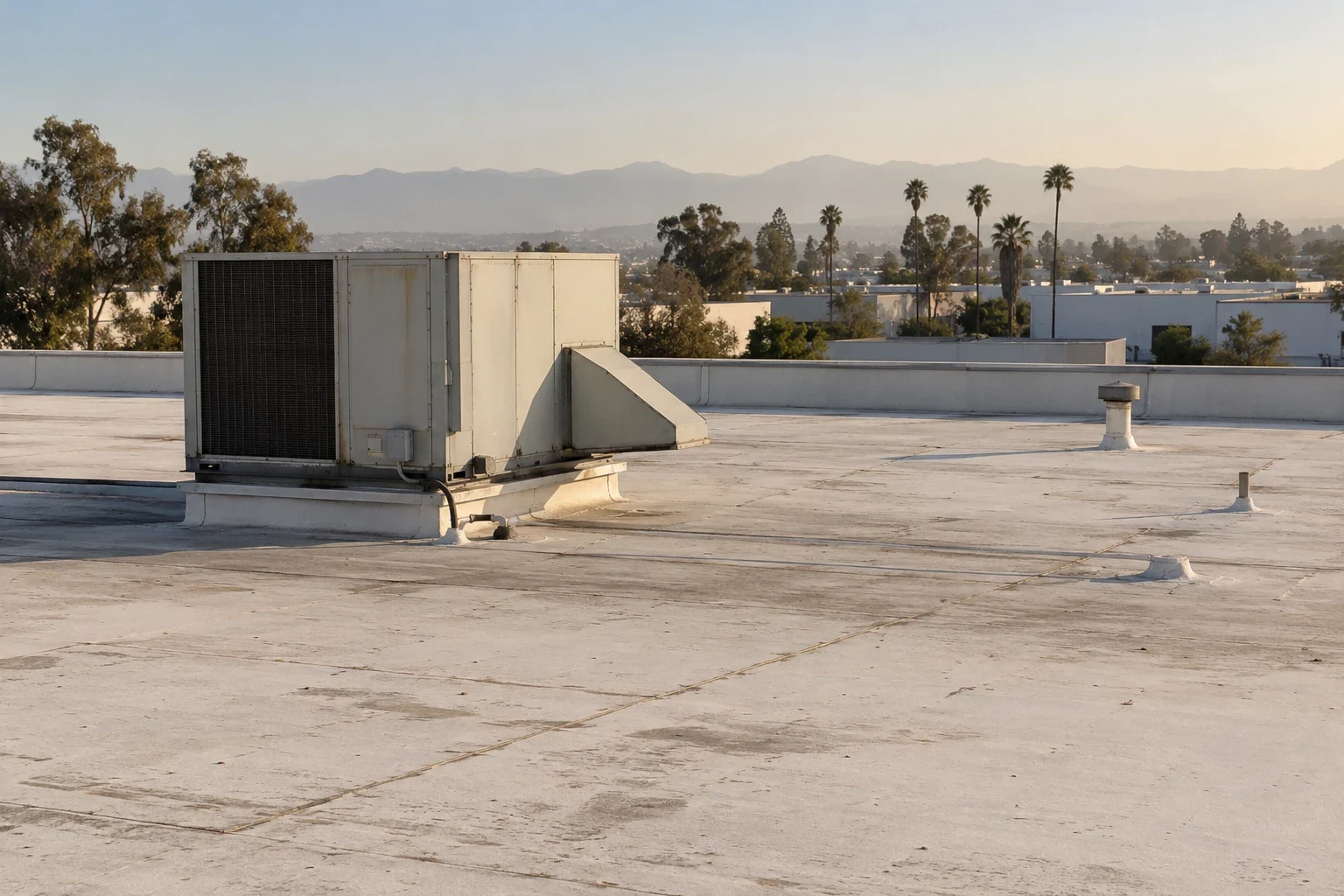
Long roof planes can carry water far from the interior mark. We compare slope, seam direction, drains, scuppers, overflow points, and prior patches with the reported area. A blocked strainer and a failed flashing need different actions. The report labels each condition and identifies any test that would resolve where water entered. It does not assume that a single drain serves the whole building.
Drain cleaning can be scoped separately from membrane work. We record outlet condition, overflow route, and the nearby roof field to be rechecked after water is removed. A drainage check for large roof zones gives the operator a defined closeout point.
Interpret Local Industrial Planning Carefully
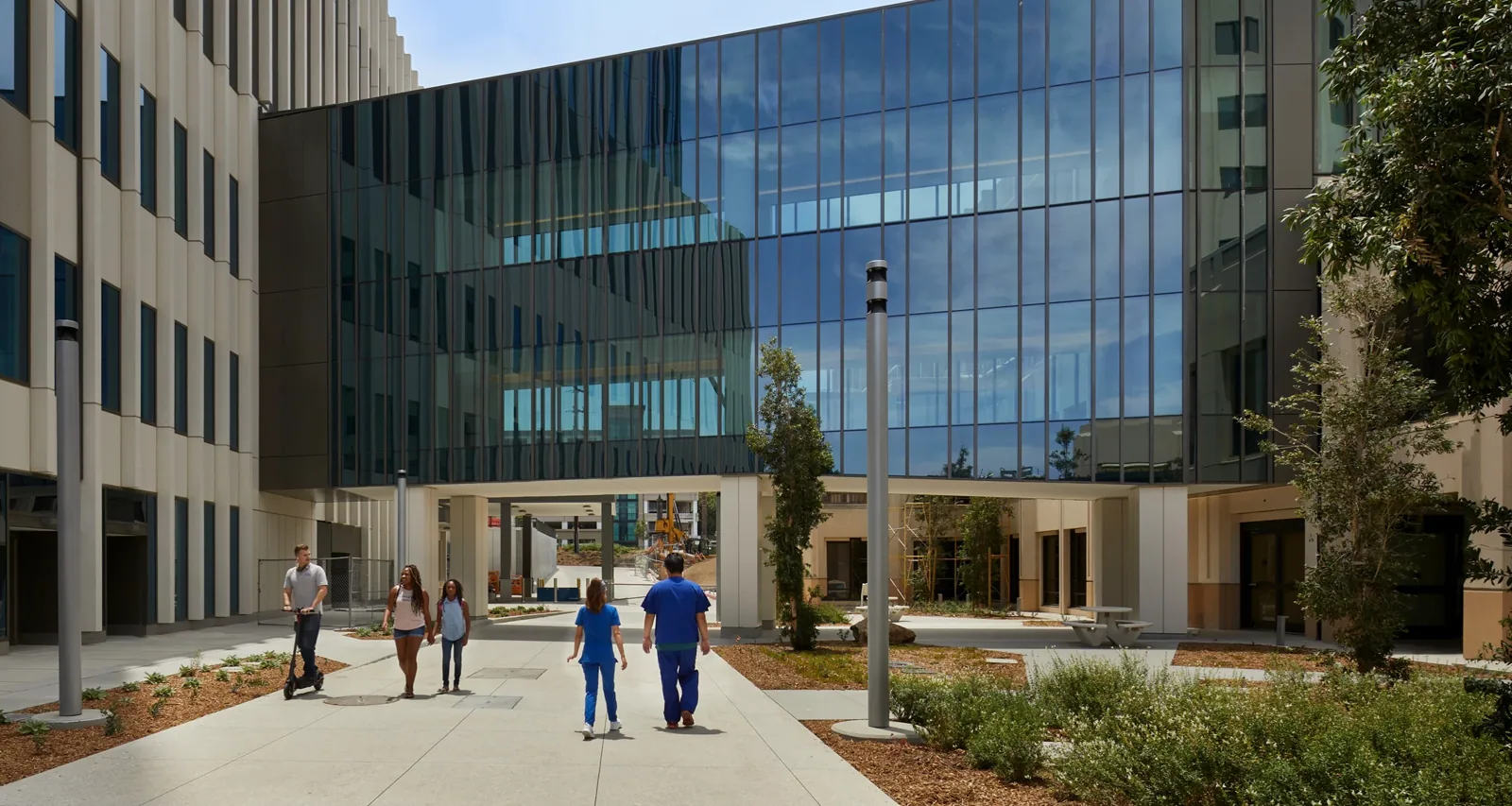
Menifee's 2026 economic strategy identifies logistics, manufacturing, and distribution as emerging sectors connected with industrial development. Northern Gateway Economic Development Corridor and Southern Gateway Economic Development Corridor are broad planning areas rather than an active-building inventory. Neither fact establishes a particular 3PL operation or roof need. The operator and owner confirm the site, loading plan, and approved access.
A property in the Southern Gateway employment corridor still needs its own roof survey, drainage map, and shift plan. We base the estimate on the inspected assembly and verified operating constraints.
Coordinate Rooftop Equipment and Conveyors
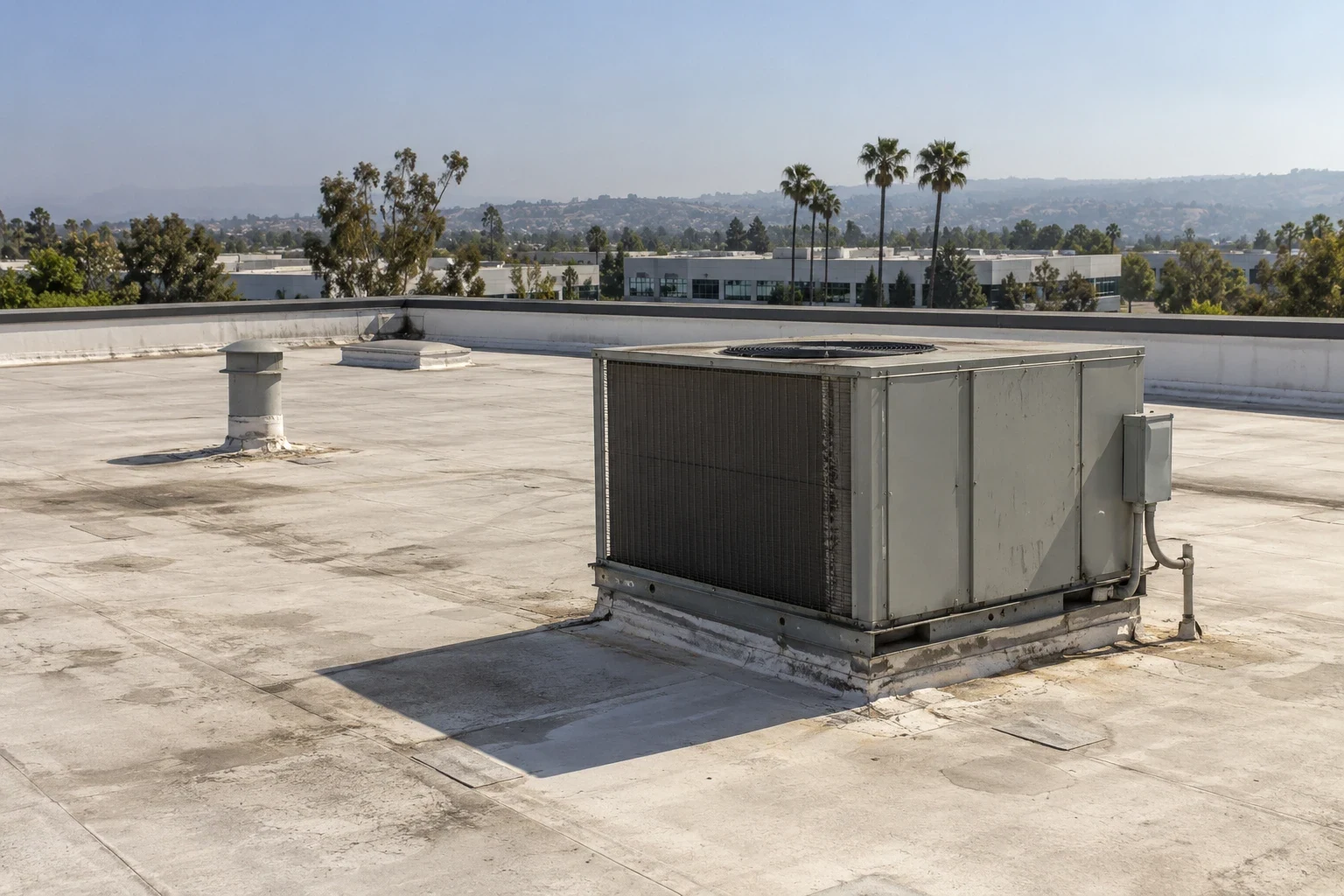
HVAC, exhaust, conveyors, antennas, and service platforms may have separate owners or maintenance contractors. We label curbs and supports, inspect flashing and fasteners, and mark the safe route for technicians. A unit lift or conveyor change is authorized by the operator and the responsible trade. Roofing scope ends at a documented membrane tie-in unless the owner approves related work.
After another trade visits the roof, we check the disturbed area for new penetrations or damaged membrane before closing the work order. A review of equipment and roof interfaces can make those responsibilities explicit.
Compare Repair Timing With Throughput
A localized repair may fit between shifts if lift access, noise, and inventory protection are manageable. A wider replacement may need a planned closure or a sequence across roof zones. We show estimated work boundaries and conditions that could change after removal. The operator can compare throughput impact with the condition evidence instead of choosing a phase based only on calendar convenience.
For multiple buildings, records can track open repairs and recurring drains without assuming one facility's condition applies to another. A portfolio roof record can organize the schedule while preserving each dock, yard, and assembly map.
Release the Dock and Close the Roof Record
The closeout lists completed zones, seam or curb repairs, drain status, photos, test openings, material information, and follow-up dates. The ground-level release states when the dock lane, trailer route, and pedestrian path returned to use. If a cure period or rooftop equipment restriction remains, the operations contact receives the exact zone and end time.
Menifee’s current map separates commercial property from several industrial land-use categories. Those designations help describe planning; they do not confirm a particular operator, roof system, or condition. Roof coordination for production facilities is a separate operational context that can share a record format without merging work boundaries.
On a large distribution roof, a leak in the dock office may track back to a seam over storage aisles or a curb near rooftop equipment. We map the report to the roof grid and compare it with the building slope before recommending a test. The operations contact identifies account-specific inventory, temperature requirements, battery-charging areas, and the routes that must remain open. Ground protection can be staged by door or aisle, with a check before each shift takes over. If temporary cover is installed, the work order records who will inspect it after weather and what time a permanent repair can be scheduled. Dock productivity is not the only constraint: yard congestion, trailer appointment windows, security seals, and pedestrian crossings can change where a lift can operate. A phased estimate identifies each affected lane, each roof zone, and the point when the area returns to normal use. This makes it possible to compare a short repair window with a larger planned phase using both condition evidence and operating impact.
A useful shift update includes the doors or aisles affected, the barrier location, whether temporary cover was inspected, and the weather point that would trigger another check. The operations lead can relay this to the next supervisor without sharing a customer account list. At final handback, the owner confirms the yard route, dock availability, and any remaining lift restriction. A repeat visit can then use the same roof-grid reference rather than beginning with a new search for the original leak.
Commercial Roofing Questions
Can loading continue during roof work?
The operator decides by door and shift. The plan identifies lift access, protected docks, alternate trailer paths, and a point when barriers move.
How do you protect inventory?
The manager identifies sensitive goods and the roof zone above them, then approves covering, temporary relocation, or a controlled test.
Does a roof leak always come from the nearest drain?
No. We compare slope, seams, drains, penetrations, and prior repairs before locating a test or permanent repair.
Can multiple warehouses share one roof program?
A common schedule and report format can help, while each building retains a separate map, condition, owner, and access plan.
What is included in a dock-area closeout?
Repair photos, completed roof zone, drain findings, closed test openings, released lanes, remaining restrictions, and a follow-up contact.
Related Roofing Work
Coordinate a commercial roof review
Request a Roof Assessment
Schedule the roof review with operations and facilities. We can map dock constraints, inventory protection, water paths, and a phased work boundary.
Service area
Menifee, Perris, Murrieta, Temecula, Hemet, Lake Elsinore and nearby Inland Empire communities
Quick contact
[email protected]
555-555-5555