Commercial Roof Drains and Scuppers in Menifee, CA
Home / Commercial Roofing Services / Commercial Roof Drains and Scuppers in Menifee, CA
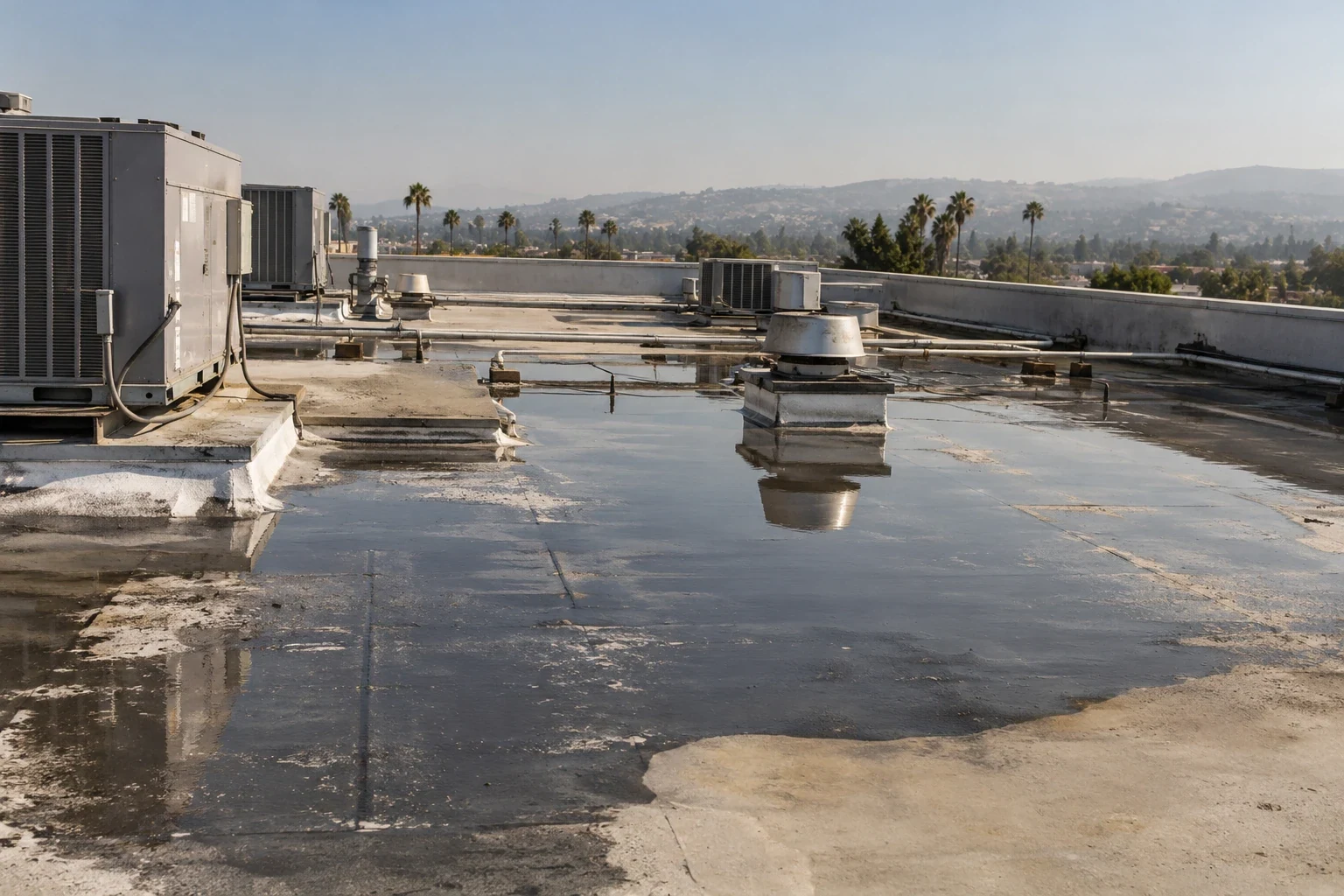
A drain bowl tells only part of the story when water remains on a commercial roof. The opening may be clear while a leader is restricted, a scupper is too high for the low point, or the roof surface has settled away from its intended path. In Menifee, heat-exposed membrane and metal details also deserve inspection beside each outlet because movement can open a water route at the flashing. We trace the flow from roof field to discharge, then note where water stops and what conditions surround it. A roof inspection can distinguish debris removal from a drain-body repair or a broader correction to slope.
Follow Water to Its Outlet
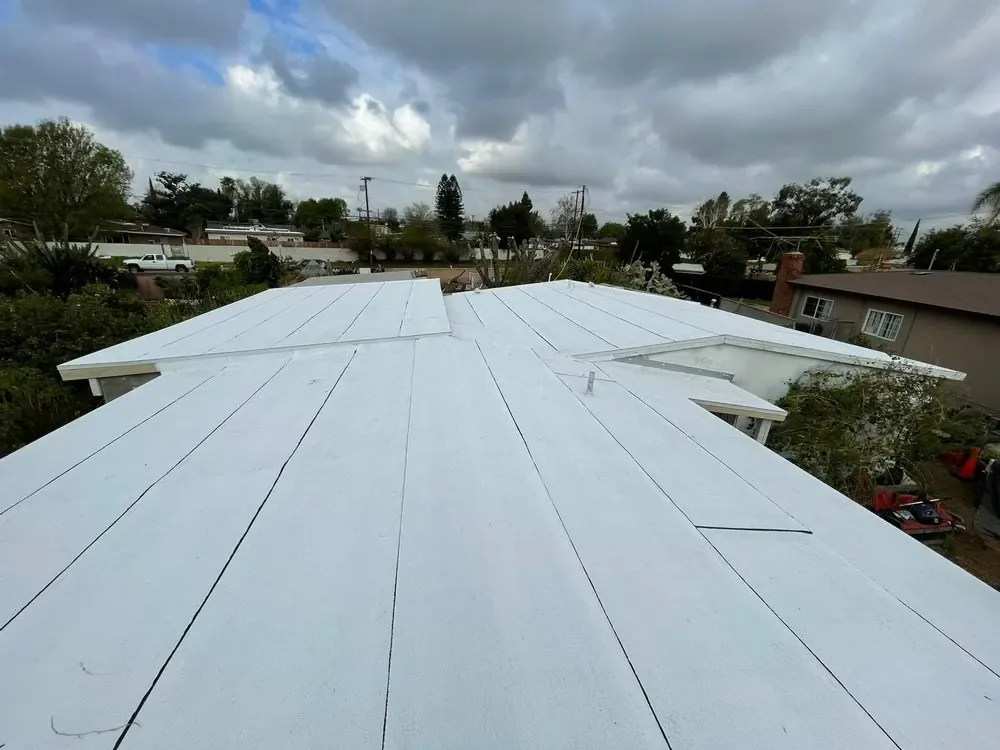
Start at the area where water remains and follow the roof plane toward the nearest drain, scupper, or gutter. A roof plan helps show whether the low spot feeds the intended outlet or lies behind a curb, equipment support, or raised seam. We clear loose debris from accessible openings, check the strainer, and observe whether water can reach the bowl. A dry opening after cleaning does not prove that the downstream line is open. The inspection should document standing-water depth when it can be measured safely, the visible route, and how long the area remains wet after rain or testing. Those observations guide whether to inspect the drain connection, adjust the slope, or address a separate membrane condition. Where access permits, a controlled flow check can show whether water reaches the discharge. We first note the dry baseline, start point, and expected route, then use a safe test method coordinated with the facility. If flow does not exit, the roof opening and any concealed leader or downstream line need separate evaluation. The report records the test extent, result, and connections that were not visible. A brief flow check helps locate a restriction but does not replace inspection of concealed piping or the roof layers around the drain.
Inspect the Bowl, Clamp, and Flashing
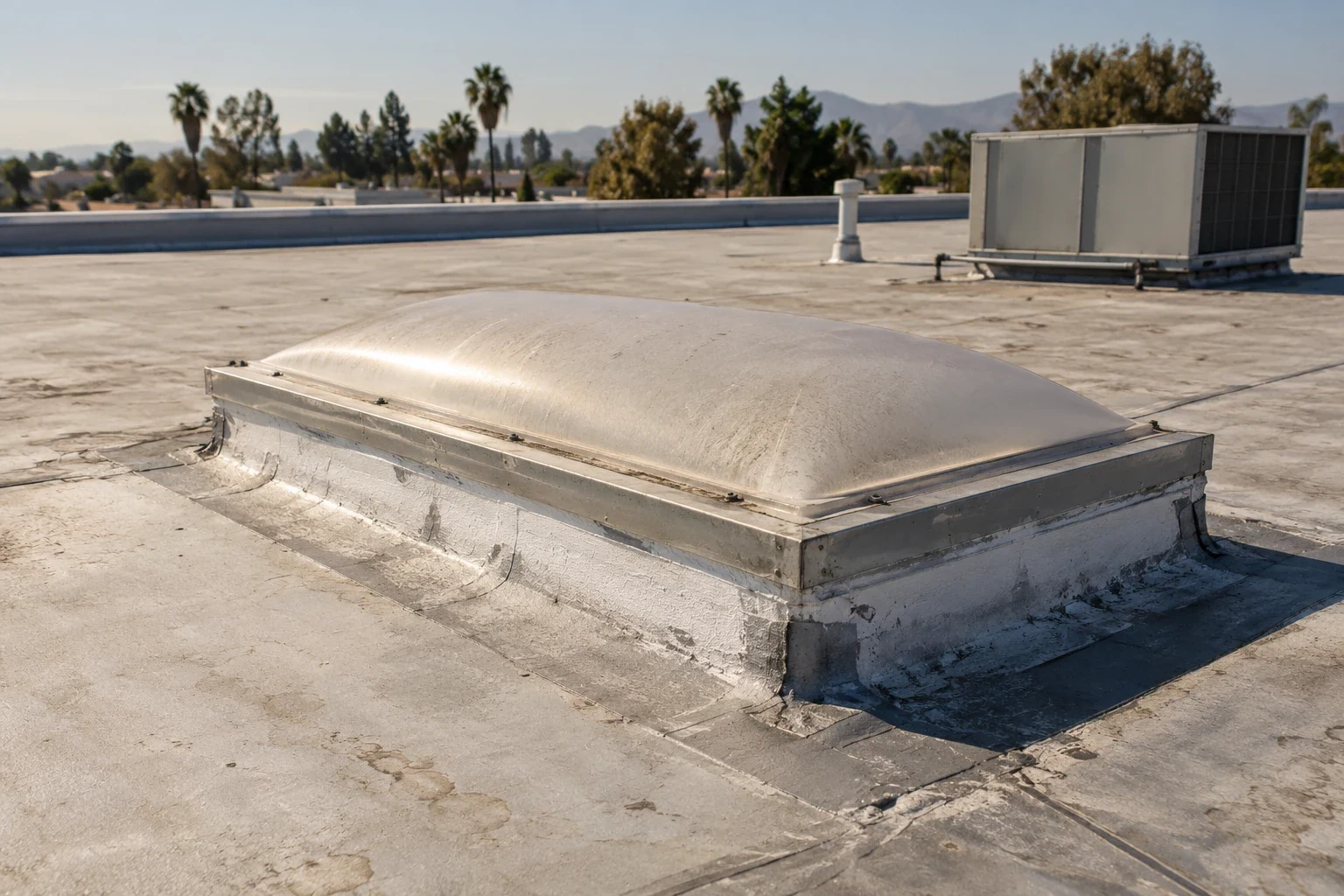
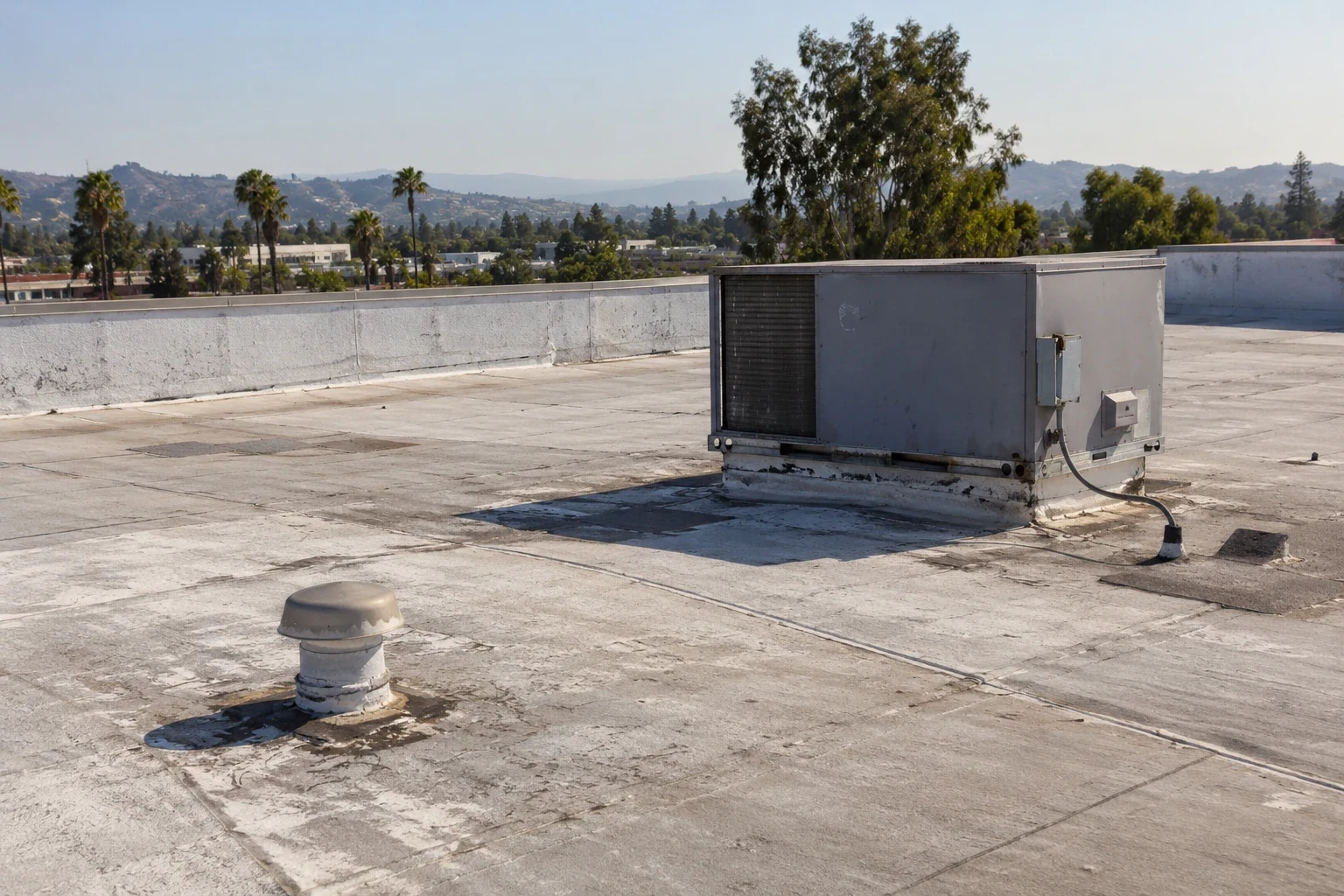
At a roof drain, the bowl, clamping ring, membrane termination, and flashing have to work together. We look for cracked or loose components, corrosion, missing fasteners, and membrane that has pulled away from the drain body. If the clamping ring is covered or difficult to inspect, the report says so rather than treating the outlet as sound. A repair may require exposing the connection and rebuilding the flashing with materials compatible with the roof system. On a confirmed single-ply assembly, a TPO drain detail needs a compatible membrane tie-in and a clean, stable surface. The repair record should show the opened area and the completed connection before the final surface is closed. If walkway pads or equipment-curb transitions obscure part of the bowl, photograph the limit and do not rely on a top-side view for a concealed clamp. An access opening may be needed before the estimate can specify replacement parts.
Check Scuppers and Overflow Routes
A scupper carries water through a parapet, so its opening, sleeve, surrounding membrane, and exterior discharge all matter. We check whether the opening is clear, whether the metal is separated at a seam, and whether the roof field falls toward it. An overflow outlet should remain visible and free of material that could obstruct it. Gutters and downspouts below the edge need to accept the discharge without backing water toward the roof. When the outlet sits above a low spot, cleaning alone cannot correct the height difference. A scope can separate scupper metal, flashing, gutter attachment, and downstream restrictions so the owner can see which component is being repaired and which requires another trade or inspection.
Separate Ponding from a Blocked Drain
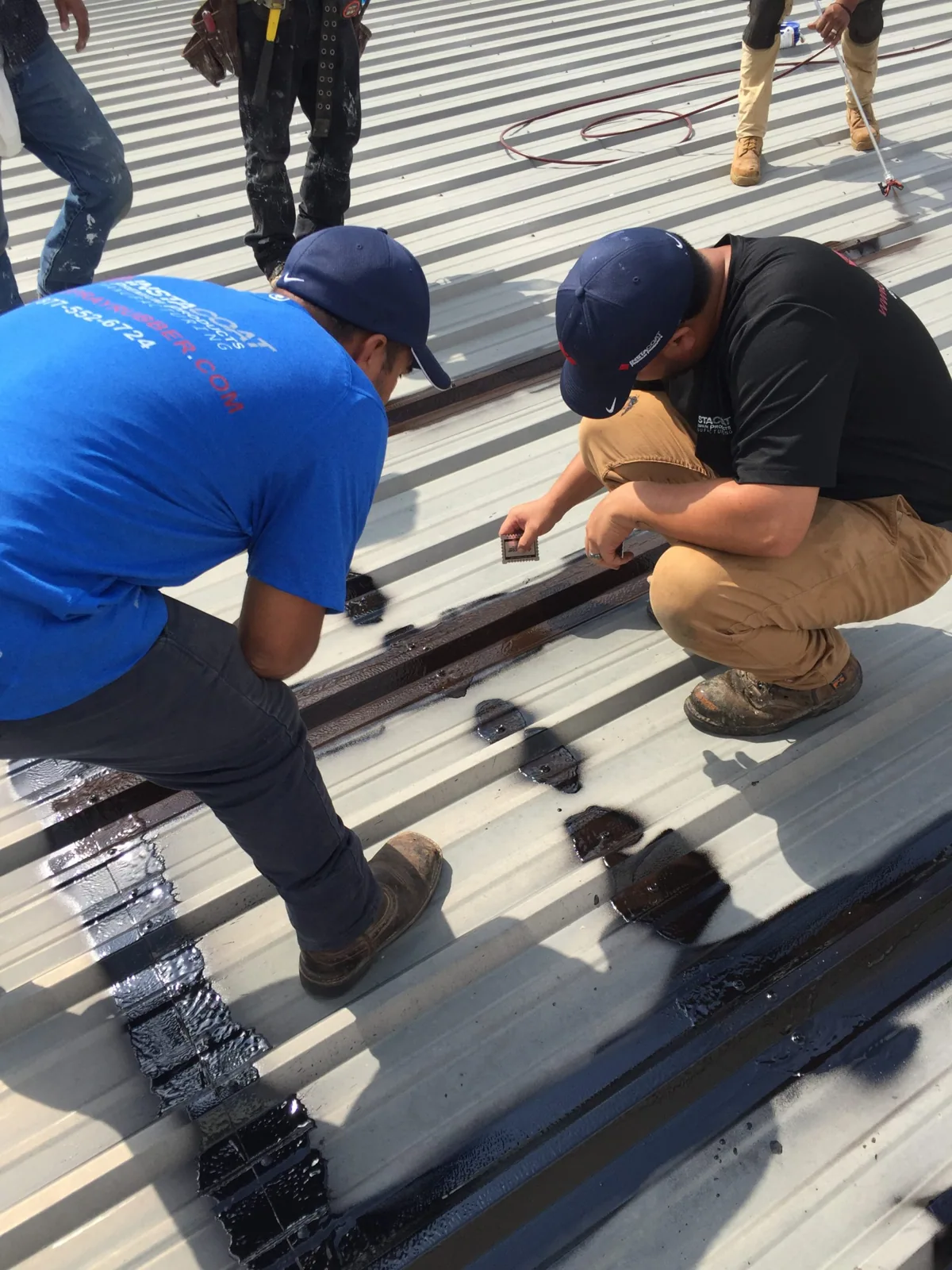
Water that remains after accessible outlets are cleared calls for a geometry review. A low area can come from insulation thickness, deflection, a misplaced drain, or a later roof layer that changed the slope. We map the extent and compare it with the drainage path before selecting a correction. A cricket or tapered insulation may redirect flow, but added material changes roof height and can affect curbs, edges, and doors below the roof. If water is associated with a soft surface or wet insulation, the scope needs moisture testing before a leveling proposal is prepared. A ponding-water roof assessment can separate outlet work from slope correction and identify the evidence needed for a design decision.
Plan Access Around the Building
Within Menifee, the Community Core Economic Development Corridor is envisioned as a city-center gathering place where civic functions and retail sit together; the Northern Gateway Economic Development Corridor focuses on employment districts, business parks, and industrial growth with connections to I-215 and rail. Those area-scale plans do not reveal the drainage assembly at any individual property. For a facility director, the actual roof use and access path determine how an open drain or scupper repair is protected during work. We identify equipment routes, deliveries, occupied rooms below, and any interior area that needs temporary protection. Menifee's hotter days also make surface temperature and cure requirements relevant when a membrane or coating detail is rebuilt. The inspection ties those schedule questions to the specific outlet and roof material, not to a district label.
Choose Cleaning, Repair, or Regrading
Cleaning is appropriate when debris blocks the outlet and the surrounding connection remains sound. A failed bowl or flashing requires a repair that restores the seal between the roof field and drain body. Persistent low areas may need slope correction or a more extensive roof evaluation. We compare those choices using the observed water path, moisture findings, roof layer, and height limits at curbs and edges. A drainage estimate should separate labor for access and cleaning from metal, membrane, insulation, and outlet materials. If multiple items appear, a broader commercial roof repair plan can rank immediate water controls against capital work. Routine roof maintenance can then track the corrected outlet on later visits.
Record the Drainage Change
Before closing a repair, photograph the drain or scupper, its membrane tie-in, nearby seams, and the discharge route. The closeout should state whether the outlet was cleaned, rebuilt, or left for another scope, and whether water moved as expected during a safe check. If a downstream line could not be observed, note the remaining access limit. A manager can then compare the next visit with the same roof-plan reference and decide whether more testing is warranted. That record is useful for a single drain and for a multi-building maintenance file alike. The Community Core corridor is one of Menifee's planned mixed-use areas, but the repair result comes from the tested outlet and roof field at the property.
Commercial Roofing Questions
What if water remains after the drain is cleared?
We map the remaining low area and inspect the route to other outlets. Persistent water can indicate a slope, deflection, or downstream issue, so the next step may be moisture testing or a drainage design review rather than more cleaning.
Does an overflow scupper replace the primary drain?
No. An overflow route is a separate safeguard and should remain open at its intended height. We check its opening, flashing, and discharge path along with the primary drain, then document any obstruction or condition that needs repair.
Can a drain be repaired without opening the roof?
Some surface obstructions can be cleared without opening the assembly. A loose bowl, failed clamping detail, or concealed connection may require access to the layers below. The inspection marks what is visible and what additional opening would confirm.
How do you protect operations during drain work?
We agree on roof access, work zones, debris handling, and any temporary interior protection with the facility contact. If the drain is opened, the scope sets a sequence for securing the area and restoring a watertight tie-in before the crew leaves that zone.
Related Roofing Work
Trace the Drainage Path Before Rebuilding It
Request a Roof Assessment
Arrange an inspection with the leak location, roof plan, and recent maintenance notes available. We will identify whether cleaning, outlet repair, or slope correction belongs in the scope.
Service area
Menifee, Perris, Murrieta, Temecula, Hemet, Lake Elsinore and nearby Inland Empire communities
Quick contact
[email protected]
555-555-5555