
Ponding Water Roof Repair in Menifee
Home / Roof Damage Repair / Ponding Water Roof Repair in Menifee
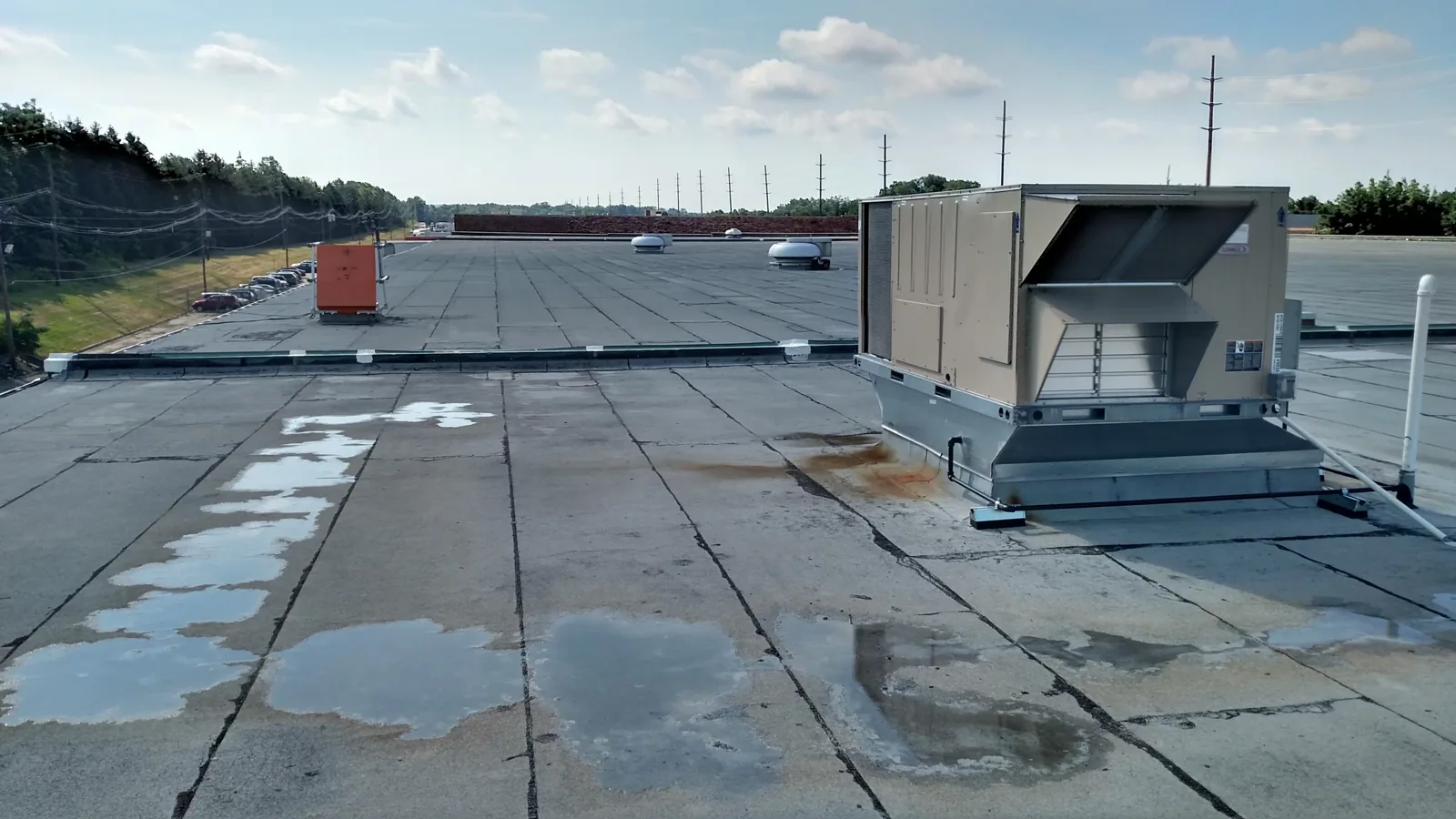
A shallow pool that remains after nearby areas dry may point to a blocked outlet, a low roof area, deflection, or a change in insulation taper. We photograph the water line, estimate its footprint, and check how long it remains after weather clears. The first visit does not assume that every shallow area needs a new roof. We trace the drainage path, identify the nearest primary and overflow outlets, and document any interior staining below.
The property contact should not send staff onto a wet roof to measure a pool. The inspection needs an approved access plan, fall protection, and a safe route away from ponded or slick areas. If water is active inside, protect the room and record the stain location. A flashing failure or failed seam may admit water even where ponding is present, so the report keeps those possibilities distinct.
Measure
Record the affected area with a roof-plan reference, photographs, approximate depth, and the time since the last rain. A single measurement can be misleading if the roof was inspected while rainfall or cleaning was still underway. Note whether the pool shrinks, whether debris is blocking an inlet, and whether the overflow path is clear. Repeat observations can separate a temporary obstruction from a recurring low point.
Interior evidence can help but does not substitute for roof measurements. Note whether a ceiling stain grows during rain, appears later, or remains unchanged. Look for an entry detail along the same roof route, then compare the timing with drain performance. A wind-damage inspection may be appropriate if displaced metal or flashing is also visible; do not combine unrelated conditions under a single cause.
Drainage
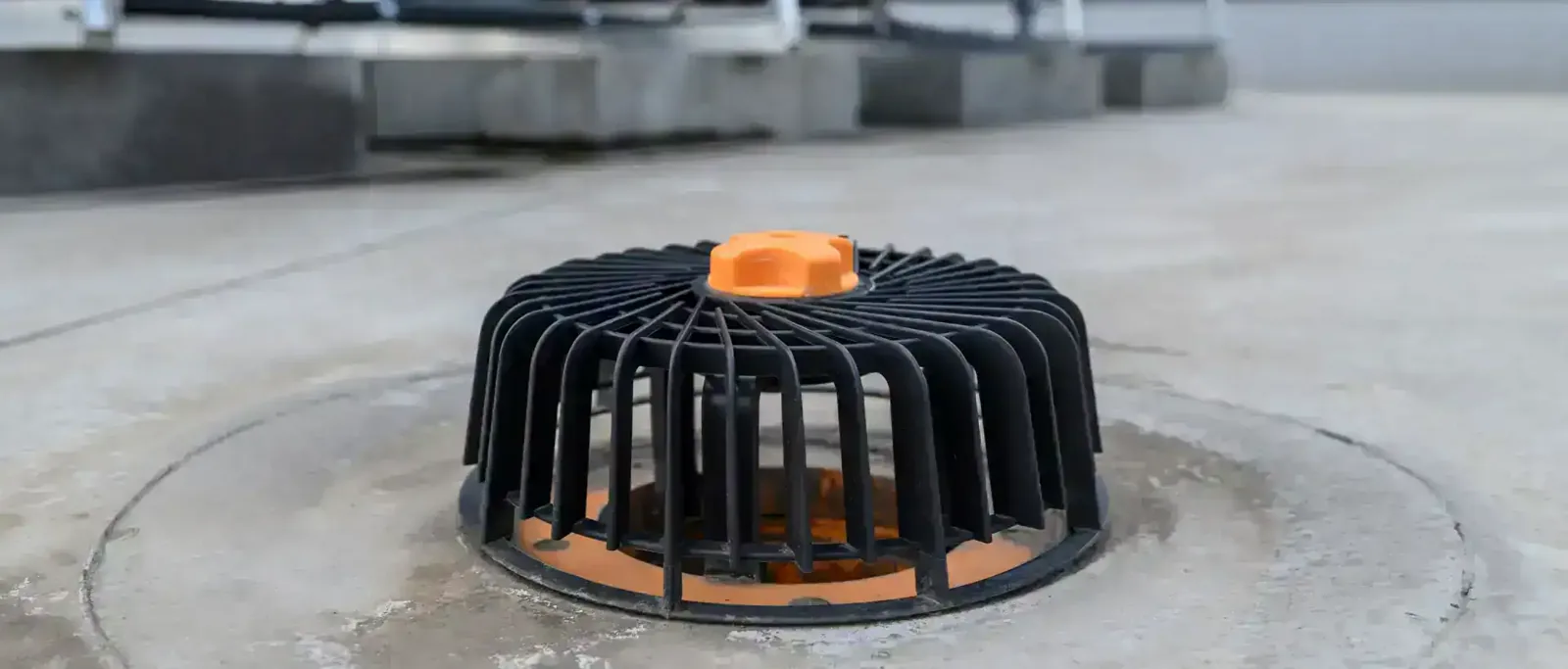
Inspect the primary drain, strainer, clamping ring, sump, scupper, and overflow where access permits. A drain can be clear while the roof surface still holds water because of slope or deck movement. Remove debris only with the owner’s permission and only when the work can be done safely. Photograph the condition before cleaning so the record reflects the original obstruction or damage.
Confirm that an overflow can discharge without directing water over an entrance or wall assembly. Check nearby seams and flashing for signs of water entry, but do not seal a drain bowl or block an outlet with temporary material. Drain and scupper work can address a failed roof interface; plumbing or structural corrections require the appropriate trade and design direction.
Structure
If the roof appears to deflect, if cracking is visible below, or if the pool has expanded, stop short of making a structural conclusion. The contractor can document observed movement, approximate dimensions, water depth, and affected rooms. A qualified structural professional determines whether the deck or supports need evaluation. Do not add ballast, fill a low area, or install heavy equipment as a field solution without approved design.
The repair estimate should separate cleaning a blocked inlet from correcting slope, replacing wet insulation, or addressing structural deflection. Each has different cost, disruption, and design requirements. If a test opening is authorized, record the layers and moisture found, then protect the opening. A written stop-and-approve boundary prevents uncertain subsurface conditions from silently expanding into a larger scope.
Repair Options
For a local drainage obstruction, the scope may cover debris removal, strainer replacement, or repair of the roof flashing if that detail is confirmed defective. A recurring low area could require tapered insulation or a broader reconfiguration, with a design review of drainage, loads, and existing assembly. A coating does not correct a slope problem. The report should compare a targeted repair with a larger correction only after the roof has been mapped.
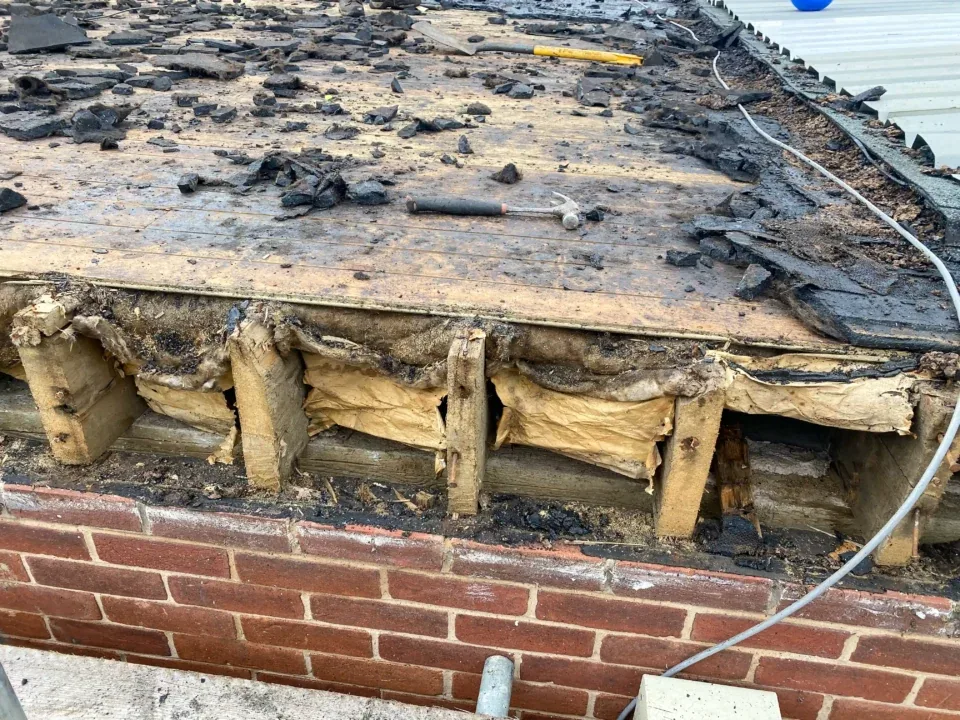
If wet insulation exists, remove only the authorized boundary and verify whether the surrounding material remains sound. Prepare the substrate for a compatible patch and reinstate the drainage detail according to the approved system. A seam repair is separate from a low-slope correction; combine scopes only where inspection shows both conditions share a project boundary.
Menifee Context
City materials characterize Menifee as an inland, dry place and flag hotter conditions as a planning concern. That regional context does not establish what caused a particular pool or leak. The roof record should show actual rain timing, outlet conditions, surface slope, and any observed deflection. A property-specific diagnosis depends on those field observations and, when needed, engineering review. Newport Road Economic Development Corridor and McCall Boulevard Economic Development Corridor are planning references, not drainage surveys or service limits. Newport Road Economic Development Corridor and McCall Boulevard Economic Development Corridor are planning references, not drainage surveys or service limits.
The City’s land-use map distinguishes retail, office, business-park, and manufacturing categories. Newport Road Economic Development Corridor and McCall Boulevard Economic Development Corridor identify commercial planning areas; they do not map roof drainage or contractor reach. Confirm the address and roof ownership before proposing work. Citywide strategy informs the setting but cannot tell whether an individual roof is draining correctly.
Prevention
After a repair, keep a seasonal record of drain cleaning, overflow checks, and any repeated water footprint. A dated roof map helps the next inspection compare the same low area instead of starting from a vague “standing water” report. The maintenance team should note changes to rooftop equipment, new penetrations, and debris sources that could affect flow. A maintenance visit should follow safe-access rules and the manufacturer’s requirements.
The first useful check after work may come after rain, once the surface has had time to drain. Record the time, outlet condition, and remaining footprint, then compare it with the original map. If the pool remains, the roofer can return to determine whether the repair addressed the obstruction or whether a slope or deck question needs another professional.
Closeout
Closeout should state the outlet cleaned or repaired, the roof zone treated, the boundary of any membrane work, and the condition of any area that was not opened. Include before-and-after photos, measured observations, material used, and the person who approved the scope. Do not describe a localized repair as a structural correction unless the appropriate design review confirms it.
The property contact should receive a clear next action: maintain an outlet, watch an identified ceiling area, arrange an engineering review, or schedule a post-rain inspection. A complete record tells the next technician what was tested and what remains uncertain. That practical distinction prevents a recurring pool from being repeatedly labeled as the same leak without a fresh examination.
Use the measured water footprint to decide whether a membrane opening, surface aging, or nearby corridor context belongs in the follow-up record.
Commercial Roofing Questions
How long should a roof pool remain after rain?
The inspection records when the water was observed and whether it changed after weather cleared. A single visit does not establish the cause or a universal acceptable duration.
Can ponding alone prove that a roof is leaking?
No. Check the drainage route and nearby seams, curbs, and wall transitions. Interior moisture should be mapped separately from the water footprint.
Should a low area be filled with coating?
Only after evaluating slope, assembly, drainage, and moisture. A surface layer does not correct deck movement or a wet substrate.
What is included in a drain repair?
The scope identifies the outlet, strainer, roof flashing, observed obstruction, and any plumbing or structural work assigned elsewhere.
What should the owner observe after a repair?
Record outlet flow, remaining water footprint, and any interior change after suitable weather. Use the same roof-zone label at each visit.
Related Roofing Work
Coordinate a commercial roof inspection
Request a Roof Assessment
Arrange an inspection with the property contact. We can trace the reported condition, record the observed roof detail, define a repair boundary, and state what remains untested.
Service area
Menifee, Perris, Murrieta, Temecula, Hemet, Lake Elsinore and nearby Inland Empire communities
Quick contact
[email protected]
555-555-5555