
Commercial TPO Roofing in Menifee, CA
Home / Roof Systems / Commercial TPO Roofing in Menifee, CA
A TPO roof is only as dependable as its heat-welded seams and perimeter transitions. We inspect weld consistency, patches, penetrations, drains, and edge attachment before proposing repair or replacement. On an existing roof, a field probe and test weld can show whether a seam remains sound or needs correction. The inspection report maps those findings so the owner can compare a bounded repair with a larger system decision.
Probe the Seams Before Calling the Field Sound
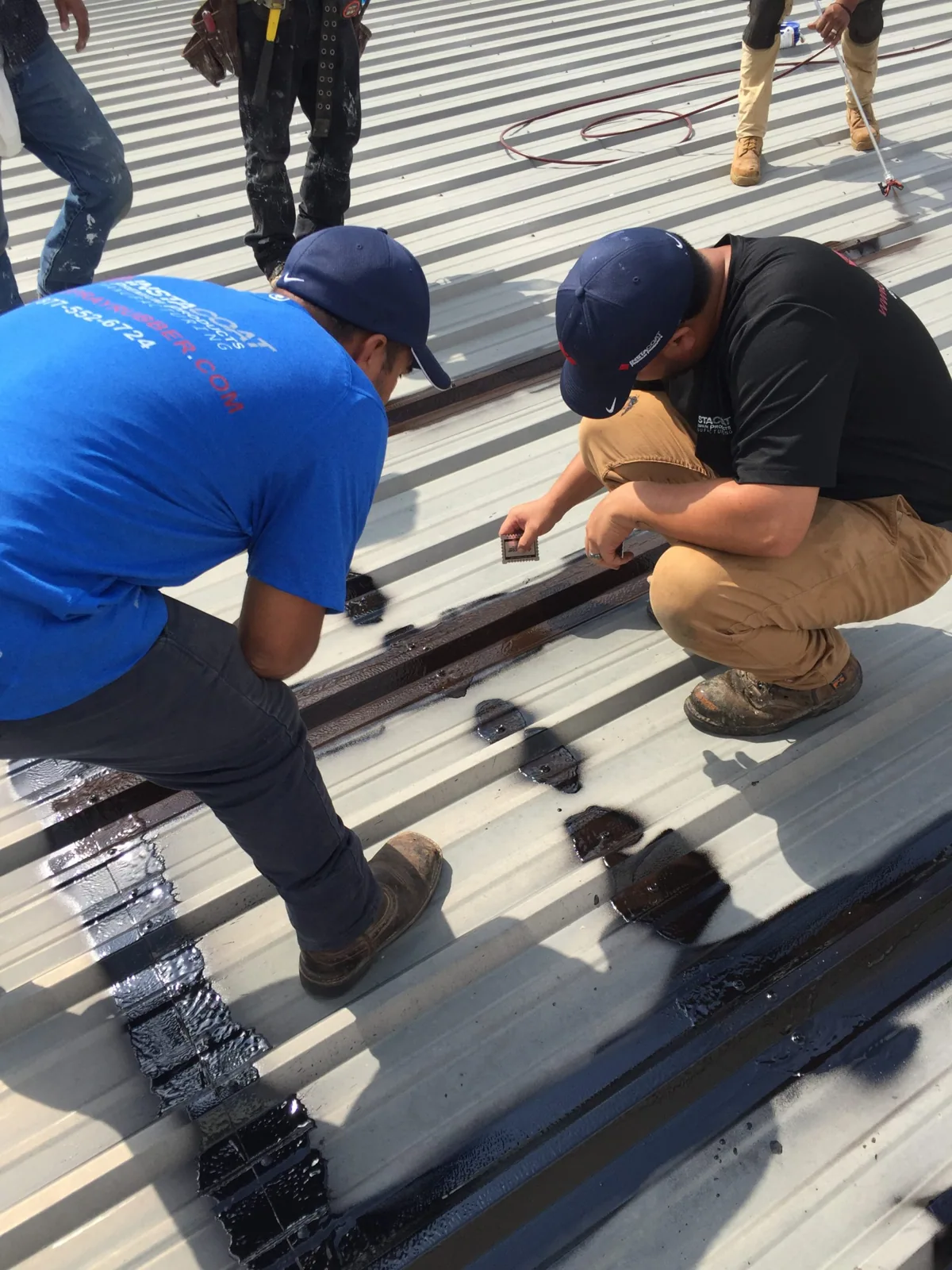
A seam can look closed and still contain a channel that admits water under pressure. We probe representative laps, corners, T-joints, patches, and flashing returns, then note where welds separate or membrane edges have lifted. If the membrane is dirty or aged, we clean a test area before deciding whether a weld repair is practical. The result depends on the actual material and weather conditions during testing.
Field seams and detail seams do not fail in the same way. A small fishmouth at a penetration may call for a formed patch, while repeated open laps can indicate a wider installation or movement issue. We mark each test location and keep a repair scope limited to verified defects. If moisture extends beyond the visible opening, a moisture survey can help select confirmation areas.
Confirm What Holds the Membrane
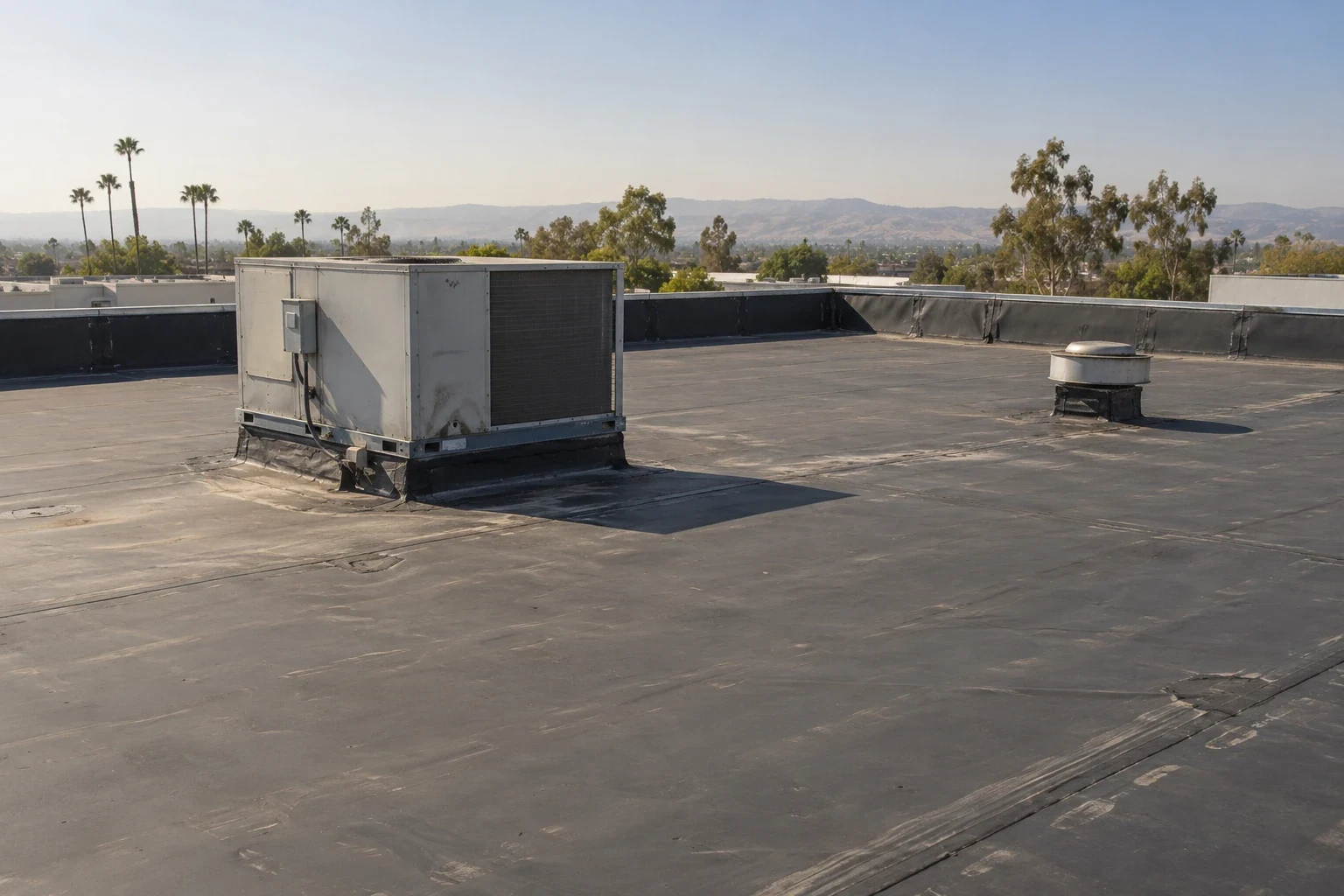
TPO systems may be mechanically attached, fully adhered, or part of a ballasted assembly. The roof record and field observations determine which method is present. We check fastener rows, plates, adhesive contact, and movement at the perimeter, then compare them with the approved details. A membrane wrinkle alone does not establish attachment failure, and a fastener count cannot replace the system submittal.
For a replacement, the deck type, insulation, building height, and project wind criteria inform the design. Menifee’s code sheet lists wind values by risk category, but the responsible designer confirms the project-specific basis. We document the existing assembly and follow the approved fastener and edge schedule. The insulation and cover-board scope also addresses whether the substrate can support new attachment without burying wet material.
Build Corners and Penetrations with the Field Seam
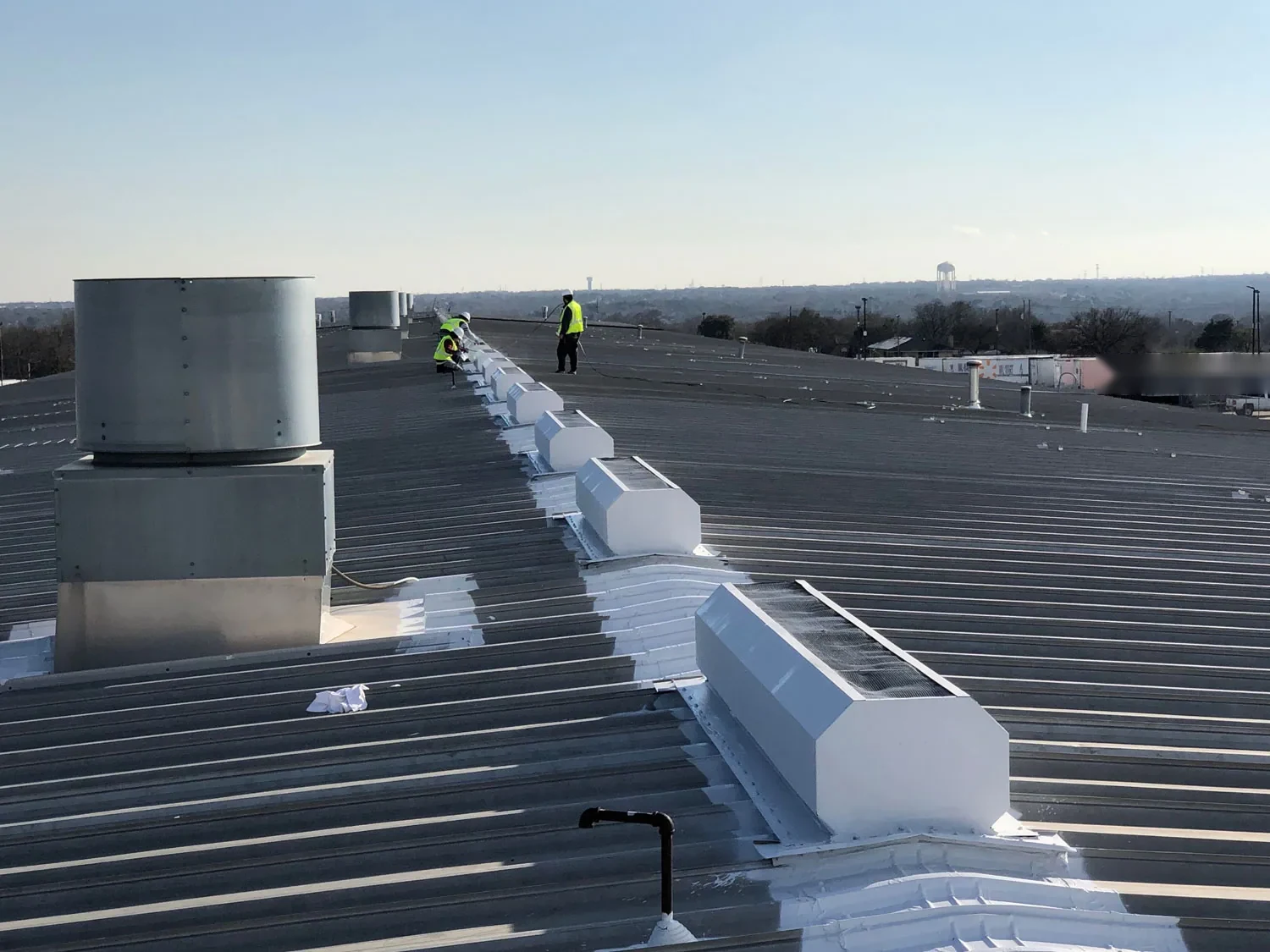
Pipe boots, curbs, drains, and wall transitions need flexible flashing that is compatible with the field membrane. We inspect the turn-up, termination, and corner geometry, then check whether the detail can be welded without contamination or trapped wrinkles. A prefabricated accessory may suit one opening, while a field-fabricated detail may be needed for another. The roof plan identifies each location so later service can find the repair.
Metal edges have their own sequence. The membrane termination, cleat, and coping must remain secure and shed water at the perimeter. We coordinate a metal-edge repair where the existing edge has movement or corrosion, and inspect nearby fasteners before closing the assembly. At a drain, the drain flashing detail must connect the membrane to the outlet without blocking the bowl or overflow route.
Choose Repair, Recover, or Replacement
Repair can be appropriate when the TPO field remains attached, seams can be rewelded, and moisture is limited. A recover may preserve a serviceable substrate if code, attachment, and existing layers allow it. Replacement exposes more of the roof and gives the project team a clearer view of insulation and deck. We compare these paths with test findings, repair frequency, edge condition, and the owner’s planned use of the building.
A coating over TPO requires a compatible system and preparation that the product manufacturer allows; it is not an automatic shortcut. If the field is severely contaminated or poorly attached, the work may require a different approach. The recover assessment records the existing layers and design limits. The Community Core Economic Development Corridor is planned for greater retail and office concentration toward I-215. The Newport Road Economic Development Corridor is intended for neighborhood-oriented commercial uses. These plans describe two development settings, not the TPO assembly on an individual roof.
Track Heat and Drainage as Separate Inputs
Menifee’s inland climate planning identifies rising average temperatures and more extreme-temperature days. That context supports attention to membrane movement and exposed seams during inspection; it does not establish a particular roof’s condition. We record changes in lap shape, brittle flashing, and surface wear, then compare them with prior photos. Heat exposure is one observation alongside attachment and moisture evidence.
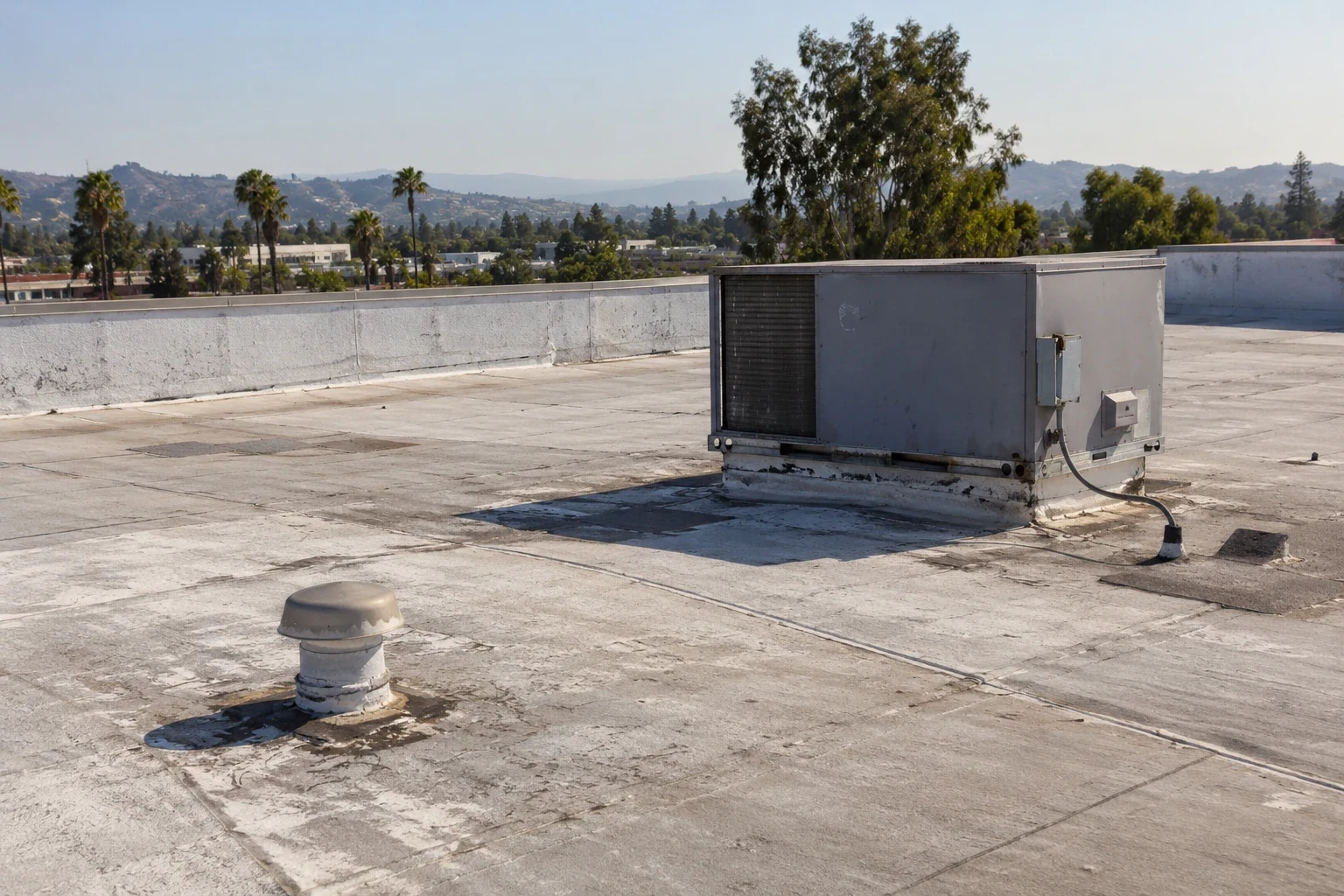
Water still needs a clear path to discharge. We inspect drain strainers, sumps, scuppers, and any low point where water remains after cleaning. When a low area persists, we measure and consider slope or deck movement rather than add a surface patch. The ponding-water investigation defines whether the issue follows drainage geometry or a local obstruction. A TPO membrane can shed water, but it cannot correct an unaddressed slope condition.
Sequence the Work by Dry, Secure Zones
Replacement proceeds by areas that can be made watertight within the shift. We remove only the planned section, inspect the substrate, replace approved insulation, attach the membrane, weld seams, and close perimeters before moving forward. If a test reveals wet insulation or damaged deck, we photograph the finding and obtain direction before increasing the removal boundary.
For an occupied property, the sequence identifies deliveries, rooftop equipment, room protection, and temporary closures. The occupied-building plan assigns daily zones and handoffs with facility staff. The Community Core Economic Development Corridor includes civic and retail planning, while the Newport Road Economic Development Corridor targets neighborhood-oriented commercial uses; the actual property contact sets the work hours and occupant notices. The project record shows what area was released each day.
Keep the Weld Record for Future Repairs
At closeout, we map the TPO field, repair locations, seams tested, details installed, and any retained existing layers. Photographs should show the work before it is covered, then the finished corners, drains, and edges. The owner receives product and maintenance documents required by the contract. Those records help the next inspector distinguish a known repair from a new opening.
A maintenance visit checks seam edges, punctures, rooftop traffic, and drain condition before small defects spread. The maintenance schedule can compare the same details over time. Menifee’s code adoption and project design documents stay with the roof file, while the field record describes what was actually installed. That combination gives a manager a practical basis for a repair decision without assuming every TPO system has the same attachment or remaining life. When the assembly changes, we compare it with an alternate single-ply system or an EPDM membrane only after the roof and project criteria are documented.
Where seams run beneath rooftop equipment, we log the route and identify spots that cannot be probed without moving a unit. That prevents a maintenance note from overstating how much of the roof was tested. A follow-up window can be arranged with the mechanical contact, then photos show the additional seam and the condition found. The owner receives a clear distinction between checked detail, inaccessible detail, and repair completed.
Commercial Roofing Questions
How do you know a TPO seam needs repair?
We probe representative welds and inspect corners, T-joints, patches, and flashing returns. The report identifies the location and the condition found. A test weld may be needed before selecting a repair method.
Can TPO be coated instead of replaced?
Only when the selected coating is compatible with the membrane and the substrate is suitable. We verify preparation, adhesion, moisture, and seam condition first. If the assembly is unstable, a coating does not solve the underlying issue.
What changes the cost of TPO replacement?
Removal depth, deck access, insulation quantity, attachment design, edge metal, penetrations, and occupied-building protection affect scope. We list assumptions and the approval step for concealed conditions.
Does a white membrane eliminate ponding?
No. Reflective color does not change roof slope. We inspect drains and low points, then separate cleaning from taper, deck, or drainage corrections that need design review.
Related Roofing Work
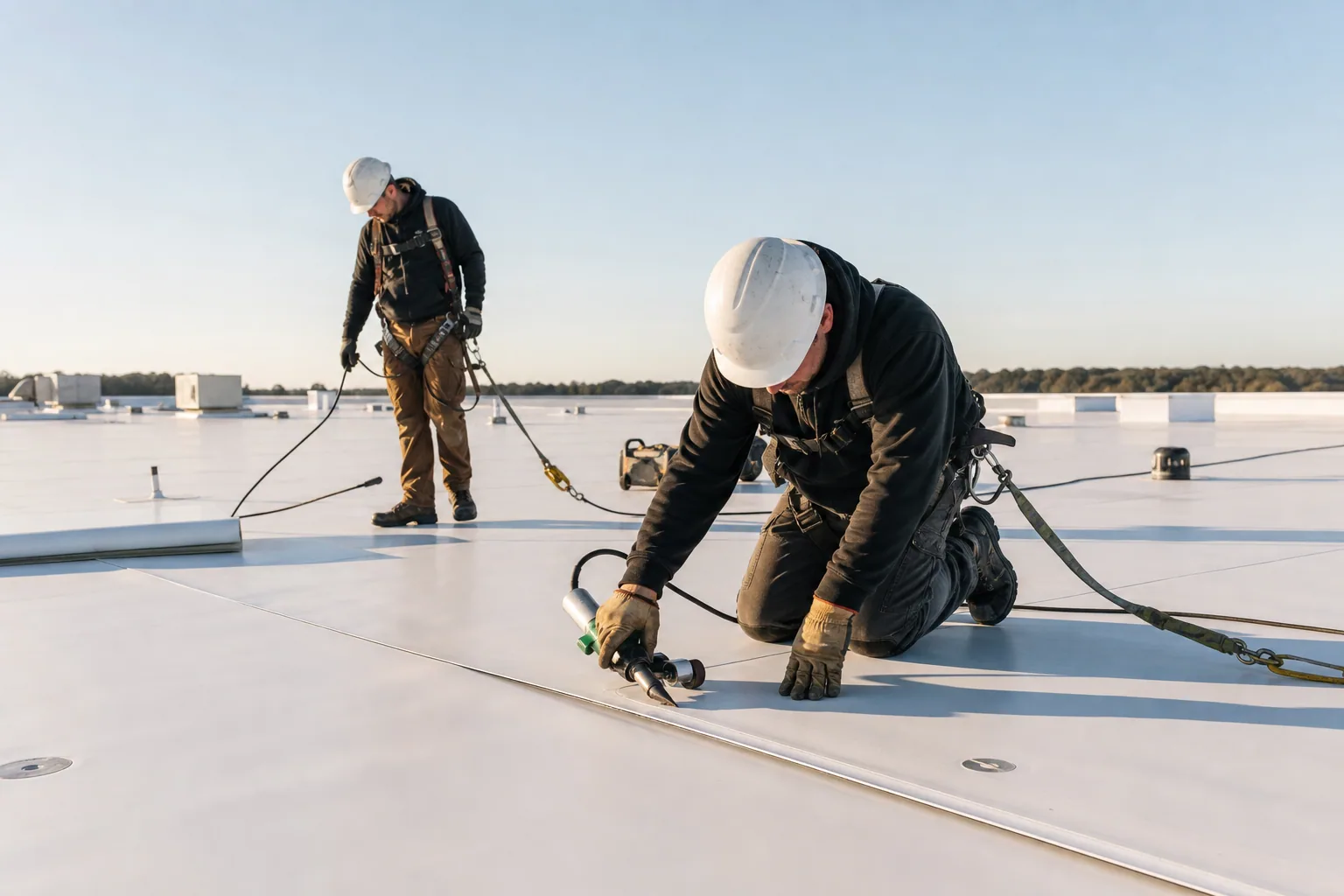
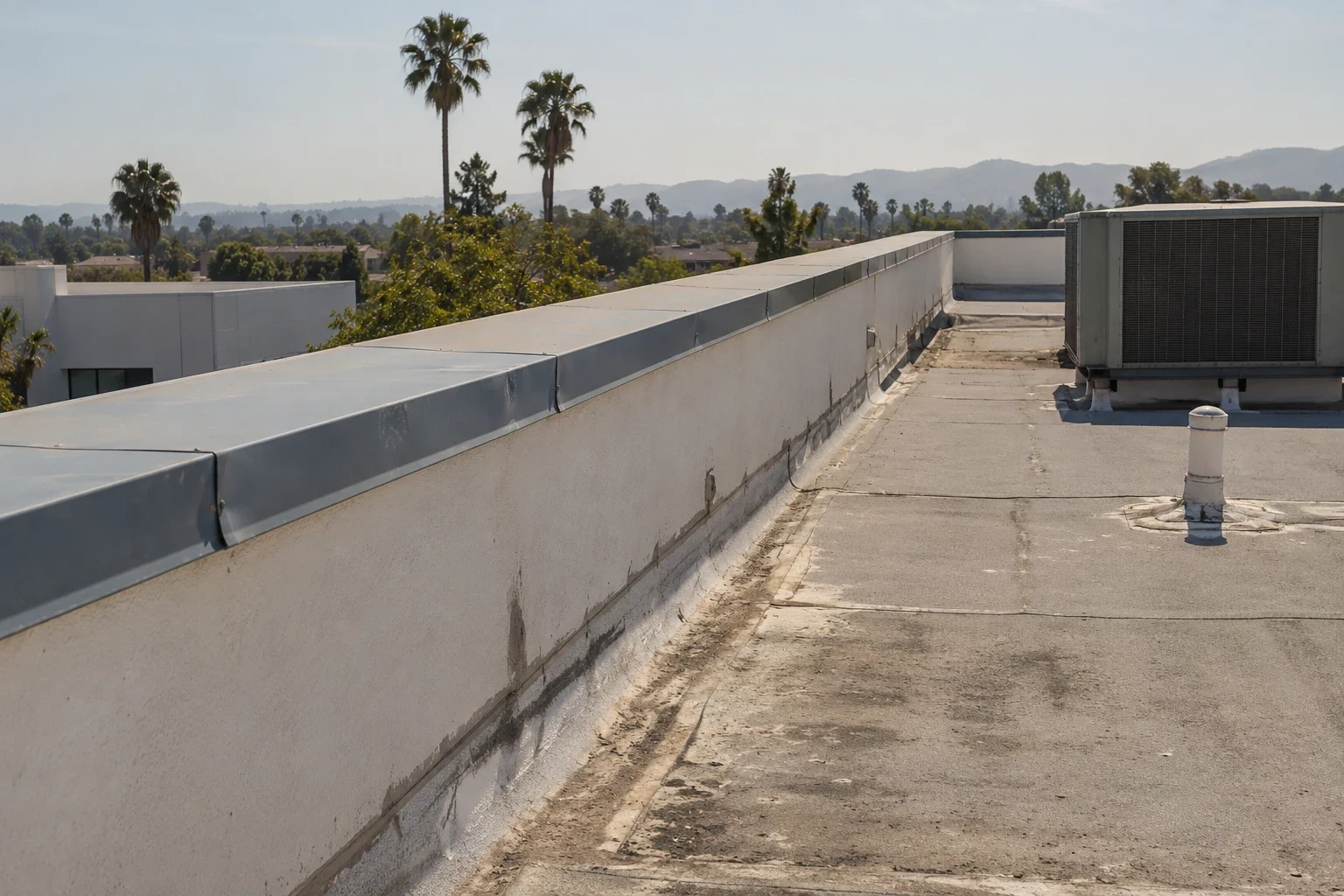
Check the Welds and Roof Edge
Request a Roof Assessment
Schedule a TPO inspection that probes seams, checks attachment, and traces drainage. We will map confirmed repairs and compare the existing assembly with replacement options.
Service area
Menifee, Perris, Murrieta, Temecula, Hemet, Lake Elsinore and nearby Inland Empire communities
Quick contact
[email protected]
555-555-5555