Infrared Roof Moisture Survey in Menifee, CA
Home / Commercial Roofing Services / Infrared Roof Moisture Survey in Menifee, CA
A temperature pattern on a roof is a clue to investigate, not a moisture diagnosis by itself. We use infrared review when a surface walk, leak history, or repair question leaves uncertainty about the area that may need a closer look. Menifee’s city planning identifies a naturally dry inland climate and rising temperature risks; daily surface conditions can also affect a scan, so we consider timing, weather, roof material, and recent sun exposure. The report distinguishes measured patterns from confirmed wet material and shows whether a core or other test could change the repair boundary.
Start with a question the scan can answer
Before scheduling, we identify the decision at hand: whether moisture may extend beyond a visible leak, whether a replacement scope should include testing, or whether several roof zones deserve comparison. The method depends on roof construction and survey conditions. We review the membrane, deck, insulation, and access information available, then choose a scan window that supports interpretation. A commercial roof inspection provides the surface observations that help explain a thermal pattern. Without a specific question, an image can create a map without telling the owner what to do next. We ask what the owner needs to choose after the survey. If a roof is being considered for recovery, the question may be whether a suspected wet area is confined to one section or continues below adjacent seams. If a leak has recurred, the survey may help compare affected zones. We explain the limit before scheduling so a scan is not treated as a substitute for opening the assembly when confirmation is needed.
Separate temperature change from confirmed moisture
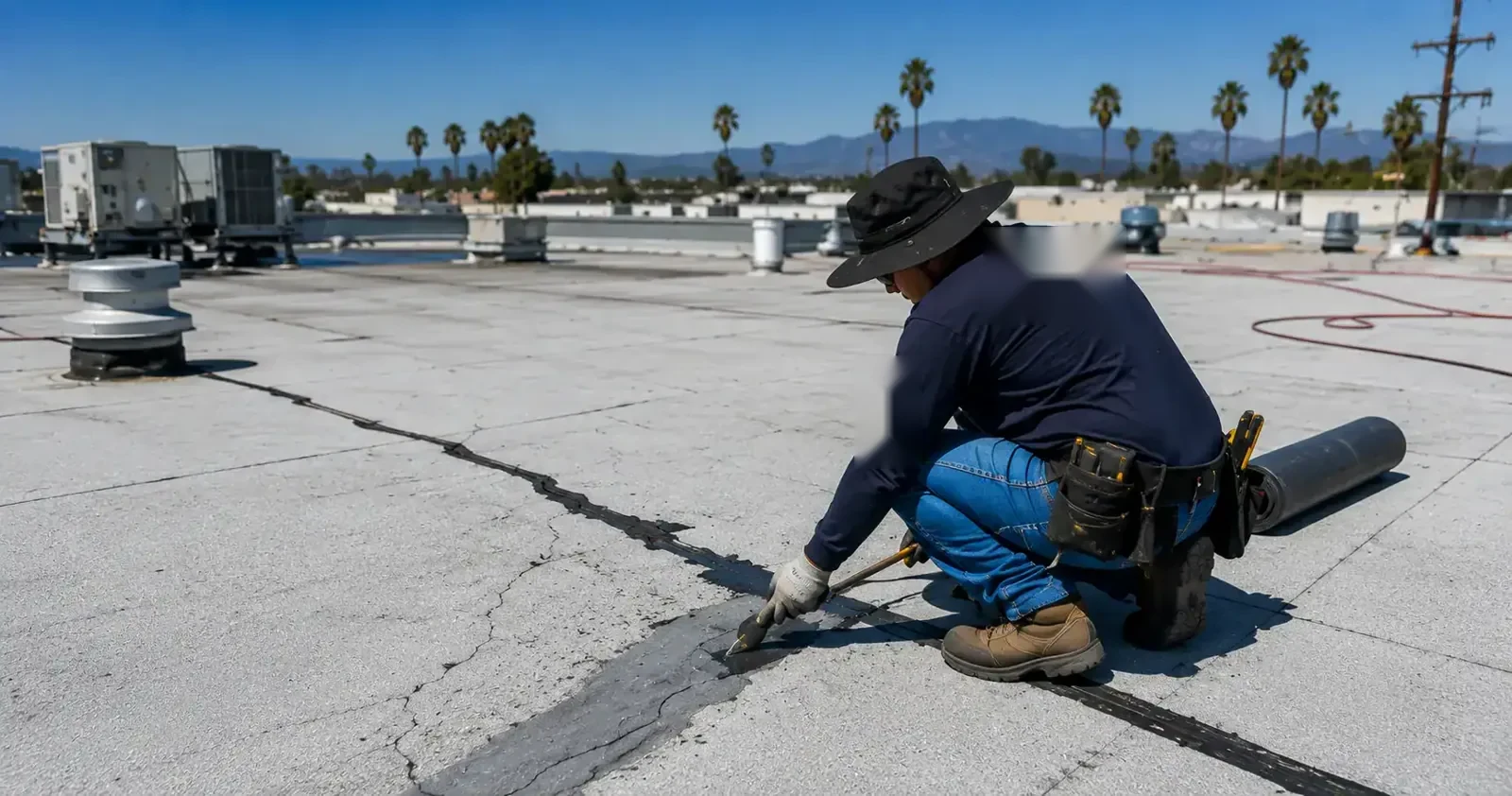
Infrared equipment records differences in surface temperature. Those differences can come from moisture, but also from insulation type, attachment, shade, equipment, stored heat, or changing surface conditions. We compare the scan with a roof walk, interior reports, and visible details before labeling an area for testing. A pattern is not entered as confirmed wet insulation unless a suitable verification supports that conclusion. The report explains the evidence and uncertainty in plain terms. If a leak is active, a leak repair review can locate the immediate entry path while the broader moisture question is evaluated separately. Sun exposure can create different readings between roof areas even when the assembly is dry. Shade from equipment, insulation changes, reflective surfaces, and previous repairs can also affect a thermal image. We compare patterns with the roof layout and visible details instead of assigning one cause to every temperature difference. If a pattern does not align with a repair question, we can recommend monitoring rather than creating a larger removal scope.
Prepare a roof that can be interpreted
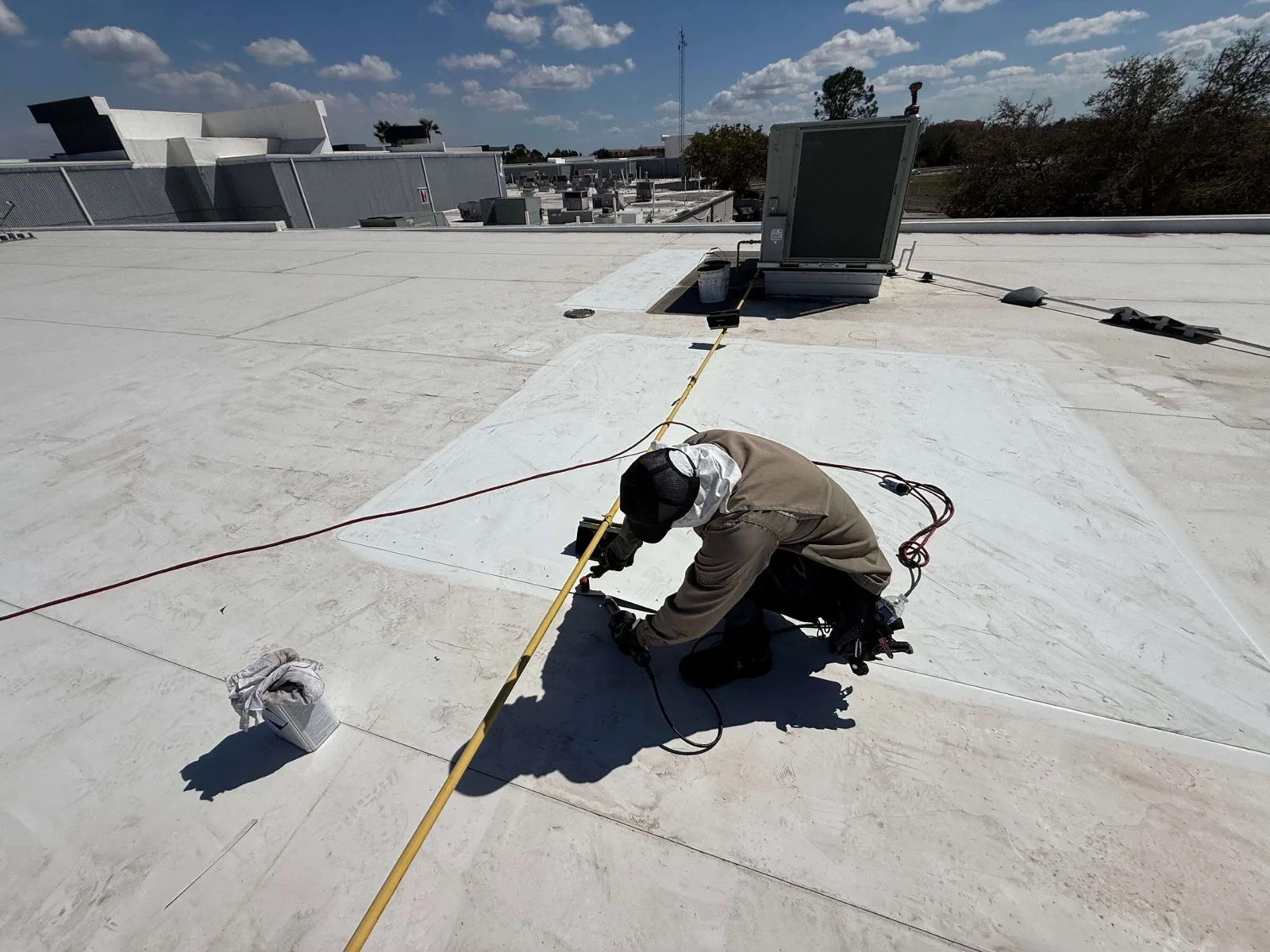
Scan timing, weather, roof exposure, and recent rain affect the contrast the equipment records. We confirm the surface, access route, and roof-zone map before the survey. The crew notes conditions that could influence interpretation and captures reference views of drains, curbs, seams, and equipment. If a surface is obscured or roof access is unsafe, the limitation is stated rather than filled by assumption. A follow-up core or other opening needs owner approval and a defined location. The test should answer whether moisture is present in a selected layer and whether that finding changes the proposed work. The facility team can help by sharing leak dates, roof plans, and known repairs before the survey. We use those records to choose reference zones and avoid confusing a past patch with a new pattern. We also note recent rain or roof washing because surface water may change what the equipment records. The scan plan identifies where access is needed and which equipment or operations might restrict the view.
Consider Menifee’s exposure without overreading it
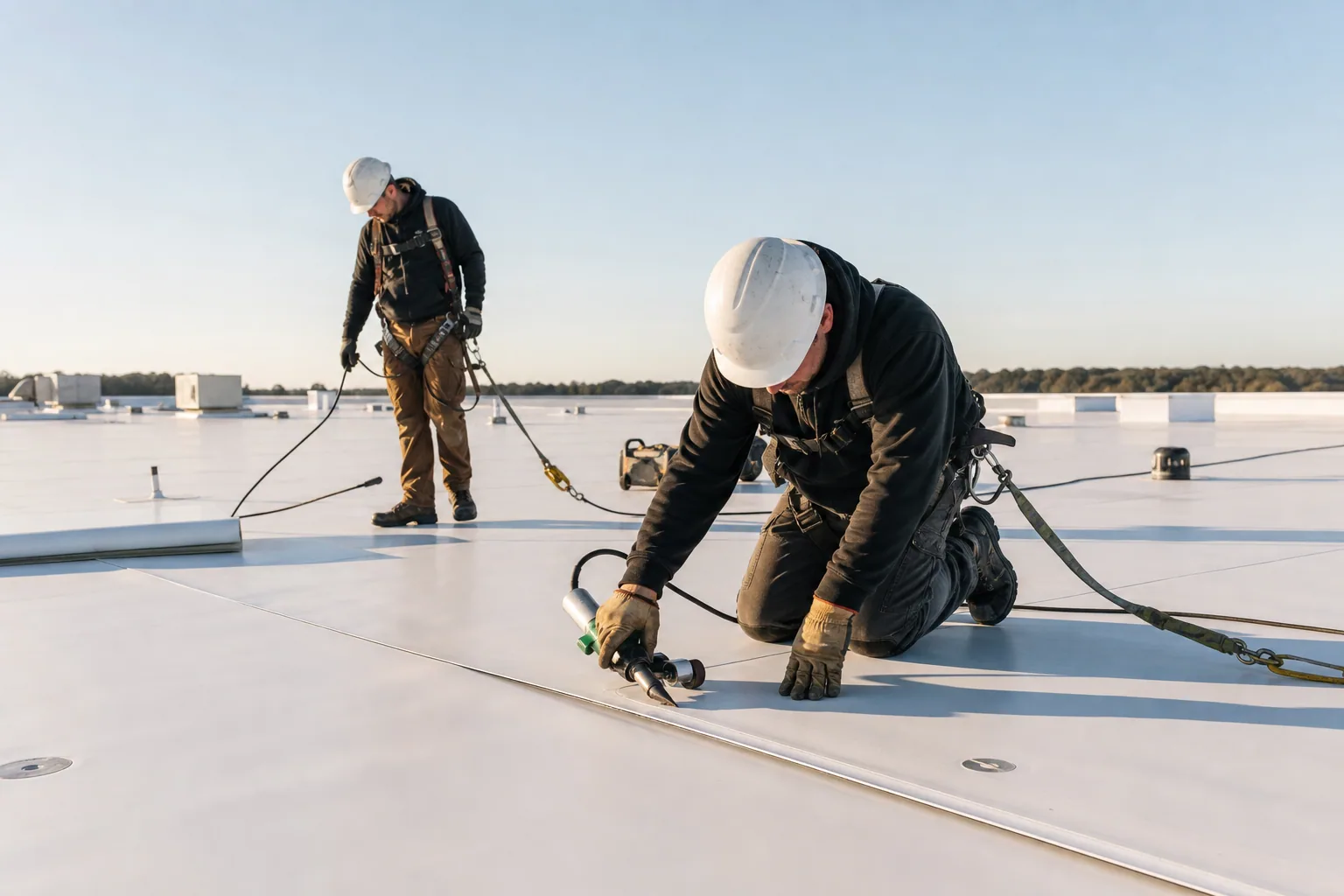
City planning describes Menifee as inland and naturally dry while identifying increasing temperatures and more extreme-temperature days as climate risks. That context can support closer attention to repeated surface exposure, but it cannot establish moisture in a roof. The City’s economic strategy also identifies the Northern Gateway Economic Development Corridor as part of the planned commercial growth pattern along I-215. A facility in that area still needs its own access, roof-zone, and operating review. We use the local context to plan the visit, then base the scan interpretation on the measured pattern and the construction of the building’s assembly.
Use the result to make a repair choice
A thermal pattern matters when confirming it would alter the work. The owner may need to remove wet insulation, isolate a repair, or compare recovery with tear-off. We identify where a core could answer that question and what the result would mean for each option. If test results would not change the scope, further investigation may not be useful. A condition report can link the scan, photos, selected test locations, and final repair boundary. No image alone should be used to price concealed damage as if it had already been observed. For each highlighted area, the report records the image reference, nearby roof detail, and reason to verify or monitor. If an opening is recommended, we identify the location and request approval before any cut is made. The owner can compare the test cost with its potential to change the scope. This keeps an image from becoming a repair quantity before the assembly is confirmed.
Connect scan findings with the roof system
Different assemblies store and release heat differently, and a membrane color or insulation configuration can affect how a pattern appears. We interpret observations in the context of the roof system, not as a universal signature. If the roof has an EPDM or TPO membrane, the surface and attachment inform where a test is placed. A TPO roof review can connect a scan question with seam and flashing details. When the roof is sound but needs tracking, a maintenance program can compare the same roof zones over time.
Give the owner a defensible next step
The final report identifies the scan conditions, marked zones, interpretation, verification performed, and items that remain uncertain. We include image references and a recommendation tied to a specific decision rather than presenting a color map as a diagnosis. At a building in Menifee’s Northern Gateway Economic Development Corridor, site access and operations still shape when testing can occur. Schedule a review with your roof history and access contact. We will explain whether infrared scanning could narrow the repair boundary and what evidence would be needed before expanding the scope. A clear handoff includes the person responsible for approving a test, the proposed location, and how the roof will be restored after sampling. If the scan points to more than one zone, we prioritize areas based on active leakage and the consequence of waiting. A repeat survey is useful only when the comparison can answer a new maintenance or capital question. The report states that reason and preserves the original zone labels for future review.
Commercial Roofing Questions
Does an infrared image prove an area is wet?
No. It shows temperature patterns. We compare them with roof observations and use a suitable test when confirmation could change the scope.
When should the survey be performed?
Timing depends on exposure, weather, surface material, and the question being tested. We choose a window that supports interpretation.
Will the scan show every leak?
A scan cannot trace every water route or replace a roof inspection. It can help identify areas for follow-up when temperature patterns warrant a closer look.
Do you cut the roof during a survey?
Infrared scanning is non-invasive. A core or opening is a separate test and requires a defined location and owner approval.
What does the report help us decide?
It can show where testing may alter a repair, recovery, or replacement boundary. If it will not change the choice, the report says so.
Related Roofing Work
Check whether a moisture survey fits
Request a Roof Assessment
Provide the roof history, known leaks, and available access window. We will explain what the scan can show, what it cannot confirm, and whether a follow-up test could change the repair choice.
Service area
Menifee, Perris, Murrieta, Temecula, Hemet, Lake Elsinore and nearby Inland Empire communities
Quick contact
[email protected]
555-555-5555