
Commercial Roofing in Canyon Lake, CA
Home / Service Areas / Commercial Roofing in Canyon Lake, CA
Around Canyon Lake, commercial roofs need a plan that begins with the building and its actual roof, not a broad assumption about a whole community. A leak in a small office, retail space, or service building can travel through insulation before a ceiling reveals it. We record the affected room, inspect the corresponding roof zone, then trace the nearby seams, penetrations, wall transitions, and drains. Canyon Lake Towne Center is the city’s largest shopping center, with professional services, health care, financial and legal offices, food retail, and dining. That variety makes access and operating-hour questions worth asking before roof work begins. We confirm the property’s actual use and roof system rather than treating a nearby retail mix as a description of every building.
Locate the Roof Condition
A clean diagnosis takes more than a photograph of a ceiling stain. We compare the timing of the report with weather and roof access, inspect the membrane where water could enter, and look for a second route that may feed the same interior area. If a drain is involved, we note its condition and any ponding pattern. If a pipe penetration or curb sits uphill, we test its flashing and seam. When access is restricted, we mark that limit and explain which additional test would answer the remaining question. This keeps the report useful without turning an unverified possibility into a repair order. Nearby commercial contexts differ in Northern Gateway and McCall Boulevard, so each building remains its own inspection subject.
Keep the Water Route in View
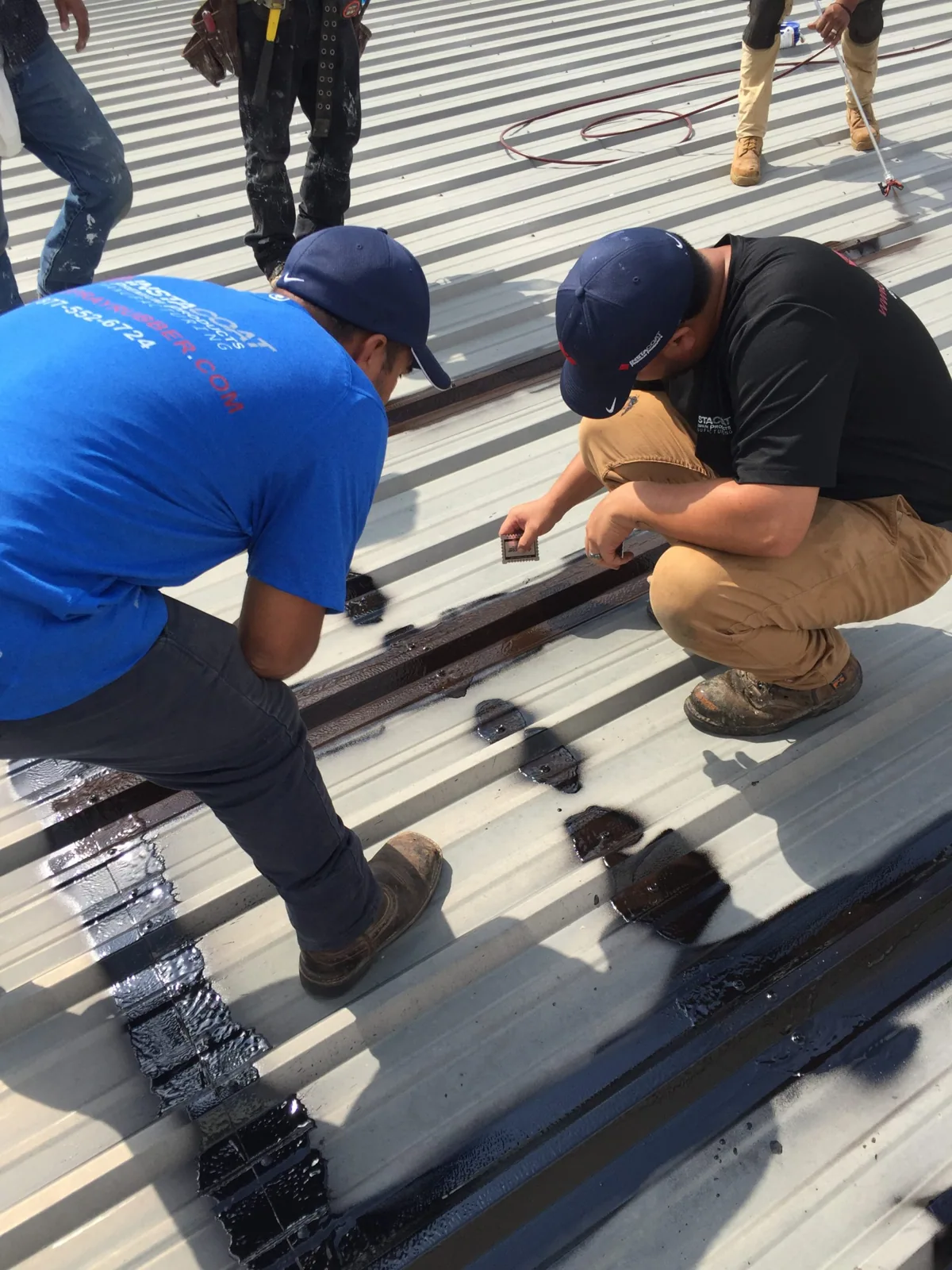
The roof system sets the repair method. A single-ply membrane may need compatible flashing and welded seams; modified bitumen and built-up surfaces need different preparation; metal panels move and require attention at fasteners and closures. We identify the assembly before proposing a patch, then check whether the adjacent material can accept the repair. If insulation or cover board is wet, we define the area that needs opening and replacement. If the roof is sound beyond a local defect, a focused repair may limit disruption. The estimate can also note a separate option when the inspection finds a wider pattern of seam or surface failure. We use a commercial inspection to tie the reported room to a tested roof detail.
Select a Compatible Repair
A service visit must protect people below as well as the roof. We agree on the access path, secure ladders, protect entrances, and coordinate any lift or material staging before work starts. If the building remains occupied, we plan noise and equipment shutdowns with the facility contact. We keep the work area closed against weather at the end of a shift and check that drains remain unobstructed. A leak that cannot wait can receive emergency stabilization at any hour; we then schedule the permanent repair to address the confirmed entry point and any wet materials found around it. When the existing material is TPO, review the TPO seam conditions before choosing a compatible patch.
Coordinate Access and Weather
Canyon Lake’s central Towne Center sits along Railroad Canyon Road, a local commercial access corridor. For any repair or replacement, the project team still confirms the code and wind criteria that apply to that building and scope. When work touches a roof edge, curb, or structural attachment, our inspection documents what is visible and what needs design review. For a roof replacement, the proposal should state how removal, insulation, cover board, membrane, drainage details, and edge metal will be handled. For maintenance, it should identify the seams and penetrations checked so the next visit repeats the right observations. A recurring maintenance visit can revisit drains, flashings, and any area noted for monitoring.
Make the Next Visit More Useful
After repair, keep the report with the building’s service history. Mark each work area, include before-and-after images, and identify conditions that still need observation. That helps a later facilities contact tell whether a new stain follows the old route or points to a separate detail. A periodic inspection can revisit drains, membrane laps, flashings, and rooftop supports after equipment work or storms. It can also identify debris or open sealant before water reaches the interior. We can review the roof and give the building team a written choice among immediate repair, further testing, maintenance, and a capital project. A confirmed local failure may suit commercial roof repair after the surrounding assembly is checked.
Prepare the Building File
Roof records may be held by a property manager, owner, or service contact who changes over time. The inspection report should make sense to the next person without a long verbal handoff. We identify the assembly when visible, list roof zones inspected, attach photos, and mark limits such as locked access or equipment that blocked a detail. If a test cut or infrared scan is recommended, we explain the question it will answer. That makes the next visit a continuation of the investigation instead of another attempt to reconstruct the original leak.
A simple file can separate routine service from capital planning. Keep emergency stabilization records, permanent repairs, maintenance notes, and replacement proposals together but labeled by date and scope. The facility director can see whether the same area failed repeatedly or whether new reports point to different zones. If the roof supports a business that cannot pause, note access requirements and operating windows so future work can be planned before water becomes urgent.
Choose a Follow-up That Fits
Follow-up visits should answer a specific open question. A curb disturbed during HVAC service may need a closer review after the lift; a drain concern may call for a flow check once debris is removed; test-confirmed moisture may require another opening to set removal limits. We name the condition, the next observation, and why that observation matters. This is more useful than promising identical work for every building on a fixed calendar. When a roof has had prior patching, note the material and approximate location of each visible repair without assuming who installed it. That map can show whether failures cluster around one penetration or appear across the field. A manager can then choose a focused opening or broader survey instead of treating every patch as the same condition.
When the building contact calls, share the affected room, recent weather, prior repair notes, and any planned rooftop equipment service. Those details help us prepare for access and compare the report with the actual roof route. We can inspect, photograph, and explain repair or replacement choices in a written scope. If water is active, emergency stabilization is available around the clock. Permanent work follows the confirmed condition, safe access, and the building’s operating needs.
Commercial Roofing Questions
What information helps before a roof inspection?
Share the room location, when the stain appeared, whether it changes after rain, and any prior repair notes. We use those details to plan roof access and compare the interior report with the conditions above it.
Do you repair every roofing system?
We repair and replace common commercial low-slope and metal systems, including TPO, PVC, EPDM, modified bitumen, built-up, and standing seam. We confirm the existing material before selecting a compatible detail.
What if the interior is still dry when you arrive?
We inspect the reported route and nearby details even if active dripping has stopped. Photos and weather timing can help us identify the likely entry. If the evidence remains incomplete, we name the test or follow-up needed rather than overstate a conclusion.
How should a manager decide between another repair and a project?
We compare the scope against the documented roof condition. Repeat failures, widespread wet insulation, or loss of adhesion can make a larger project worth evaluating. The report should explain the evidence, access requirements, and work that each option includes.
Related Roofing Work
Request a roof inspection
Request a Roof Assessment
Share the building use, reported roof condition, and access window. We will inspect the affected area, document the findings, and outline practical repair or replacement choices.
Service area
Menifee, Perris, Murrieta, Temecula, Hemet, Lake Elsinore and nearby Inland Empire communities
Quick contact
[email protected]
555-555-5555