
Restaurant Roofing in Menifee
Home / Property Types We Roof / Restaurant Roofing in Menifee
A water mark near a kitchen ceiling may begin at an exhaust curb, pipe penetration, drain, or seam several roof bays away. Restaurant roofs also carry service paths and equipment changes that can disturb flashing over time. We compare the interior report with the roof detail, equipment history, and water direction before opening the assembly. The record separates a confirmed failure from a nearby condition that still needs testing.
The operator can identify meal periods, delivery windows, kitchen sanitation needs, and guest areas that should remain clear. We use those constraints to set lift access, staging, interior protection, and the point when each roof zone returns to use. For connected tenant layouts, roof coordination across retail suites may help frame shared access without assuming one restaurant controls the entire property.
Inspect Exhaust Curbs and Flashing
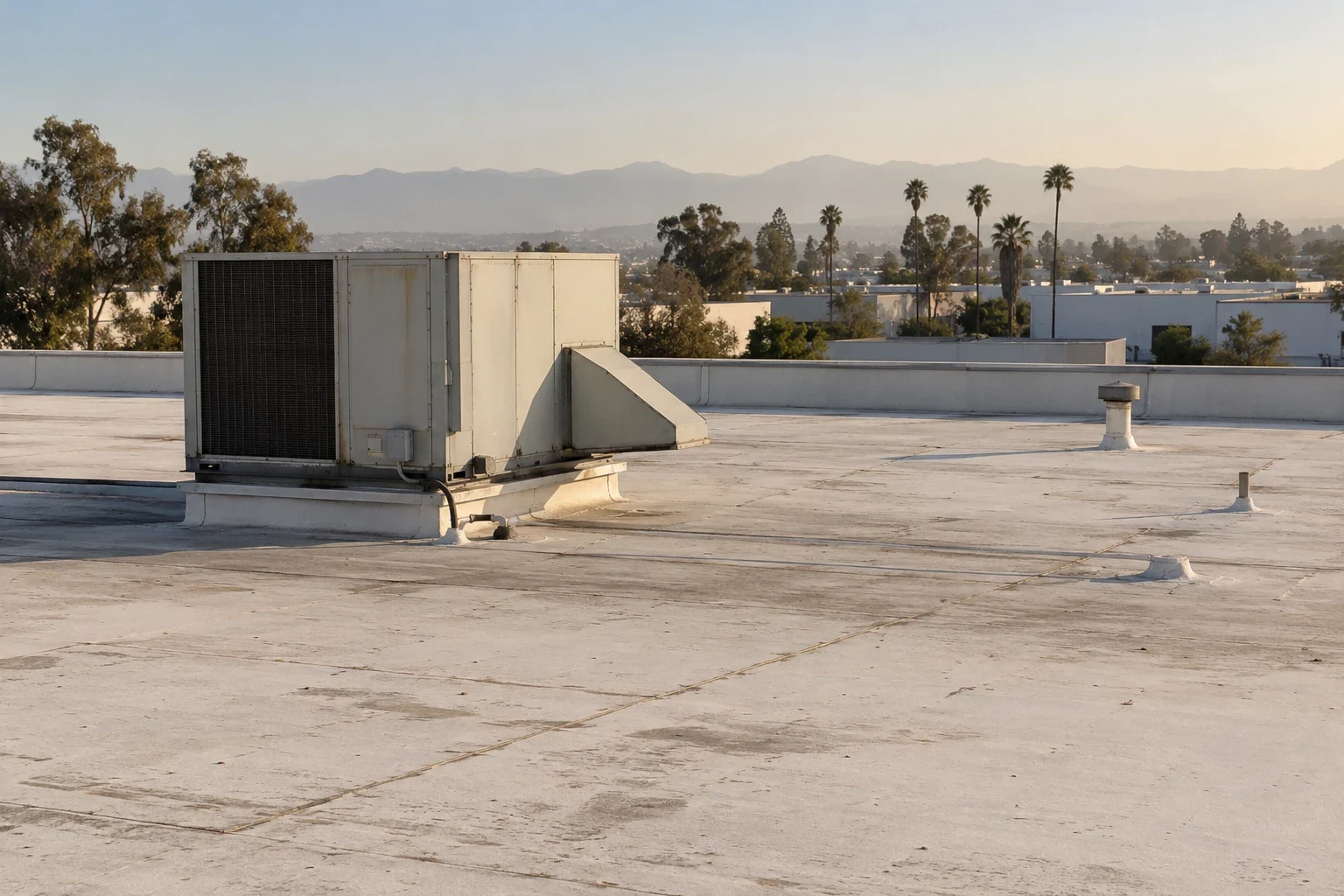
Kitchen exhaust creates a concentrated roof detail where duct, curb, fan, grease-control equipment, and service access meet. We look for separated corner flashing, membrane movement, open counterflashing, and damage from maintenance visits. The roof plan records the curb location and safe service path so a future fan repair does not pull at an unprotected membrane edge. If the equipment itself needs service, we coordinate the roof work around that trade.
Odor or staining indoors is not enough to assign a roof source. We compare moisture marks with the exhaust opening, adjacent seams, drain direction, and any recent mechanical work. A test cut is used only when it answers a defined question and the owner approves the location. A focused penetration and flashing review can keep roof repairs distinct from kitchen-equipment replacement.
Set the Work Window Around Meal Service
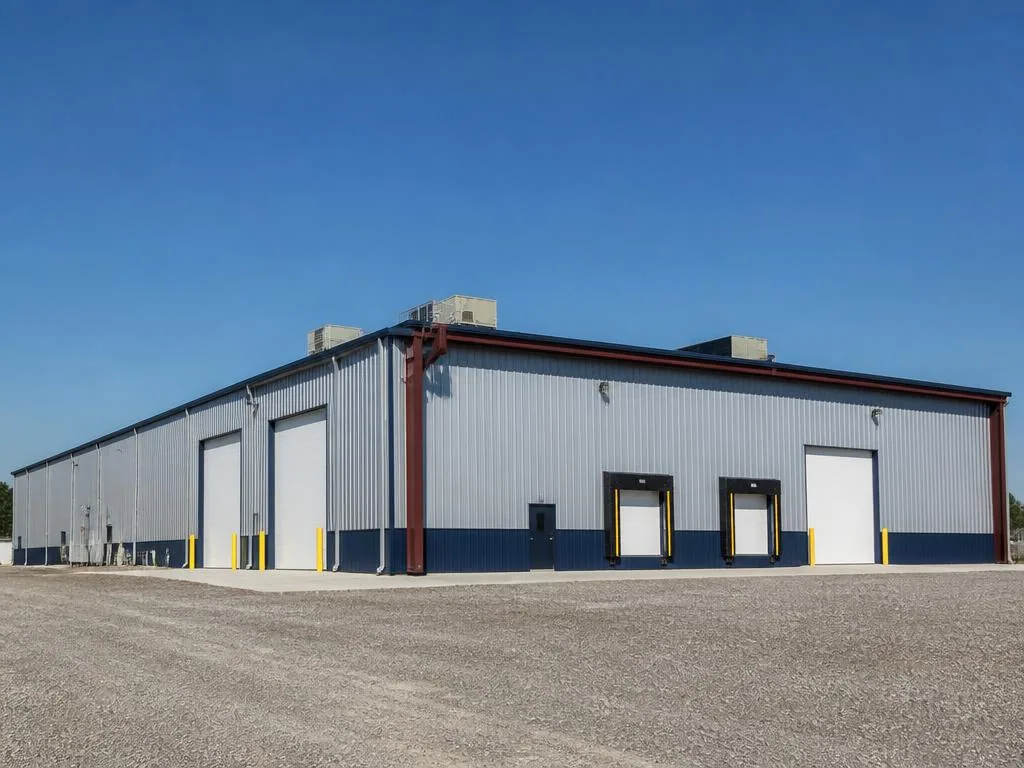
A restaurant can have a short interval between deliveries, prep, lunch, dinner, and cleaning. The roof plan names the hours when a lift can occupy a service lane and when noise or interior access should be avoided. We identify the manager who can pause work if a delivery blocks the route. If an open roof zone cannot be closed within that window, the crew changes the phase rather than leaving an unprotected edge.
Interior protection may need to be reset between kitchen, storage, and dining areas. The owner identifies surfaces and equipment that cannot be exposed to dust or falling debris, and we match that list to the roof-grid location. A completion note records when the work zone was returned to normal access. Restaurants with longer sequences can use occupied-building phasing to link each roof release to operations.
Separate the Roof Leak From Plumbing
A ceiling mark beneath a kitchen may sit near plumbing, refrigeration, exhaust, or a roof opening. We document the mark and compare it with rainfall, equipment use, pipe routing, roof seams, and the drainage path. If the evidence points to a pipe rather than the membrane, the report identifies that distinction before a roof patch is priced. This avoids closing the wrong opening while the interior source continues.
On the roof, we inspect the curb perimeter, seam terminations, conduit supports, and transitions where grease-control equipment has been serviced. We note whether material is cracked, loose, wet, or merely discolored, then recommend the next test that can confirm the path. A leak repair with a mapped source should close the confirmed route and document adjacent areas retained.
Use Menifee Planning as Context, Not Inventory
The McCall Boulevard Economic Development Corridor is one context for Menifee’s office and medical uses. City economic planning also describes commercial and mixed-use districts along Interstate 215. When a restaurant shares road access with nearby offices, the operator can identify the delivery window and guest entrance that must remain open; a corridor designation alone does not establish the property layout. We confirm those details at the site.
A restaurant roof map should distinguish the kitchen exhaust zone from dining areas, delivery access, and any shared service court. We mark fan curbs, drain paths, and membrane transitions before the operator selects a work window. That prevents a short evening repair from blocking the route needed for a morning delivery. Near the McCall Boulevard Economic Development Corridor, the specific entrance, parking controls, and guest route must still be confirmed by the property contact.
Keep Drainage Separate From Exhaust Cleaning
Grease control belongs to kitchen equipment and its maintenance schedule, but roof drainage still needs its own inspection. We check drain bowls, strainers, overflow paths, membrane at the flange, and any low point where debris can collect. Cleaning a drain will not reseal a failed curb, and patching a seam will not restore an obstructed outlet. The scope assigns each task to the correct trade and gives the operator a clear closeout.
If ponding remains after an outlet is clear, we document slope and transition conditions before proposing a larger correction. A temporary water-control measure can be separated from permanent membrane work so the restaurant can decide in sequence. When the outlet itself is the supported issue, a defined drain and overflow repair shows its limits and the surrounding roof area checked.
Compare a Local Fix With Replacement
A single failed curb or lap may be repaired when the surrounding membrane and substrate remain sound. If inspection shows repeated separation, widespread wet insulation, or several incompatible patches, we outline a replacement area separately. The owner receives the test result, removal boundary, transition detail, and protection needed during the shift. The choice is tied to roof evidence rather than the size of the interior stain.
Menifee is an inland city with naturally dry conditions, and city planning identifies higher average temperatures and more extreme-temperature days as risks. We consider actual surface temperature and product limits when scheduling adhesive or coating work. We do not convert citywide planning into a claim about a restaurant roof. An inspection can document whether a single-ply assembly or another system suits the measured conditions.
Where several roof openings sit close to an exhaust fan, the inspection should distinguish the curb flashing from the duct, fan base, and nearby roof seam. We photograph the edge before the mechanical contractor removes equipment, then confirm the final membrane tie-in once the fan returns. That sequence leaves a record of which trade handled each transition. For a property that includes lodging as well as dining, roof planning for guest operations adds the room-access questions that a restaurant-only schedule does not need.
Hand Back the Roof and the Operating Area
At the end of a phase, we record the curb, seam, drain, or transition treated and note any detail that remains open for a later visit. Photos should show a roof-grid reference and the completed edge. The restaurant manager receives the interior protection status, access restriction, cure period where applicable, and the point at which normal service paths are restored.
The next inspection should revisit the documented repair boundary, not restart with the original ceiling mark. Menifee’s corridor plans can help a portfolio group organize work across commercial locations, but each restaurant still has its own exhaust layout, roof access, and meal schedule. Maintenance linked to restaurant equipment records can preserve those details for the next service window.
Commercial Roofing Questions
Can roof work happen before dinner service?
It can when the owner approves the noise window, exhaust access, staging route, and a dry-in point that fits the shift.
How do you distinguish a roof leak from a kitchen pipe leak?
We compare the interior location with pipe routing, equipment use, roof penetrations, seams, and rainfall before assigning a source.
Does grease buildup mean the roof membrane has failed?
No. Grease-control cleaning and membrane condition are separate observations; we document flashing and drainage conditions around the equipment.
What if the exhaust fan needs replacement too?
We coordinate the sequence with the mechanical trade so the curb is protected while equipment is removed and the final flashing can be inspected.
Which restaurant areas need protection?
The operator identifies kitchen, storage, dining, and delivery areas that should remain clear, then we tie each measure to a roof zone.
Related Roofing Work
Arrange a roof condition review
Request a Roof Assessment
Arrange a roof review around meal service and delivery access. We will trace the reported water route, define any opening, and explain the repair choices supported by inspection.
Service area
Menifee, Perris, Murrieta, Temecula, Hemet, Lake Elsinore and nearby Inland Empire communities
Quick contact
[email protected]
555-555-5555