
Commercial Skylight and Penetration Flashing in Menifee, CA
Home / Commercial Roofing Services / Commercial Skylight and Penetration Flashing in Menifee, CA
A ceiling stain below a skylight can start at the curb corner, the flashing lap, a fastener, or the membrane several feet uphill. We trace the roof assembly before sealing the visible edge. On a commercial roof, the skylight itself also changes access and fall-protection planning, so the repair has to protect the opening while preserving a safe route for the crew. Our inspection records the curb material, flashing layers, nearby seams, and interior evidence, then separates a localized repair from a larger wet-area question. A focused commercial roof inspection gives the repair a baseline instead of treating every stain as the same defect.
Trace the Opening Before the Sealant
Water can travel along a curb, fastener line, or deck before it reaches the ceiling. We mark the interior symptom, compare it with roof slope and drainage, and inspect the uphill side before choosing a repair point. A failed sealant bead is evidence, but it does not tell us whether the underlying flashing remains attached. We look for lifted corners, split laps, corrosion, loose counterflashing, and membrane stress around each transition.
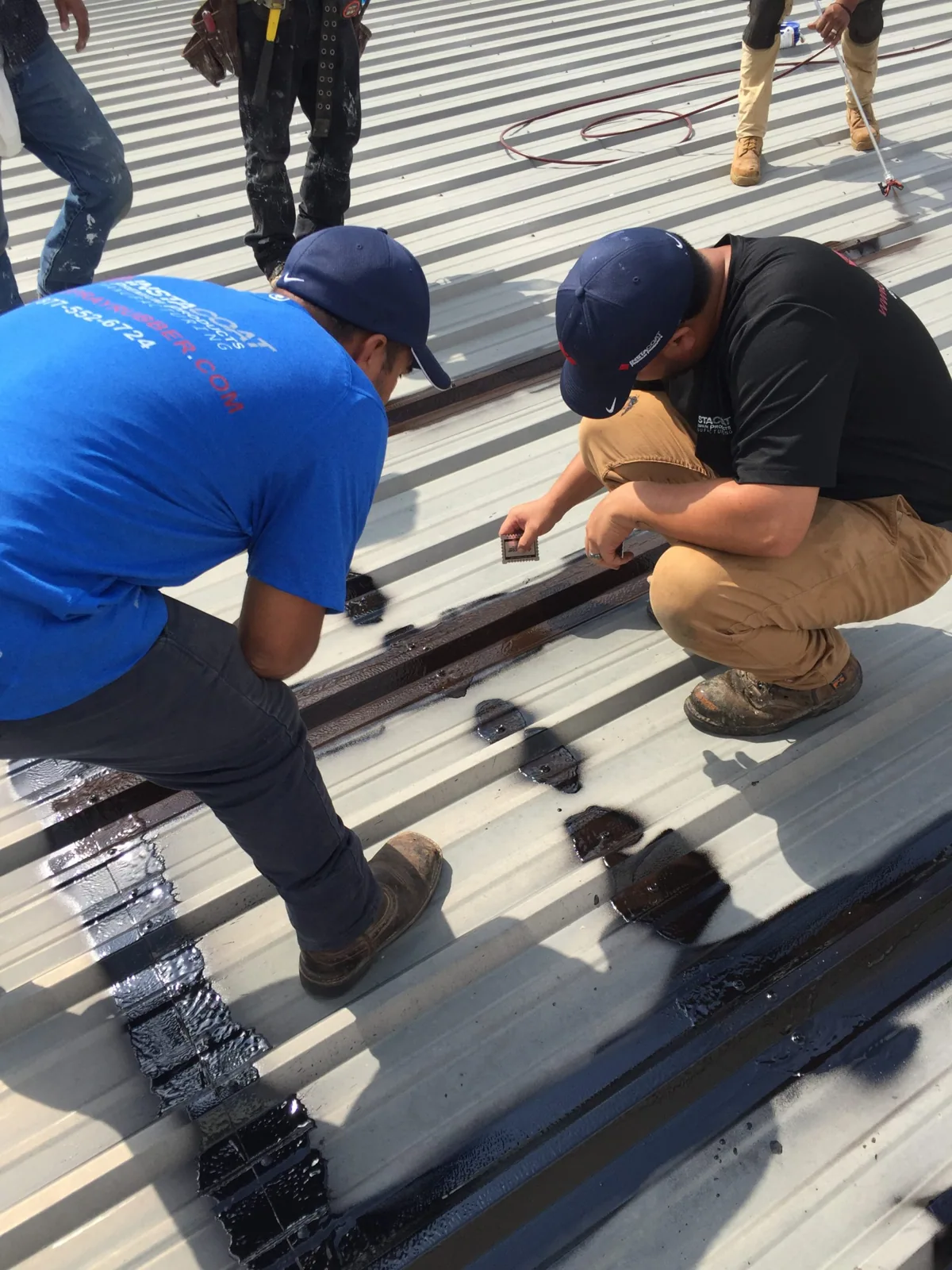
Skylights, pipes, conduit supports, and mechanical curbs each create a different interruption in the field membrane. We group observations by detail rather than label the whole roof as failed. That distinction matters when a commercial leak repair must stop water quickly while leaving sound roof area undisturbed. The work record identifies the defect, the tested boundary, and any area that needs a separate opening or moisture survey.
Read the Curb as Part of the Roof
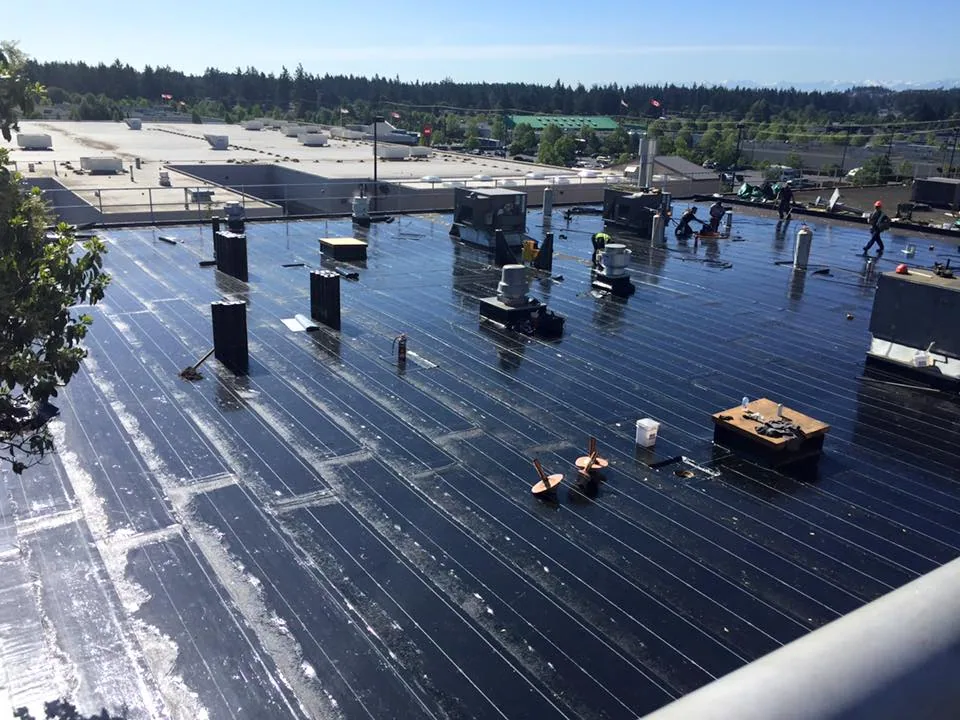
A curb can move independently from the surrounding roof as equipment vibrates, supports settle, or seasonal temperature shifts change the assembly. We check the curb faces, corners, cap, and membrane turn-up together. Where metal counterflashing covers the membrane edge, we confirm that the termination remains secure and that water sheds away from the opening. A bead of sealant across a loose edge may hide the movement without correcting its cause.
Roof geometry also matters. A skylight set near a drain, valley, or low point can receive concentrated water even when the unit itself is intact. We compare the opening with nearby ponding marks and inspect whether runoff reaches the curb from an upslope path. For a membrane roof, the roof recover assessment should state which layers will be removed, how the opening is protected during work, and how the tie-in will be tested.
Match the Repair to the Assembly
Repair materials must bond to the existing membrane and remain compatible with its coating, primer, and flashing layers. Before a patch is selected, we identify the roof system where the available labels, seams, and field details allow. A single-ply transition may need a welded or manufacturer-compatible flashing detail; a metal curb may need new counterflashing rather than more surface sealant. We do not assume that two materials are compatible because they look similar after installation.
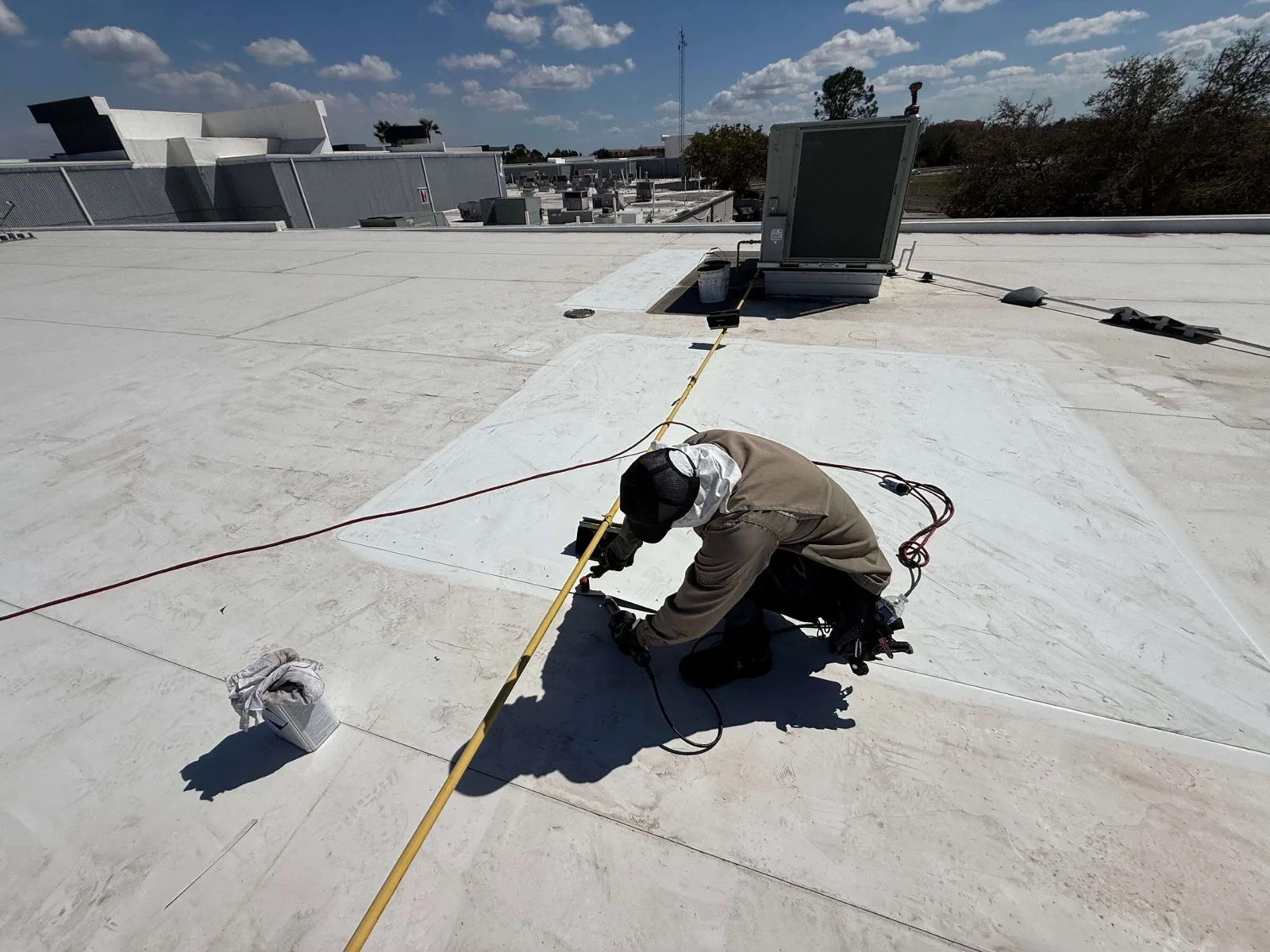
When the assembly is confirmed as TPO, a TPO flashing repair can be evaluated against the actual membrane condition and detail geometry. If the curb is surrounded by wet insulation or the deck shows deterioration, a surface repair alone may leave the larger cause in place. An infrared moisture survey can help map suspect areas under suitable conditions, followed by verification before a replacement boundary is drawn.
Protect the Opening During Work
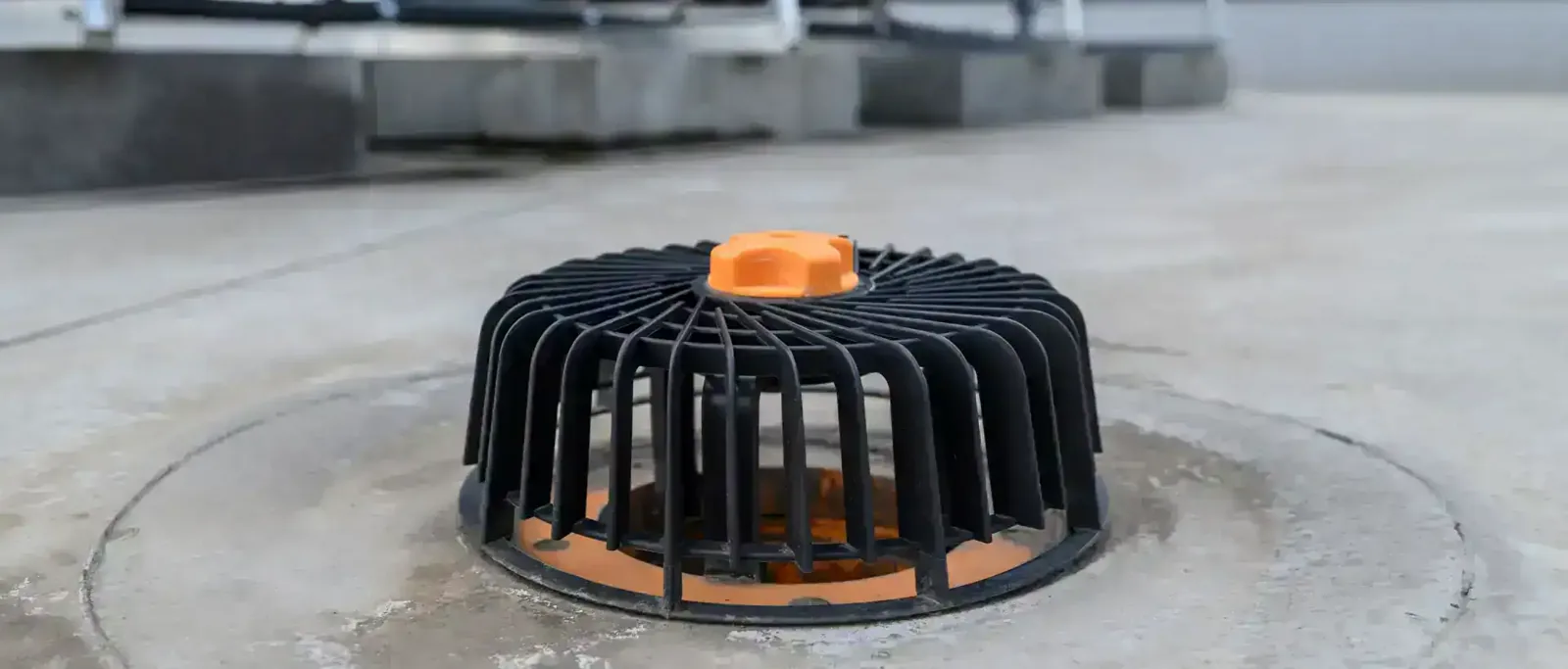
A skylight is a fragile opening, not a work platform. We establish a controlled route, identify fall hazards, and keep tools and removed materials away from the glazing. If the building remains occupied, a contact can coordinate the work zone below, especially where daylighting serves a customer or staff area. Temporary protection has to remain secure if weather or another trade delays the repair, so the closeout records its condition and removal.
Access planning also sets the sequence. We inspect first, stage only the materials needed for the defined repair, then open and close the flashing in one controlled operation where practical. If interior access is required, we coordinate it before the roof work begins. The occupied-building work plan shows how roof access, noise, debris, and interior protection can be scheduled without treating the whole facility as vacant.
Account for Menifee Heat and Exposure
Menifee’s inland, naturally dry climate and rising extreme-temperature risk make exposed sealants, curb corners, and membrane laps useful comparison points during a repeat inspection. We record whether a bead is split, hardened, displaced, or still bonded; we do not convert citywide climate context into a claim about this particular roof. The roof’s age, assembly, shade, and surface condition remain field questions.
Commercial uses in the Community Core Economic Development Corridor are envisioned alongside civic and retail activity. The McCall Boulevard Economic Development Corridor includes an I-215 interchange serving commercial district and medical-center access. Those planning contexts make occupant coordination relevant, but they do not identify a specific skylight or building. We tie the repair to the curb condition, route water away from the opening, and preserve the customer or staff path below.
Define What the Repair Includes
Cost follows the number of openings, roof access, curb height, material compatibility, and the amount of concealed damage found once a detail is opened. A quote should identify each skylight or penetration, the flashing layers to be removed, the new termination, and any substrate allowance. If the opening is sound and only one edge has separated, the scope can stay local. Repeated wet insulation or movement across several curbs changes the comparison.
We separate verified repair quantities from conditions that cannot be seen until removal. A moisture survey, test cut, or deck review may be warranted before the owner approves a wider replacement. The roof insulation and cover-board review can define how a wet or damaged substrate affects the tie-in. That gives a manager a visible choice between a bounded repair and a broader correction rather than a single allowance with no limits.
Leave a Record at Every Opening
The closeout should identify the opening, show the before and after condition, describe the material used, and note any adjacent issue left for monitoring. We photograph the curb corners and tie-in from consistent angles so a future inspection can tell whether movement has returned. If the leak continues, the record helps narrow the next investigation to a remaining route rather than repeating the same surface patch.
Menifee’s adopted building-code edition and wind criteria are project-design inputs, not a shortcut to a repair detail. The actual risk category, attachment, and local criteria must be confirmed for a permitted scope. We keep that review separate from cosmetic sealing and record the decision that controls the repair. A roof condition report preserves the observation and design question for the next visit. A roof condition report preserves the observation and design question for the next visit. A clear closeout gives the facilities contact enough information to schedule follow-up without confusing a completed flashing detail with proof that every nearby roof layer is dry.
Commercial Roofing Questions
How do you tell a skylight leak from water entering uphill?
We compare the stain location with roof slope, curb corners, seams, and the path water can follow below the membrane. The inspection documents more than one plausible entry point before a detail is opened. That makes the repair boundary easier to explain.
Can you replace only the curb flashing?
Yes, when the curb is stable, the surrounding membrane is sound, and the tie-in can be made without leaving wet material behind. If removal exposes movement or deterioration, we show the added condition and price it separately.
What changes the cost of a skylight repair?
The number of openings, curb construction, roof access, compatible flashing materials, and any concealed substrate damage affect labor and scope. A defined repair lists each opening and separates confirmed work from a test or allowance.
How should a facility handle the area below the skylight?
We coordinate the work window and protection with the building contact, then keep tools and removed material away from the opening. Where people occupy the room, the interior route and temporary protection are part of the sequence, not an afterthought.
Related Roofing Work
Trace the Leak at the Opening
Request a Roof Assessment
Set a roof inspection around the skylight, curb, nearby seams, and the room below. We will document the water path and define the flashing repair before material is removed.
Service area
Menifee, Perris, Murrieta, Temecula, Hemet, Lake Elsinore and nearby Inland Empire communities
Quick contact
[email protected]
555-555-5555