
Grocery Store Roofing in Menifee
Home / Property Types We Roof / Grocery Store Roofing in Menifee
A wet mark above a grocery aisle can appear far from the roof opening that feeds it. Refrigeration lines, rooftop units, drains, skylights, and long membrane seams create several possible water routes, so the first task is to connect the interior report to a roof zone. We record the mark, weather timing, equipment activity, and nearby details before setting a repair boundary. That keeps a local leak from becoming an unsupported full-roof recommendation.
Store staff can identify receiving hours, food-preparation areas, customer paths, and any aisle that needs protection. We use those details to plan access, material staging, temporary cover, and a safe handback. If the roof supports a connected retail footprint, compare the coordination needs for roof work across shopping-center suites. A grocery roof still needs its own equipment map and operating plan.
Trace Water Near Refrigeration Equipment
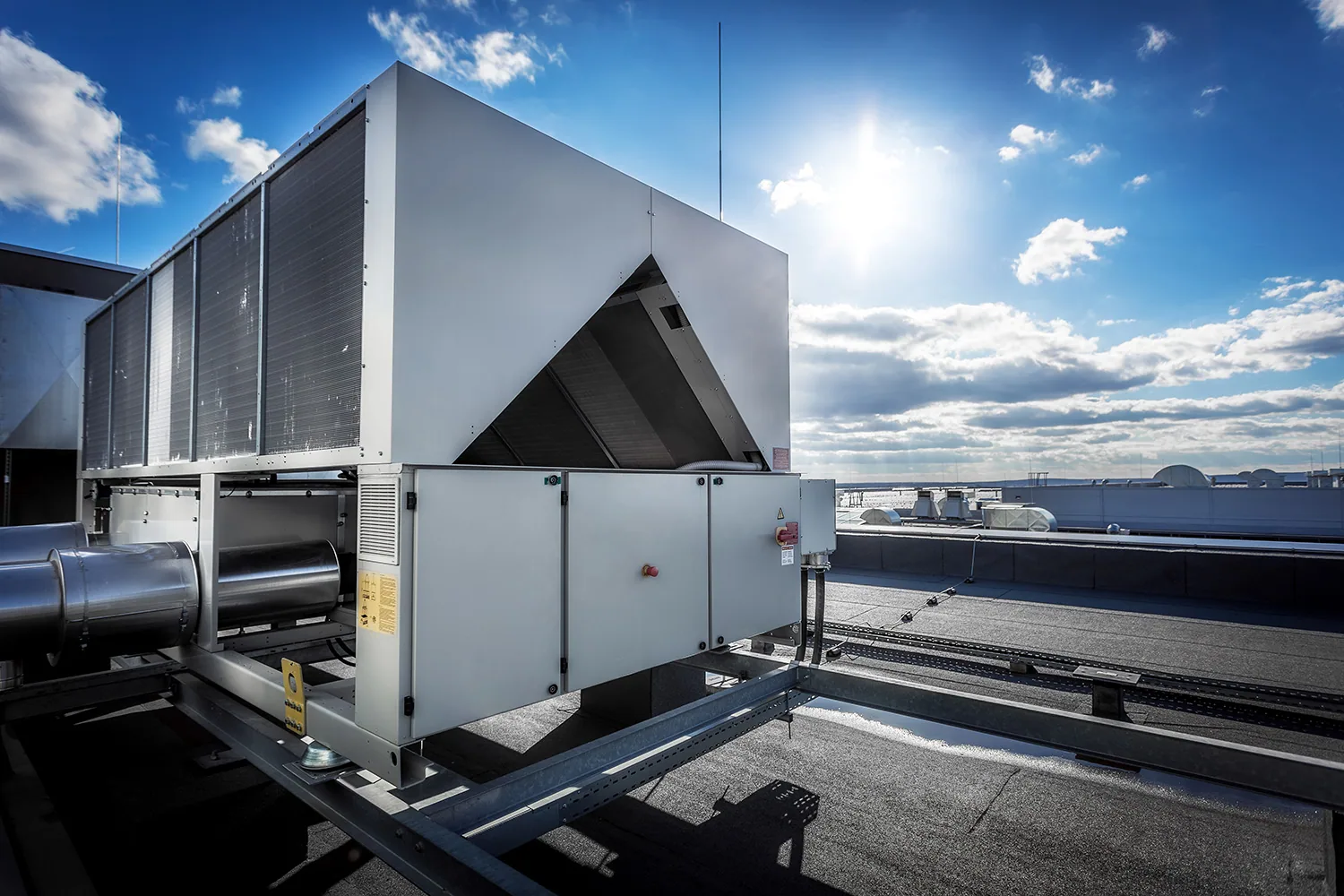
A refrigeration curb can concentrate penetrations, conduit, piping, and service traffic in one roof zone. We inspect the flashing height, membrane attachment, corners, and nearby seams, then compare those details with interior reports and equipment work orders. If a line set or support has moved, the repair scope records the current condition and the trade coordination needed before the roof is closed. A stain alone does not identify which penetration failed.
Cold areas also need protection from uncontrolled water entry while a source is tested. The owner can designate merchandise, food-preparation, and electrical spaces that require interior covering or temporary access limits. We explain whether a small opening is needed, how it will be closed, and what evidence is still missing. A curb and support review can separate roof flashing work from mechanical service.
Protect Food Areas During Investigation
Before opening a roof over a stocked store, the manager and facilities contact identify the interior zone below the proposed work. They can move product, cover shelving, isolate a preparation area, or select another inspection point. We mark the roof location against a simple grid so staff can match each test to the floor plan. The inspection record notes what was protected and when normal use can resume.
A grocery operation may run separate schedules for receiving, refrigeration service, stocking, and public hours. We place noisy work and lift movements into an approved window instead of assuming the entire building shares one quiet period. If a temporary dry-in must remain overnight, the handoff names the roof edge and the person responsible for checking it. For work inside an occupied retail building, see phased occupied-building roofing.
Check the Outlet Before Patching the Field
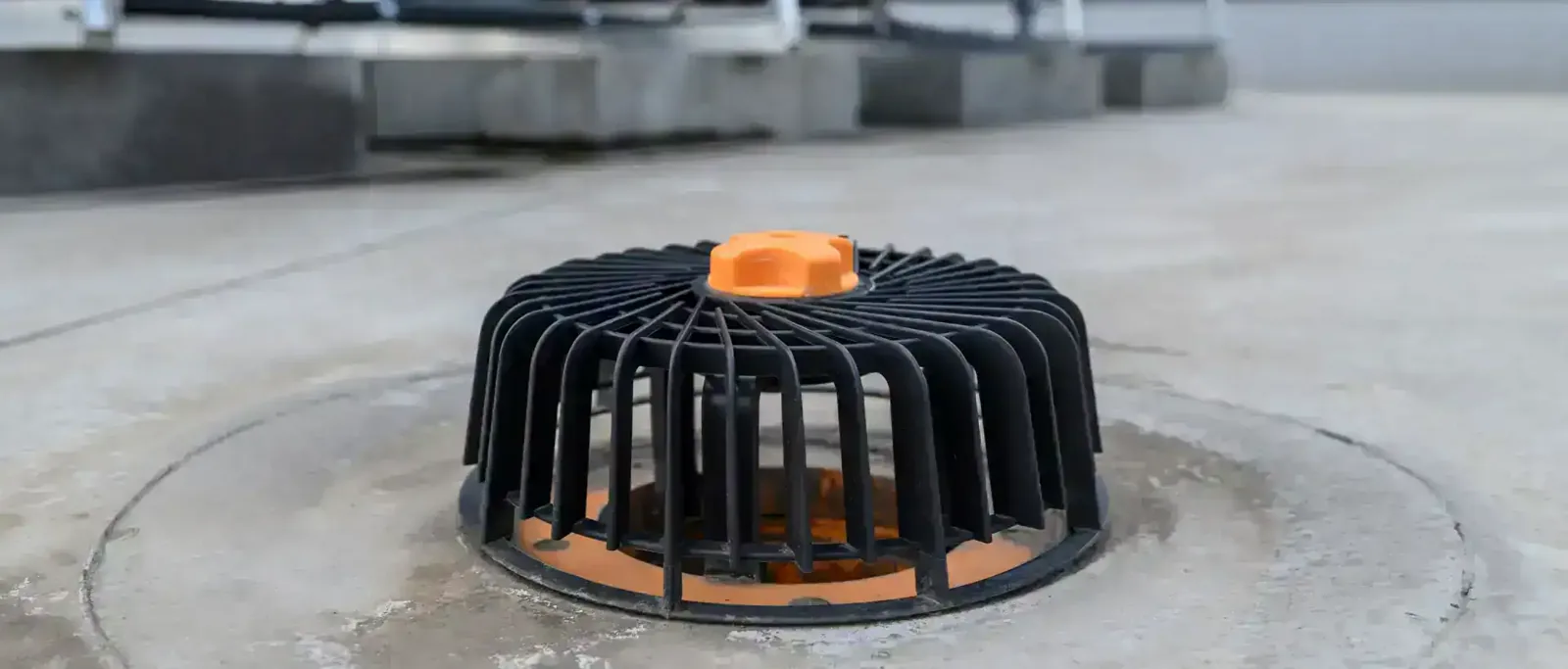
Standing water near an aisle leak can point toward a drain, but the roof path may cross more than one slope change. We inspect the bowl, strainer, flange, overflow, and surrounding membrane for debris, separation, low transitions, or prior patch edges. A blocked outlet and an open seam call for different work. The report identifies the condition found at each drain instead of bundling every wet area into one vague line item.
When the source remains uncertain, we compare the roof map with the timing and location of interior reports, then select the next test that will reduce uncertainty. A controlled test opening may be more useful than applying coating to a broad area. If drainage work is supported, the scope can be isolated through a drain and overflow repair before membrane restoration is priced.

Connect the Store Plan to Menifee Conditions
The City’s 2026 CEDS places Menifee’s designated commercial and office districts along Interstate 215, while the Newport Road Economic Development Corridor has a neighborhood-serving retail role in the city code. For a grocery site, those are planning cues for deliveries and nearby residential uses, not a roof inventory. We confirm the property’s entrances and loading limits before setting a work zone. A store near the Newport Road corridor still needs its own access plan.
For a building with refrigeration, exhaust, and a long delivery frontage, the roof sketch should show how those details relate to one another. We mark service paths, outlets, and prior patches before selecting a test point. The manager can then match the indoor report with a roof location without closing a broad sales area. If the property lies near the Newport Road Economic Development Corridor, that district name provides planning context only; site access and the reported condition still need direct confirmation.
Choose a Repair Window That Fits Store Work
A localized repair may fit between deliveries when the failed detail is known and adjacent materials remain serviceable. If testing finds wet insulation, repeated seam separation, or deterioration across several zones, we separate a larger replacement option from the immediate water-control work. Each option lists removal limits, temporary protection, tie-ins, and the area released at the end of a shift. The store can compare disruption as well as material scope.
Menifee’s McCall Boulevard Economic Development Corridor combines office, medical, and residential uses. That mix is a reminder to coordinate traffic and deliveries at the actual property, not a claim that a specific grocery tenant sits there. We agree on a lift route, staging point, fire-lane clearance, and person who can approve a schedule change. For a broader comparison of systems and repair limits, review a documented commercial roof inspection before approving removal.
Sequence Removal Around Refrigeration and Stock
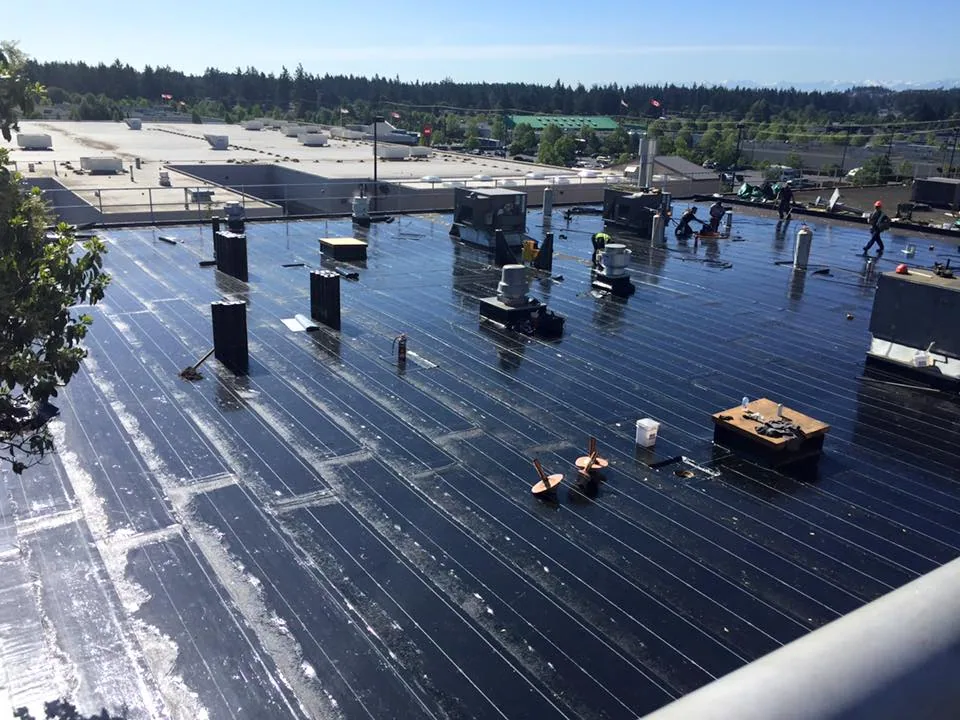
Replacement planning starts with a roof-zone map that marks curbs, drains, skylights, exhaust, and lines serving refrigeration. The crew can then remove only the area that can be dried in and tied off within the approved work period. The proposal identifies where materials are staged, how temporary protection is checked, and which equipment must remain accessible to service technicians. The owner sees each release point before work begins.
If a grocery roof has several additions or different assemblies, we verify those transitions instead of carrying one detail across the whole footprint. Insulation depth, deck condition, attachment, and existing moisture affect both schedule and scope. A recovery may be considered only when the retained roof and drainage support it. When removal is the better-supported choice, replacement by protected roof zone makes the sequence easier to review.
When several refrigeration circuits cross one roof area, we label the line routes and service clearances before the first repair. That makes it easier to protect a curb during a later compressor visit and to tell whether a new ceiling report follows the same path. A store with a separate loading canopy or attached sales wing should have those roof sections identified independently. If that footprint includes a large single-tenant sales floor, large-format store roof planning offers a useful comparison for staging and receiving access.
Leave a Useful Facilities Record
Closeout should make the repair findable after the crew leaves. We record the roof-grid location, seam or curb treated, drain and overflow condition, test opening closure, and any remaining observation. Photographs show the same zone from a repeatable point, while the work note identifies whether a temporary cover or cure limit remains. Store staff can then connect the roof record to the interior report and the next inspection.
A portfolio owner can keep grocery records comparable without assuming that two stores use the same refrigeration layout or roof assembly. Menifee’s commercial planning and employment districts change over time, so a current property survey matters more than a corridor label. For a recurring roof review, scheduled maintenance tied to known repair edges can help preserve the condition history.
Commercial Roofing Questions
Can a grocery store stay open during roof work?
Often, if the owner approves an access route, interior protection, receiving window, and roof-zone handback before materials are staged.
What should happen before testing above food areas?
The store identifies product and preparation zones, then we map the proposed roof opening and agree on covering, isolation, and reopening steps.
Why does a ceiling stain move after rain?
A stain can form downstream from a drain, curb, or seam. We compare the mark with roof slope, interior framing, and the timing of the report.
When is coating a poor choice?
A coating does not correct a blocked drain, failed curb, unstable substrate, or wet insulation. We test the assembly and separate those conditions first.
What should the handoff include?
It should show the treated zone, nearby drains and curbs checked, closed test areas, any access restriction, and the next inspection point.
Related Roofing Work

Arrange a roof condition review
Request a Roof Assessment
Arrange a roof review around receiving and store hours. We will map the reported water path, explain each repair boundary, and document the options supported by the assembly.
Service area
Menifee, Perris, Murrieta, Temecula, Hemet, Lake Elsinore and nearby Inland Empire communities
Quick contact
[email protected]
555-555-5555