Big-Box Retail Roofing in Menifee
Home / Property Types We Roof / Big-Box Retail Roofing in Menifee
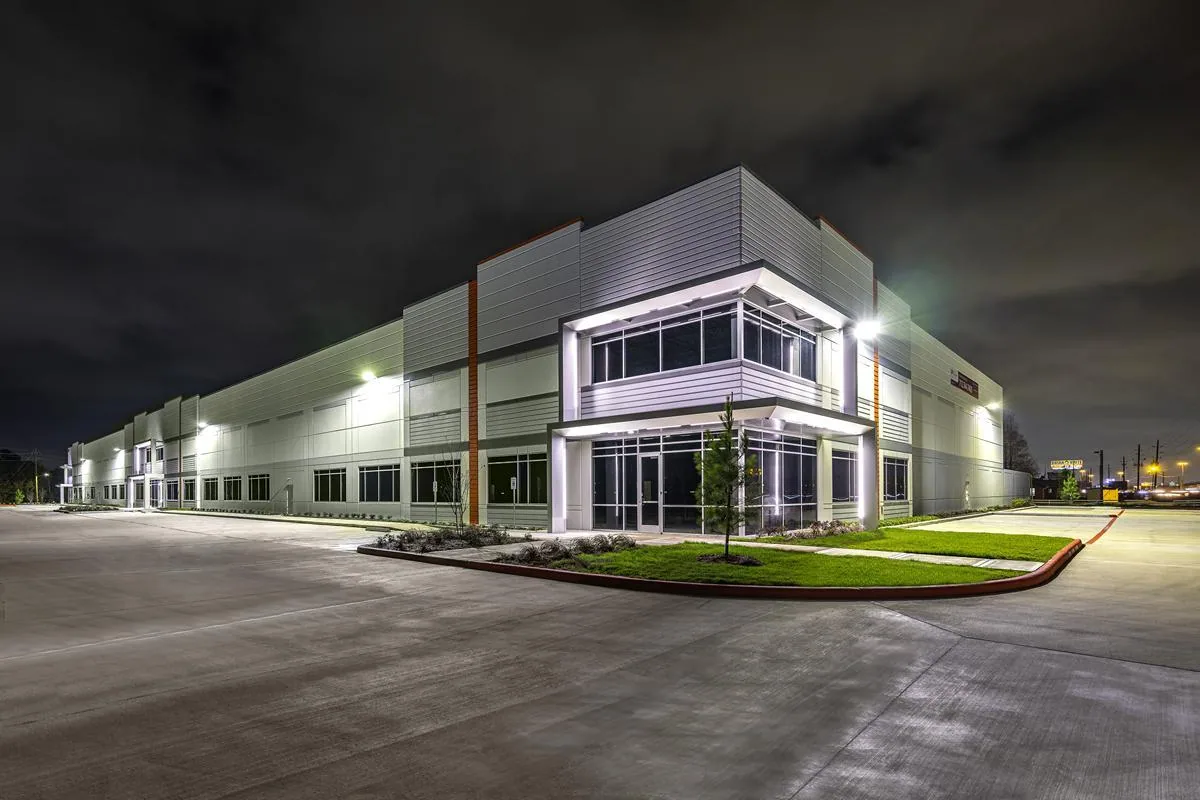
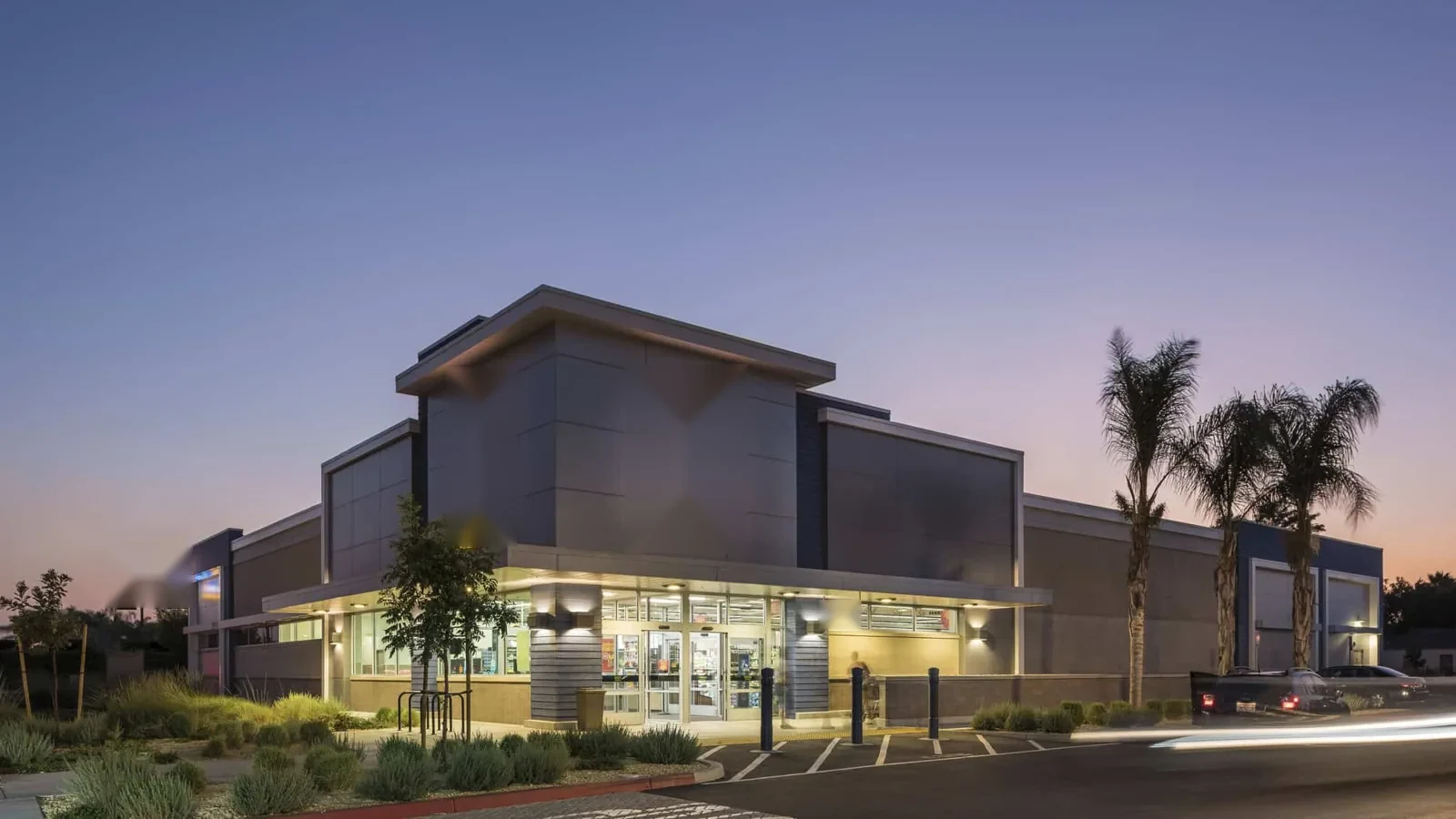
Large-format retail roofs combine long membrane runs with busy receiving areas, customer doors, and equipment that may operate throughout store hours. A leak above inventory or a sales floor needs a documented path before a repair is chosen. We compare the interior report with seams, drains, roof openings, and nearby equipment, then draw a work zone that protects the building while keeping essential access available.
A store manager can confirm truck windows, customer traffic, fire lanes, and any area where material staging is restricted. We use that information to set a phase and a handback point. The scope records what is visible, where testing is needed, and how temporary protection will be maintained if weather or a delivery changes the schedule. For smaller connected suites, compare roof work across connected retail suites.
Keep Receiving and Customer Access in View
A roof crew may need to stage a lift, pallet, dumpster, or fall-protection line near a receiving lane. We check those paths against truck turns, delivery timing, customer entry, and emergency access before selecting a setup. Store operations can name the hours that are less disruptive and the areas that remain open. The schedule then identifies who can approve a route change if freight arrives early.
If interior protection is required above merchandise or checkout lanes, we plan it with the store contact before opening the roof. The scope notes any area that needs a temporary closure and how it will be returned to use. We do not assume that a large floor plate has a single operating schedule; receiving, sales, pharmacy, food, and support areas may require separate coordination. Where cold or food storage is present, review roof details over a grocery operation.
Find the Roof Opening Behind the Interior Clue
A stain at a stockroom ceiling may be fed by an uphill drain or curb rather than the roof directly above it. We compare the interior mark with water direction, membrane seams, wall transitions, skylight wells, and service history. Several marks that occur after one storm can share a path. Recording the dates and locations gives the owner a way to distinguish a repeat leak from a new roof opening.
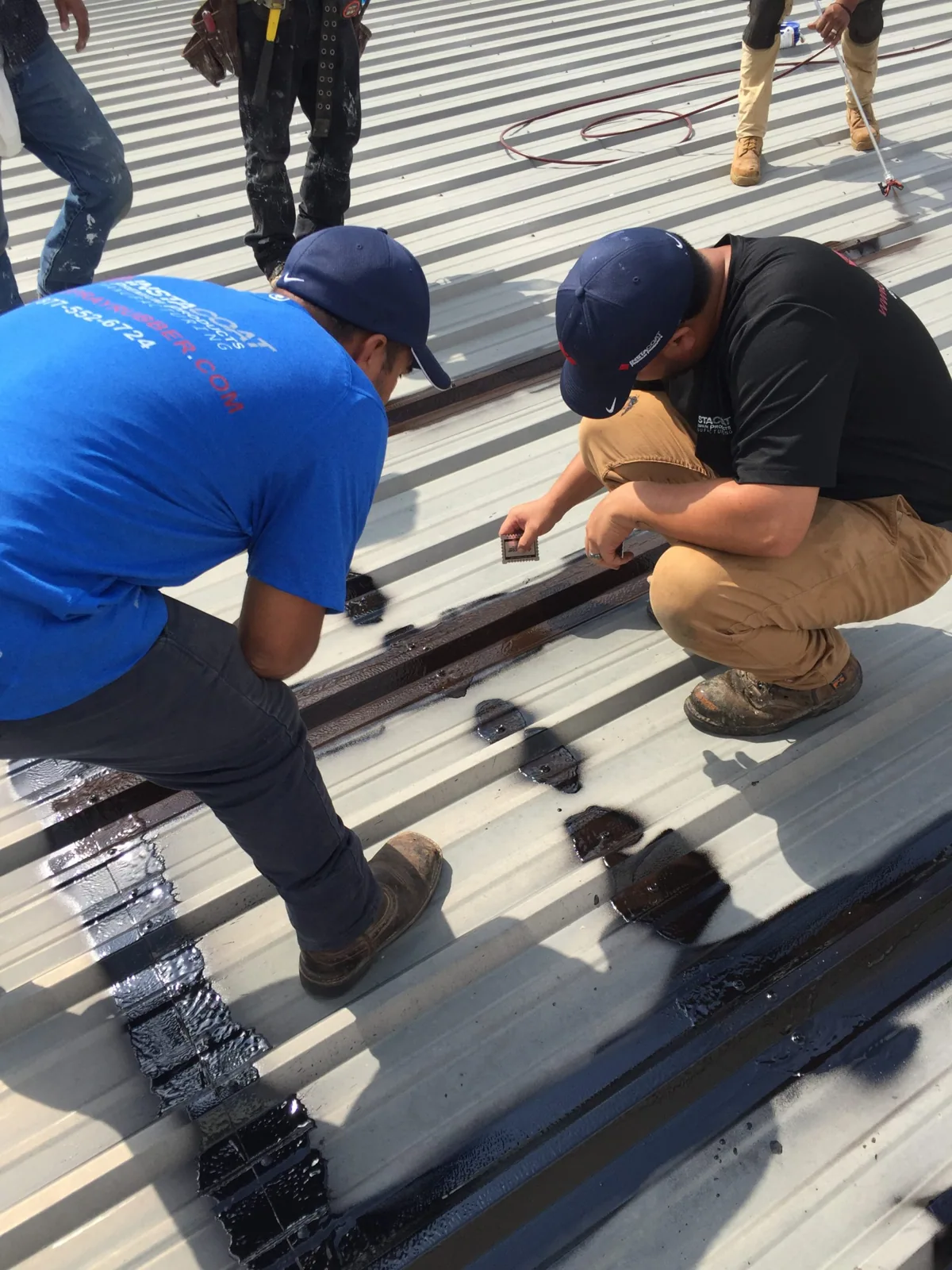
A visible patch may hide a prior repair, so we check its edge, bond, and relation to surrounding wet material. If a test cut is necessary, the store approves timing and inventory protection. An inspection mapped to store reports should state what was confirmed and what needs another test rather than converting every ceiling mark into a separate repair order. Multi-property teams may use repeatable roof records for retail portfolios without assuming identical assemblies.
Use Menifee Retail Planning Without Guessing at Stock
The City strategy describes an office and commercial-space shortage in its growth discussion, and Menifee’s zoning map separates commercial retail from office and employment designations. Those sources explain land-use context; they do not count big-box stores or identify current roof conditions. For a specific address, we verify the building use, roof records, and receiving schedule with the owner.
Northern Gateway is planned as a business-park area with a stronger industrial orientation than Scott Road. The Northern Gateway Economic Development Corridor is not itself a retail service boundary. A store near a designated corridor still needs property-level access approval and a field survey before a schedule, repair boundary, or system recommendation is set. Begin with an inspection mapped to store reports before selecting a scope. At the Newport Road Economic Development Corridor, municipal planning prioritizes everyday commercial services for nearby residential areas. That goal says nothing about the number of large-format tenants or the condition of their roofs.

Review Mechanical Equipment and Outlets
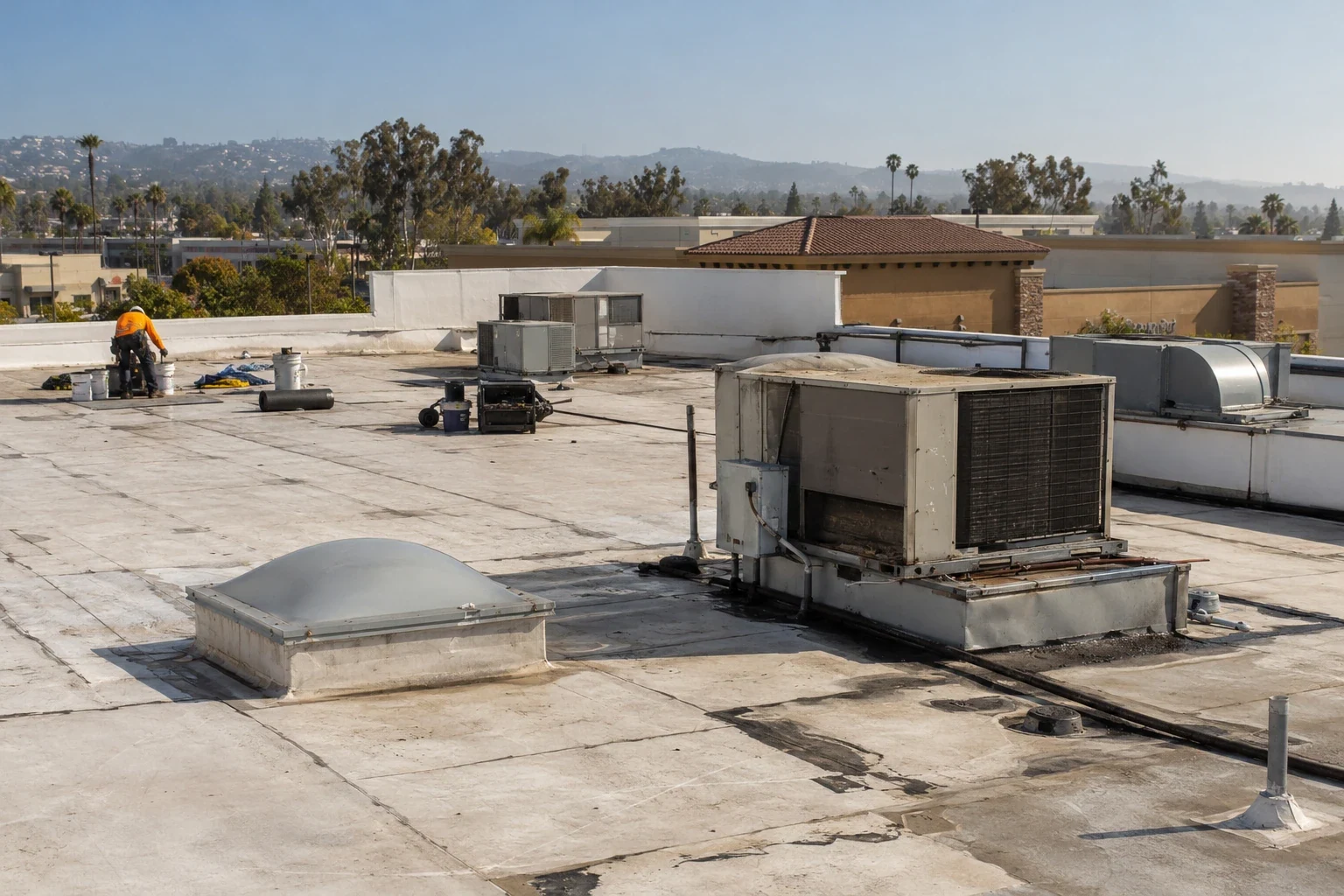
A wide retail roof can carry many HVAC units, exhaust fans, skylights, conduit runs, and tenant-installed supports. We map each curb, then look for flashing separation, fastener movement, and a change in equipment footprint. Rooftop service routes can create wear in otherwise sound areas. The inspection notes where routine maintenance staff walk so future work can protect those paths.
At each drain and overflow, we inspect the flange, bowl, slope, and any debris or high transition. When an outlet cannot carry water away, coating the nearby field will not solve the cause. A drain and overflow task with defined limits can be paired with a separate membrane scope. We photograph the same roof zone before and after work to show what changed. If broader removal is supported, consider replacement sequenced by protected zone.
Compare a Repair With a Protected Phase
A single failed lap or curb can support a localized repair if the adjacent system remains stable. If the same detail fails across several sections or tests show wet insulation, a larger replacement phase may deserve review. We outline the area, materials, removal depth, tie-ins, and protection for each option. Store teams can compare choices without treating a small stain as evidence that the entire roof must be replaced.
A replacement sequenced by protected zone should list the temporary dry-in and the area that returns to operations after each shift. The owner may phase work around receiving, store hours, or a capital budget. We also identify the inspection needed before closure so retained materials and new edges are documented together. A drain and overflow task with defined limits makes water control visible in the bid.
Set Work Windows With the Store Team
Store schedules change around promotions, inventory counts, seasonal deliveries, and contractor visits. The manager identifies events and restricted aisles before we set the lift and crew route. A phase plan shows customer access, loading, dumpster location, and any roof area that will stay unavailable. If weather changes the sequence, the open edge is secured and the owner receives a revised boundary.
Menifee’s climate planning identifies higher average temperatures and more extreme-temperature days as citywide risks. We check surface and ambient conditions against safety limits and product instructions rather than making a performance promise from citywide climate information. The installation plan accounts for material staging, cure requirements, and the work hours approved for the specific property. Owners can retain the evidence in capital planning tied to field evidence.
Provide a Store-Operations Handoff
The final record lists the repaired seam or curb, drains checked, zones retained, test openings closed, and any remaining task. Photos should identify a roof-grid location that the facilities team can find later. We note when the receiving or customer path returns to normal and whether a roof detail needs restricted access during cure. That gives store managers a useful handoff at the next shift.
A capital plan tied to field evidence can separate immediate water control from a future roof phase. Portfolio managers can compare repeatable roof records for retail portfolios while preserving each store’s unique equipment map and operating schedule. A maintenance check returns to the documented repair edge instead of repeating the original investigation. The Northern Gateway Economic Development Corridor is a planning reference, not proof of store location or service reach.
Commercial Roofing Questions
Can the store keep operating during a reroof?
Often, when receiving lanes, customer routes, emergency access, noise, and roof work zones are planned with the store team.
What causes leaks over large retail floors?
Possible sources include seams, curbs, drains, skylights, or water traveling across deck or insulation. Inspection must establish which path is supported.
Why review drains separately from membrane?
A blocked outlet or high flange is not corrected by a field patch. Separate scope lines let the owner compare each water-control action.
How should a replacement be phased?
The plan identifies removal limits, temporary cover, equipment protection, drainage, and the part of the roof released after each work period.
What should the facilities handoff preserve?
It should locate repair edges, drains, equipment details, test openings, remaining concerns, and any cure limit before routine access returns.
Related Roofing Work
Arrange a roof condition review
Request a Roof Assessment
Set an inspection around building access and operating hours. We will map the roof condition, explain repair boundaries, and document the options that fit the assembly.
Service area
Menifee, Perris, Murrieta, Temecula, Hemet, Lake Elsinore and nearby Inland Empire communities
Quick contact
[email protected]
555-555-5555