
Commercial Roofing in Riverside, CA
Home / Service Areas / Commercial Roofing in Riverside, CA
A water ring under a rooftop unit may be the last point in a long path, not the opening above the room. We note the stain, check when it appears and locate the roof features that could connect to it. Then we walk the membrane, drain paths, curbs and wall edges before choosing a repair. That keeps the first proposal tied to what the roof shows rather than to a symptom alone.
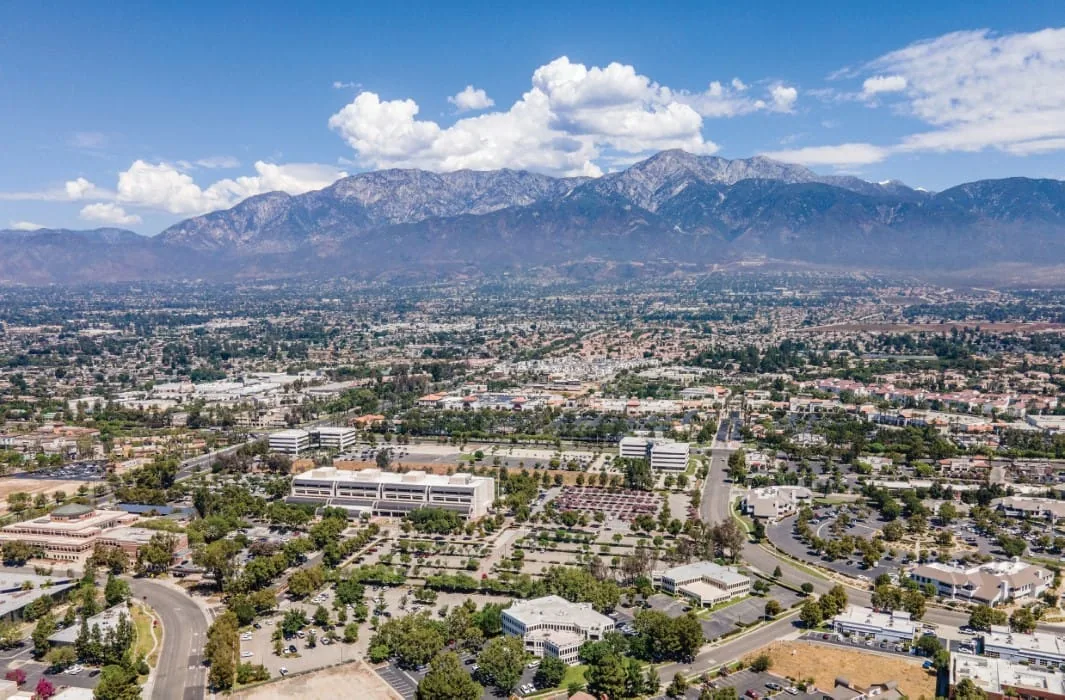
Riverside’s economic-development dashboard publishes city and trade-area data, including 2024 population measures, and provides business users with labor-market and quarterly report resources. Those city statistics do not reveal a particular building’s roof type or condition. On site, we record the membrane, drainage, repair history and access limits. A commercial roof inspection gives a facility manager a field record to compare with the building file.
Separate market data from property facts
The Riverside dashboard places figures and business resources together, but a trade-area estimate is not a count of roof systems, customers or active projects. The City’s investment strategy describes support for entrepreneurship, a varied mix of industry and talent, and living-wage employment. Those goals are economic-development context. They do not establish the occupancy, operating schedule or maintenance needs of any one building.
We ask the property contact about the actual work area: which spaces remain open, what deliveries use the loading side, which doors need clear access and whether rooftop equipment can be isolated. The answers affect staging and timing, not the diagnosis. Menifee is a separate nearby market, and Moreno Valley has its own property inventory. Even neighboring assets in Temecula may have different assemblies. We do not carry a roof assumption from one record into another; photos and findings stay attached to the address inspected.
Start where water became visible and work backward
We compare an interior mark with the roof above it, then follow plausible routes through the assembly. Water can travel along a deck flute, insulation joint, framing line or low slope before appearing indoors. We inspect seams, penetrations, drains, scuppers and parapet transitions that connect those routes. We note whether an outlet is clear, whether the membrane has lifted and whether any repair overlaps the suspected path.
At the detail, we check flashing turn-ups, corners, edge termination and adjoining membrane. A loose fastener or sealant gap can be a clue, but the route still needs to connect. If the first point looks intact, we continue toward the nearest drainage boundary and document the next likely test. A focused repair scope can then address the failed detail without hiding a second condition under a larger patch.
Verify the roof system before selecting products
We identify the assembly from seam layout, edge conditions, labels and any maintenance records the owner can provide. A coating or earlier patch may obscure the original surface, so we record uncertainty instead of treating appearance as proof. When concealed moisture or material compatibility could change the recommendation, an approved test may be useful. We explain the purpose, secure permission and plan how the opening will be restored.
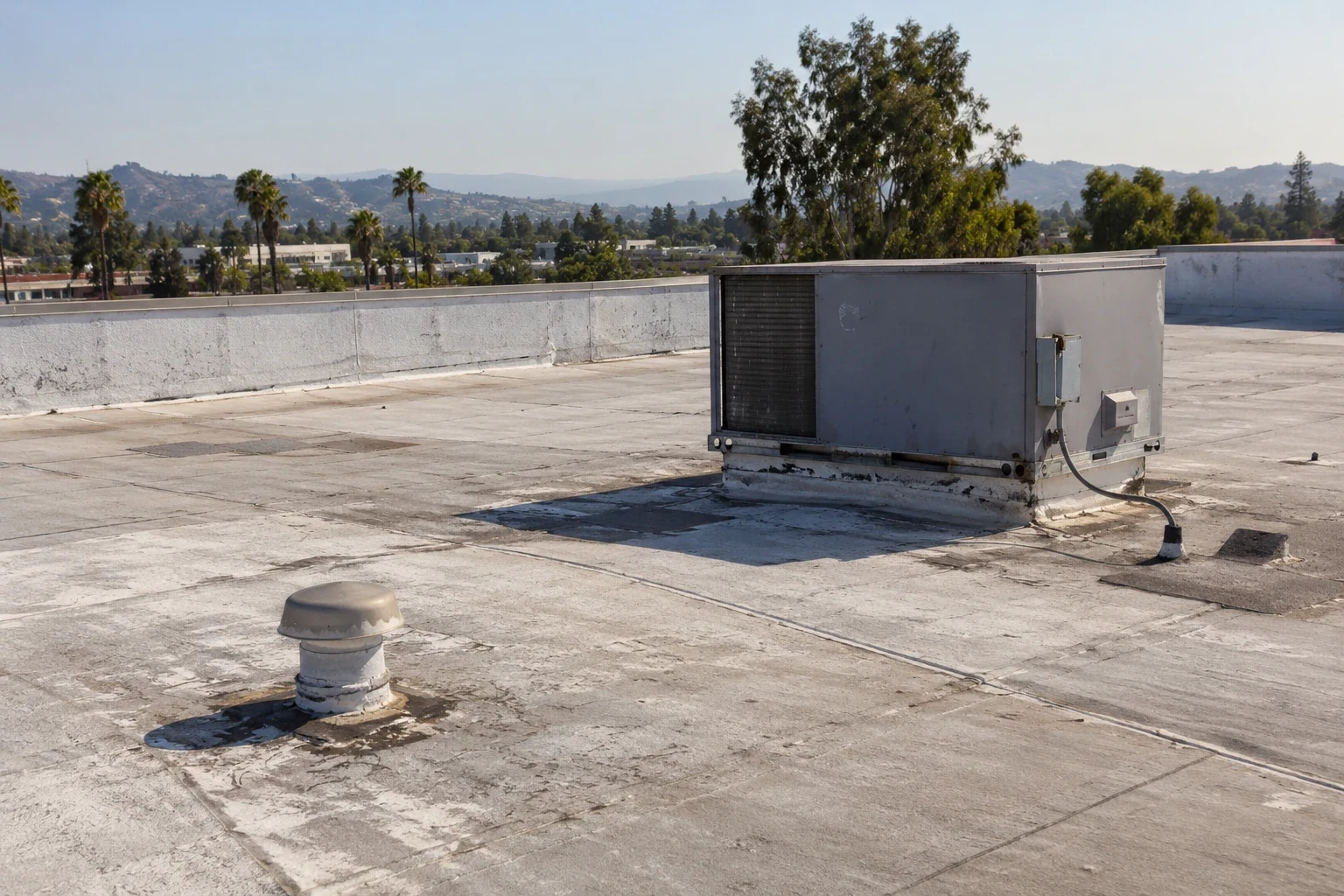
The walk captures drains, scuppers, curbs, penetrations, edge metal, walk paths and equipment clearances. Photographs show the defect and the surrounding material that supports the repair boundary. If a unit or locked area prevents access, we identify that limit and a practical way to complete the check. A roof condition report is more useful when it states what could not be inspected. For a confirmed single-ply system, the PVC roof overview explains material-specific preparation; the installed membrane must still be verified on the roof.
Keep the correction matched to the failed layer
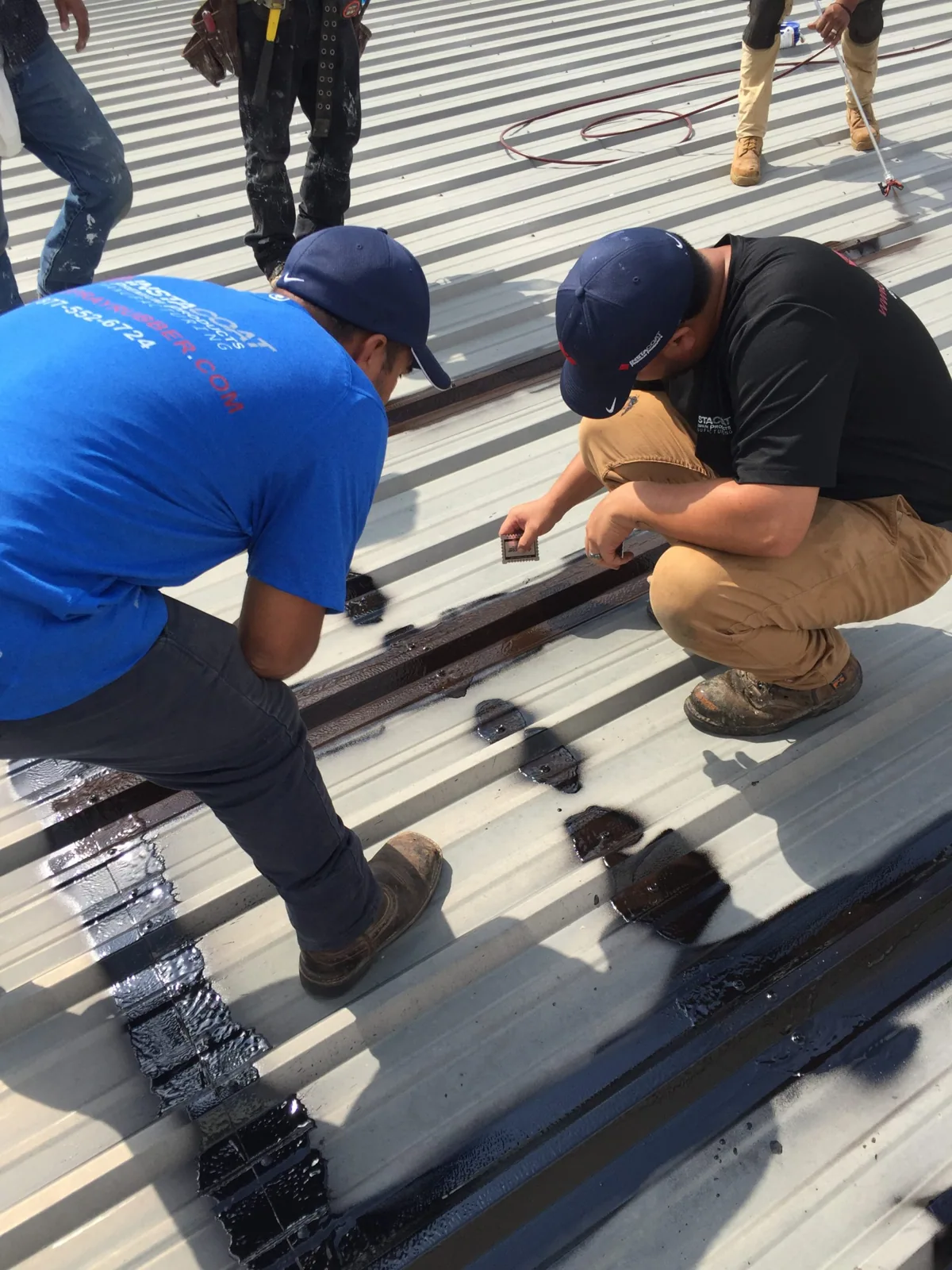
A puncture in dry, well-bonded membrane may need a patch prepared with a compatible cleaner, primer or adhesive. A seam defect calls for restoring the seam itself. A curb failure may require removing deteriorated flashing, checking the substrate and rebuilding the turn-up and termination. The scope identifies what will be removed and where new work stops, so a property manager can compare the proposal with photographs.
Repeated leaks, soft or wet insulation and several failed transitions can justify mapping a wider area. That does not make replacement the default. We weigh the confirmed repair area, adjoining membrane condition, drainage and access costs, then describe what evidence would change the decision. Where water collects near an outlet, a drainage review may be needed before membrane repair. The owner can pair a repair with a later maintenance check to see whether the same location remains dry.
Apply heat context without assigning damage
Menifee’s climate guidance notes its inland dry conditions and treats rising average heat and more extreme-temperature days as hazards in that city. Those observations cannot be transferred to a Riverside weather station or to a roof inspection here. We use it only as a prompt to ask when symptoms appear and to compare actual exposed and shaded zones. A roof surface temperature does not prove a membrane failure by itself.
Field evidence comes from the assembly: open laps, brittle flashing, movement at penetrations, ponding or insulation that has lost support. We check the roof after the reported event when safe and note how drainage behaved. If a coating is proposed, it must fit the membrane and the substrate must be dry and adequately bonded. Menifee’s hazard-planning statements about severe rain and wildfire are not evidence of damage in Riverside. The report names what was observed, what remains uncertain and which additional opening or access would resolve the question.
Coordinate roof access with building operations
Before a crew arrives, the facility contact confirms roof access, ladder location, fall-protection controls, work hours, delivery traffic and sensitive interior areas. If a test opening is planned, the owner identifies who can approve it and how the space beneath will be protected. Material staging should not block a drain, access lane or exit. When a building stays open, we can discuss sequencing by zone and quiet or noisy steps.
Before closing an opened area, the supervisor photographs what the layers reveal and checks that roof outlets remain free of debris. Proposed scope changes are brought to the owner before additional work begins. Closeout includes photographs, the completed repair limit, materials used and any area not reached. A second inspection can compare the same locations to the baseline. For a nearby service-area reference, Beaumont has its own municipal project tracker; that information does not change the Riverside roof plan.
Use a record that supports the next capital choice
Repair cost and timing depend on the material, access, amount of preparation, wet-area limit, safety controls and the building’s operating window. We list those drivers so a manager can compare a small detail repair with wider work. If the roof stays dry around one defect and adjacent seams remain secure, a bounded correction may be appropriate. If moisture extends beneath the surface or failures recur, mapping more area can prevent a decision based on incomplete evidence.
Riverside’s city dashboard and economic-development resources are useful for market questions, while the roof report answers a different question: what failed, where the water traveled and what remains serviceable? The owner receives a repair boundary, photos, access limitations and follow-up conditions. If a new symptom appears later, the team can compare it against that record instead of assuming it came from the same source. No citywide population measure is a substitute for a roof walk or property maintenance history.
Commercial Roofing Questions
Can Riverside trade-area figures predict roof demand?
No. They describe population context, not roof condition or customer activity at an individual address. A field inspection is needed for the building itself.
Why does the stain appear away from the roof defect?
Water can travel along framing, insulation or the deck before it reaches the ceiling. We trace connected details and drainage paths instead of stopping above the stain.
Can coating solve a recurring leak?
Only after the roof system, substrate, adhesion, moisture and drainage are understood. A coating that covers a failed seam without repairing it can leave the original path active.
What if some roof areas cannot be reached?
The report should identify those zones and state the next safe access step. We do not describe an unseen area as inspected or sound.
How does the owner compare options?
The scope should show repair size, material, preparation, access limits and what would trigger broader work. Photos and a follow-up date make the comparison more concrete.
Related Roofing Work
Get a repair boundary supported by Diligence Notes
Request a Roof Assessment
Request a Riverside roof walk that records the assembly, drainage, water route and access conditions before work is priced.
Service area
Menifee, Perris, Murrieta, Temecula, Hemet, Lake Elsinore and nearby Inland Empire communities
Quick contact
[email protected]
555-555-5555