Commercial Roofing in Moreno Valley, CA
Home / Service Areas / Commercial Roofing in Moreno Valley, CA
A drip that appears beside a production line or a retail ceiling can begin at a roof detail several bays away. We start by recording where moisture appeared, when it became visible and what sits above that point. Then we compare the interior clue with roof seams, curbs, drains, wall transitions and penetrations. That sequence helps separate the place water entered from the place it finally showed.
Moreno Valley’s site-selection material places the city at the junction of State Route 60 and Interstate 215 and presents a business inventory of land, entitled projects and lease space. Those are citywide resources, not proof of a particular building’s use or roof assembly. The property file and field walk decide what repair fits. A commercial roof inspection records the condition before repair options are compared.
Treat each property record as its own
The City’s site-selection tools map retail, industrial, commercial, office, restaurant and vacant-land opportunities separately. That distinction is useful context when coordinating access, but it does not identify what sits under a roof membrane. We verify the actual use and operating schedule with the owner instead of drawing conclusions from a map category.
We ask which doors must stay open, when deliveries arrive, and what areas cannot receive noise, dust or water intrusion. The contact also identifies approved roof access and any unit shutdown that requires advance notice. Menifee and Temecula may be nearby communities, while each Moreno Valley roof has its own history. A separate visit to Beaumont would not establish conditions at this roof. Photos and recommendations stay tied to the inspected building.
Map the route from symptom to opening
Water can move sideways through insulation, travel along a deck flute, or follow framing before it reaches a ceiling. We mark the interior symptom and check whether a drain, scupper, penetration, curb or wall edge lies along a plausible route. On the roof, we note ponding, blocked outlets, open laps and corners where flashing turns up. A loose termination may matter more than a nearby surface mark, but we verify rather than assume.
If the first suspected detail looks intact, we follow the connected roof geometry. We compare low areas with drainage paths, inspect adjacent seams and note any earlier repair that could redirect water. A wet area below the membrane may require a limited opening; a dry surface defect may need only preparation and a compatible repair. The written repair scope names the observed condition, likely path, test limits and what would prompt further work.
Confirm the membrane before the repair
Material identification comes before choosing a patch. We review seam shape, labels, exposed edges and maintenance records, then compare them with the field condition. Existing coating or a prior repair can obscure the original membrane. We record that uncertainty and use an approved test only when knowing the assembly changes the recommendation. Any test opening needs owner permission and a plan to restore the roof safely that day.
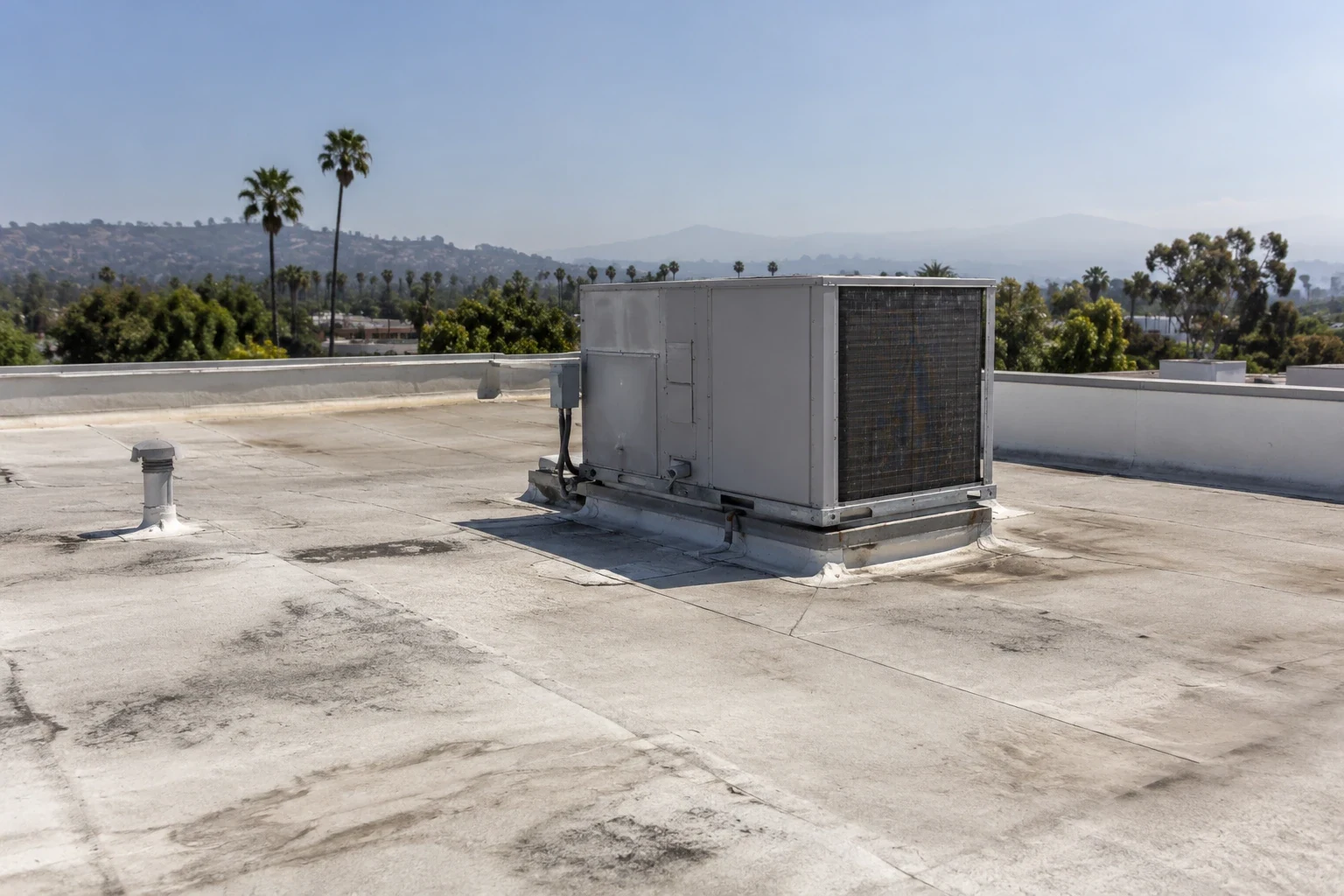
The inspection covers drains, scuppers, edge metal, curbs, penetrations, walk paths and equipment clearances. We photograph each relevant detail and distinguish what was visible from any location that remained inaccessible. Where a roof has a thermoplastic membrane, the TPO seam overview explains why weld condition and preparation matter; appearance alone does not confirm TPO. A condition report gives facilities staff a repeatable record instead of a verbal description.
Choose a repair that stops at sound material
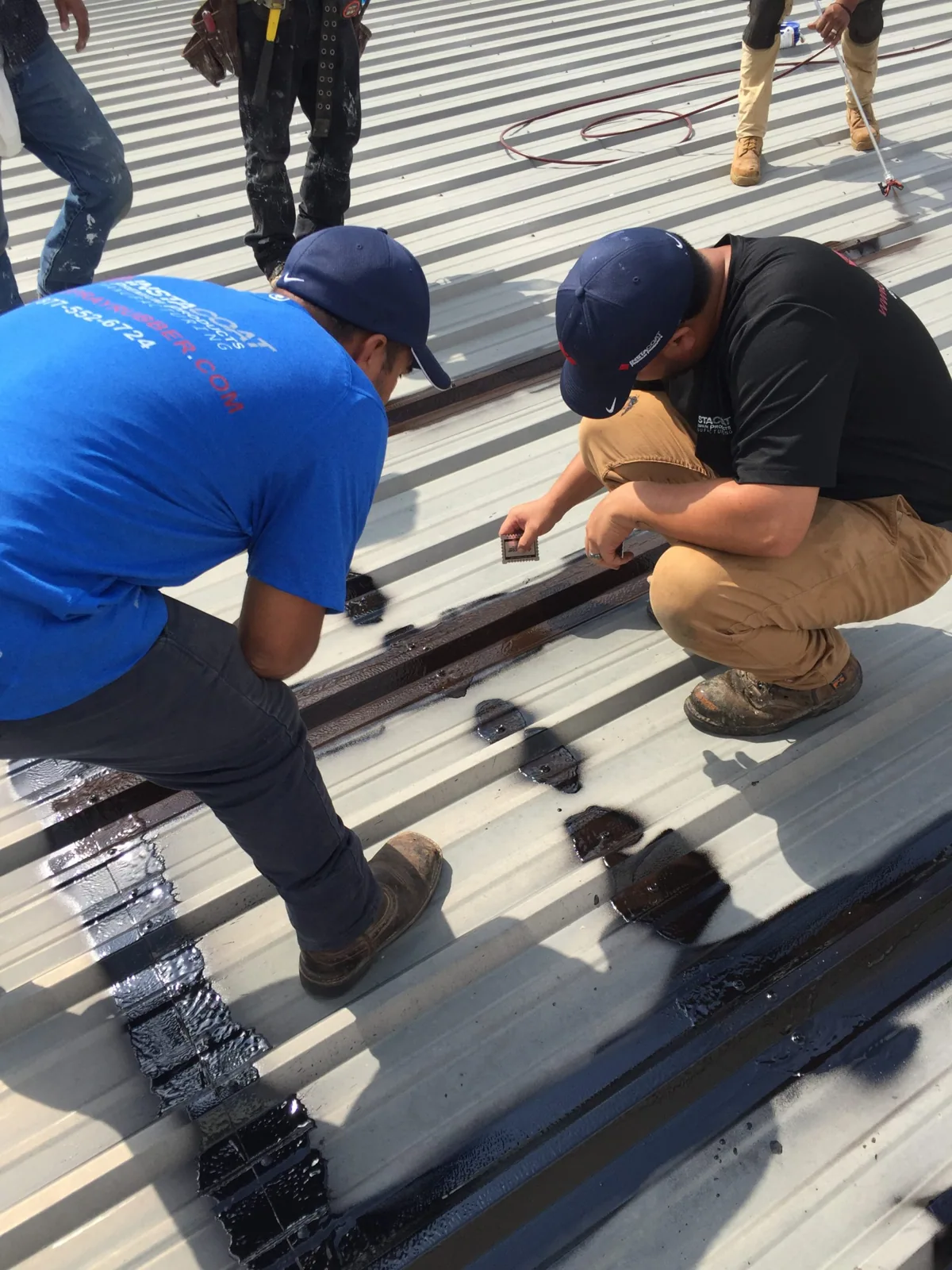
A small puncture may need a compatible patch after the surface is cleaned and prepared. A seam separation requires restoration of the seam itself, not a strip of sealant placed over the edge. Failed flashing at a curb can call for removal back to material that bonds, followed by a rebuilt turn-up and secure termination. The repair boundary should show where preparation starts, where it ends and how adjoining details will remain watertight.
When a leak repeats, the area below the surface is wet, or several transitions have failed, we compare a larger repair with longer-term planning. Replacement is not automatic. We explain what remains sound, what is damaged and what evidence would move the decision. If water collects at an outlet, the owner may first need a drainage review. A maintenance visit can then record debris, seam movement and any recurrence after the repair.
Separate regional heat planning from roof evidence
The Menifee climate plan describes an inland, naturally dry place and points to rising averages and additional extreme-heat days as local planning risks. That is a Menifee statement, not a Moreno Valley forecast or evidence about this roof’s history. During an inspection, we ask when a symptom occurs and compare exposed and shaded roof zones, while documenting actual material and drainage conditions.
Heat can make an existing weakness easier to see, but the roof itself supplies the evidence. We look for seam edges that have lifted, brittle or split flashing, movement around penetrations and water that remains after a drain path should clear. A coating proposal also needs a dry substrate, compatible materials, adequate adhesion and a drainage plan. If heavy rain or wildfire is part of a site concern, we record observed impact and refer to the property’s own history. Menifee’s hazard-planning language is context, not a claim that this Moreno Valley property was affected.
Keep roof work coordinated with operations
The property contact first sets the workable hours and points out delivery lanes, sensitive equipment and areas crews cannot enter. We agree on roof access, fall protection, ladder location, material staging and how the open area will be covered if conditions change.
As the repair proceeds, the supervisor records concealed conditions and checks that drains stay clear. Any scope expansion is explained before it happens. At closeout, photos show the completed detail, materials used and the actual repair edge. The report lists areas not accessed and any follow-up condition to watch. Owners comparing several roof sections can use condition records to prioritize future checks without assuming one section represents the whole property.
Compare cost, downtime and remaining service
Price depends on the assembly, repair area, wet insulation, access, safety controls and preparation needed to reach sound material. The operating plan matters too: equipment clearance, delivery traffic and any interior protection can change the work window. We describe these items in the scope rather than estimate from a city label. A focused repair may be reasonable when nearby membrane remains bonded and dry. Repeated leaks or widespread moisture may call for further mapping before a larger capital choice.
The Moreno Valley inventory helps businesses explore development and lease opportunities, but it does not show a building’s roof condition or maintenance history. The City’s separate map categories also do not establish that any planned or listed use is operating today. Our recommendation remains tied to the inspected roof, its drainage and the owner’s schedule. We leave the manager with photos, a repair boundary, any limits on access and a date for the next observation. If a later visit finds a new path, the team can compare it with this baseline rather than reopen the same questions.
Commercial Roofing Questions
Does a mapped industrial use identify the roof system?
No. The City’s site-selection categories describe opportunity mapping, not the installed assembly. We verify seams, labels, edge details and records at the property.
Can water show up far from the roof opening?
Yes. It may travel through insulation or along a deck flute before becoming visible. We trace the likely route across connected details before setting a patch boundary.
What if a roof unit blocks part of the inspection?
We record the inaccessible area and identify a safe next step, such as coordinating a unit shutdown or another access method. We do not mark an unseen surface as sound.
When does a repair become a larger project?
The decision changes when moisture extends beyond the repair area, adjacent seams have failed, or repeated work no longer addresses the cause. We document those findings for the owner to compare.
What should the closeout include?
The record should show photos, materials, repair limits, concealed conditions, access restrictions and any follow-up date. That gives the property team a baseline for the next walk.
Related Roofing Work
Start with a roof walk
Request a Roof Assessment
Request a documented inspection in Moreno Valley. We will identify the assembly, trace the reported water path and explain the repair limits before work is scheduled.
Service area
Menifee, Perris, Murrieta, Temecula, Hemet, Lake Elsinore and nearby Inland Empire communities
Quick contact
[email protected]
555-555-5555