Commercial Roofing in Temecula, CA
Home / Service Areas / Commercial Roofing in Temecula, CA
A ceiling tile that darkens after a busy afternoon does not identify the roof opening above it. Moisture may have entered near a curb, crossed a seam and followed the deck before it reached the room. We begin with the affected area, then compare its position with roof drains, wall edges and mechanical penetrations. We document what is visible and trace the route before proposing a patch.
Temecula’s business materials identify advanced manufacturing, including medical devices and injection molding, as an industry focus. That fact describes an economic priority, not a survey of any property’s roof. Where a facility has controlled work areas, equipment or production schedules, we ask the manager about access and protection before opening a roof assembly. A commercial roof inspection records the details that influence the next step.
Plan around the work inside
Temecula’s strategy discusses economic diversification, stronger commercial districts, small-business support and visitor activity. It also addresses entrepreneurial and academic conditions. Those are city planning goals; they do not establish that a specific building is new, occupied, or due for roof work.
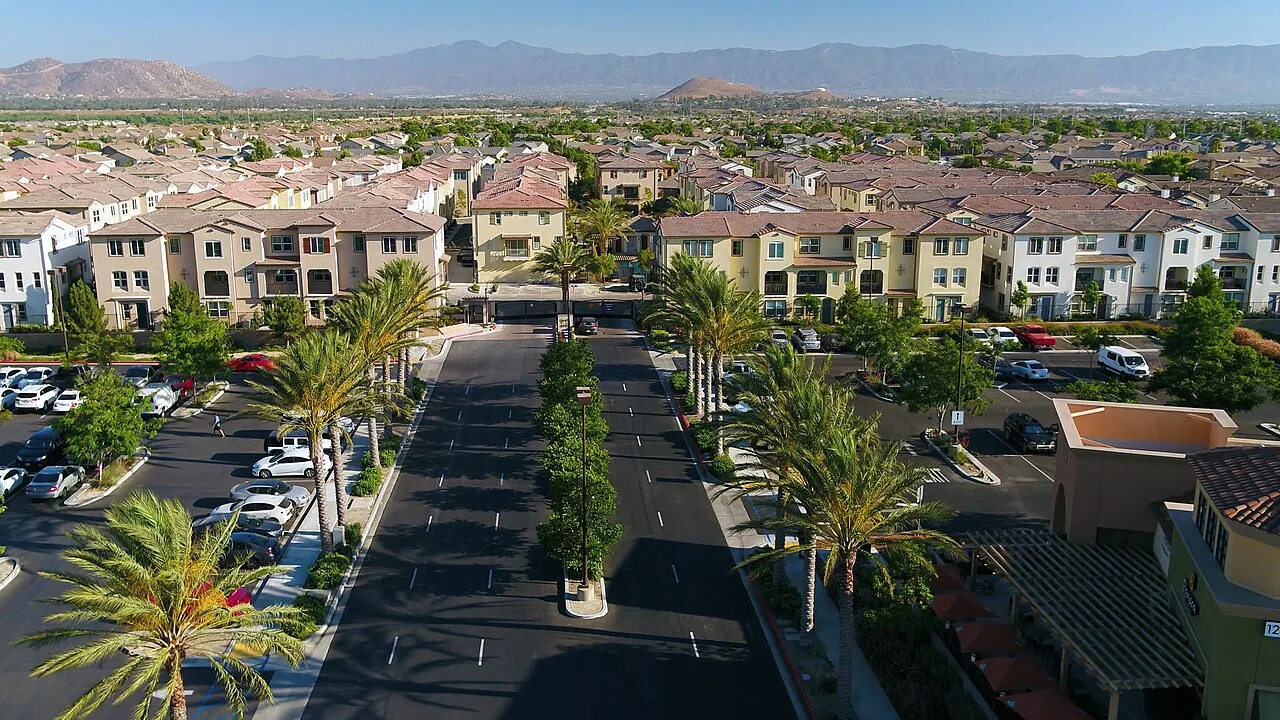
Before setting a ladder or moving material, we identify employee and visitor entrances, delivery windows, sensitive rooms and rooftop equipment that must remain accessible. A manufacturing space may have a different sequence from an office or retail property, so we do not assume one shutdown plan fits every site. We confirm who can authorize a test opening, where debris can be staged and how occupants will be notified. Nearby San Jacinto and Hemet are separate service areas; their building records do not substitute for a Temecula inspection.
Follow water back to the roof detail
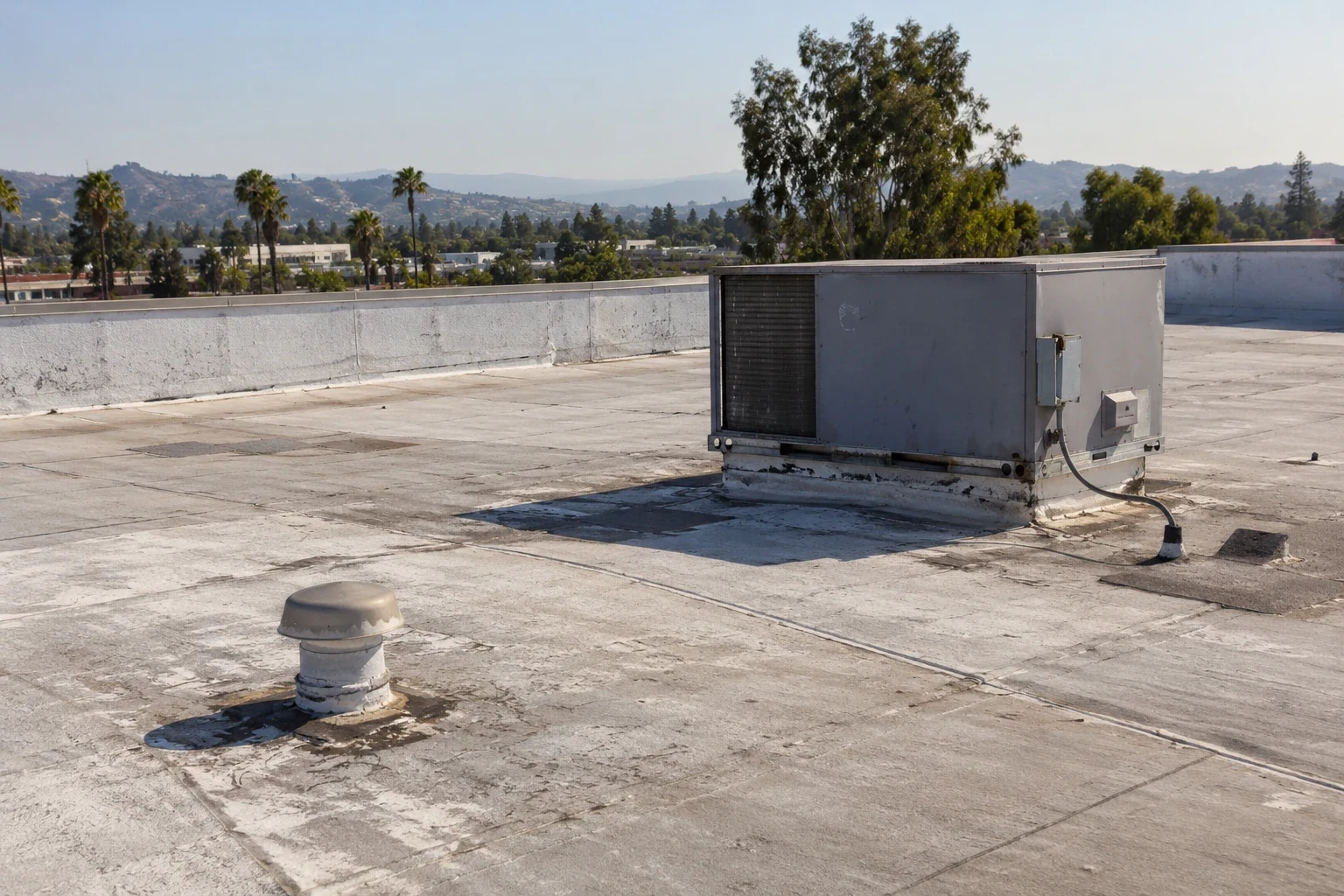
We compare the interior stain with roof geometry rather than drawing a straight line upward and stopping. A low point may direct water toward a drain; a deck flute or insulation joint may carry it sideways. At a parapet, we check the membrane turn-up, termination bar and counterflashing. At a curb, we look for separation at the corners and laps. At a drain, we note the bowl, clamping ring, debris and any surrounding depression.
One failed sealant bead rarely proves the full cause. We look for a repeatable path and note whether the roof is wet below the surface or only at a detail. If the suspected location is sound, we expand the inspection along connected seams and transitions. The report separates observed conditions from likely causes and lists any area that could not be reached. That record supports a focused commercial roof repair instead of a broad coating or patch that hides the source.
Identify materials before selecting a method
We identify the roof assembly from visible seams, edge conditions, labels and available maintenance records. A membrane that looks like another system may require different cleaning, primer, welding or adhesive. We note existing coatings, old patches and repairs that cross the suspected water route. If concealed moisture could change the recommendation, a test cut or probe may help, but only with the owner’s approval and a defined plan to restore the opening.
The walk also records drains, scuppers, penetrations, edge metal, walk paths and equipment clearances. If a unit or access restriction blocks a view, the next check should be specific, not a vague request to inspect again. A roof condition report can preserve that baseline. For a verified thermoplastic system, the TPO assembly overview explains relevant seam details; we confirm the actual material at the property first.
Set a repair limit the owner can verify
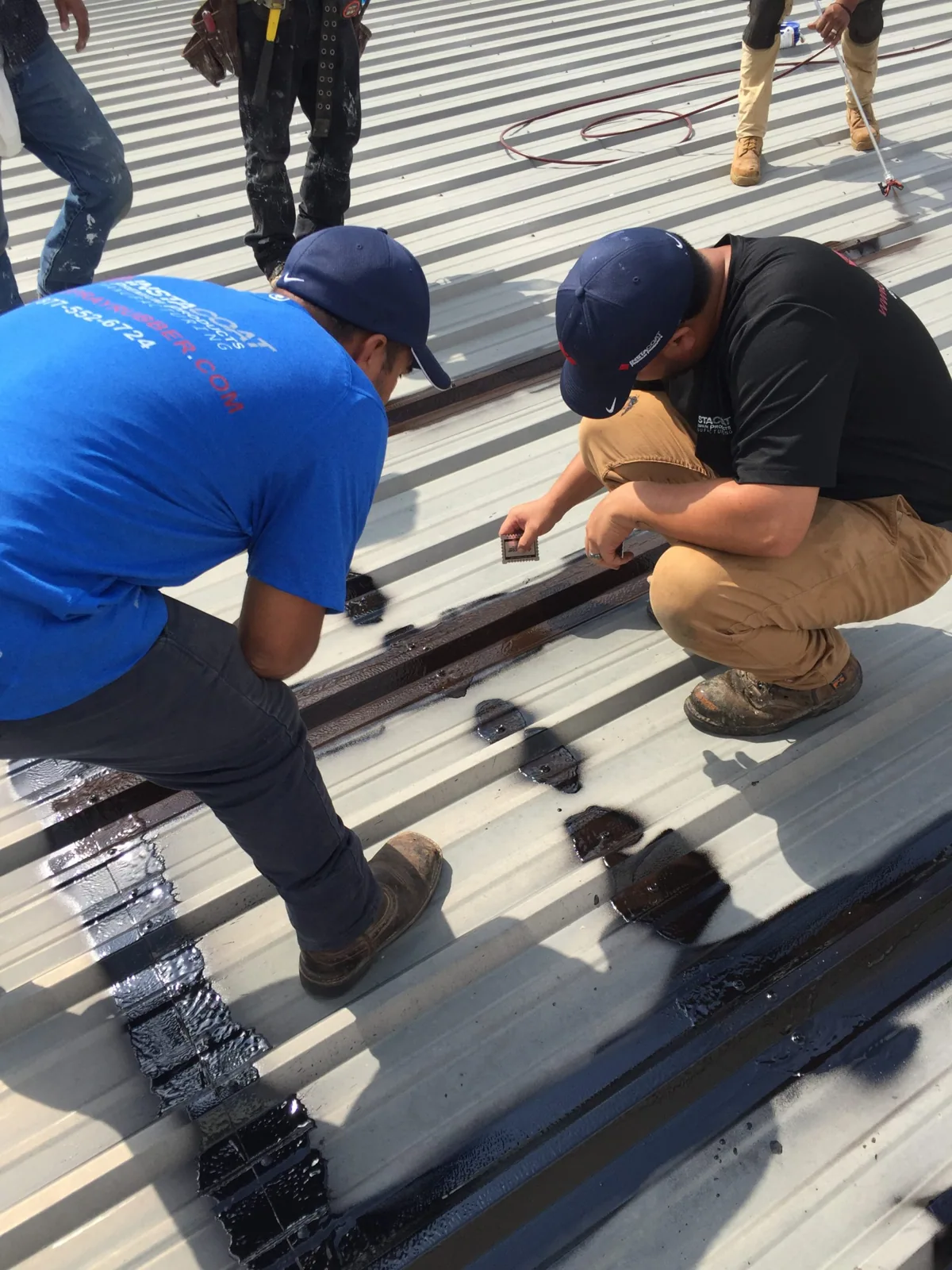
A repair scope should state what will be removed, what substrate will be checked and where new material will stop. If the membrane around a small puncture is dry and sound, a compatible patch with prepared, rounded edges may be enough. A split lap needs a seam repair that restores the bond or weld, not sealant applied across the top. At a curb, the work may need to rebuild the flashing turn and termination. The chosen materials must suit the roof actually present.
Several leaks, recurring separation or wet insulation can justify checking a wider area, but none automatically requires replacement. We compare the repair footprint with the surrounding roof condition, drainage and access costs. If water collects around an outlet, the owner may need a drain and scupper assessment before finalizing membrane work. We document concealed conditions and seek direction before expanding the agreed boundary.
Use Menifee climate context carefully
Menifee’s adaptation page characterizes its setting as inland and naturally dry, then flags higher average temperatures and more extreme-heat days as future risks. That information belongs to the home market. It cannot stand in for a Temecula weather record or tell us whether one roof was damaged. We ask when the symptom appears and compare roof zones with different exposure.
On the roof we look for open laps, checking, brittle detail material, movement around penetrations and drainage that remains slow after the surface should have cleared. We do not treat a warm surface reading as a diagnosis. If a coating is considered, we first verify substrate dryness, adhesion, compatibility and slope to outlets. A condition map shows the evidence and limits; a repair recommendation follows only after those checks. Extreme heat and severe-rain planning risks in Menifee do not establish that a Temecula property has experienced either event.
Coordinate access, protection and closeout
Before mobilization, the property contact confirms access hours, deliveries, occupied areas, roof hatches and equipment restrictions. We agree on ladder placement, fall-protection controls, a material route and a staging point that does not block an exit or drain. If production or customer activity must continue, we divide the work into zones and confirm when a noisy or disruptive step can occur.
During work, the supervisor records concealed conditions before covering them and explains any proposed scope change. The owner decides whether to authorize work beyond the stated boundary. At completion, the crew photographs the repaired detail, notes materials and remaining limitations, and identifies any follow-up observation. A planned maintenance visit can compare the same seams and drainage points later. That follow-up records the same details for comparison.
Compare a local repair with broader planning
Cost and timing depend on the roof material, access, preparation, wet-area limits, repair size and whether equipment or occupants constrain the work window. We state these drivers instead of quoting a flat figure from a city name. If one termination failed while adjacent membrane remains sound, a bounded repair may preserve useful roof life. If moisture extends below the surface or several details have failed, a larger opening can reveal whether the repair should expand. The owner receives the evidence before that decision.
Temecula’s current quick-facts panel reports more than 56,000 jobs and more than 3.4 million annual visitors in its stated city context. Those figures are dated city information, not a measure of roof demand or a prediction for an individual business. The local strategy’s interest in commercial districts also says nothing about a particular asset’s condition. We keep the roof recommendation separate: observed assembly, water path, repair boundary, access plan and next check. A neighboring property in Lake Elsinore may call for a different scope after its own inspection.
Commercial Roofing Questions
Does the stain show where water entered?
No. Water can travel along insulation, a deck flute or framing before it appears inside. We map the interior clue against the roof assembly and connected details.
Can production continue during a roof repair?
Often the sequence can be coordinated, but access, noise, protection and any test opening depend on the facility. We agree on restricted areas and work windows with the site contact first.
When is a test cut useful?
It can clarify concealed moisture or assembly layers when that information changes the repair. We explain the purpose, obtain permission and include a weather-safe restoration method before opening the roof.
Should an old patch be covered with coating?
Not until the membrane, patch compatibility, moisture and drainage are checked. Coating over a failed detail can conceal the route without correcting it.
What should the repair record show?
It should identify the area, materials, photographs, boundary, concealed conditions and access limits. A follow-up date lets the property team compare the same details.
Related Roofing Work
Document the roof before the next interruption
Request a Roof Assessment
Request an inspection that traces the reported symptom, identifies the roof assembly and sets a repair boundary before work begins.
Service area
Menifee, Perris, Murrieta, Temecula, Hemet, Lake Elsinore and nearby Inland Empire communities
Quick contact
[email protected]
555-555-5555