Commercial Roofing in Calimesa, CA
Home / Service Areas / Commercial Roofing in Calimesa, CA
A roof leak near a storefront ceiling can start where a wall meets the membrane, then move along a seam before it becomes visible indoors. We note the stain and its timing, then inspect the likely water route, drainage points and roof transitions. The repair begins with that path, not with a patch sized to the mark on the ceiling. We photograph the condition and identify what remains uncertain.
Calimesa’s development page links a city-filtered opportunity map and a StoryMap for commercial property and leasing research. Those tools help frame property research; they do not describe any individual roof. At the building, we confirm the actual membrane, surface layers, access and drainage. A commercial roof inspection can create a condition record before a repair is priced.
Keep a district plan distinct from a roof survey
The City describes its Downtown Business District as a planned pedestrian-friendly area along Calimesa Boulevard, with storefronts, gathering spaces and pedestrian and vehicle links. The downtown plan aims to support retail and mixed-use development and shows conceptual corridor segments. These planning materials do not say which roof systems exist or whether a specific property is scheduled for work. We use them only as context for discussing access around a property’s own operating day.
A manager can tell us which entrance needs to remain open, where deliveries arrive and whether a roof hatch or ladder route crosses an active area. We confirm those details before staging material or opening the roof. The work plan also identifies drains that must remain clear and any equipment that requires a shutdown. Menifee and Banning have separate municipal records; neither supplies a condition report for Calimesa. Each roof receives its own photographs, notes and recommendation.
Look beyond the first visible mark
Moisture may travel from an upturned edge to an interior location along a deck flute, insulation joint or structural member. We trace the probable path across roof geometry and check nearby drains, scuppers, curb corners, penetrations and laps. The inspection notes any low area, debris, open seam or patch that intersects the route. A surface defect matters only when it connects to the evidence below.
If the suspected area is dry and intact, we continue along connected details before recommending work. When the membrane is wet below the surface, an owner-approved test opening may show how far the condition extends. We record confirmed findings separately from a possible route and name any blocked view. That lets a repair plan define a start and stop point. A small stain should not become a broad coating proposal without evidence that the larger roof area needs it.
Identify layers and document the edges
We identify the roof assembly from exposed edges, seam configuration, labels and maintenance records. Older repairs and coatings can hide those clues, so we note what cannot be confirmed visually. If material compatibility or trapped moisture would change the scope, a test can be discussed with the owner. Before any opening, we describe the location, purpose and restoration approach.
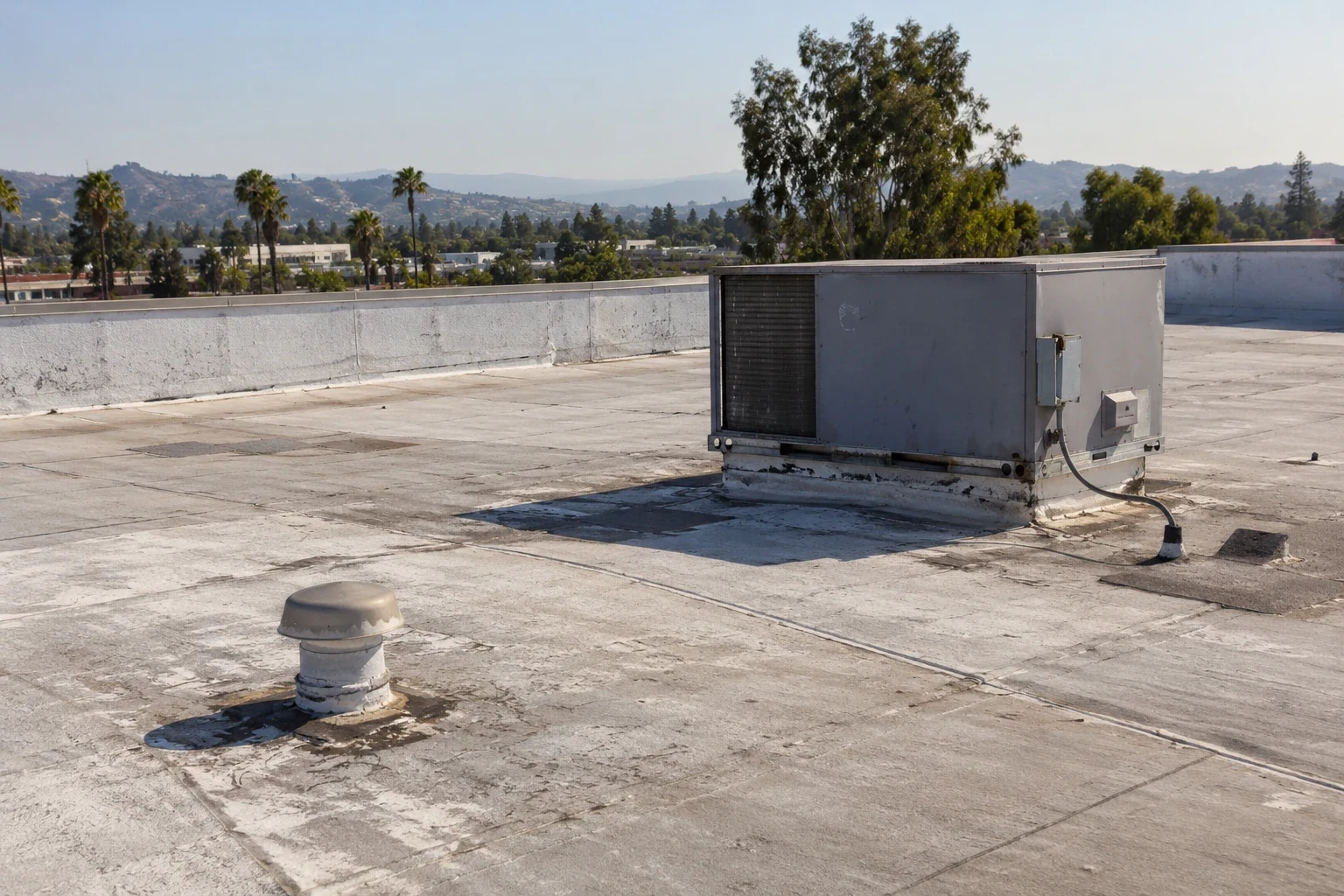
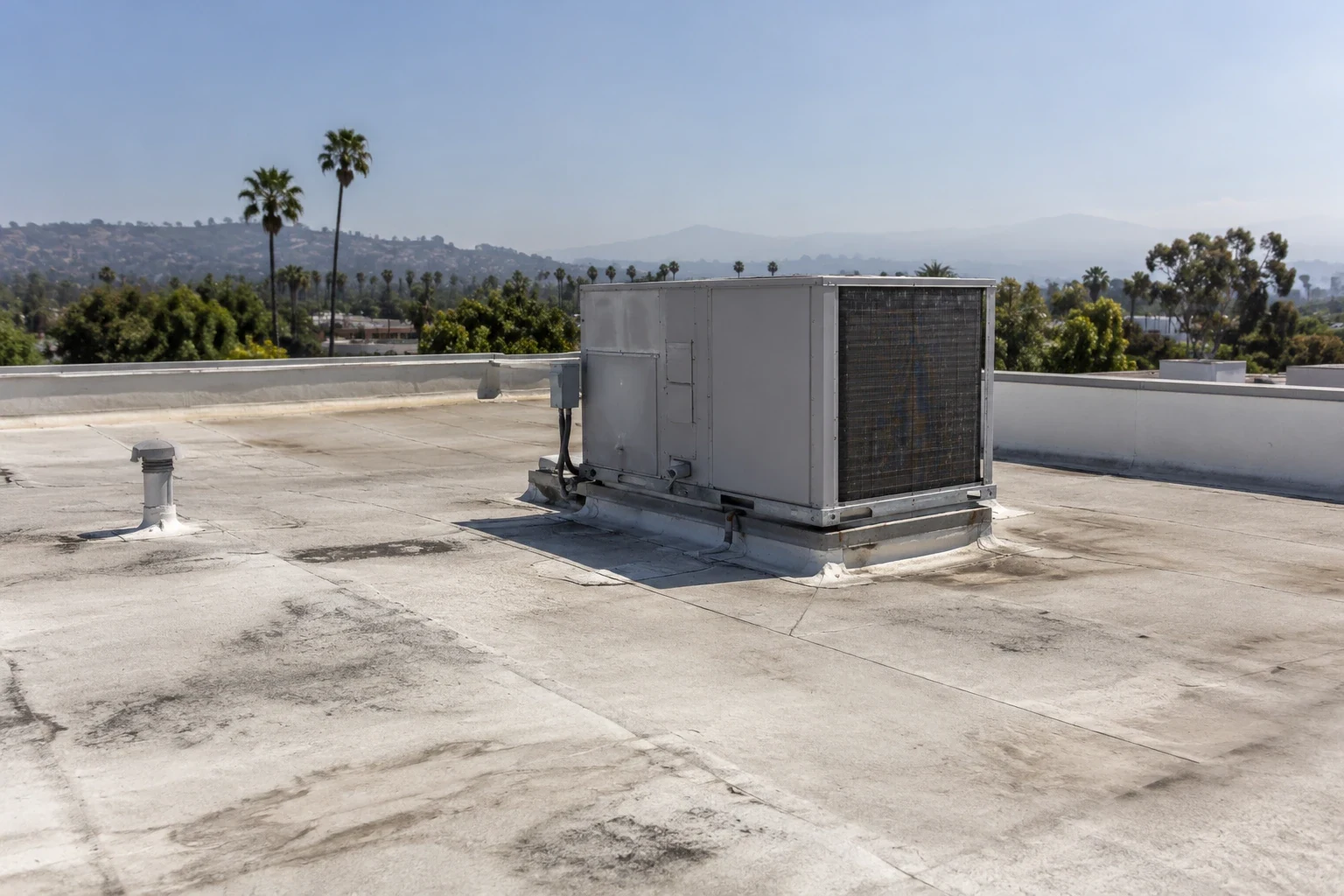
We also inspect drain bowls, scuppers, parapet edges, curbs, penetrations and walk paths. Photos should show the failed point with surrounding membrane, not just a close crop. The report records safety or access limits and whether equipment prevented a complete view. A roof condition report gives the property team a usable baseline. If the installed membrane is confirmed as modified bitumen, the modified-bitumen system overview covers relevant surfacing and lap details; the installation on site determines which method is appropriate.
Repair the failed transition before widening work
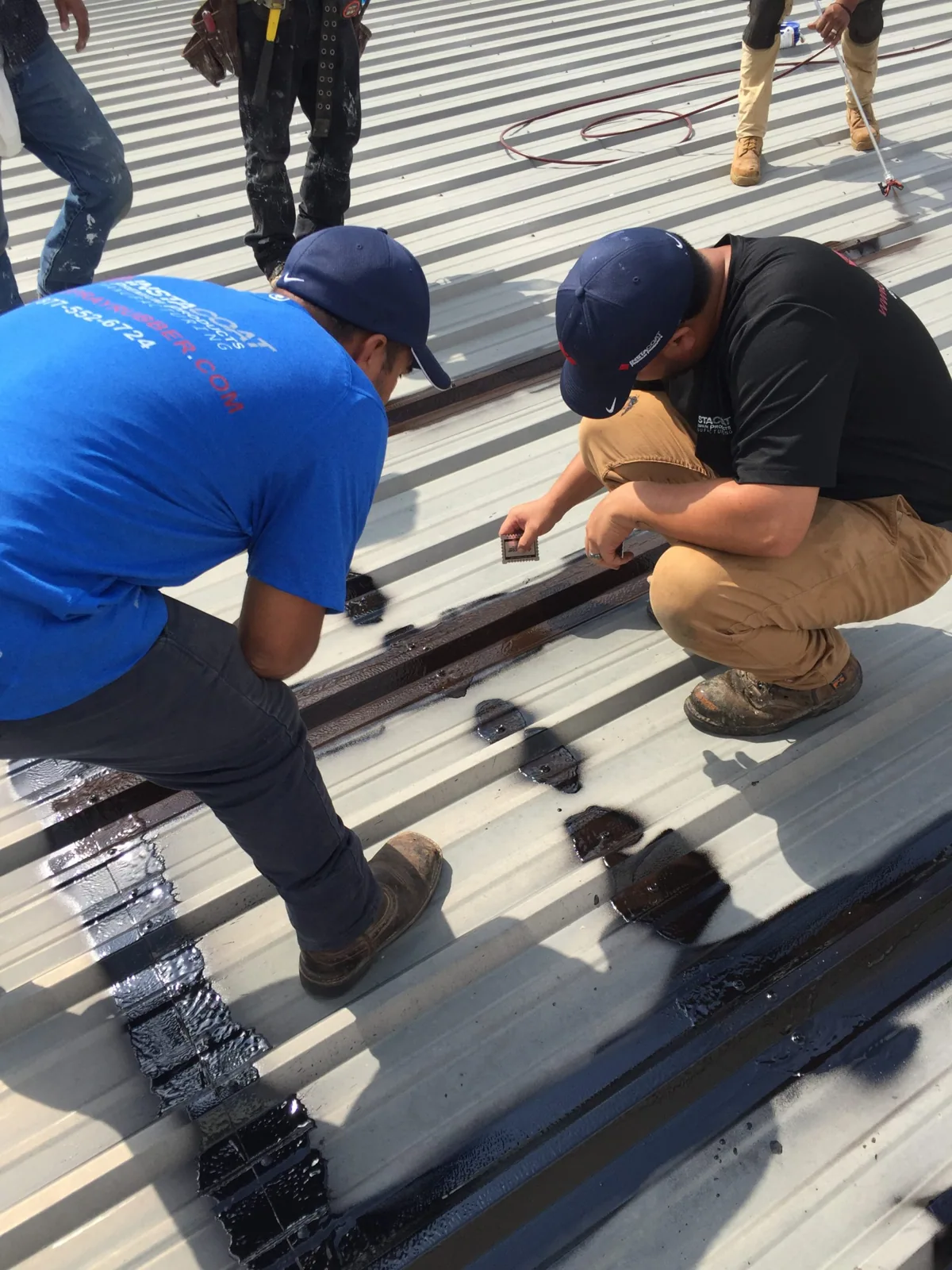
A puncture surrounded by sound, dry membrane may be repaired with compatible material after the surface is prepared. A separated lap needs the lap restored rather than sealed across its top. A failed curb or wall transition may require removal of loose flashing and a rebuilt turn-up secured to sound substrate. We define the repair boundary, material and preparation so the manager can compare the proposal with the photographs.
If several details have failed or moisture is present below the membrane, we map a wider zone before committing to a broad scope. Replacement depends on the extent of damage and condition of the surrounding assembly, not on a single symptom. Standing water near a drain may need a drain and scupper review before the membrane work is chosen. A later maintenance visit can track the repaired location and note debris or movement after service.
Use heat planning to guide questions
Menifee’s climate-adaptation materials identify an inland dry setting and more extreme-heat days as risks for the market city. They are not Calimesa weather data and cannot establish that a roof has been damaged. On a site visit we ask when an interior symptom occurs and inspect exposed areas, seams and transitions for physical change. Actual field conditions drive the recommendation.
We look for edges that have lost bond, brittle flashing, movement where a curb meets the roof and outlets that do not drain. A high surface temperature alone is not a diagnosis. If the owner is considering a coating, we verify the substrate, adhesion, material compatibility and drainage before discussing that option. The city plan’s pedestrian and corridor goals do not imply that a commercial property is complete or occupied. We confirm active access needs with the manager and document any work restrictions before setting a repair sequence.
Protect entrances, drains and operating space
Before work begins, we agree on the ladder path, fall protection, staging location and hours for noisy tasks. The property contact identifies storefront entrances, deliveries, tenant access and any interior zone that needs protection from dust or water. If work is near a public route, the crew can coordinate temporary controls and keep exits open. Material and debris must remain clear of roof drains and access points.
During repair, the supervisor records concealed layers before covering them, protects an open area if conditions change and asks before adding work beyond the approved scope. Closeout photographs show the completed transition and repair edge. The report lists material, access limits, any test findings and the follow-up check. A separate inspection in Temecula or Riverside does not replace this Calimesa record; conditions vary by building and maintenance history.
Compare the repair with future building work
The cost of a roof repair follows assembly, extent of preparation, access, safety controls, moisture below the membrane and the work window. We state which factors affect this scope. If one lap has separated and adjacent areas remain dry, correcting that seam may be appropriate. If water has moved into insulation or several transitions are weak, additional mapping can prevent a narrow repair from missing the cause.
Calimesa’s downtown vision includes a planned district and conceptual corridor segments, but property-level roof decisions still depend on current field evidence. The owner should receive a written boundary, photographs, material notes, exclusions and the condition that would justify a larger scope. We also identify a next inspection point so the team can compare the repaired area after service. A roof plan should fit the property’s operational schedule and capital priorities without presenting a planning map as evidence of roof demand.
Commercial Roofing Questions
Is the Downtown Business District already a completed project?
The City describes it as a planned district and its design materials include conceptual corridor segments. We do not assume a particular property is built, occupied or scheduled for work.
Can a ceiling stain be patched from below?
That may protect an interior surface temporarily, but it does not close the roof entry. We trace the likely route and verify the assembly before selecting a repair.
How do you avoid blocking a storefront?
The manager identifies entrances, deliveries and access restrictions before staging. The crew sequences work and controls the area around the active route.
When should a larger roof area be checked?
Recurring symptoms, wet material below the membrane or several failed transitions can justify mapping beyond one detail. The owner authorizes any test opening.
What is recorded at closeout?
Photos, materials, repair limits, test findings, inaccessible areas and follow-up conditions should be in the record. That gives the next inspection a clear comparison point.
Related Roofing Work
Request a Calimesa roof walk
Request a Roof Assessment
We will trace the symptom, confirm drainage and membrane details, and provide a documented repair limit coordinated with the property schedule.
Service area
Menifee, Perris, Murrieta, Temecula, Hemet, Lake Elsinore and nearby Inland Empire communities
Quick contact
[email protected]
555-555-5555