Commercial Roofing in Banning, CA
Home / Service Areas / Commercial Roofing in Banning, CA
A ceiling leak near a loading area can show up after water has crossed a roof seam or traveled along a structural member. We begin with the location, timing and interior conditions, then inspect the connected roof area. The crew checks the membrane, drain path, curb corners and wall terminations before deciding how far a repair should extend. A visible drip marks where water ended, not necessarily where it entered.
Banning’s public development tracker lists active and proposed projects across residential, commercial and industrial categories, while cautioning that approval does not mean construction has started. That project status is not an inventory of completed buildings or their roofing systems. We verify the actual property, roof material and operating plan on site. A commercial roof inspection provides a separate condition record for the owner.
Read project status without assuming roof scope
The City tracker includes logistics proposals north of Interstate 10 and names project-plan figures for particular proposals. Those figures remain tied to the plans and current status; they do not establish that a roof exists, that work is underway or that a building is operating. We do not turn a proposed development into a claim about the present property. A roof assessment follows the building and current field evidence.
Banning Electric Utility publishes separate small-commercial, medium-commercial and industrial schedules. That shows distinct nonresidential customer classes, not a promise of service timing or a description of a roof. For an active property, the manager confirms equipment, access rules, tenants and delivery periods. We agree on a ladder route and staging before bringing material onto the roof. Nearby Calimesa or Beaumont is a separate service-area record; no neighboring city’s file identifies the condition at this Banning building.
Find the entry point before sealing a symptom
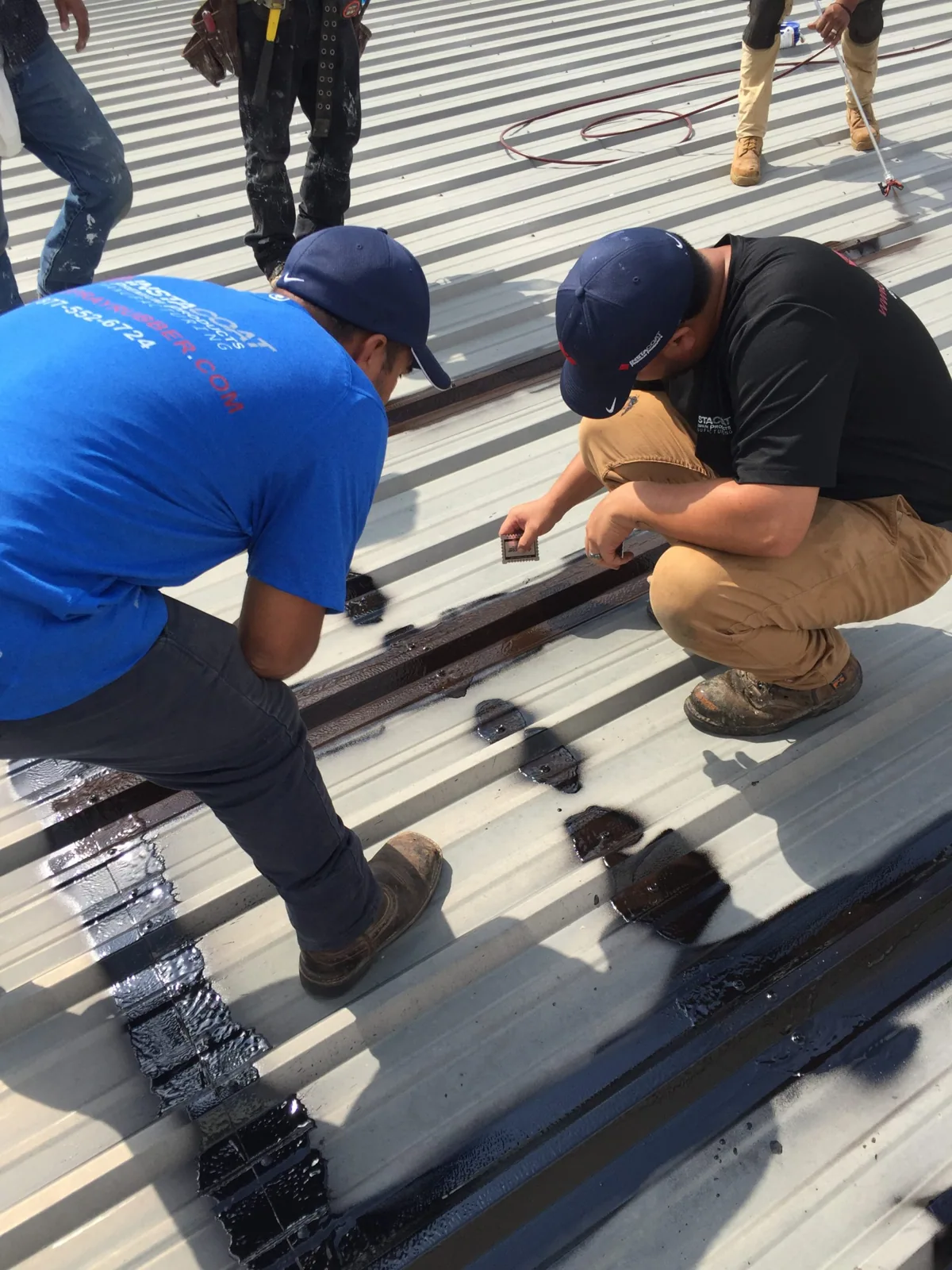
We compare the interior mark with roof slope, drainage, seams, curbs, penetrations and parapet edges. Water may move through an insulation joint or deck channel before appearing inside. At a drain, we note debris, a low spot and the condition of the clamping ring. At a wall, we inspect the membrane turn-up, counterflashing and termination. At a curb, we check corners and laps for separation.
If the nearest detail does not connect to the reported route, we continue the walk instead of applying a larger patch nearby. We note any existing repair that may redirect water and distinguish an observed opening from a suspected path. If concealed moisture changes the scope, an owner-approved opening can map its boundary. The resulting repair recommendation describes what was found, what remains unknown and where the correction would stop.
Record materials, drainage and access limits
Before selecting a repair product, we identify the installed system from seams, exposed edges, labels and maintenance records. Surface coatings and old patches can obscure the assembly. When that uncertainty affects compatibility, we state what would confirm the material rather than guessing from color. Any test cut needs permission, a defined location and a safe method to restore the roof.
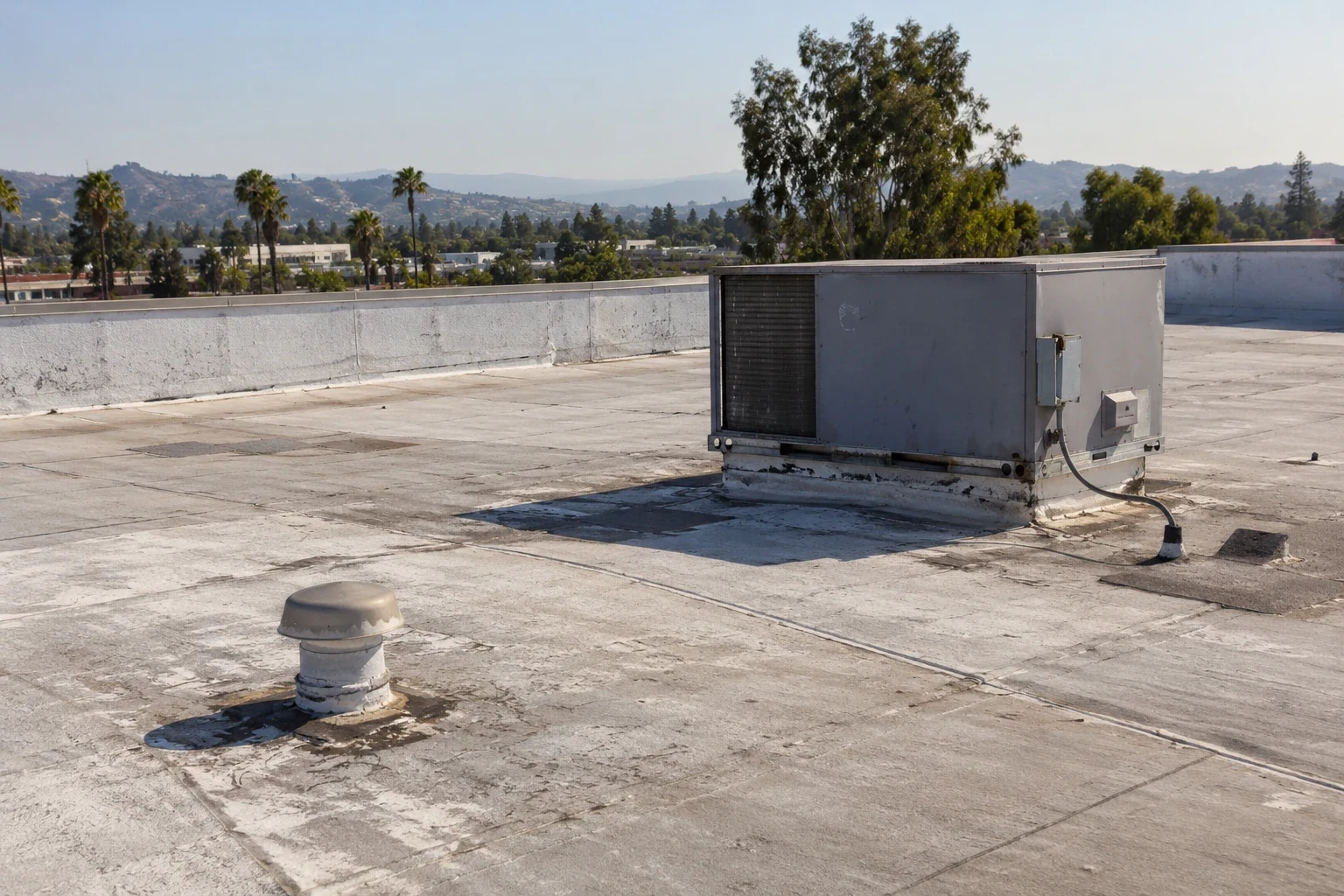
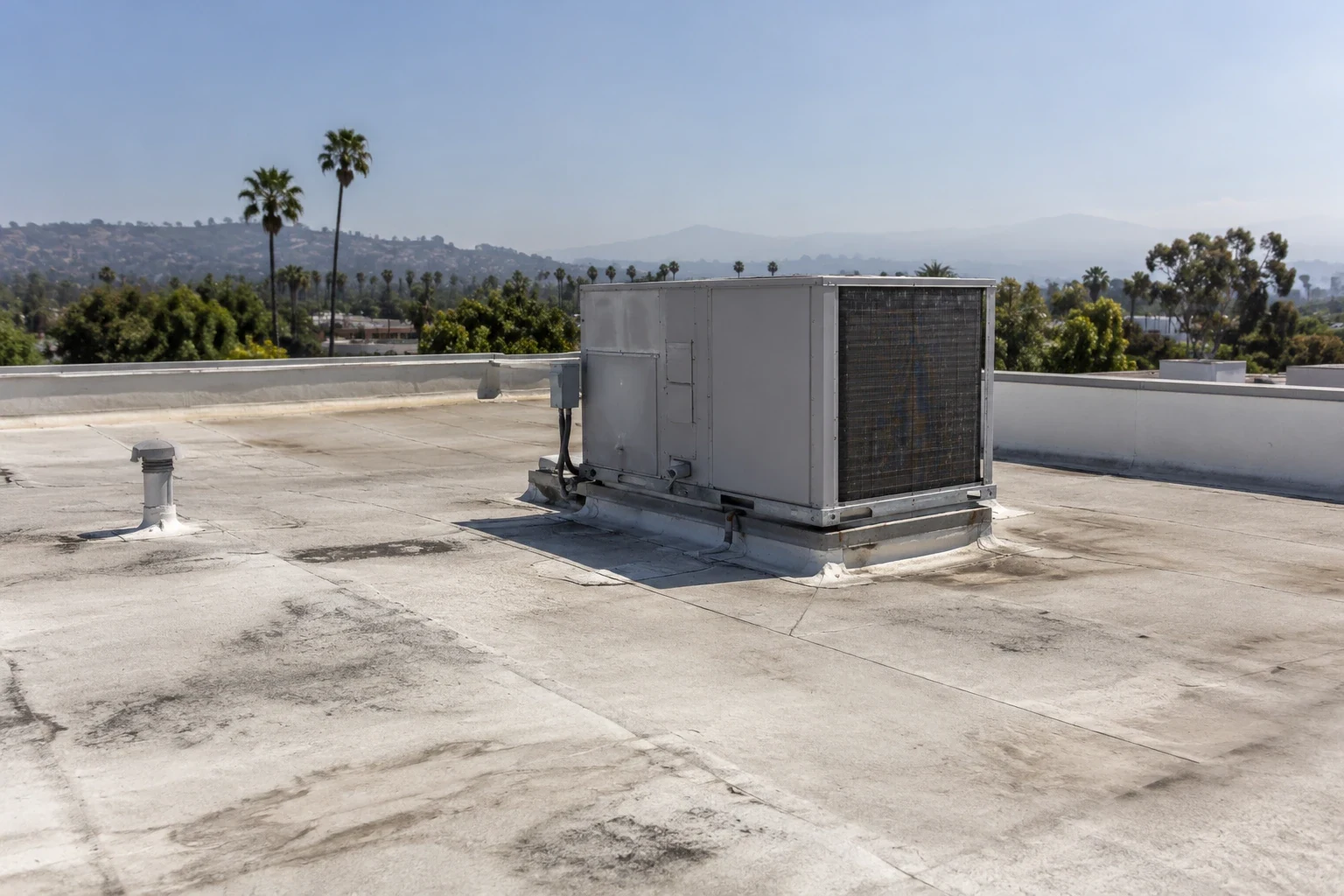
The inspection records drains, scuppers, edge metal, roof penetrations, walk paths and mechanical clearances. Photos include enough surrounding material to show how the defect relates to adjoining seams. If a unit or safety restriction prevents access, the report names that area and the next step. A roof condition report can carry those limits into future planning. For an identified single-ply assembly, the PVC system overview explains why preparation and material compatibility matter, but we verify the installed membrane before using that method.
Match repair size to the confirmed condition
A puncture in dry, stable membrane may be corrected with a compatible patch after preparation. A seam failure requires restoring the seam rather than covering it with sealant. A curb or wall transition may need removal back to sound material and a rebuilt flashing turn. The written scope identifies material, preparation, repair extent and any substrate check. If the owner wants a comparison, the same boundary should be used for labor and material options.
Repeated leakage, wet insulation or several failed details can call for a larger investigation. Replacement is a separate decision based on the area affected and what remains serviceable. Where water collects near the outlet, a drain and scupper check may be needed before the membrane detail is repaired. After work, a maintenance inspection can look at the same seams and drainage points and record any recurrence.
Separate market-city climate from field findings
Menifee’s climate-adaptation materials describe an inland, naturally dry setting and identify more extreme-heat days as a risk for that city. This is not Banning weather data and does not demonstrate that a particular roof was exposed to damage. We ask when water appeared and look for the actual change at the membrane or flashing. The property’s own records and current conditions guide the work.
Heat can make a brittle sealant or lifted edge easier to notice, but a warm surface alone is not a diagnosis. We inspect seams, transitions, fasteners, ponding and the route to drains. If a coating is considered, we verify dryness and adhesion and confirm that water can still move to outlets. Menifee hazard-planning references to heavy rain or wildfire remain citywide context, not proof of a Banning event. We keep those distinctions clear in the report and list any roof area that was not accessible.
Protect the building during the roof opening
Before mobilization, the facility contact confirms roof access, working hours, loading activity, entrances, sensitive rooms and equipment that cannot be interrupted. We agree on fall protection, ladder placement, material staging and a weather-safe plan for an opening. Debris cannot be allowed to enter a drain or block an exit. If the building remains active, work can be sequenced by zone with the manager’s approval.
As layers are exposed, the supervisor records concealed conditions and checks that the approved scope still fits. If wet insulation extends beyond the planned edge, work pauses for the owner to review the evidence. At completion, photos show the repaired detail, materials and limits. The closeout lists anything not reached and the next useful check. A Moreno Valley roof record or a Riverside visit does not answer questions about this roof; each building gets its own Diligence Notes.
Compare repair, interruption and future exposure
Scope and timing depend on roof assembly, preparation, moisture extent, access, fall protection, equipment and the work window. A narrow repair can be reasonable when the failure is isolated and the surrounding membrane remains dry and bonded. If water has moved below the surface or a transition has failed repeatedly, mapping a larger area may reduce the chance of returning to the same symptom. We state which observation supports each path.
The City’s proposed-project list and utility schedules serve different purposes from a roof report. They cannot tell an owner whether one patch is enough or whether replacement is due. We explain current condition, repair boundary, cost drivers, exclusions and follow-up timing so a manager can compare immediate work with capital planning. Where the evidence is incomplete, the next check should be specific: open a defined test area, arrange equipment access or return after a rain event. A clear record helps the property team make that decision on observed conditions instead of assumptions.
Commercial Roofing Questions
Does an approved project mean roof construction has started?
No. The City notes that approval alone does not establish that construction began. A roof scope depends on the building’s current status and a direct inspection.
Can utility customer classes confirm the roof type?
Those schedules distinguish nonresidential rate categories, not building assemblies. We identify the installed membrane and details on the roof.
What if the leak is near a drain?
We inspect the bowl, clamping ring, debris and surrounding roof geometry. Water near an outlet can reflect a blocked drain, low area or separate detail failure.
When can a repair boundary expand?
If an approved opening reveals wet material beyond the planned limit or another failed transition, the owner receives the finding and chooses whether to extend work.
What should the final record contain?
Photos, assembly notes, repair limits, concealed conditions, access restrictions and a follow-up point let the manager compare roof performance later.
Related Roofing Work
Request a Banning roof inspection
Request a Roof Assessment
We will trace the water route, verify the roof assembly and record access limits before providing a repair scope.
Service area
Menifee, Perris, Murrieta, Temecula, Hemet, Lake Elsinore and nearby Inland Empire communities
Quick contact
[email protected]
555-555-5555