Commercial Roofing in Hemet, CA
Home / Service Areas / Commercial Roofing in Hemet, CA
A damp line at an interior wall after a warm afternoon may begin several bays away on the roof. We begin at the affected room, note the ceiling stain and equipment above it, then inspect the roof zone that could feed that path. A lifted curb corner, brittle sealant, open lap or compressed insulation each points to a different next test. The first weak point is evidence, not a complete diagnosis.
Hemet’s downtown plan describes a historic commercial core connected to civic, retail and transit-oriented districts, while its current economic-development materials describe business-retention and corridor-improvement work. Those citywide contexts do not tell us what a particular roof contains. They do make a careful plan useful across different operating schedules and building types. We confirm the actual membrane, roof access and drainage conditions before recommending a commercial roof inspection or repair.
Separate city planning from roof evidence
The Downtown Hemet Specific Plan describes a street grid, historic commercial buildings and civic activity in the Downtown Village, and identifies separate districts around the wider downtown area. The City’s business programs also include support for commercial-corridor storefront improvements and downtown food businesses. These are planning and economic-development facts; they are not a survey of existing roof systems or proof that a particular property is scheduled for work.
For an occupied retail, office or service property, we ask what hours are quietest, which entrances must remain clear, and whether rooftop units can be accessed while the space is open. We map those constraints before setting up ladders or staging material. A neighboring property may have a different membrane, slope or repair history even on the same block.
Trace the route before opening the roof
A ceiling stain marks where moisture became visible, not necessarily where it crossed the roof surface. We compare its location with drain bowls, scuppers, wall transitions, skylights and equipment curbs. Water can follow a deck flute, insulation joint or framing member before appearing indoors. If the first suspected detail is intact, we continue along the likely path rather than applying a wider patch without evidence.
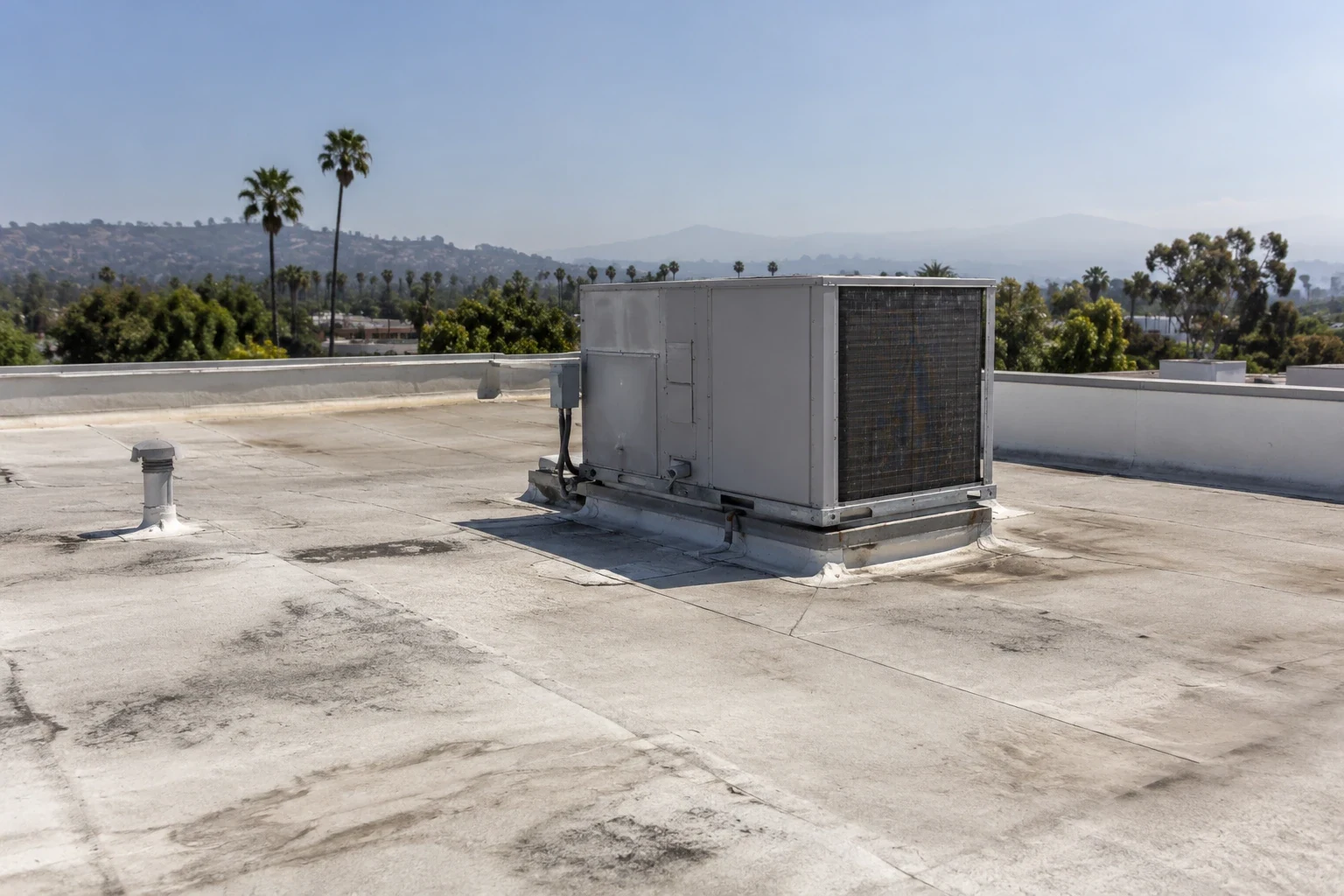
At a curb, look for a separation where flashing turns up, a loose counterflashing edge, or a membrane lap that has lost contact. At a drain, note debris, standing water, a low area and the condition of the clamping ring. Each observation narrows the repair.
Identify the assembly and its limits
Repair materials only work when they suit the existing roof. We identify the installed assembly from seam layout, labels, repair history and approved tests where needed, then note coatings and patches. We do not assume that a similar-looking surface uses the same chemistry or seam method. A test cut or probe may be appropriate when moisture below the membrane would change the recommendation; it requires permission and a safe restoration plan.
The inspection also records edge metal, penetrations, rooftop equipment, walk paths, drainage outlets and access limitations. If an area cannot be reached safely or a mechanical unit prevents a clear view, the report says so and names the next useful check. For an existing single-ply roof, the TPO seam and flashing details illustrate why material identification matters, but the installed system must be verified on site.
When a property team needs to compare a repair with future capital work, a second visit can confirm whether the same detail remains dry. We can pair Diligence Notes with a roof condition review and compare neighboring service considerations in San Jacinto. The two records stay separate because drainage, materials, access and repair history vary from one roof to the next.
Choose a repair boundary that can be checked
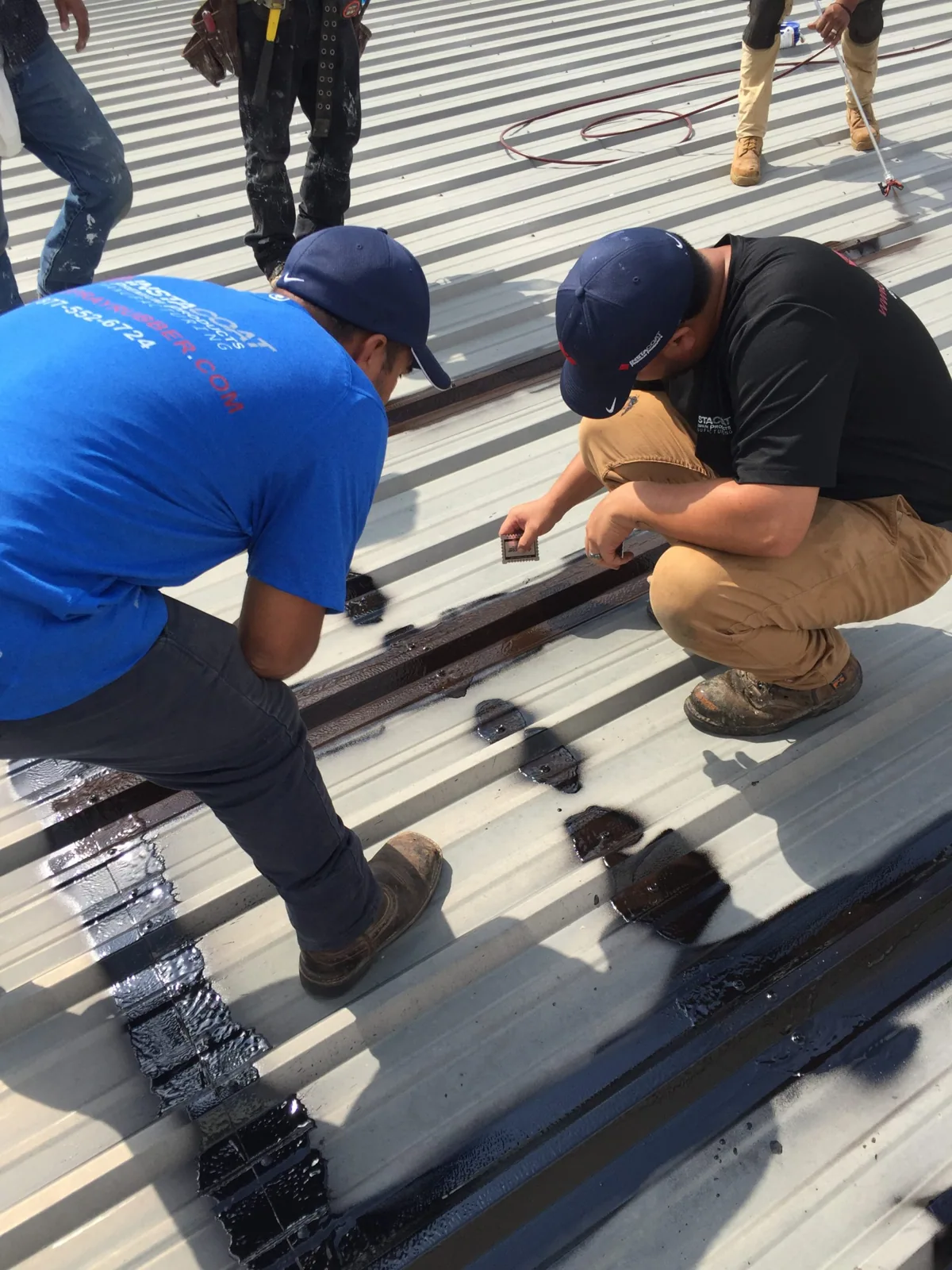
A localized puncture in dry, well-bonded membrane may be suited to a compatible patch with rounded corners and properly prepared surfaces. A split seam needs repair that restores the seam itself, not just a bead across its edge. Failed flashing at a curb may require removal to sound material and a rebuilt transition.
Repeated failure around the same feature, multiple wet zones, or widespread loss of adhesion can point toward a larger scope. That does not make replacement automatic. We compare the repair area, age and condition of the surrounding assembly, drainage performance and access cost, then explain what evidence would change the recommendation. Where ponding or blocked outlets are involved, a drain and scupper evaluation can distinguish maintenance from a slope or detail problem.
Plan for heat exposure without assuming failure
Menifee’s climate-adaptation material flags its inland dry setting and more frequent days above an extreme-heat threshold. That nearby planning context is not a Hemet weather log or a roof diagnosis. It only prompts us to ask when symptoms appear and how exposed areas compare with shade.
On the field, we look for seam edges that have lifted, surface checking, brittle detail sealant and movement at penetrations. We document any variation across shaded and exposed areas without treating one warm reading as proof of damage. If a coating is being considered, substrate dryness, adhesion, existing coating compatibility and drainage come first.
Fit roof work around the building day
Before mobilization, the property contact identifies operating hours, deliveries, public entrances, sensitive rooms and any equipment shutdown window. We agree on a roof access path, fall-protection controls, material staging and the areas that remain off limits. Work near an entrance may need overhead protection or a short closure coordinated with the site. If the building stays open, we sequence noisy steps and interior checks around its schedule.
During the repair, the crew protects the open roof from changing weather and keeps drains clear of debris. The supervisor records concealed conditions as the roof is opened, explains any proposed scope change, and obtains the owner’s direction before expanding beyond the agreed repair. At closeout, we photograph the completed detail and note materials, limits and follow-up observations.
Compare immediate repair with broader planning
A sound decision compares what failed, how far the condition extends, and what remains dependable. We explain whether the roof is dry around the defect, whether adjacent seams are secure, and whether water continues to collect. If only one detail has failed, a limited repair may be appropriate.
Hemet’s plan includes a historic core and several differently planned downtown districts, but roof investment still follows each owner’s building file and operating needs. A repair report can be paired with a preventive maintenance visit that schedules drain clearing, seam observation and photo comparison. For a nearby commercial setting, the West Latham district is a separate planned area; the roof recommendation remains specific to the property inspected.
Commercial Roofing Questions
Does a ceiling stain show the roof entry point?
Not reliably. Moisture can travel along a deck, insulation joint or framing member before it reaches the ceiling. We compare the interior location with roof details and document the route.
Can a small seam split be patched?
Sometimes, if nearby membrane is sound, dry and compatible with the repair method. We inspect the seam and substrate first, then define how far preparation and repair must extend.
Will an inspection interrupt business hours?
The roof visit can be planned around access, deliveries and sensitive operating periods. The property contact and crew should agree on entrances, staging, equipment access and any restricted areas before work begins.
When should wet insulation be replaced?
The affected area must be mapped and opened only with approval. If insulation is wet or has lost its function, the report should explain the removal boundary and how the roof will be restored.
What should the closeout report include?
It should show the inspected roof zone, photographs, materials, repair boundary, concealed conditions and anything not accessible. A next-check date helps the facility team compare performance later.
Related Roofing Work

Arrange a roof inspection window
Request a Roof Assessment
Share the building schedule, access limits and location of the reported leak. We will inspect the roof assembly, trace the water route, document the repair boundary and explain practical next steps.
Service area
Menifee, Perris, Murrieta, Temecula, Hemet, Lake Elsinore and nearby Inland Empire communities
Quick contact
[email protected]
555-555-5555