Commercial Roofing in Moreno Valley Industrial Area, Moreno Valley, CA
Home / Service Areas / Commercial Roofing in Moreno Valley Industrial Area, Moreno Valley, CA
A seam that has begun to lift can admit water while the roof around it remains visually flat. Moreno Valley names its Industrial Area as one of the city's major industrial hubs and provides a distinct industrial site-selection map alongside tools for other property types. Those resources define a broad city context, not an inventory of roof systems or building conditions. We inspect the property, identify the visible assembly, and trace the water route from the first clue. Photos, a repair boundary, and a next check give the facility director a record to use with maintenance and ownership.
Use the property map to orient the visit
The City's map tools distinguish industrial property from commercial, office, restaurant, retail, and vacant-land resources. Its development-activity map and industrial inventory are intended to help check changing projects and available sites. A map can help orient a property discussion, but the owner still confirms the address, access, and current use. We ask which roof zones are active, where equipment needs to remain online, and what hours fit the facility's operating schedule before choosing an inspection route.
Planning records do not reveal the roof's prior repairs or current water path. On site, we confirm membrane or metal where visible, check how additions meet, and note where different surfaces drain. A building with several roof zones needs separate condition notes if one area has open seams while another has a blocked drain. That way a city map remains a location aid and the repair decision comes from observable roof conditions.
Follow water from the first clue
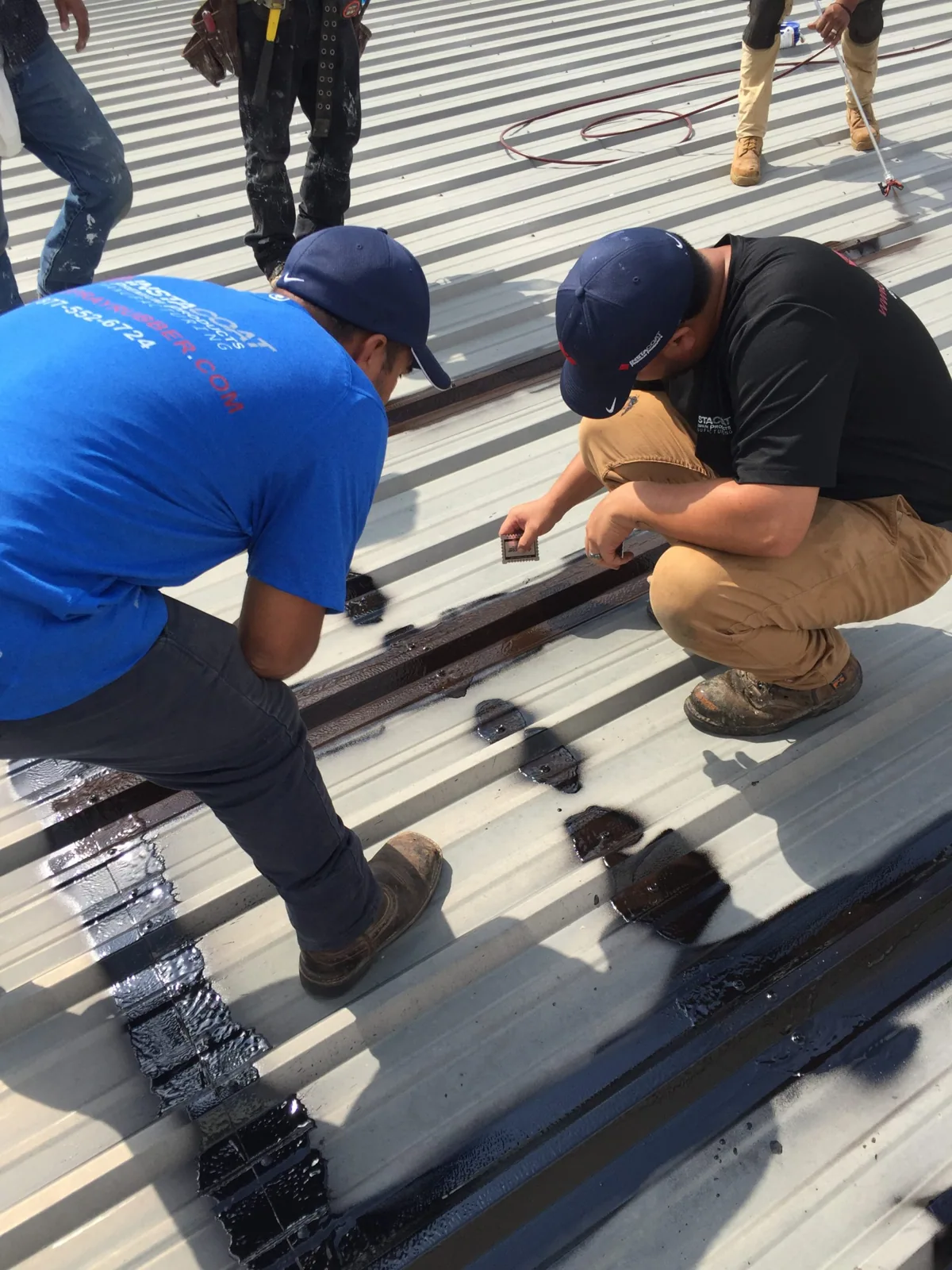
Water may travel inside the roof assembly before it reaches a ceiling. We compare a stain or active drip with seams, curbs, wall transitions, roof edges, and drain points near the interior location. A deck flute can carry water away from a penetration; wet insulation can spread it before it shows below. We photograph the visible clue, follow the likely path, and identify what is confirmed versus what needs more testing. This matters when an isolated patch would leave a second weak point untouched.
If multiple roof areas show distress, the first repair may need to be paired with moisture mapping. Infrared review can help identify a pattern beneath a surface; an approved core can confirm layers at one selected spot. Each method has limits, so we explain what question it will answer before it is scheduled. The Diligence Notes connects that result to the repair boundary rather than treating a scan as a condition report by itself.
Review the perimeter and rooftop details
We inspect membrane seams, metal panel joints, pipe boots, equipment curbs, skylights, wall flashings, parapet edges, and drains. A small opening at a termination can expose insulation and deck without a large visible tear. We look for loose metal, cracked sealant, a patch that has released, debris that holds water, and ponding that touches a seam. A photo and roof-zone label help show whether a detail is isolated or related to nearby problems.
Equipment supports can move as a roof changes temperature. The inspection records any visible gap, loose flashing, or distortion and notes whether another trade needs to review the support. We do not infer load capacity or structural condition from a surface walk. If moisture, deck damage, or attachment cannot be established visually, the report says what further review is needed. This protects the repair decision from going beyond what the roof evidence can support.
Match the repair to the visible assembly
Once the roof type is known, we define the smallest boundary that can produce a durable repair. The field record notes the membrane or panel, visible damage, nearby seams, and any change in insulation or deck condition. If the evidence stops at one curb or lap, a contained detail may be appropriate; if it continues across roof zones, we pause and explain the additional investigation before work expands.
In Moreno Valley’s industrial districts, equipment and delivery schedules can shape access, so the proposal states staging needs and operating-hour assumptions. Owners receive a repair scope and a separate option when the roof condition supports broader restoration or replacement. If a discovery changes the work area, we photograph it and request direction before proceeding beyond the approved boundary.
For large roof areas, the closeout should make the next inspection repeatable. We label roof zones, note access points, and identify which curb or edge detail should be revisited after the repair. If neighboring tenants share a roof plane, the owner can use that record to coordinate future work without assuming that one leak explains every report.
Keep access and operations coordinated
Before mobilization, we confirm roof access, material delivery, a lift route if needed, safe walk paths, and equipment that cannot be shut down. The facility contact identifies sensitive hours, receiving activity, and areas below that need protection. We agree on where the crew can work and how each opened area will be secured at the end of the shift. If rain risk changes the plan, the approved stopping point provides a clear way to keep the building dry.
While the repair is under way, Diligence Notes capture concealed layers and conditions that change the scope. Wet insulation or a damaged deck is documented before replacement material is installed. At closeout, photos show the completed seam, curb, or edge and list any area for another visit. The owner can keep that record with maintenance files and compare the same roof zones during the next scheduled check.
Keep nearby context in its own place
Moreno Valley identifies the SR-60 Corridor and Centerpointe Industrial Area as separate industrial hubs. The map and development resources can help a property team distinguish those broad areas when reviewing city activity. The roof scope should still name the actual building, its access, and the observed details. We do not transfer a development status or building condition from one district to another.
Menifee's city planning identifies a naturally dry inland climate and increasing temperature risks for Menifee. Those facts do not describe Moreno Valley weather at a specific facility. We document heat-related surface movement where visible and check seams, flashing, and metal edges. For a roof record, start with a commercial inspection and a condition report. An active drip may need leak repair, while a repeat issue can be compared with maintenance planning. A broader repair discussion may include restoration or replacement once the assembly is known.
For distinct city context, see Centerpointe Industrial Area, the SR-60 Corridor, and Menifee's Community Core corridor. These are broad locations with separate planning references, not a substitute for a roof walk.
Commercial Roofing Questions
Does the industrial map show roof condition?
No. It helps locate industrial property and current development tools. We inspect the building to identify roof materials, leaks, drainage, and repairs.
How do you check a roof with several additions?
We record each zone and the transitions between them, including changes in surface, elevation, drains, and past patches. That keeps the scope tied to the correct area.
Can moisture mapping replace a roof inspection?
No. A scan can help with a moisture question, but it does not replace checking seams, flashings, drains, and visible damage. We use it when results could change the repair choice.
What should happen if hidden damage appears?
We document the finding with a photo and location, stop at a safe boundary, and review the scope change with the owner before proceeding.
What makes a repair report useful to maintenance?
It names the roof zone, observed condition, completed repair, and next check. Labeled photos let the team compare the same detail on a later visit.
Related Roofing Work
Get a property-level roof report
Request a Roof Assessment
Arrange an inspection around facility access and operating hours. We will document the assembly, follow water paths, and explain the repair or testing choices for your Moreno Valley property.
Service area
Menifee, Perris, Murrieta, Temecula, Hemet, Lake Elsinore and nearby Inland Empire communities
Quick contact
[email protected]
555-555-5555