
Commercial Roofing in Centerpointe Industrial Area, Moreno Valley, CA
Home / Service Areas / Commercial Roofing in Centerpointe Industrial Area, Moreno Valley, CA
An open lap beside a roof-mounted unit can send water beneath the field before a room below shows a stain. Moreno Valley identifies Centerpointe Industrial Area as one of its major industrial hubs and provides city tools for checking industrial property and development activity. Those maps help define a broad business area, but they do not establish an individual building's roof system, access route, or condition. We inspect the property directly, trace the water route, and record the seam, curb, and drainage details that affect a repair. The owner receives photos and a clear boundary for work or follow-up testing.
Check the equipment transitions
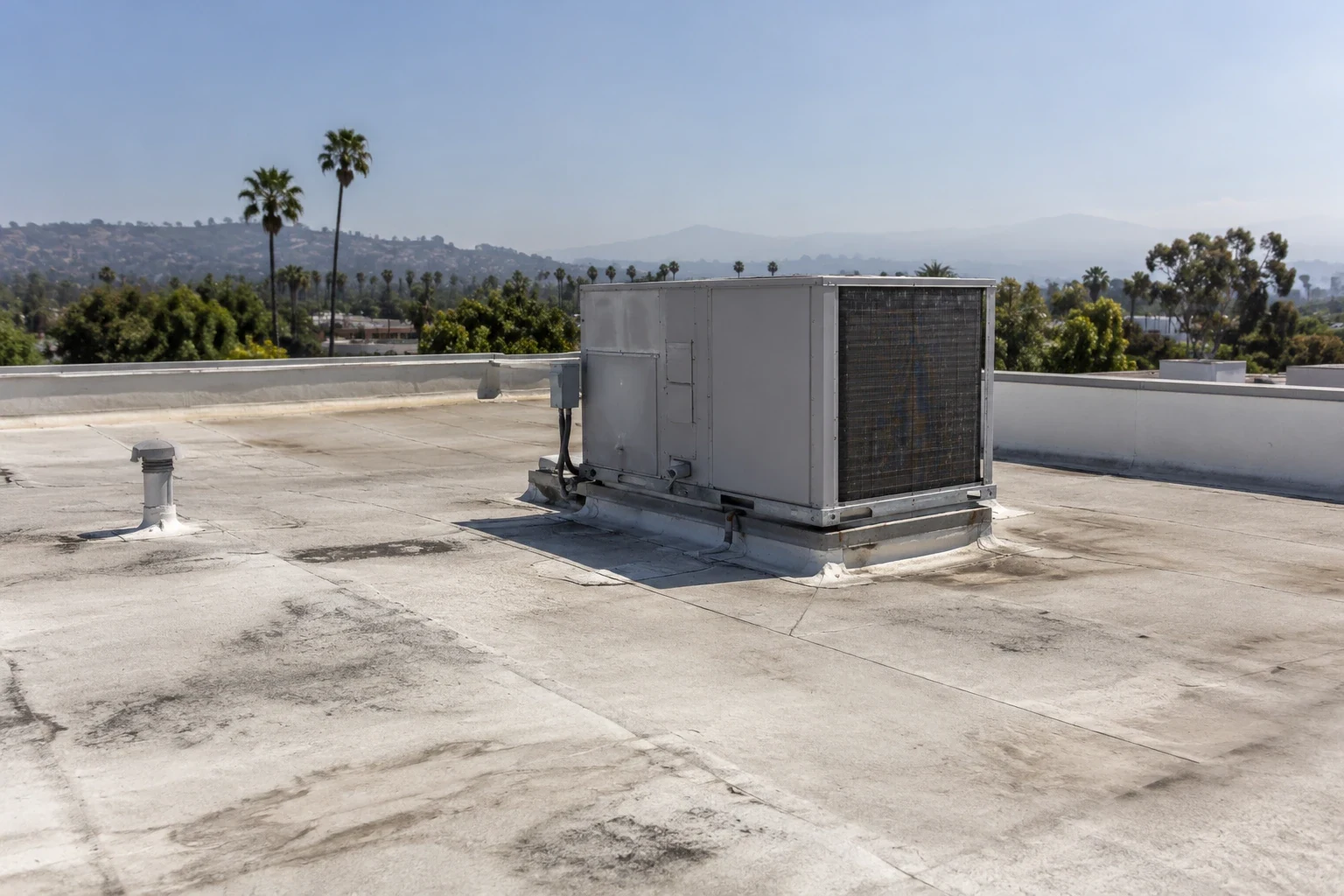
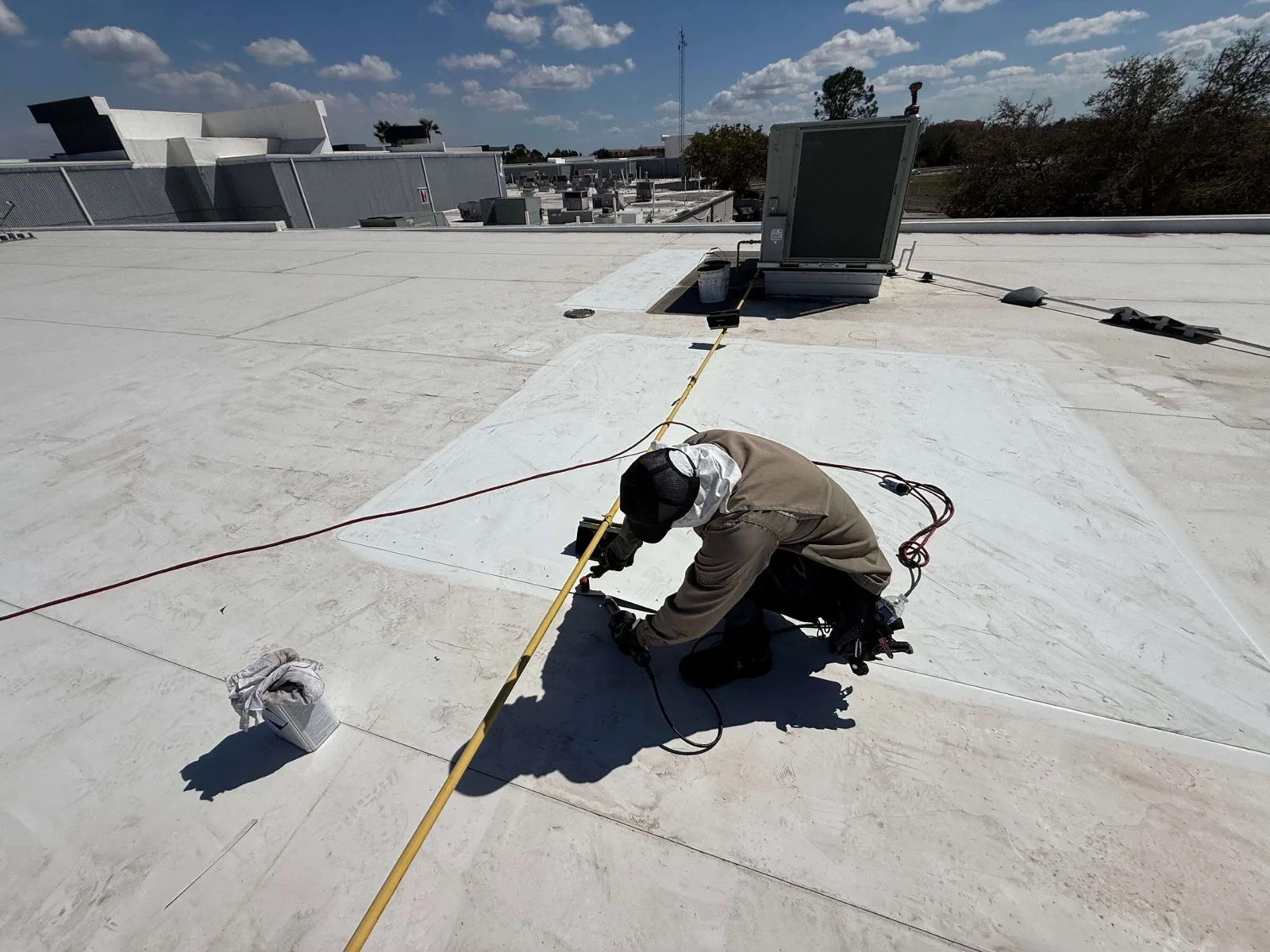
Rooftop equipment interrupts the membrane and creates several details to inspect: a curb, flashing, counterflashing, electrical support, and the seams around the opening. A small separation can let water travel below the surface. We check the visible seal, membrane transition, and nearby drainage, then compare those clues with any interior mark. Each observation gets a roof-zone label so maintenance staff can tell whether a repair is confined to one curb or part of a wider pattern.
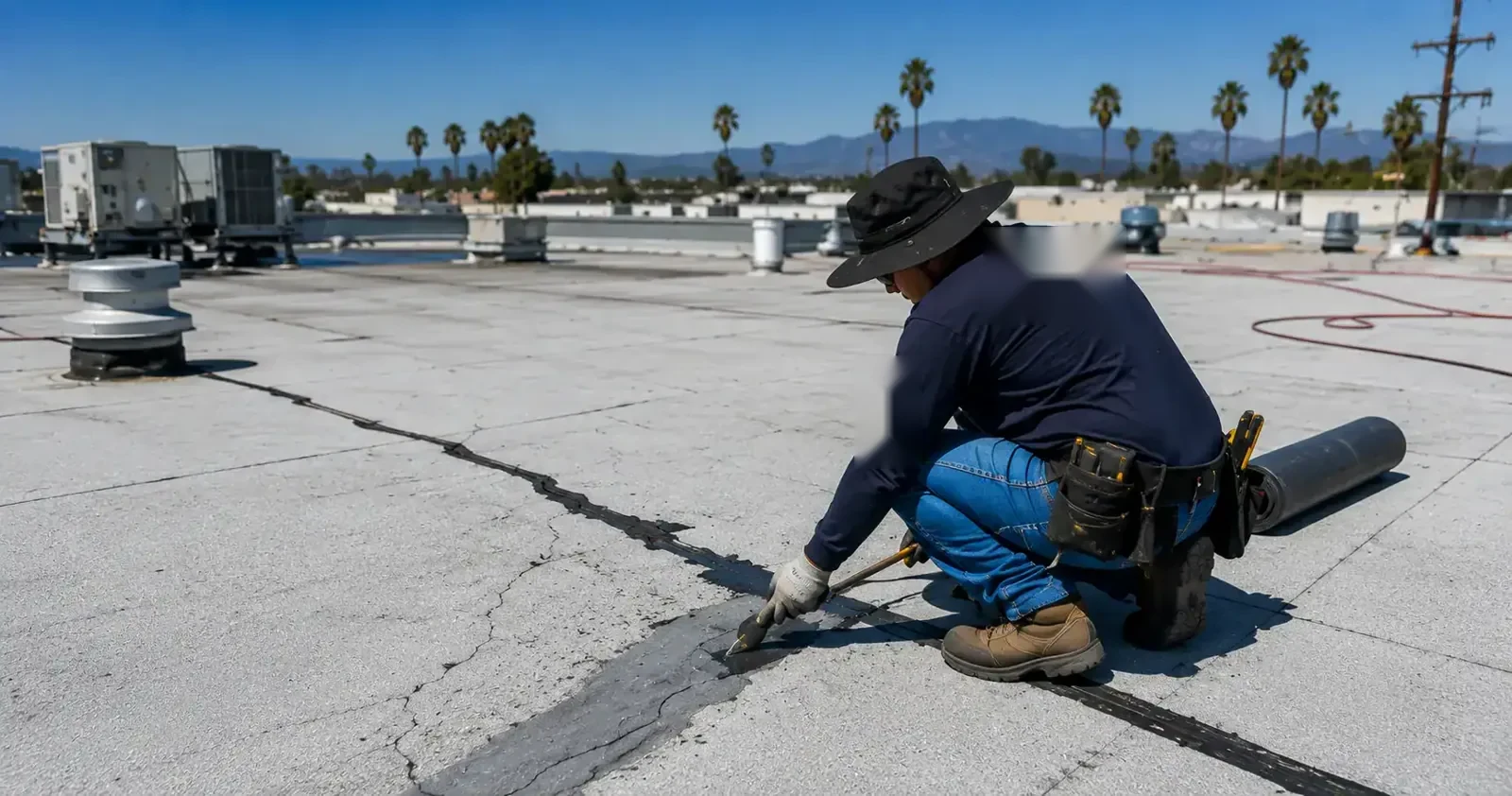
We also inspect drains, scuppers, perimeter edges, walls, and any prior patch that may have changed the water route. A membrane roof may show an open lap, puncture, blisters, or exposed reinforcement. A metal system calls for checking fasteners, panel joints, and flashing at transitions. We identify the visible assembly and avoid assuming the same roof covers every addition. If moisture may extend beyond what the surface shows, we explain whether infrared review or an approved core could change the repair boundary.
Use city maps for context only
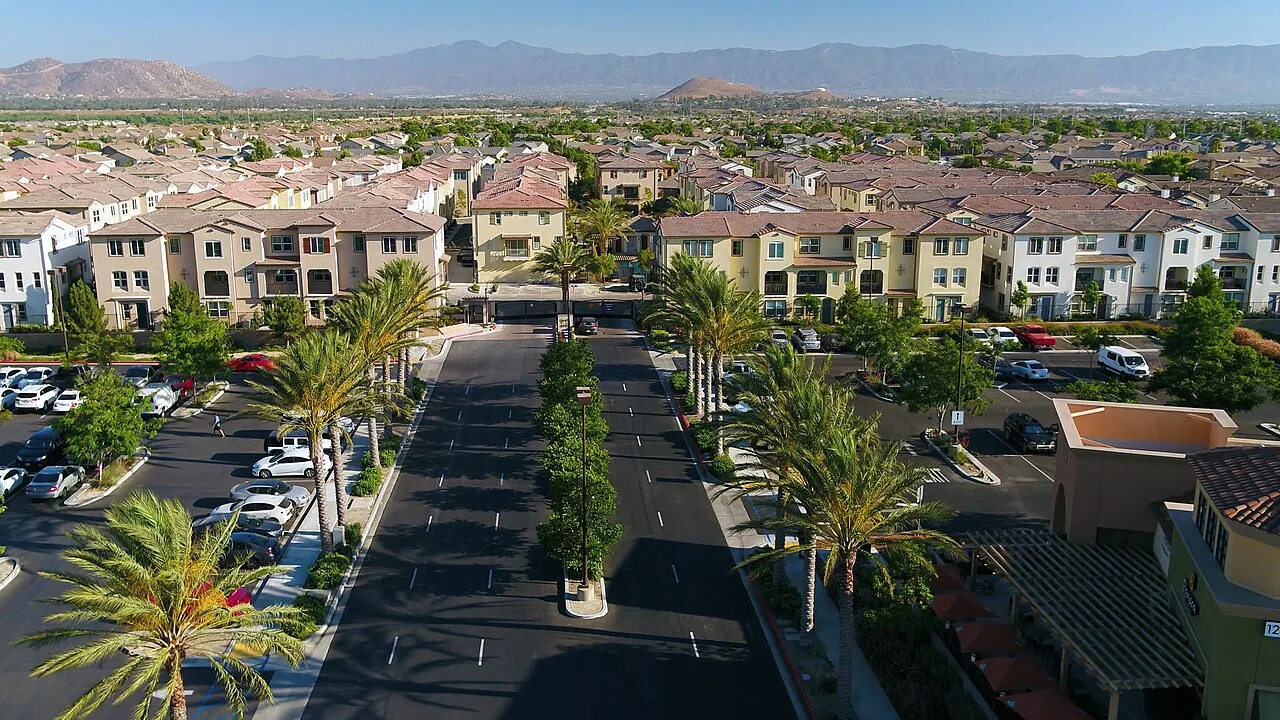
The City publishes monthly development summaries and maintains site-selection maps for industrial property and development activity. Its current materials name Centerpointe as one of three major industrial hubs. Those records help a property team follow changing area inventory; they do not establish whether a specific site is active. We confirm the building's current use, operating schedule, and access with the owner before planning a visit.
Menifee's climate planning describes an inland, naturally dry climate with higher average temperatures and more extreme-temperature days identified as risks for that city. We keep that context attached to Menifee rather than assigning its figures to Moreno Valley. On the roof, heat exposure is still considered through observed movement at seams, flashing, and perimeter metal. We record what the assembly shows and connect the repair to the physical detail rather than to a citywide planning statement.
Trace water from the interior clue
A wet ceiling tile may sit below the point where water entered the roof. The path can follow insulation, a deck flute, or a seam before reaching the room. We compare the mark with details above and around it, including equipment curbs, penetrations, drains, and roof edges. Where the route is not clear, we note the uncertainty rather than labeling the stain as the source. A photo sequence from the interior to the roof helps a facility director review the logic behind the proposed work.
Several active leaks, recurring patches, or moisture in separated areas may call for a roof-zone map before another patch is installed. We identify which item needs immediate water control and which area needs additional information. A core sample can confirm layers at an approved location; an infrared survey can help show a moisture pattern. Each method has limits, and we recommend one only when it helps distinguish a localized repair from a broader assembly issue.
Select a boundary the crew can finish
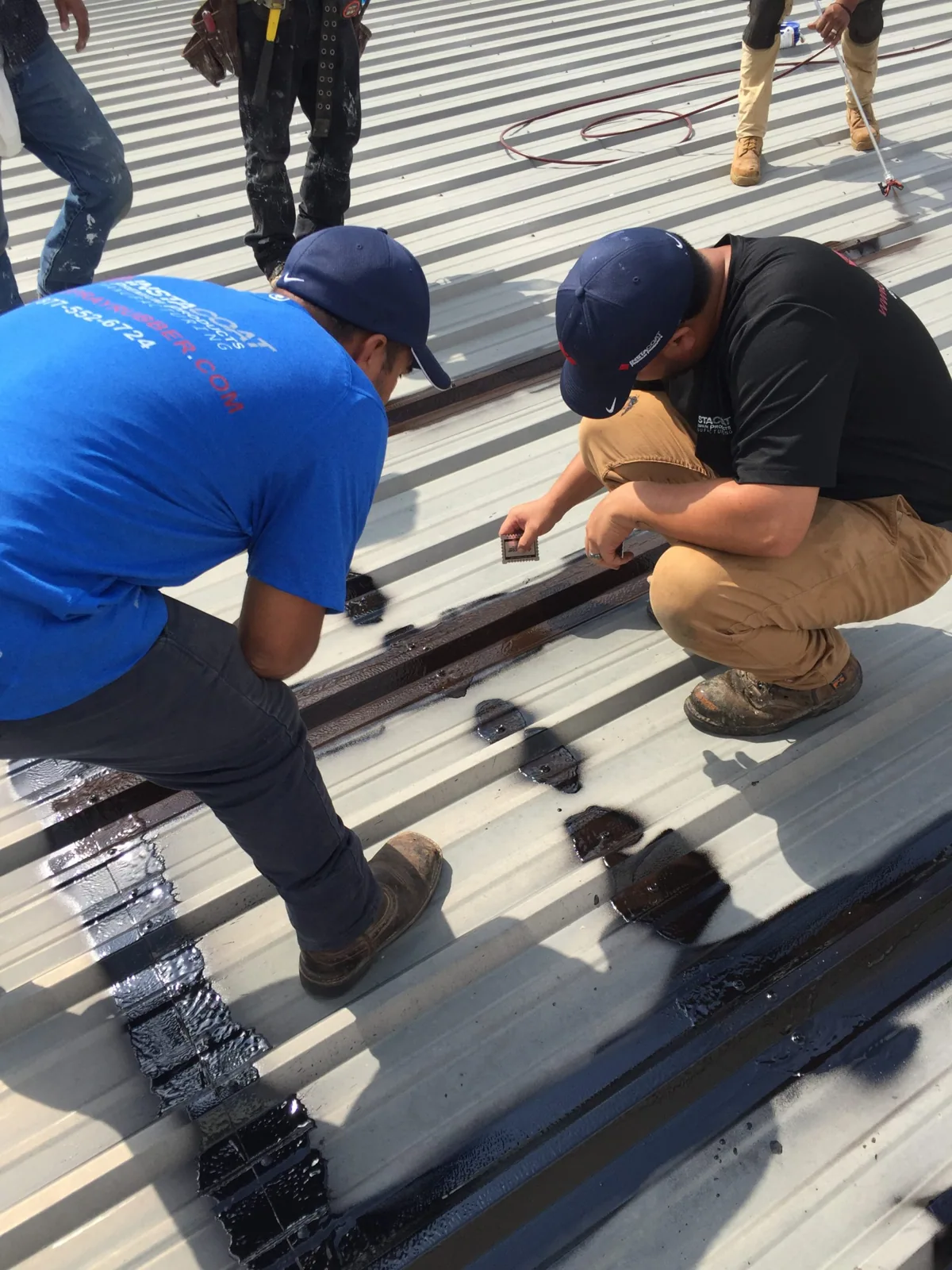
A repair can stay focused when the failure is contained and adjacent material remains compatible. We remove loose or failed material within the documented boundary, prepare the surface, install a matching repair, and inspect the finished transition. If wet insulation extends beyond the seam or several curbs show separation, the owner may need testing or a broader scope. A coating is considered only when the surface, substrate, drainage, and edge details support it.
Recovery depends on how the current roof is attached, what layers remain, the structure below, and the finished height at drains, curbs, doors, and walls. If those conditions do not support another layer, replacement may be the better comparison. Cost and time reflect the system, roof height, access, equipment clearances, staging, wet insulation, and hours available for work. The written option separates confirmed repair from testing or assumptions so a property manager can make a staged decision.
Coordinate roof work with facility activity
Before staging, we confirm roof access, delivery routes, lift placement, and any equipment that must remain in service. The site contact identifies occupied zones, safe paths, and hours that fit facility operations. If HVAC or electrical work is planned near the same equipment curb, we coordinate the roof detail with the trade schedule. Before opening the membrane, we set the day's stopping point and how the area will be made watertight. If a work zone sits near an intake, loading bay, or sensitive room, we confirm the protection method and any temporary limits with the facility contact. The crew also identifies where removed material will go so drains and walkways remain clear.
During work, concealed conditions are photographed and reviewed before scope expands. Wet insulation, deck deterioration, or a prior repair that will not bond gets documented with a location. At closeout, photos show the completed curb, seam, drain, or edge. The Diligence Notes names any follow-up observation and the timeframe or condition that would make another visit useful. This creates a handoff that can be used by facilities, ownership, or the next trade without relying on a verbal summary.
Keep a condition record for the next decision
A roof record helps a property team track what is complete, what remains uncertain, and what should be reviewed later. We list the roof zone, observed condition, repair boundary, and any testing that could change the comparison. If an owner is planning maintenance or a larger capital project, the report makes access limits and equipment coordination visible alongside the roof condition. A city development map cannot replace these property-specific notes.
For a first review, schedule a commercial roof inspection and request a condition report. A current water route may need leak repair; a recurring detail can be reviewed through preventive maintenance. When moisture or layers affect the decision, compare restoration with replacement after the assembly is checked.
Moreno Valley's SR-60 Corridor and Industrial Area are separate city-designated industrial contexts. Menifee's Community Core corridor is a separate market reference. Each roof still needs its own inspection.
Commercial Roofing Questions
Can city development maps identify the roof at our property?
No. They provide area and project context. We inspect the building to identify visible roof materials, seams, penetrations, and drainage.
What should be checked around rooftop equipment?
We inspect the curb, membrane transition, flashing, supports, and nearby seams. The report identifies whether the issue is limited to one detail or appears elsewhere.
How do we know if moisture extends beyond a leak?
A roof-zone map and, when useful, infrared review or an approved core can help define the pattern. We explain what each method can and cannot show.
Can the crew work while equipment stays online?
Often, if access and safe work areas can be coordinated. We confirm equipment restrictions, facility hours, and any needed trade schedule with the site contact first.
What makes the repair boundary clear?
A labeled photo and written location show where failed material ends and sound material begins. We also identify concealed conditions that could change the scope.
Related Roofing Work
Document the roof before choosing work
Request a Roof Assessment
Set access around facility operations. We will inspect equipment transitions, trace water paths, and give your Moreno Valley team a documented repair boundary and next step.
Service area
Menifee, Perris, Murrieta, Temecula, Hemet, Lake Elsinore and nearby Inland Empire communities
Quick contact
[email protected]
555-555-5555