
Commercial Roofing in West Latham District, Hemet, CA
Home / Service Areas / Commercial Roofing in West Latham District, Hemet, CA
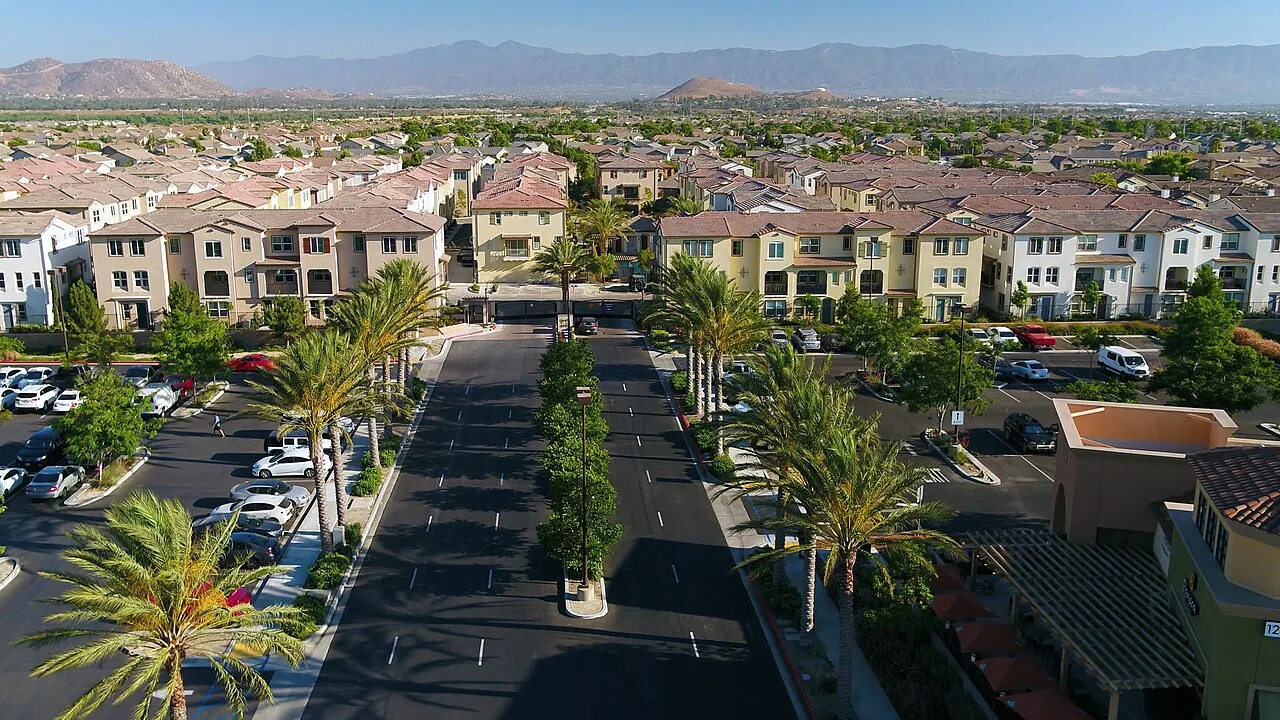
A wall transition can look dry from the parking area while water moves behind flashing above it. Hemet's West Latham District includes retail and commercial uses along Florida Avenue and North State Street, alongside residential uses. The district shifts west from Downtown Village toward larger shopping centers. That mix affects access planning, but it does not establish any building's construction or condition. We start with the actual roof surface, trace the water route, and record the first weak point before setting a repair boundary. The Diligence Notes connects findings to a practical next step.
Follow the leak beyond the room
A ceiling stain shows where water appeared, not where it entered. Water can travel through insulation or beside a seam before it drops indoors. We compare the interior clue with drains, curbs, wall terminations, and prior patches. A lifted corner at a flashing or a gap at the perimeter may be the first weak point even when the interior mark is several feet away. We photograph the roof and interior clues so the repair follows the likely water path.
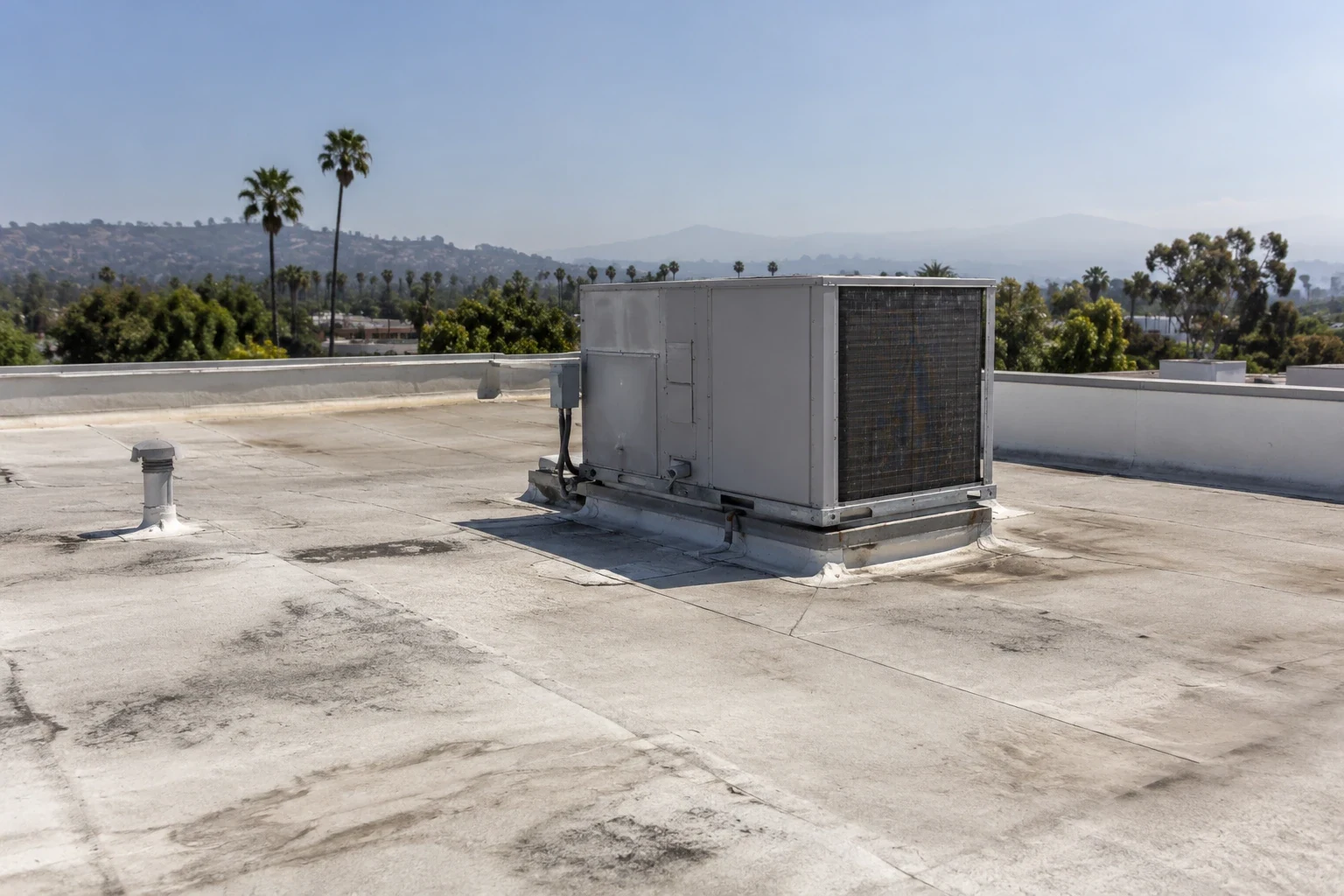
Along Florida Avenue or North State Street, district-wide land use is not a substitute for the roof walk. Retail and residential access hours differ, and each roof assembly must be confirmed on site. We record the visible membrane or metal system, the number of layers at an edge when observable, and any conditions that require testing. Widespread moisture or several prior repairs may call for mapping before a patch is selected.

Check where roof areas meet
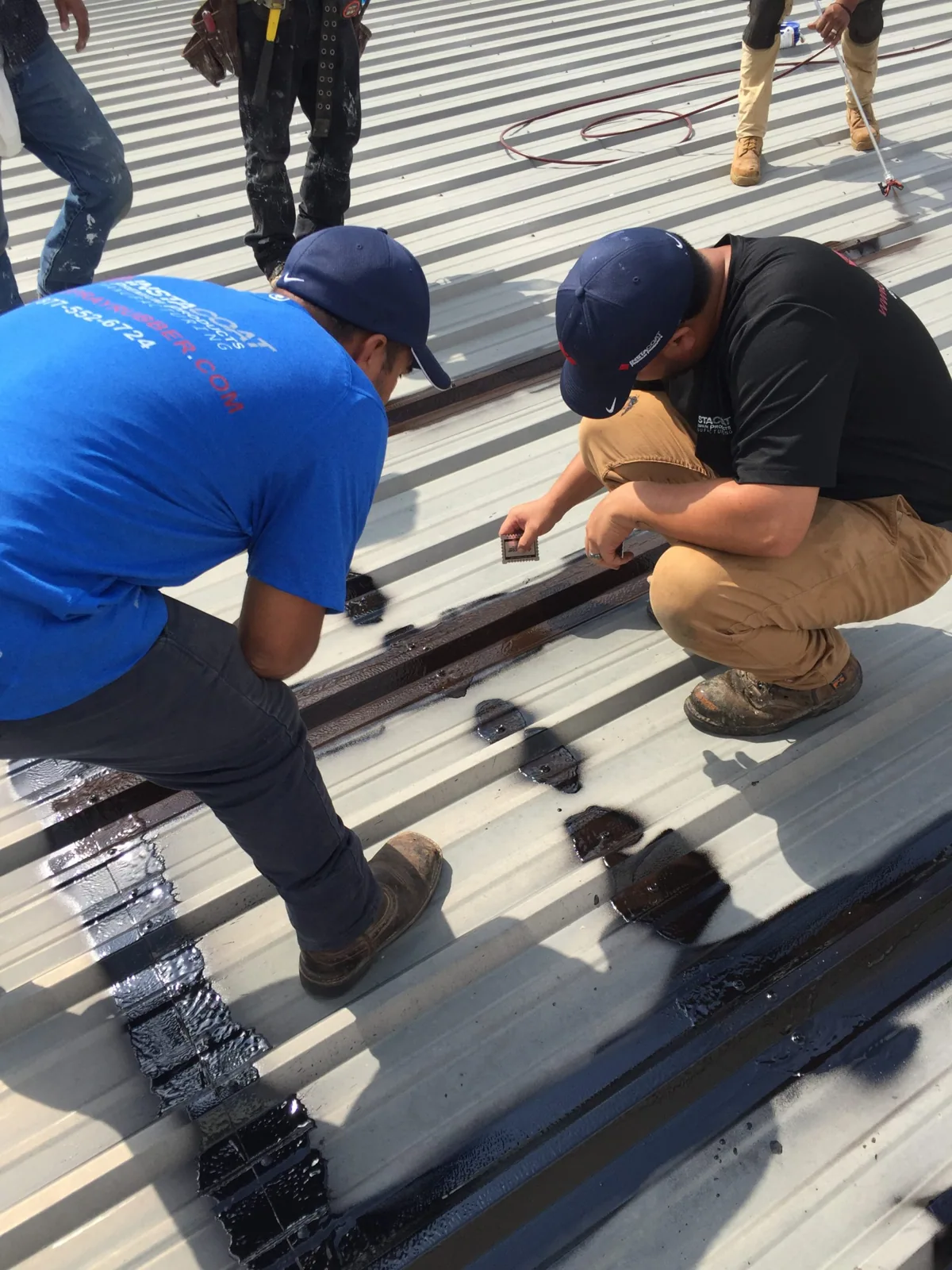
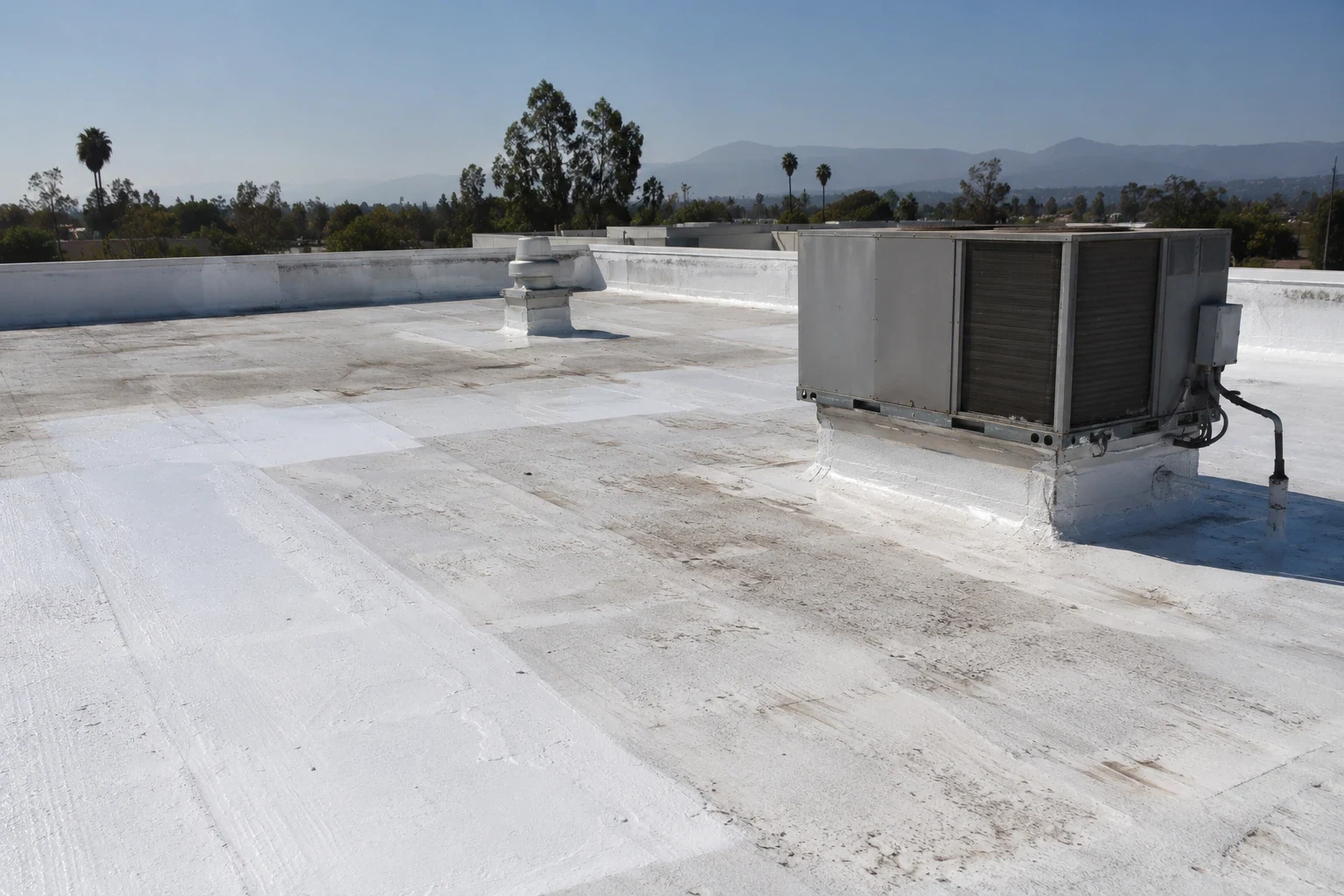
We inspect the places where one roof condition meets another: membrane to wall, drain to field, curb to flashing, and metal edge to fascia. The walk includes open seams, cracked sealant, loose counterflashing, blocked outlets, and ponding. On a metal roof, we check panel laps, fasteners, closures, and movement around penetrations. On a low-slope membrane, we look for edge lift, punctures, bubbles, exposed reinforcement, and areas where a coating has separated from its base. Each finding gets a location and photo, not a broad note.
Hemet's Downtown Village has a street-oriented retail and civic character, and West Latham includes commercial activity with residential uses. That context can make scheduling important when customers or neighbors share access routes. It does not prove a particular property has historic fabric or requires a special approval. We document visible scope and ask the owner to confirm any property review before material selection. If a question remains about concealed layers, an approved core can help identify the assembly; if the question concerns moisture spread, infrared review may help map the area.
Use local context carefully
Menifee's city planning identifies an inland, naturally dry climate and notes increasing average temperatures and more extreme-temperature days as risks there. Those conditions belong to Menifee; they are not a temperature record for Hemet or a diagnosis of a West Latham roof. Heat exposure still gives us a reason to pay attention to membrane movement, seam edges, flashing, and sealant during an inspection. A recommendation follows the surface condition observed on the building.
The West Latham planning area includes commercial and retail uses along two named streets and residential areas. For a property with an occupied storefront or a shared boundary, the work sequence can protect interior access and reduce disruption without assuming which tenants are present. We coordinate with the facility contact, set a roof access window, and identify where tools or materials will be staged. For open-roof work, we set a stopping point and temporary dry-in method before starting.
Set a repair boundary that holds
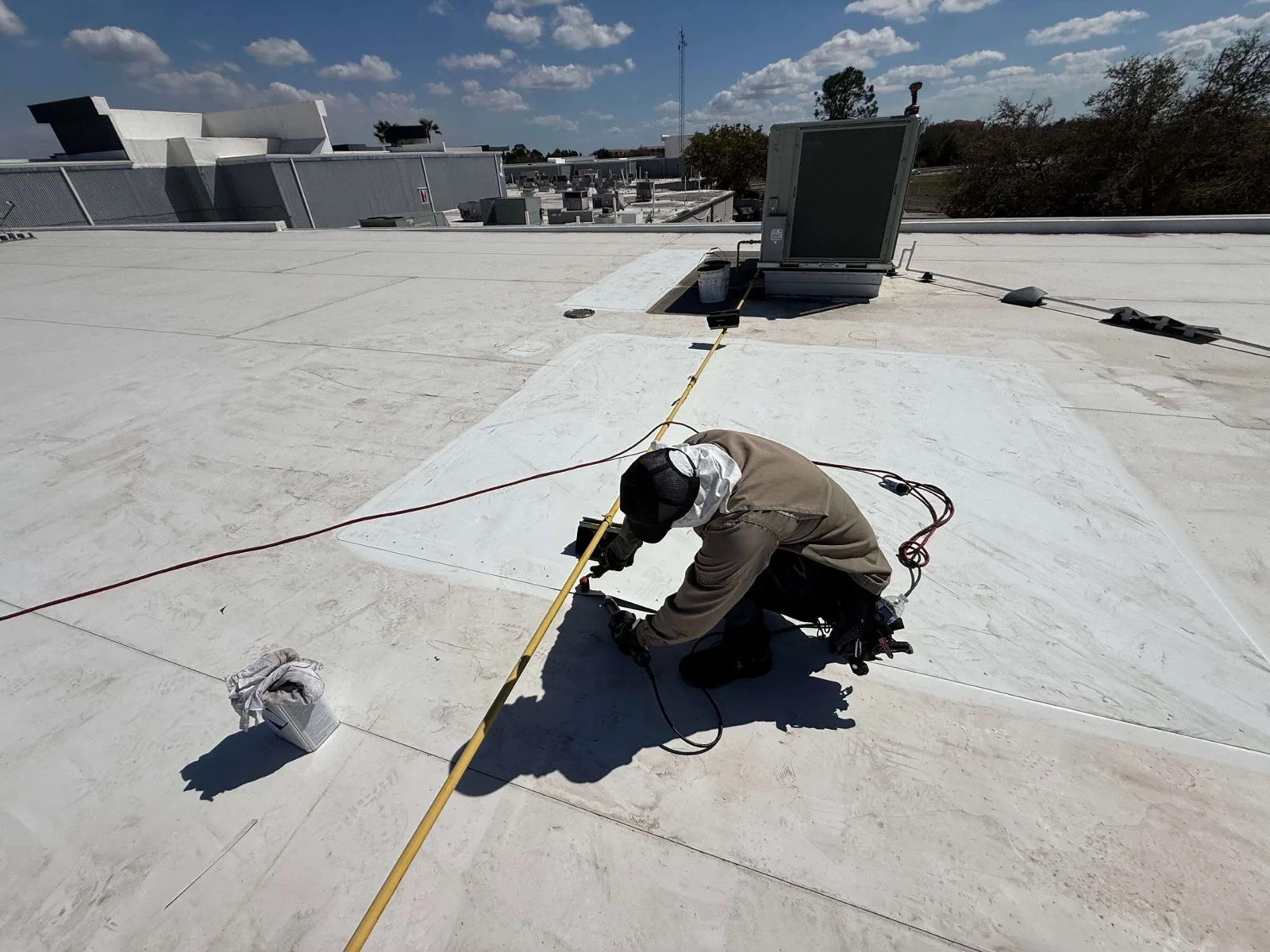
A focused repair is appropriate when the failure is contained and the adjacent assembly can accept a compatible detail. We remove loose material within the agreed boundary, prepare the surface, install the repair, and check the finished edge and nearby seams. If several patch edges have released or water shows up in separate zones, adding another isolated patch may leave the larger pattern unexplained. We can map the affected roof sections and compare the repair with a coating or replacement scope after checking substrate, drainage, and perimeter details.
A new layer is not automatically a faster option. Existing moisture, roof height, structural limits, drain elevations, wall flashings, and equipment supports affect whether a recovery can work. Removal may be necessary where the old assembly cannot provide a sound base or where added thickness changes a critical transition. Cost also follows access, staging, material compatibility, rooftop equipment, occupied areas, and the number of details that need to be rebuilt. The written scope lists those factors and separates confirmed work from options that depend on additional testing.
Coordinate around the street and building
Before a crew arrives, we confirm the roof entry, delivery point, parking or loading constraints, and any customer hours that affect the property. Florida Avenue's commercial uses and West Latham's transition toward the Downtown Village and larger shopping centers make street access a practical item to confirm, not something to infer from a map. If a lift or street control is needed, the owner can coordinate the required authorization. We establish where materials go and how the building below stays protected while the roof is open.
During the repair, we keep work inside the approved area and photograph concealed conditions that could change the scope. A wet substrate, deteriorated deck, or incompatible patch is reported before the crew expands the work. At the end of each shift, opened details are secured against water entry. Closeout photos show the finished edge, flashing, or seam, and the report states any follow-up item. If the building remains occupied, we confirm that access routes and interior protection are restored before reopening the affected area.
Compare the next step, not just the material
An owner may compare repair with restoration, a sale, tenant improvements, or a defined project period. The answer depends on what the inspection shows: how far moisture extends, whether the surface is compatible, and whether drains and edges can support a new layer. We state each option's evidence and assumptions, and identify tests that could change the recommendation.
City policy in West Latham calls for adaptive reuse and infill, with possible commercial uses subject to project review. That context may matter to a property schedule, but it is not proof that a specific development is approved or underway. A field report is based on roof conditions and the owner's current plans. Our commercial roof inspection can document the system, and a condition report organizes findings for an ownership review. A targeted leak repair may control an active entry point; restoration planning can be compared where the surface and substrate allow it.
For related Hemet context, the Downtown Village District and Transit Oriented District have separate planning descriptions. Menifee's Community Core corridor is a distinct city-defined area, not a substitute for a Hemet property inspection.
Commercial Roofing Questions
Can a leak repair be planned around store hours?
Yes. We set roof access, material staging, and any interior protection around the hours the property contact provides. If a lift or street control is needed, we confirm that before the crew is scheduled.
Does a visible ceiling mark identify the roof opening?
No. Water can travel through the assembly before it appears indoors. We compare the mark with roof details above and nearby, then document the likely entry path and remaining uncertainty.
Could an older patch cause another leak?
It can if the edge has released or the material does not suit the existing roof. We inspect the patch boundary and nearby seams, then decide whether it needs replacement or a broader repair map.
What would make a roof coating unsuitable?
A wet or unstable substrate, poor drainage, incompatible surface, or failing edge detail can make a coating the wrong choice. We check those conditions before including restoration in the options.
What will we know after the inspection?
The report identifies visible conditions by roof area, includes photos, and separates immediate corrections from testing or monitoring. You can use it to compare a defined repair with broader planning.
Related Roofing Work
Set a roof access window
Request a Roof Assessment
Arrange an inspection around customer and building hours. We will trace the water route, photograph the roof details, and document a repair boundary and practical next check for your Hemet property.
Service area
Menifee, Perris, Murrieta, Temecula, Hemet, Lake Elsinore and nearby Inland Empire communities
Quick contact
[email protected]
555-555-5555