Commercial Roofing in Downtown Village District, Hemet, CA
Home / Service Areas / Commercial Roofing in Downtown Village District, Hemet, CA
A drip near a storefront ceiling can come from a seam, a drain, or a transition well outside the room where it appears. Hemet's Downtown Village combines historic buildings, a grid street pattern, civic uses, and street-oriented retail. Roof work in that setting starts with the actual assembly and the access window, not an assumption about age or construction. We photograph the first weak point, trace the water route, and check nearby flashings and drainage before recommending a repair. For a building that remains open, the field plan should also identify the path for materials and people so roof access does not interfere with customers or public activity.
Read the district without guessing
The Downtown Hemet Specific Plan describes the Downtown Village as the city's historic commercial core and notes its grid pattern and Civic Center. It also describes street-oriented retail and civic activity as part of the district's character. Those planning details help explain why access and sequencing may matter, but they do not establish the roof type or condition of an individual building. We inspect each roof directly, note the visible membrane or metal system, and record how the field surface meets walls, parapets, drains, and equipment curbs.
Downtown Hemet’s grid pattern and civic activity make access planning a property-by-property task. We confirm the loading point, roof entrance, and hours for any street-facing work before scheduling a crew. At the roof, we document which transition sits above the reported interior area and whether drainage or another seam could have carried water across the assembly. That sequence keeps a visible ceiling stain from being mistaken for proof that the nearest roof detail is the source.
Start at edges and penetrations
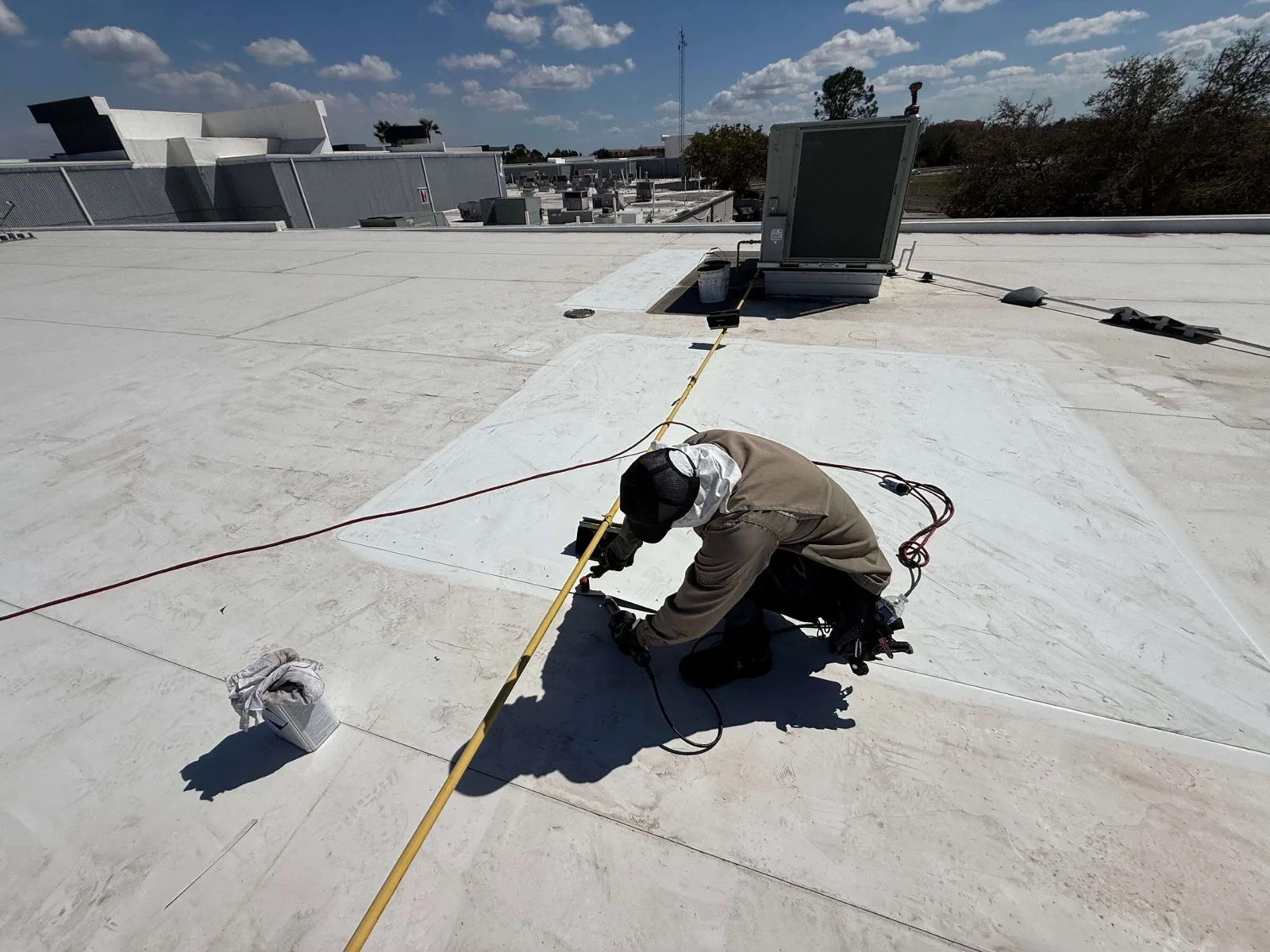
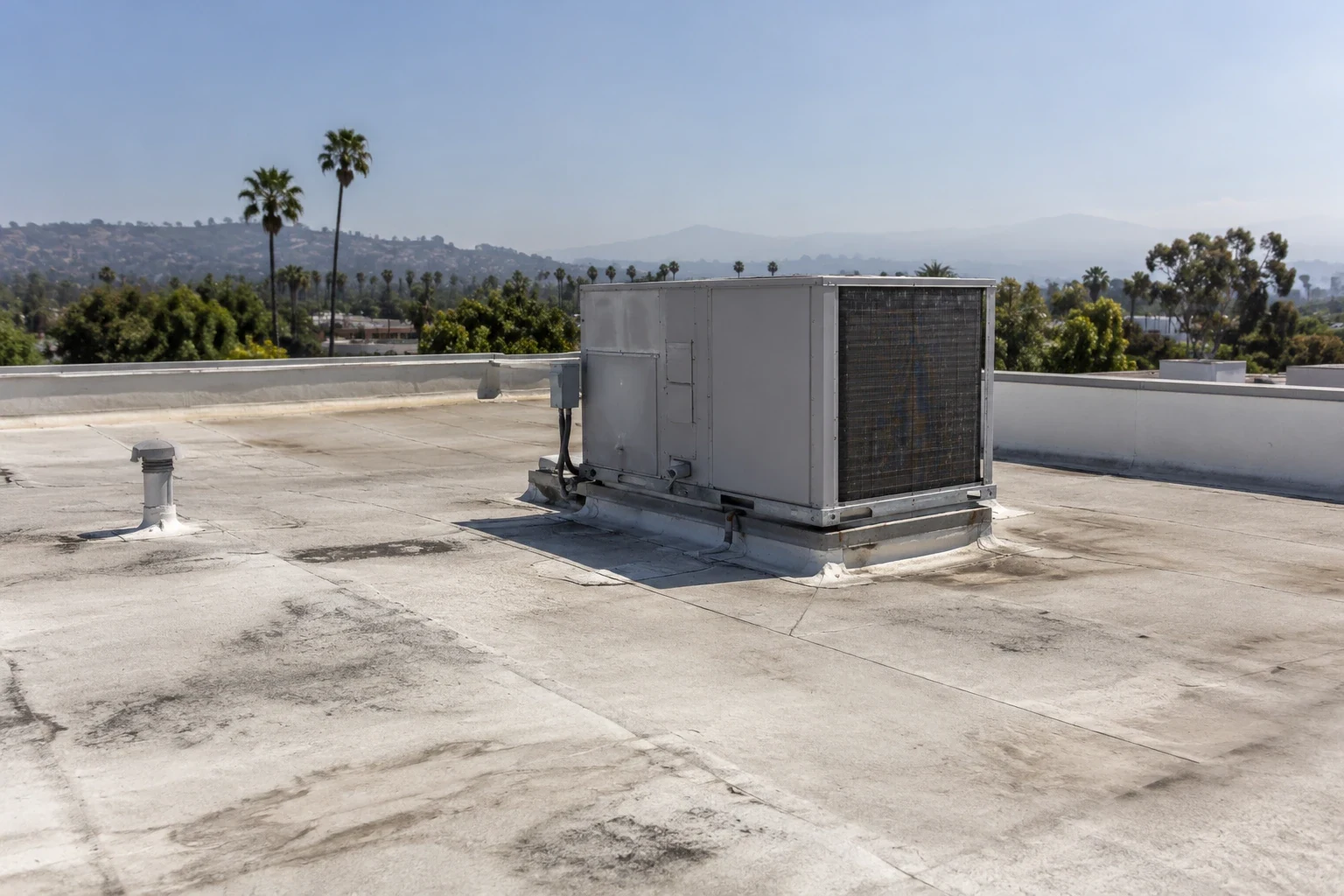
On a walk, we check the roof edge, wall transitions, drains, scuppers, pipe boots, curbs, and any change between membrane and metal. A small opening at one of those points can let water enter while the roof field still looks sound. We look for open seams, fishmouths, loose counterflashing, ponding, debris, and old patches with edges that no longer bond. Each note includes a roof zone and a photo. If a ceiling mark is available, we compare it with the likely path across the deck or insulation rather than calling the mark itself the source.
Historic character is not a substitute for a field check. A building may have additions or past repairs, and the visible surface may conceal more than one layer. We note what can be seen and identify areas needing a closer survey. Infrared review can map moisture patterns; a core sample may confirm assembly layers at an approved location. We explain what a test can answer and what approval is needed before proceeding.
Choose a repair that fits the assembly
A localized patch is appropriate when the failed area is limited and the nearby membrane can accept a compatible repair. We remove material only within the documented boundary, prepare the surface, and complete the detail with a method suited to the roof system. Then we check the repair edge and adjacent transitions. If several seams have opened, insulation is wet in multiple zones, or earlier patches overlap, the next useful step may be broader mapping rather than adding another isolated patch.
On a low-slope roof, drainage affects both the repair and the options that follow. We examine whether water reaches a drain or scupper, whether a sump or bowl is obstructed, and whether an added layer would change the finished height. Where restoration is under consideration, the existing substrate, attachment, moisture, and edge details all matter. Replacement may be the clearer choice when the assembly cannot support a reliable repair boundary. The written scope separates immediate water control from planned work so an owner can compare the choices without treating one wet room as proof the whole roof needs replacement.
Keep the storefront operating
Before material is staged, we confirm the roof hatch or ladder route, sidewalk or loading constraints, customer hours, and any civic schedule that affects access. The Downtown Village's pedestrian-oriented main-street character makes a planned route useful when the building faces active foot traffic. We coordinate work zones and delivery timing with the facility contact. If a temporary closure is needed below a work area, the location and length of that closure are discussed before the crew begins.
Each shift needs a protected stopping point. We plan dry-in at opened seams or penetrations, control debris, and record concealed conditions before scope changes. For a same-day leak, we first limit water entry and protect the interior; the lasting repair follows when the surface is ready for the selected material. Closeout photos show completed details and any condition needing another check.
Set scope by condition and access
Repair cost and timing change with roof height, system type, wet insulation, edge-metal work, equipment clearances, staging, and operating hours. Historic context may bring preservation review into an owner's planning, but we do not assume a roof is designated or that a specific approval applies. We identify visible scope and decisions to confirm before materials are ordered.
A condition report groups findings by roof section, leak path, and urgency. One item may call for a repair, another for testing, and a third for capital planning. The district plan records revitalization activity along North Harvard Street and encourages sensitive infill. We build the scope from the property inspection, not a proposed improvement, and coordinate the schedule with the owner.
If the first question is water entry, start with commercial leak repair and a documented roof condition report. A roof near the district's Transit Oriented District or West Latham area still needs its own inspection.
Leave a useful follow-up
At closeout, we note which repaired seams or penetrations deserve another look and what evidence would change the next decision. A dated photo from the same roof zone can show whether an edge remains stable or a drain is collecting debris again. We can also set a preventive visit before the next busy period, with roof access and building hours agreed in advance. That record helps maintenance staff carry the repair history forward instead of relying on a memory of where water appeared.
For a commercial property in Hemet, ask for findings that name the roof area, visible condition, repair boundary, and remaining uncertainty. Our commercial roof inspection records those items; maintenance planning can then focus on the details found during the walk. If the assembly needs a more extensive option, we can compare roof restoration with a replacement scope based on substrate and drainage. North Harvard Street and the West Latham District are part of Hemet's local planning context, while Menifee remains a separate nearby market reference.
Commercial Roofing Questions
Can storefront work happen before opening?
Yes. We arrange access with the building contact, identify the roof zones to inspect, and keep material handling away from the customer route. If street or sidewalk controls are needed, we confirm the plan before the crew arrives.
Does a historic district mean the roof cannot change?
Not by itself. We document the roof condition and proposed scope, then the owner confirms whether preservation review applies to that property. We do not treat the district plan as a building-specific approval decision.
How do you find the source of a ceiling drip?
We compare the interior mark with roof details above and nearby, then trace a likely route through seams, transitions, and drainage points. The report separates what we observed from any area that still needs testing.
When is infrared testing useful?
It can help when a surface walk leaves a question about the extent of moisture. We explain the limits of the scan and whether a core or another check is needed before setting a repair boundary.
What details should be in a repair closeout?
Ask for dated photos, the repaired location, materials and details completed, plus any follow-up item. Our closeout keeps completed work distinct from conditions that remain open.
Related Roofing Work
Plan a district building inspection
Request a Roof Assessment
Arrange access around storefront, civic, or tenant hours. We will trace the water route, photograph roof details, and give your Hemet team a repair boundary with clear next steps.
Service area
Menifee, Perris, Murrieta, Temecula, Hemet, Lake Elsinore and nearby Inland Empire communities
Quick contact
[email protected]
555-555-5555