Commercial Roofing in Transit Oriented District, Hemet, CA
Home / Service Areas / Commercial Roofing in Transit Oriented District, Hemet, CA
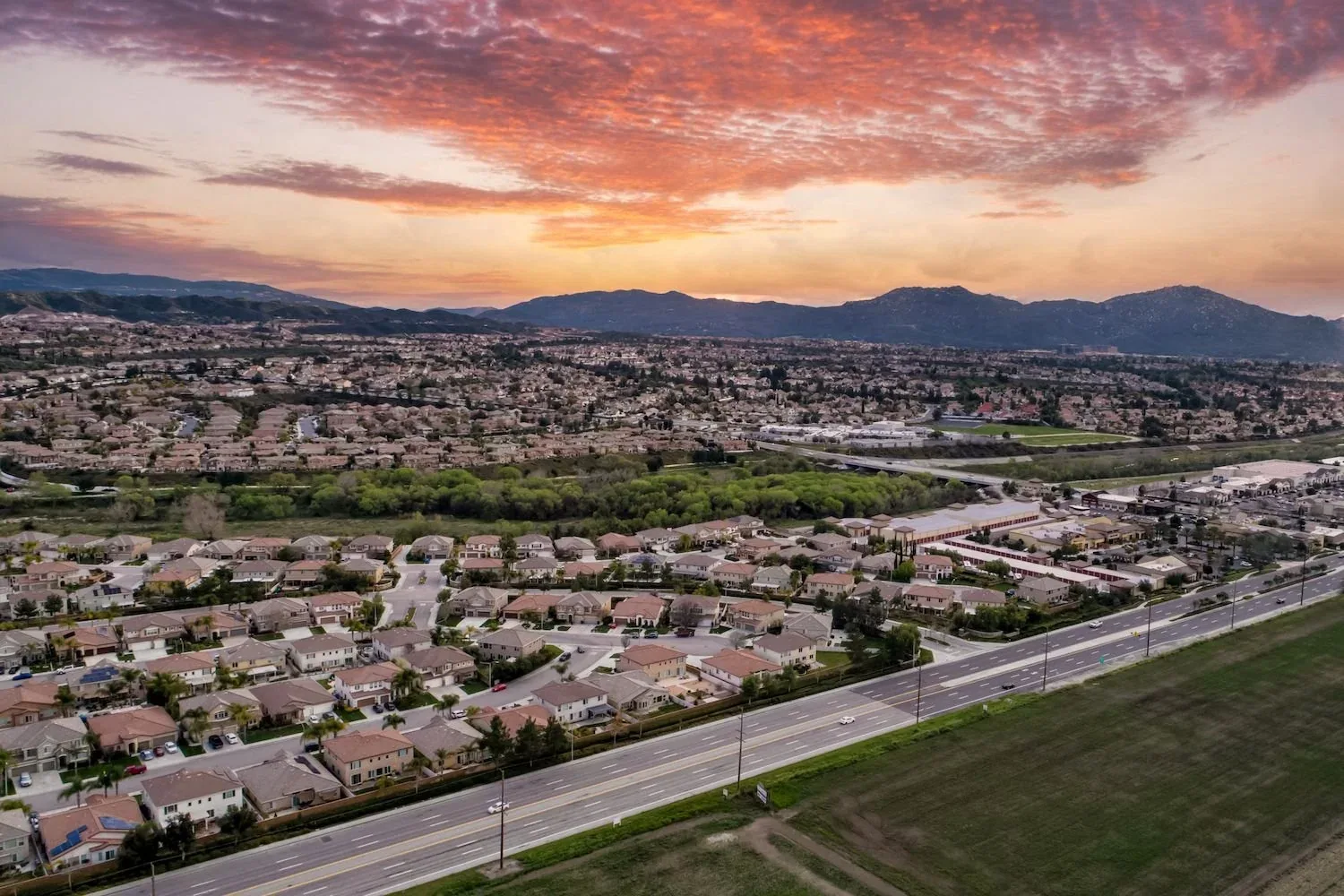
A roof project tied to future occupancy starts with what is built today and what must be checked on the structure. Hemet's Transit Oriented District is mapped within the broader downtown area and is described as primarily vacant or underused land, with a future transit hub and mixed-use development envisioned. That context does not establish a current building or completed transit service. For an existing property in or near the district, we begin with its roof assembly, access, and operating needs. We trace the water route, document visible details, and give the owner a scope based on conditions that can be inspected.
Separate current conditions from future plans
The district concept connects bus and rail, downtown streets, and a bicycle and pedestrian path along the rail right-of-way. Those are planned connections, not completed transit or nearby development. A roof decision should use today's building and schedule. We confirm roof entry, loading access, utilities, and occupancy before a visit. If construction activity changes access, the owner can identify the safe route and a workable inspection window.
Nearby Hemet planning areas have different conditions. The Downtown Village is described as the city's historic commercial core with street-oriented retail and civic activity, while West Latham includes commercial uses alongside residential areas. Those district descriptions point to differing uses and pedestrian routes, not what lies beneath a membrane. We keep a separate field record for each property.
Record the assembly before choosing work
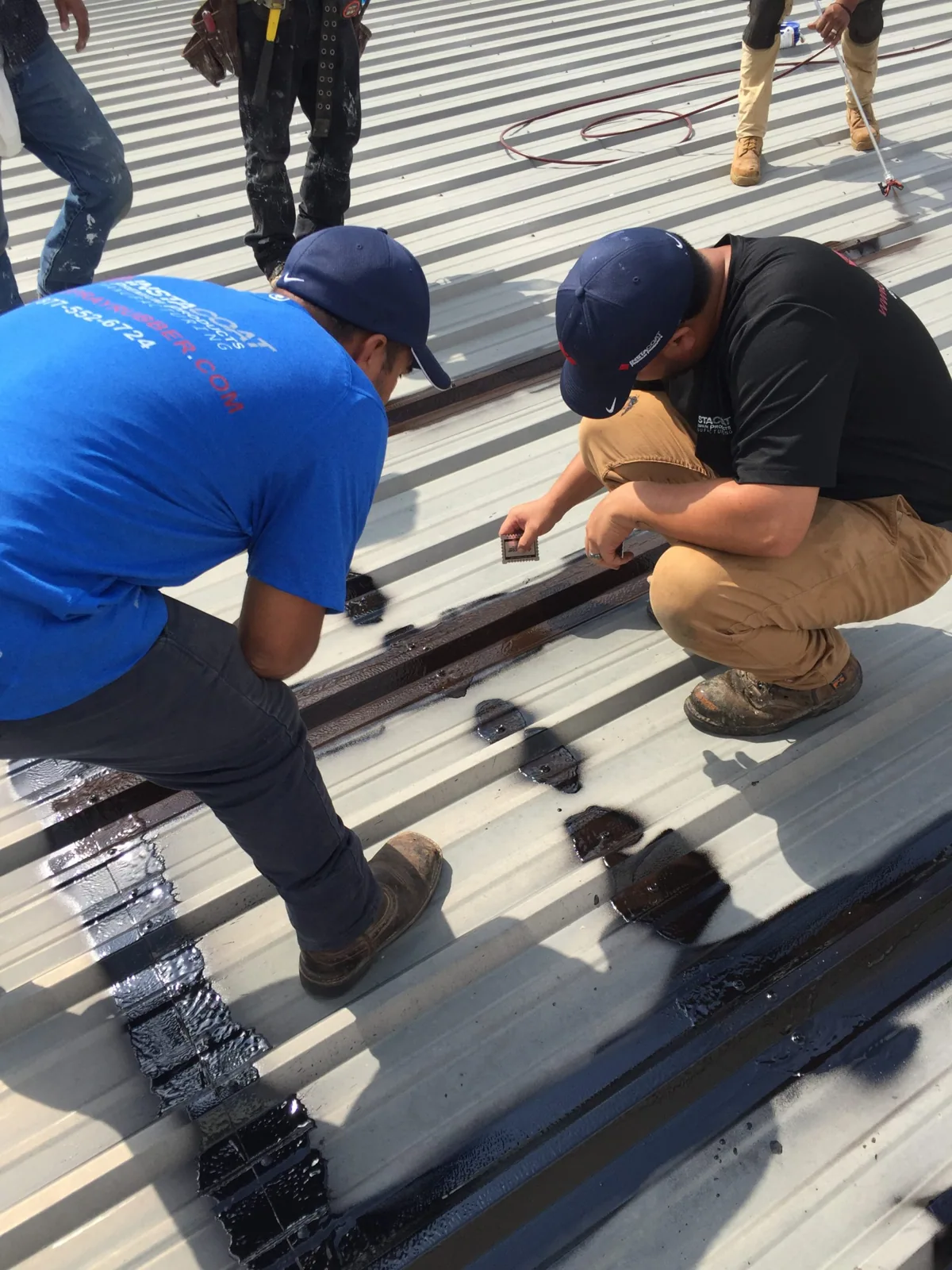
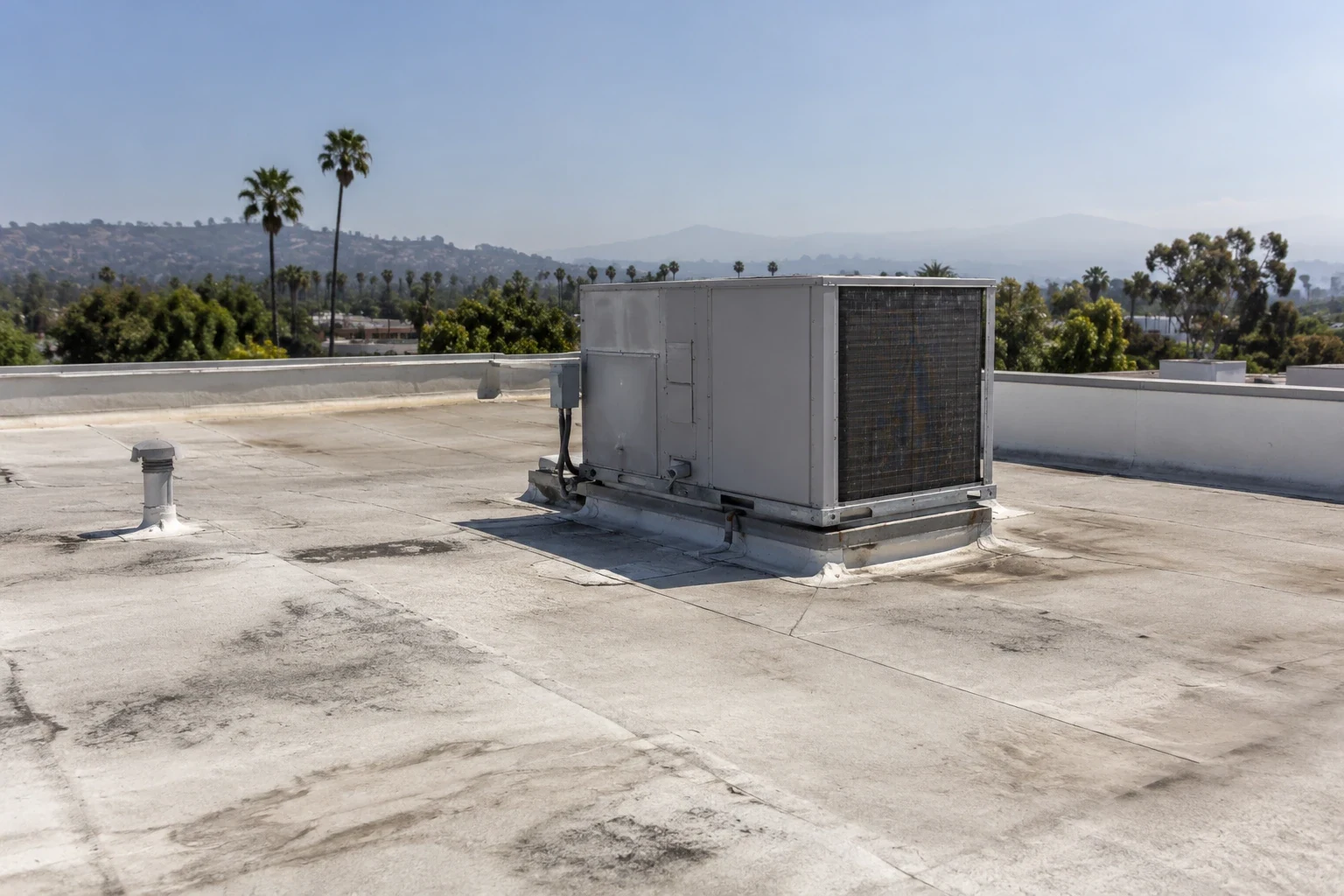
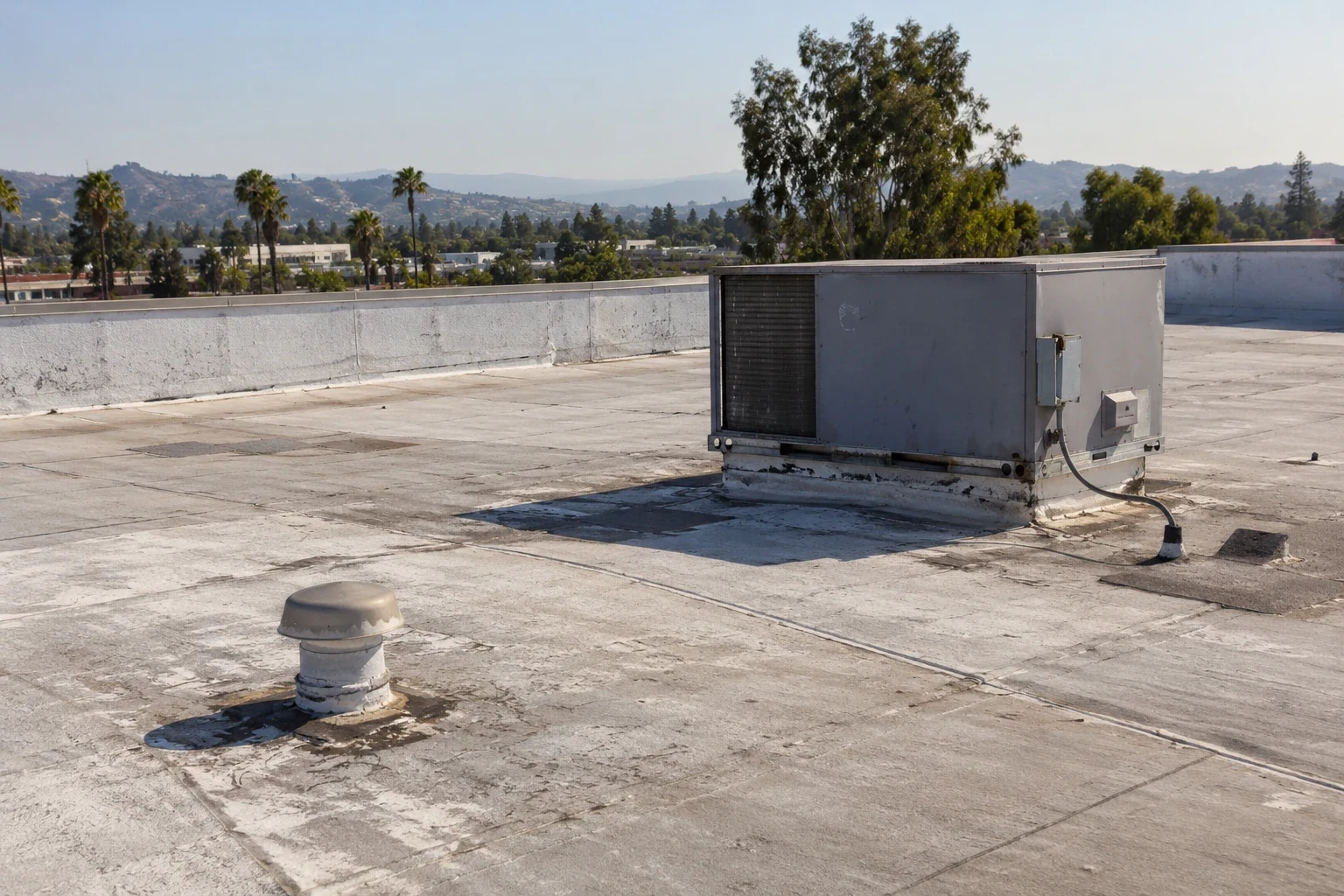
On the roof, we identify the visible system, note how many layers can be observed at edges, and follow each transition where water could enter. A low-slope membrane needs sound seams, compatible flashing, and clear drainage. A metal system calls for a look at fasteners, panel laps, closures, and changes at walls or rooftop equipment. We photograph curbs, penetrations, drain bowls, scuppers, and perimeter details so the written scope is tied to a real location.
At the interior, we note active drips, staining, ceiling materials, and whether the area is sensitive to dust or disruption. Those observations help sequence protection, but a stain alone does not locate the opening above. Water may travel across the deck or insulation before appearing inside. We compare the interior mark with roof features, look for the first weak point, and label any unresolved area. If moisture extends beyond what the surface walk can show, we explain whether infrared review or an approved core sample could change the repair boundary.
Follow the small failures first
Many leaks start at a detail rather than in the middle of an uninterrupted field. A cracked sealant bead can leave a gap at a pipe boot. A lifted edge can admit wind-driven rain at a termination. A clogged drain can hold water against a seam that was intended to shed it. We inspect those points and compare the condition with nearby patches. A patch with a loose perimeter may need removal and a compatible repair rather than another layer of sealant placed on top.
A current roof record can inform a future construction decision. We separate an urgent water-control repair from larger work that could be coordinated with a renovation. That may mean stabilizing an edge, replacing flashing, or mapping wet insulation before scheduling. We do not assume a project timeline from the district concept. We ask what has been approved for the property, which areas remain active, and what work can be safely sequenced without damaging an adjacent trade's materials.
Match the repair to the roof
A localized repair is a good candidate when the system around the failure remains sound and the selected material can bond to the existing surface. We clean and prepare the area, remove failed material to a defined boundary, install compatible flashing or membrane, and check the seams and edge after the repair is complete. If wet insulation, broad seam separation, or repeated patch failures appear across several zones, a single repair may not address the underlying condition. A survey or core can help show whether restoration, replacement, or phased work is the better comparison.
Cost and schedule reflect the system, access, transitions, staging, occupied areas, and wet substrate. A recovery layer is only considered when the existing assembly, drainage, and code details support it. Added thickness that interferes with drains or supports may point toward removal. Your scope should show immediate work, options that depend on testing, and items to monitor, so an owner can approve one decision without treating every future concept as a construction commitment.
Plan access around the property
A first visit begins with access and safety: roof entry, ladder or lift location, fall protection, utility clearances, and any area below that must remain open. If an existing building is occupied, we set hours and a route that fit its use. For a future redevelopment site, the property representative can identify current construction boundaries and temporary access. We confirm those limits before bringing equipment so the inspection does not cross into a controlled or unfinished zone.
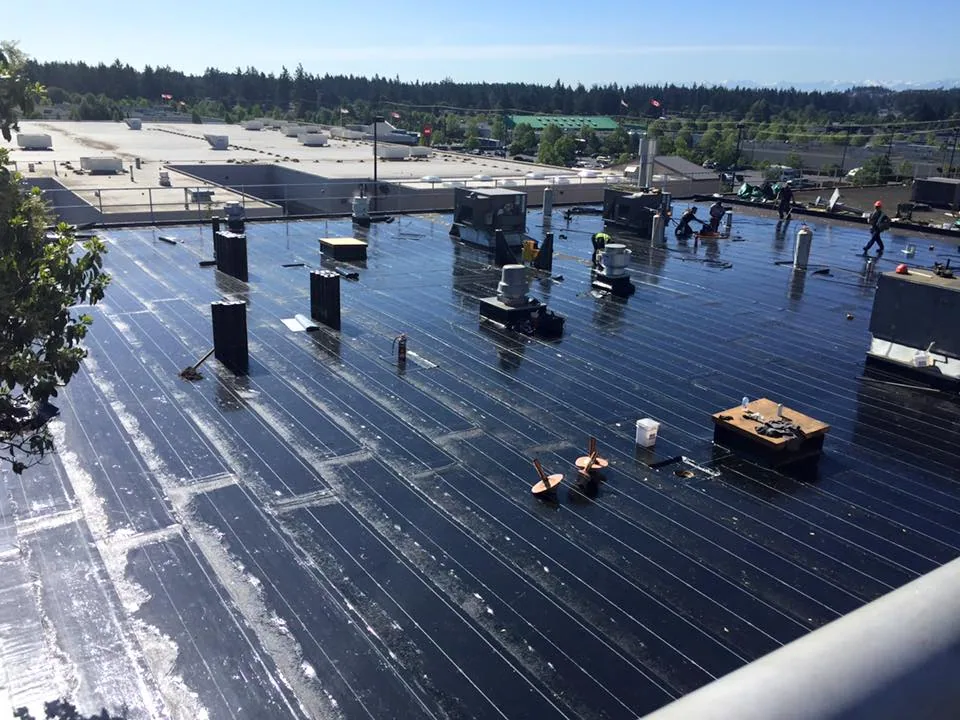
For repairs, we divide the roof into work areas and define a protected stopping point for each shift. Before opening membrane or metal, we agree on overnight protection and rain contingencies. If concealed conditions expand the work, we stop at a safe boundary, photograph the finding, and request direction before changing the scope. Closeout includes photos of the repaired detail and a note about any follow-up inspection that would make the next roof decision clearer.
Keep the roof decision tied to evidence
The practical comparison is not just patch versus replacement. An owner may need to decide whether the roof can serve through an upcoming renovation, whether moisture testing is worth the disruption, or whether a recurring leak should be managed with a phased repair. We can document these choices with a condition report that lists the observed area, likely route, repair boundary, and evidence still needed. If a test cannot answer the decision, we explain that limit before recommending it.
Hemet's Downtown Village, West Latham, and Transit Oriented District are distinct city-planning areas. The nearby city of Menifee has its own inland climate context, including identified temperature-related risks; those conditions are not transferred to a Hemet property. We use locality to guide questions, then let the actual assembly determine the scope. For practical next steps, a commercial roof inspection can document the current building, while condition reporting supports a phased budget discussion. Separate access and repair needs can be planned with occupied-building reroofing or a focused repair scope.
Nearby work can also touch the Downtown Village, the West Latham District, or Menifee's Community Core corridor, but each building gets its own inspection and location record.
Commercial Roofing Questions
Is the planned transit hub operating now?
The district vision describes a future transit connection. We do not treat that plan as completed service. For roofing, we confirm today's access route and active conditions directly with the property contact.
Can you inspect a property during redevelopment?
Yes, when the owner provides a safe, authorized route. We review construction boundaries, roof access, and any area reserved for another trade before setting the inspection window.
What should an owner decide before a core sample?
Choose the question the sample must answer, such as layer type or moisture below the membrane. We identify a suitable test area, explain the disturbance, and get approval before cutting.
Would a temporary repair work before a larger project?
It can control a defined leak while a broader decision is pending. We document the temporary boundary, check the surrounding details, and explain what should be reviewed before the next phase.
How do you keep records useful during a future buildout?
We label photos by roof zone, identify completed repairs, and list remaining tests or access limits. That gives the property team a dated condition record to compare with later work.
Related Roofing Work
Inspect the building that exists today
Request a Roof Assessment
Arrange a roof visit around current access and operating hours. We will document visible conditions, trace the water route, and separate repair work from questions that require further testing.
Service area
Menifee, Perris, Murrieta, Temecula, Hemet, Lake Elsinore and nearby Inland Empire communities
Quick contact
[email protected]
555-555-5555