
Commercial Roofing for Hospitality Groups in Menifee
Home / Industries We Serve / Commercial Roofing for Hospitality Groups in Menifee
A damp patch in a guestroom can begin at a roof detail several feet away. Before closing a room or ordering a repair, trace the water route from the ceiling to the roof zone above, then inspect transitions, penetrations, drains, and previous work. Hospitality buildings add a second question: who can take a room, meeting space, kitchen, or entrance out of service, and for what period? The roof report should help management make that decision with evidence.
An on-site contact can share occupancy patterns, event schedules, housekeeping access, loading hours, and sensitive areas. The roofing crew maps where materials can move without crossing guest routes. If a test opening or noisy removal is needed, identify the room below and the person who accepts its release. A quiet repair window is useful only when it also allows safe access, weather protection, and enough time to restore the interior before guests return.
Limit Guest Disruption
First identify the affected area and the operational response already taken. Management may close a room, move a guest, protect furnishings, or suspend use of a meeting area; the contractor should not decide that a room is fit to occupy. Note whether water is active, whether the stain changed, and which weather preceded it. Keep guest names, reservations, and payment details out of the roof file. A room number can be restricted in the facilities record if confidentiality requires it.
Trace the symptom from inside with permission, then compare it with the roof surface. Moisture can travel below the membrane before appearing above a ceiling. Inspect the nearest curb, wall termination, seam, and drainage feature, but avoid widening the repair solely because several finishes appear stained. When a test is necessary, write down the location, interior protection, and exact condition that would confirm the suspected path.
Coordinate Access and Quiet Periods
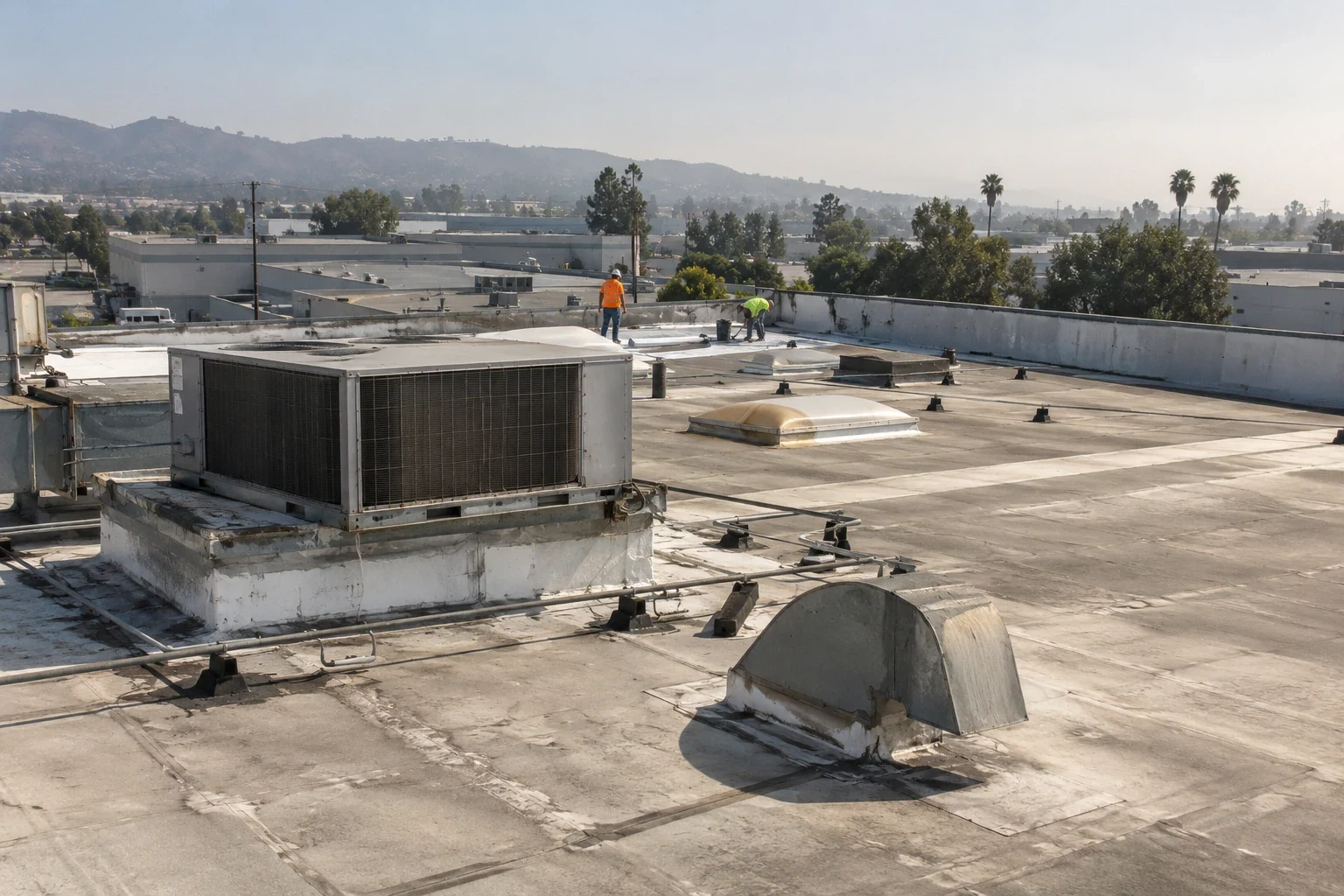
Guest access, housekeeping, deliveries, and event turnover can create different work windows each day. The property contact identifies service lifts, roof hatches, loading zones, noise limits, and routes that must stay clear. Before moving equipment, agree on whether guests can see or hear the work and where signage should direct them. A barrier around an overhead zone should not narrow an accessible path or block an exit. If the hotel changes an entrance due to an event, the work plan changes with it.
A roof section can be left secure at the end of a shift, with materials restrained and the opening protected against weather. The handoff should say which rooms can reopen, which remain unavailable, and when the next inspection occurs. Phased work in an occupied property is appropriate when roof operations need to move around guest circulation rather than treating the building as empty.
Coordinate Kitchens and Mechanical Systems
Hotels and event properties may have kitchens, laundry, pools, ventilation, exhaust, and multiple mechanical zones. Each has a separate operator and service schedule. The roof inspector records a curb or flashing condition but does not alter a fan, refrigerant line, electrical feed, or fire system. Coordinate any shutdown through the responsible engineer or vendor. A repair around an exhaust curb may require a period without cooking service; management selects the window and the trade confirms the equipment return to operation.
At pool or spa areas, control access to equipment and confirm whether moisture on the roof surface could create a slip hazard below. Keep adhesives, coatings, and debris away from air intakes and occupied terraces. For large assemblies, identify the roof drainage path and whether temporary protection could direct water toward a different wing. A documented boundary helps management explain why one room is affected while adjacent spaces remain open.
Separate Repair and Capital Decisions
A room move caused by water is disruptive even when the roof repair is small. The estimate should explain whether the price covers leak tracing, a test opening, wet insulation removal, membrane repair, interior protection, and follow-up. A bid that lists only a patch may not include the time needed to isolate the entry point. Ask for separate options when conditions are uncertain: immediate water control, a limited permanent repair, and a broader replacement only when inspection supports it.
For a group with several properties, standardize the fields in the roof report but retain site-specific details. Track roof areas, installation or repair history if documented, warranty requirements, drains, and unresolved moisture. A facilities team can compare risk and budget timing without assuming that a similarly aged roof has the same condition. Roof capital planning can connect inspection findings to future decisions.
Use Menifee Context Carefully
Menifee’s 2026 economic strategy describes planned commercial, office, and mixed-use activity along I-215 corridors, and the City zoning map distinguishes retail, office, and business-park contexts. These sources describe land use, not a hotel roster or roof inventory. Verify the operator, lease, and access for each property. For a Menifee property, verify the operator, roof access, and work authorization at the address. Community Core Economic Development Corridor and Newport Road Economic Development Corridor are broad Menifee planning references; each hotel address and roof arrangement still requires confirmation.
The City describes Menifee as inland and naturally dry, while identifying increased temperatures and more extreme-temperature days as climate-related risks. Heat exposure can influence surface inspection timing and crew planning. The property’s roof condition still comes from direct observations, not the climate summary. If a hospitality property sits near the Newport Road commercial corridor, that area label is context only and does not establish a service boundary.
Prepare for Weather
Before rain, a property can confirm that accessible drains and scuppers are free of loose debris, that roof access is controlled, and that the right staff member receives leak calls. No one should step onto a wet roof or open a drain without authorization. Temporary interior protection can reduce damage, but it does not show where water entered. After a storm, photograph the ceiling condition, note the time, and preserve any maintenance or HVAC activity that could help trace the path.
For a recurring leak, compare each report with weather timing and the affected roof zone. If the stain migrates, inspect the route rather than repeatedly sealing the visible interior mark. The roof plan should identify a safe access method, testing limits, and a stop point if the assembly changes. A condition inspection can distinguish an isolated detail from a larger drainage or membrane issue.
Confirm Room Release
Before reopening a guestroom or event area, the property’s authorized manager checks the ceiling, floor, furniture, odor, and any affected electrical or mechanical equipment. The contractor provides the roof-side work record and confirms that tools, debris, and temporary covers are removed from the interior. A room release is a management decision, not an automatic result of contractor demobilization. Record the time and person accepting the area.
Closeout should include roof-zone photos, repair material, test notes, the work boundary, and any limitation that remains. If an interior finish repair belongs to another vendor, list it separately. The next check might be a visual review after rain or a scheduled return to the repaired flashing. A short, direct handoff lets the maintenance team respond consistently if the condition recurs.
Related details are covered in retail facility procedures. Related details are covered in occupied healthcare operations. Related details are covered in preventive maintenance visits.
Commercial Roofing Questions
Can roof repairs happen while rooms remain occupied?
Sometimes. Management approves room closures, access routes, quiet periods, and work-zone barriers. Weather protection and a secure end-of-shift condition remain necessary.
Who decides when a guestroom reopens?
The property’s authorized manager releases the room after checking interior conditions and affected equipment. The roofer documents the roof work and its limits.
Should guest information go into the roofing report?
No. Use a restricted room or area reference where needed and keep guest names, reservation records, and payment data outside the roof file.
What if the leak appears far from a drain or curb?
Trace the water route and inspect possible transitions. Water can travel beneath a roof surface; the ceiling stain alone does not define the repair area.
Can a chain use one budget for every property?
A consistent report format helps comparison, but scope and cost depend on each inspected roof, access window, assembly, and repair boundary.
Related Roofing Work

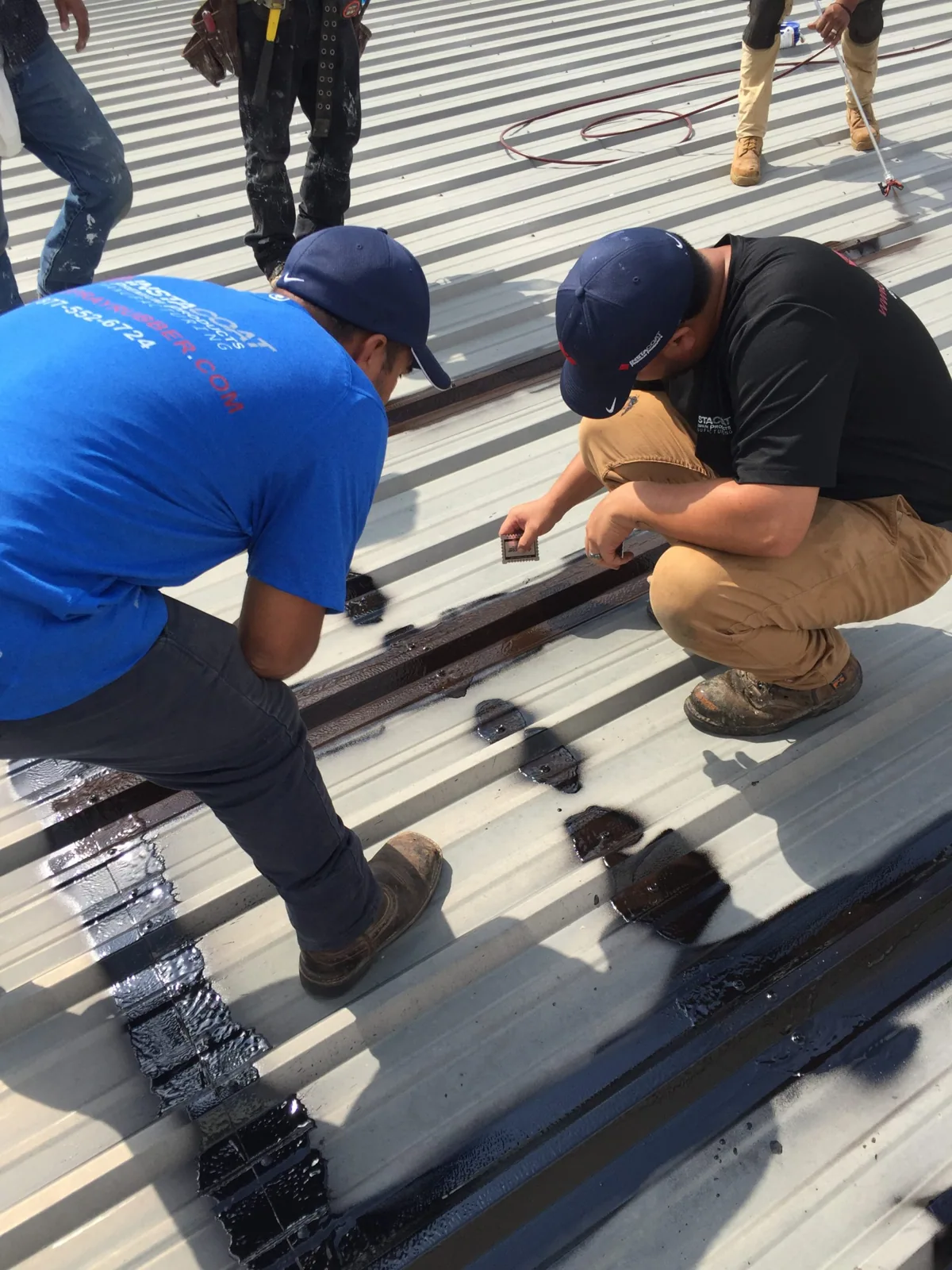
Coordinate a commercial roof review
Request a Roof Assessment
Coordinate a roof inspection with the property engineer or facilities manager. We will document the water route, access plan, repair options, and room-release information for management.
Service area
Menifee, Perris, Murrieta, Temecula, Hemet, Lake Elsinore and nearby Inland Empire communities
Quick contact
[email protected]
555-555-5555