Commercial Roofing in Murrieta, CA
Home / Service Areas / Commercial Roofing in Murrieta, CA
A seam that has lifted beside a curb can let water travel beneath the field membrane before the interior gives a clear signal. In Murrieta, we start at the lifted edge, check the nearby termination and flashing, and trace the drainage path toward the next outlet. If a tenant reports a leak after a hot afternoon, the useful question is whether the surface has moved, softened or separated at a detail. We record what the roof shows before choosing a repair material.
Murrieta's business resources include site-selection help, workshops and counseling, and its economic-development policies identify office, research, medical and scientific activity as areas for planning. Those uses can bring different rooftop equipment and operating schedules. The roof still sets the repair boundary. Our report connects membrane condition, access and moisture findings to a work sequence that fits the facility's actual hours.
Check the perimeter before the field
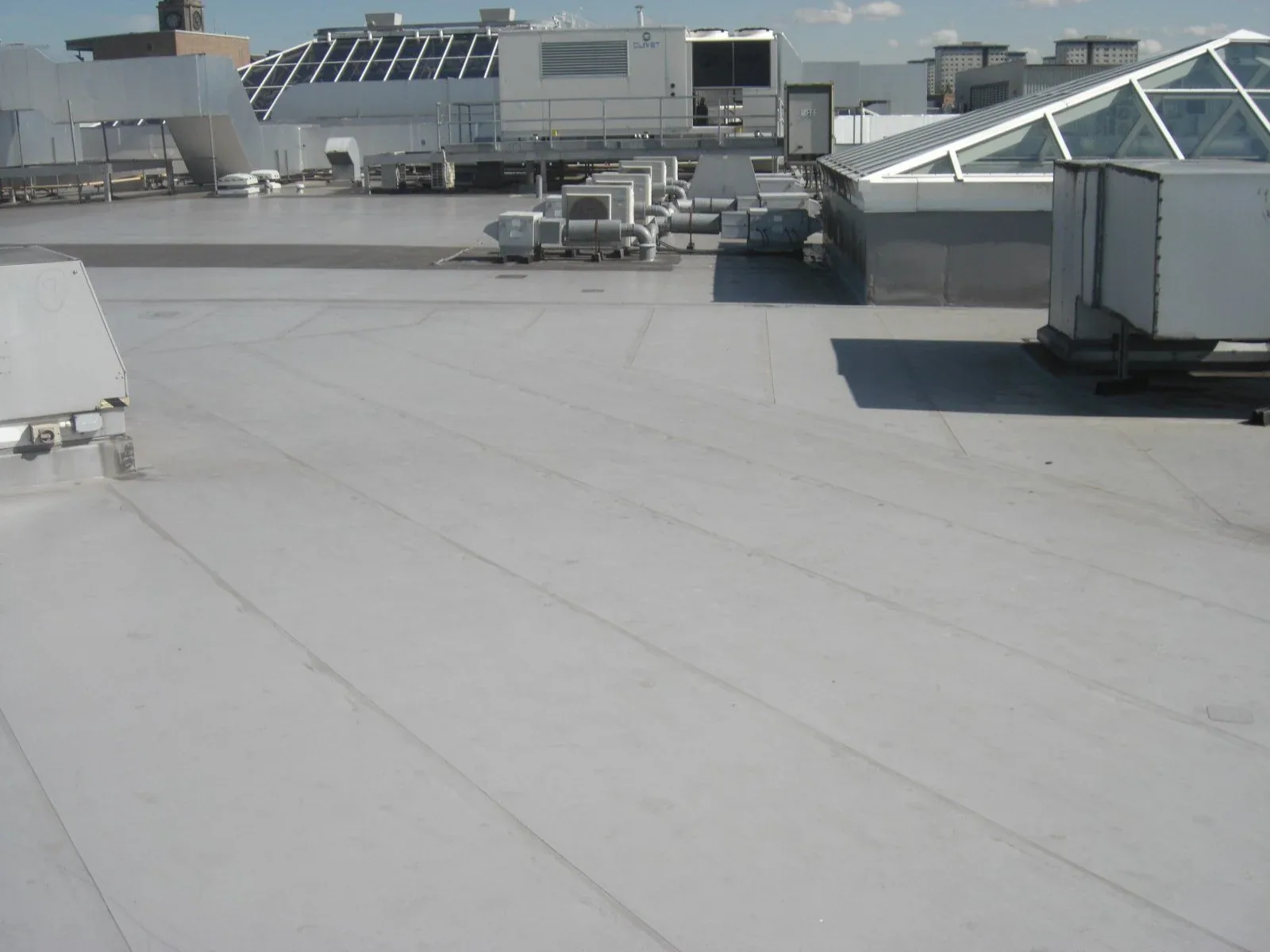
At a raised curb or parapet, a small opening can pass water even when the broad membrane surface looks serviceable. We inspect the termination, corner reinforcement, counterflashing and fasteners, then compare those details with the field sheet. A soft edge or a loose cover strip changes the repair plan. We note whether the condition repeats at other curbs, because several similar openings may point to a broader detail issue rather than a single puncture.
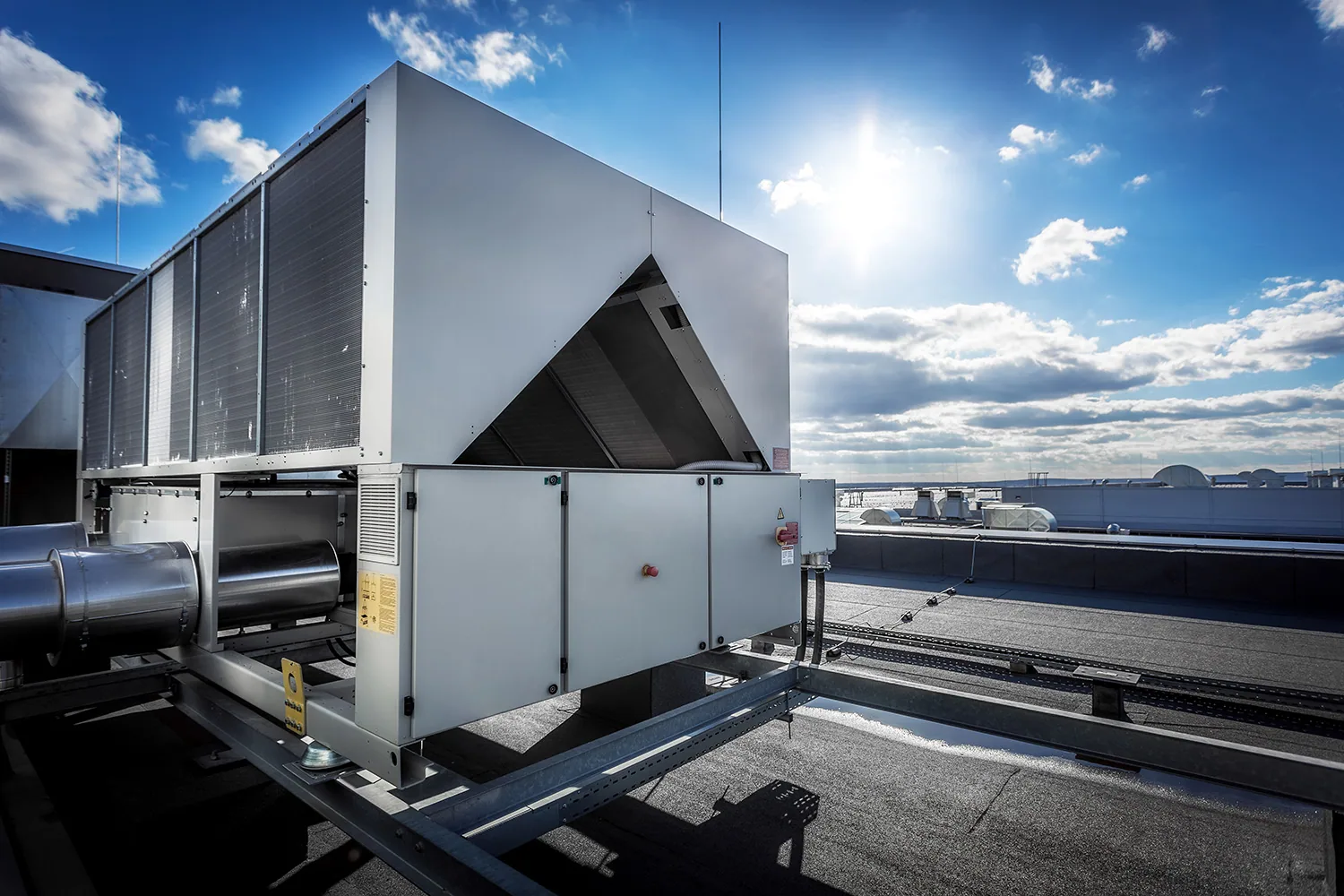
The City of Murrieta provides business-development assistance that includes site-selection help and connections for firms and developers. That context may be useful when an expansion adds rooftop units or changes service access. Before any crew is scheduled, we mark the units and clearances that affect safe movement across the roof. A curb and equipment-support inspection can identify flashing gaps, unsupported lines and pathways that should stay open during repair.
Follow the opening into the assembly
A curb corner can admit water that travels under a sheet before a ceiling shows a mark. We sketch the suspected route from the interior clue, check each likely connection above it and photograph those locations before opening the assembly. Where the membrane sits over insulation, we note firmness and temperature differences, then identify a limited spot for confirmation. That approach keeps the repair focused on the layer that is actually wet.
Where an infrared reading suggests an irregular area, we confirm it with a hands-on check before the scope includes removal. If the roof is dry below the surface, the work can remain at the flashing detail. If insulation is damp, a patch alone may hide the condition. Our infrared survey service helps define inspection points, while a roof inspection records the larger assembly and drain condition.
Choose the repair material after testing compatibility
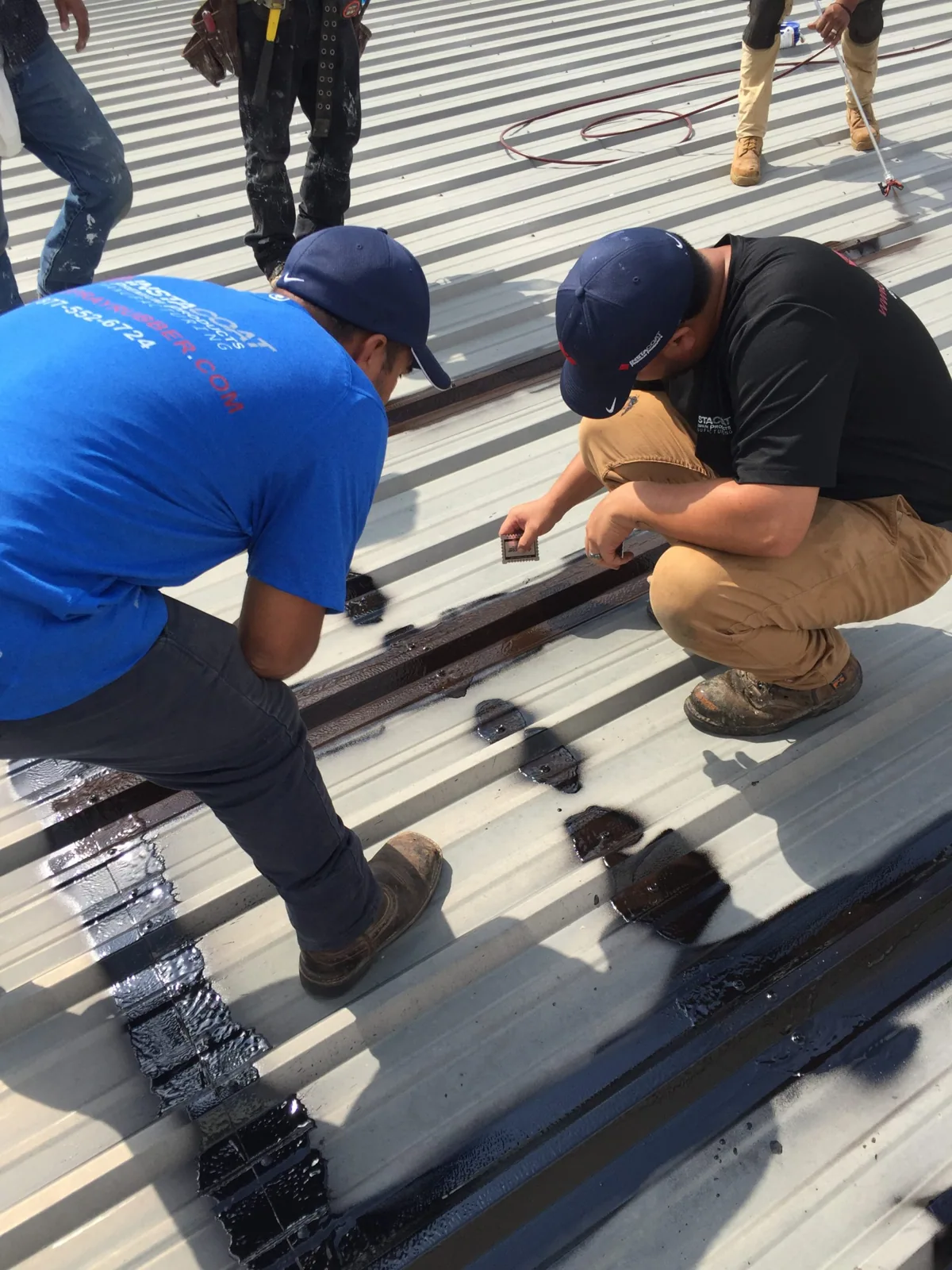
A new patch has to bond to a clean, compatible surface. We identify whether the existing membrane is thermoplastic, rubber or modified bitumen, and check whether a coating or prior repair affects adhesion. The repair plan specifies cleaning, primer, reinforcement and edge treatment where the system requires them. If a patch crosses a moving seam or wet insulation, it can fail early. We keep the boundary where the material is sound and the substrate supports a durable connection.
Murrieta's economic-development element calls for business attraction and retention, assesses office and research-and-development growth needs, and recognizes medical services and scientific research among local strengths. Those are planning priorities, not a list of roof types. On an occupied office or clinic, we coordinate around rooftop equipment, patient or tenant activity, and interior protection. A phased occupied-building reroof may be appropriate when condition is widespread and access must remain controlled.
Use heat context as a scheduling clue
Menifee's climate plan treats its dry inland location and increasing heat as adaptation concerns. We use that regional schedule context for Murrieta access, then inspect this roof's actual seam movement, surface condition and flashing details. We schedule surface checks when the crew can move safely, then record the seam response, membrane firmness and flashing condition on the actual roof. A temperature-related concern should lead to a measured field observation, not a blanket assumption about the assembly.
After the inspection, the owner can compare photos with the last maintenance record and decide whether the roof needs a localized repair, moisture confirmation or a larger scope. We identify details exposed to recurring movement, such as curb corners and metal terminations, and note whether the repair material can accommodate that movement. A coating restoration review is considered only after the substrate and membrane compatibility are known.
Set an access window around building use
A clinic, office, laboratory or shop may have different access rules even when each roof is mechanically similar. Before work, we confirm who opens the hatch, whether escorts are required, what rooms need protection and when rooftop units can be approached. The crew can stage away from air intakes and keep fasteners or debris out of occupied areas. If noise or a shutdown is required, we tell the site contact which task needs that window and how long the roof area will be affected.
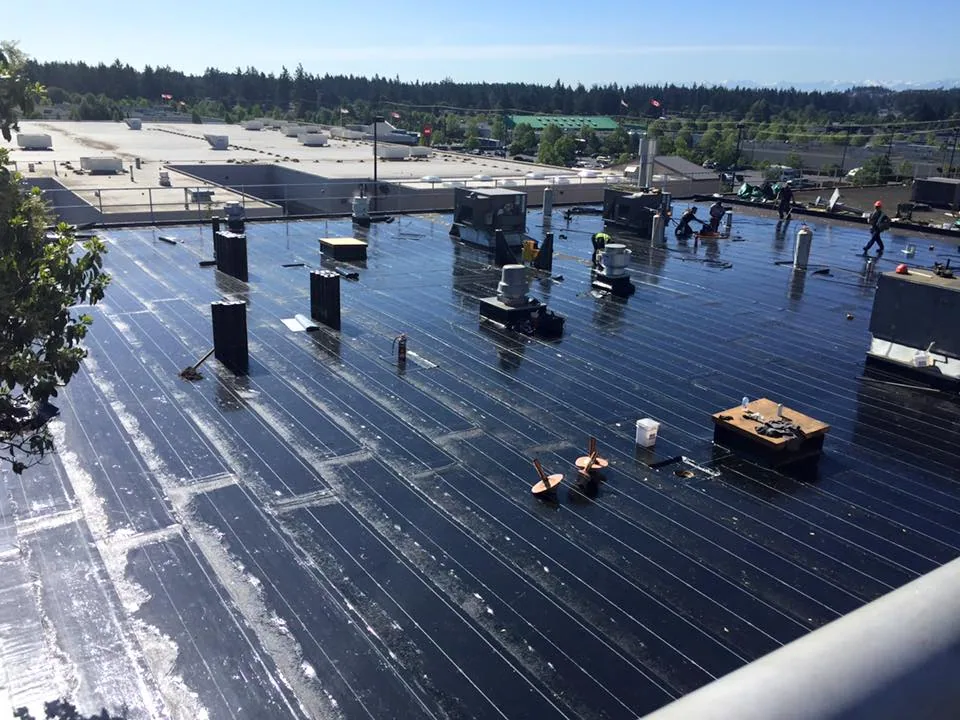
The access plan also gives facility staff a way to keep routine operations moving. We can divide a broad scope into marked zones, close each membrane transition before moving to the next area, and photograph completed work for the building file. The same plan supports a small leak repair, a larger commercial roof replacement, or a follow-up condition check. We confirm tenant communication and mechanical coordination before materials reach the roof.
Compare the repair with the roof record
A repair estimate should state what the crew will open, which layers will be replaced, what equipment needs protection and what conditions could change the work. Cost changes with roof height, access, membrane type, wet insulation, edge details and the amount of demolition. A short repair can be sensible when the area is isolated and the material remains bondable. Replacement may be more practical when similar failures repeat across several zones or moisture affects a larger section.
Murrieta's city profile notes nearby educational institutions and describes the local workforce and degree profile. We use those facts only as broad workforce context, not as a claim that a particular roof serves a college or research lab. A facility manager can identify actual operations and access needs during the site walk. The resulting roof capital plan can separate immediate water control from larger replacement work and set a next inspection date for each roof zone.
Give the next crew a clear starting point
We label photos by roof area and record the curb, seam, drain or edge detail that was inspected. The report includes moisture findings, material observations, the repair performed and any limit on access. If another trade needs to return to a rooftop unit, that detail can be marked without suggesting a hidden roof problem. A reliable file helps the facility director compare later movement or staining to the documented baseline.
For neighboring operations, roofing in Wildomar and commercial roof service in Lake Elsinore receive their own condition checks, even when the same repair principle applies. Murrieta facility teams can keep photos linked to a condition report and a scheduled maintenance visit. The next inspection then starts with a known seam, a date and a specific comparison to make.
Commercial Roofing Questions
Why can a leak appear away from the curb or seam that failed?
A curb corner may admit water that moves under a sheet before a ceiling shows a mark. We map likely connections from the interior clue, inspect above and photograph each point before opening the assembly.
How do you choose a patch material for an older roof?
We identify the membrane and prior coating or patch. Cleaning and compatibility determine which flashing or membrane repair can bond; the scope names the affected layers.
Can roof inspection be coordinated with an office or clinic schedule?
Yes. We set an access window, identify air intakes and equipment, and plan around tenant or patient areas. Required shutdowns or interior protection are listed before mobilization.
Does Murrieta heat prove a roof has failed?
Regional heat context guides safe scheduling. We document the roof surface, seams, flashing and moisture before recommending repair or replacement.
What makes a condition report useful for capital planning?
The report separates active leaks from wear, labels photos by roof zone, records membrane and substrate findings, and sets a follow-up date.
Related Roofing Work
Set a roof inspection window
Request a Roof Assessment
Tell us how the building operates and when roof access is available. We will inspect the surface, seams, penetrations, drainage and substrate, then provide photos, a repair boundary and practical next steps.
Service area
Menifee, Perris, Murrieta, Temecula, Hemet, Lake Elsinore and nearby Inland Empire communities
Quick contact
[email protected]
555-555-5555