
Spray Polyurethane Foam Roofing in Menifee
Home / Roof Systems / Spray Polyurethane Foam Roofing in Menifee
A spray polyurethane foam roof can follow a complicated surface, but a protective coating must keep the foam covered and the transitions closed. A pinhole, thin coating, or separated edge can expose the foam to water and sunlight. We inspect from the visible finish inward, tracing cracks and soft areas to determine whether the issue is limited to the coating or reaches the foam and substrate.
The assembly is applied as foam, then protected with a compatible coating system. The substrate must be prepared and dry enough for the specified bond, and each pass needs the right thickness and cure conditions. The surface alone cannot show every layer. A written survey records adhesion concerns, drainage, foam damage, and coating condition so repair, recoat, and replacement can be compared against a defined boundary.
Read the Coating Before Opening the Foam
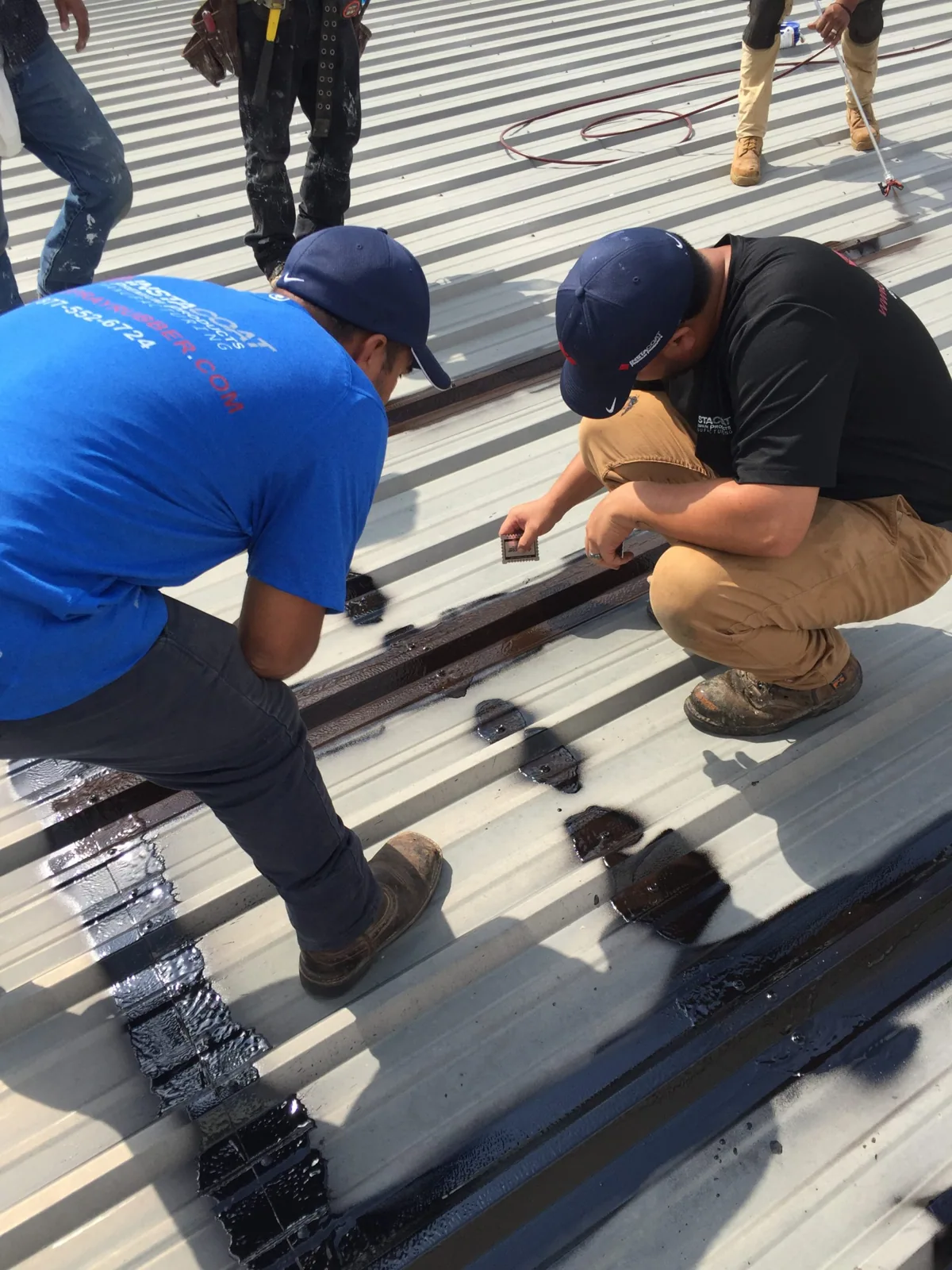
A worn coating can appear as exposed foam, thin edges, cracking, or a change in surface texture. We mark those areas and check whether water has reached the foam, whether the foam remains firm, and whether the coating pulls away at a transition. A small test patch can evaluate adhesion and preparation. We do not use color or a single blister as proof that all foam beneath the field has failed.
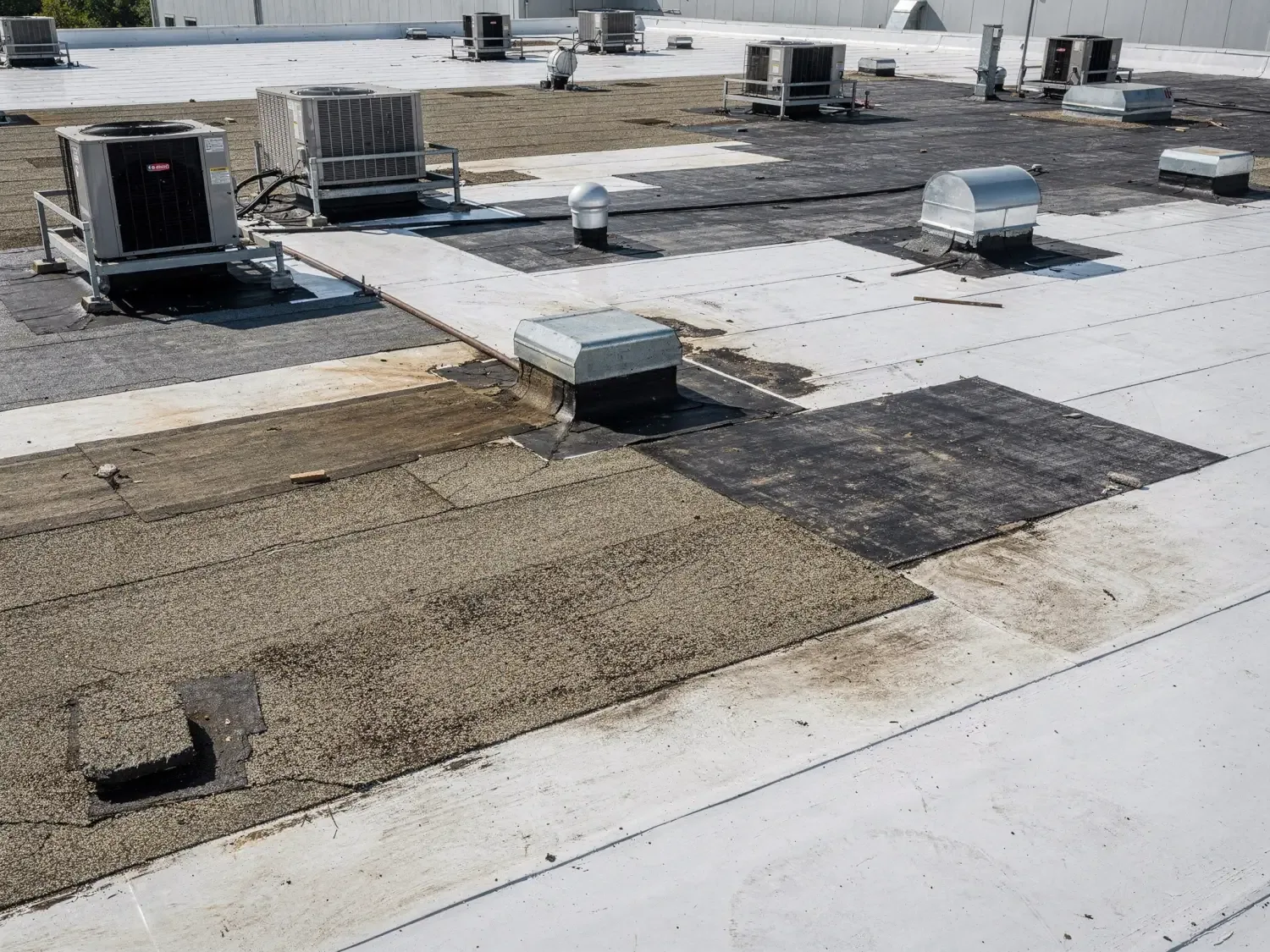
The coating protects the foam from ultraviolet exposure and weather, but it must be applied at the specified thickness and to a compatible surface. We check around drains and curbs, where field coating meets a more complex flashing. A roof a condition inspection that traces the leak path can compare the test points and identify which details need a repair before recoating.
Confirm Bond, Moisture, and Thickness
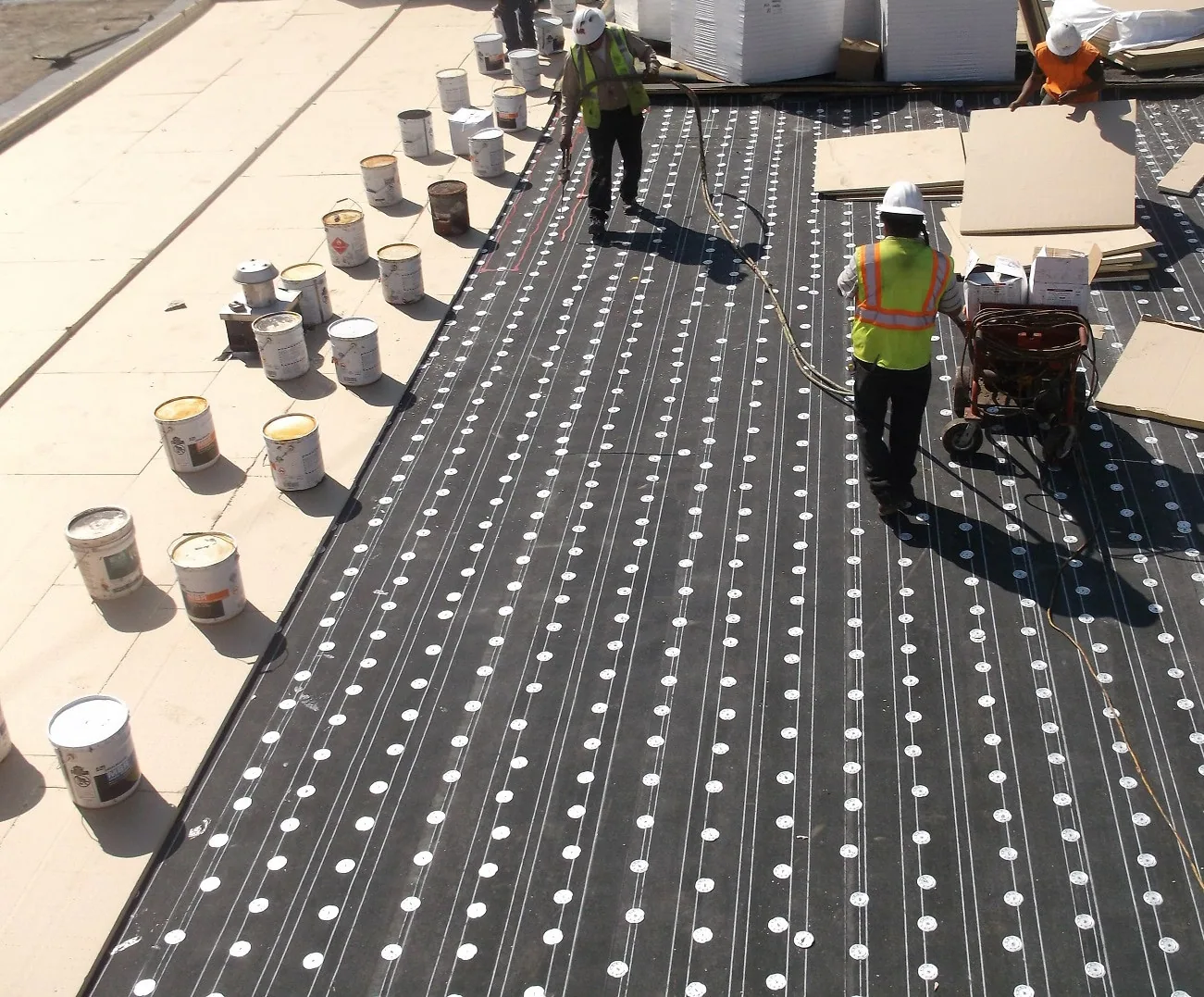
A sound foam surface depends on the bond to the underlying roof and on the continuity of the applied lifts. We inspect for delamination, brittle or crushed foam, wet substrate, and abrupt changes in thickness. Where a condition cannot be read from the surface, we select a limited test location and close it with the specified repair. The report distinguishes measured conditions from areas that remain concealed.
Foam repairs should feather into a stable edge, rebuild the required profile, and receive compatible protective coating. Cutting back to firm material can be necessary before new foam is applied. A high spot that blocks drainage cannot be fixed merely by adding material around it. The repair boundary must include the water route and the connection to drains or walls, not just the damaged patch.
Plan for Menifee Heat and Work Windows
Menifee climate materials describe dry inland conditions and anticipate more days with extreme temperatures. That can guide work-window planning; we still use the product data and field measurements to decide whether spraying can proceed.
Menifee planning identifies the Northern Gateway Economic Development Corridor as an employment district for business parks and industrial development, while the McCall Boulevard Economic Development Corridor envisions office and medical uses alongside residential areas. Those are planning contexts rather than a count of roofs. On any property, overspray controls, ventilation, occupied hours, and adjacent operations influence staging. We define masking and exclusion zones before equipment is set up.
Control the Application and Protective Finish
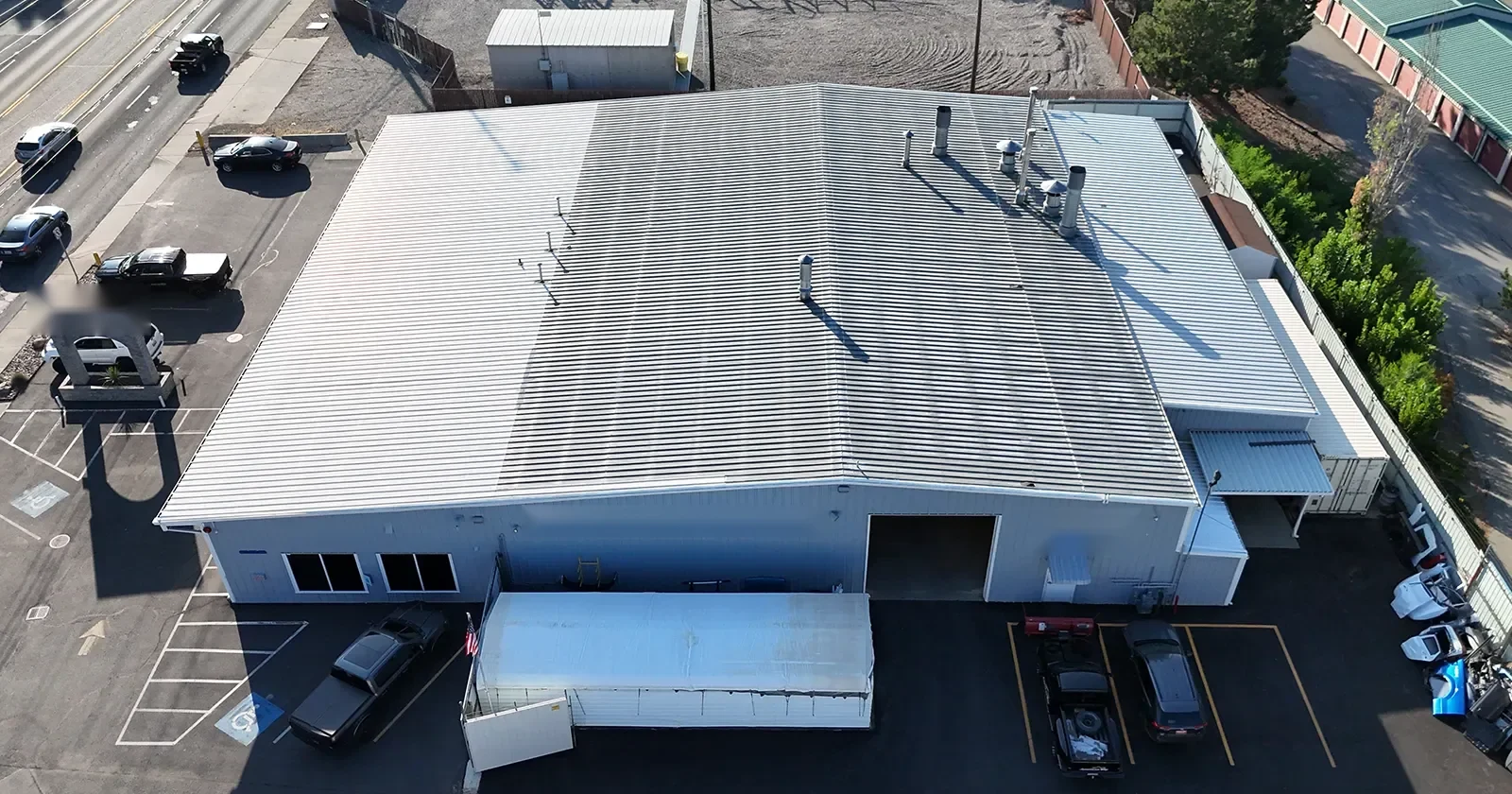
The foam is applied in passes that build the specified thickness without leaving voids, ridges, or poorly bonded edges. We check representative areas and detail transitions as work proceeds. Wind can carry material beyond the intended surface, so the crew protects nearby equipment and occupied areas and adjusts the work window when conditions are unsuitable. The application record identifies substrate preparation and the conditions that affect adhesion and cure.
The protective coating is a separate control layer, not a cosmetic finish. Its compatibility, coverage, and thickness must meet the selected system instructions. At a curb, drain, or parapet, reinforcement and coating continuity matter more than a broad field pass. We document any area that cannot be completed under the day’s conditions and leave the edge protected for the next work window.
Spray equipment, hoses, masking, and material staging require clear travel paths. We coordinate those paths with the facilities contact and define areas where occupants or other trades must stay clear. For an occupied building, ventilation intakes, doors, and adjacent work areas need review before application. A roof zone remains closed until the system reaches its required cure and inspection point.
The work log tracks surface preparation, foam passes, coating coverage, and details that remain open. If weather or surface conditions move outside the product range, we stop at a protected boundary and return when the assembly can accept the next layer. That approach limits patchwork between shifts and gives an owner a clear release status for each area.
Choose Between Repair, Recoat, and Replacement
A localized repair may be appropriate where the foam is firmly bonded and the defect sits within a stable perimeter. A recoat requires a surface that can accept the new coating after preparation and testing. If the foam is wet, detached, crushed, or inconsistent across a wider area, removal to a sound substrate may provide a more dependable repair boundary. We identify which findings support each option rather than treating every coating crack alike.
A coating restoration scope should account for field coverage, penetrations, edges, and drainage details. When foam must be removed or a profile rebuilt, the proposal states where that work begins and how the finish reconnects to existing coating. A a new assembly after foam removal may be compared with recoat where the assembly no longer offers a dependable bond or surface. The condition map explains the difference.
Use Evidence to Set the Repair Boundary
The important cost drivers are the amount of wet or detached foam, the number of curbs and drains, required coating thickness, access, masking, and disposal. We map test points and visible defects before choosing a scope. The owner can compare a focused repair with a recoat or removal by seeing what substrate each option retains and what work each includes at terminations.
Northern Gateway planning supports industrial and business-park activity, while McCall planning includes office and medical use. Those broad designations do not identify a particular roof or operation. We confirm how the actual building is occupied, where air intakes sit, and which roof areas can be isolated. A a photo-backed roof condition report records that context and identifies the next inspection milestone for each repaired zone.
Track Coating Condition After Closeout
After completion, the owner should have a map of repaired foam, coating coverage, test points, and any excluded area. Maintenance checks return to edges, drains, curbs, and coating transitions, where water and movement can find a weak point. If a new pinhole or crack appears, the inspection compares it with prior photographs and tests rather than applying a broad patch without checking adhesion.
The follow-up record also notes when access is restricted, when coating has not reached cure, and whether other trades have crossed the roof. Material protection can be damaged after closeout by unplanned foot traffic or equipment service. A a preventive maintenance plan that tracks repeat details gives the property manager a repeatable record of condition and repair history without assuming every roof section will age alike.
Where the surface can be retained, a a silicone coating system or an acrylic coating system finish may be considered only after the substrate and product instructions are checked. A planned industrial context in commercial properties in the Northern Gateway does not establish the roof condition at a particular property.
Commercial Roofing Questions
Can new coating go over exposed foam?
Only after the foam edge, adhesion, surface preparation, and selected coating compatibility are checked. We repair damaged foam before applying a protective finish.
How do you find moisture under spray foam?
We compare surface clues with selected tests and interior evidence. A test opening represents its location, not every concealed area on the roof.
What stops a spray application during the day?
Surface and weather conditions outside the specified application or cure range, unsafe wind, or incomplete masking can require a pause at a protected boundary.
How is the repair area decided?
We map coating damage, foam condition, bond, moisture, and adjacent details. The repair continues to a stable perimeter and a compatible tie-in.
Related Roofing Work
Set the next roof check
Request a Roof Assessment
Arrange an inspection around site access and operating hours. We will map the roof condition, explain repair boundaries, and document the options that fit the assembly.
Service area
Menifee, Perris, Murrieta, Temecula, Hemet, Lake Elsinore and nearby Inland Empire communities
Quick contact
[email protected]
555-555-5555