
School Roofing in Menifee
Home / Property Types We Roof / School Roofing in Menifee
School roofing has a calendar as well as a roof plan. A leak above a classroom, library, cafeteria, gym, or office can disrupt different activities and needs a clear repair boundary. We compare the interior clue with drains, seams, skylights, curbs, and wall transitions above it. Then the district or property contact can choose an access window and interior controls based on the affected use.
We do not assume a campus is empty during summer or that every room is available during a break. The site team confirms dates, student routes, delivery paths, and any public-program schedule. The scope records what can be inspected, which areas need protection, and how the crew will secure the roof at the end of each shift. A roof repair plan for a school building can use the same mapped evidence with different operating rules.
Keep Student and Public Routes Separate
A lift, dumpster, or material staging area can change the safest route across a school property. We review the site contact’s movement plan before proposing where equipment arrives and how roof access is reached. Student entry, bus circulation, playground use, and evening programs may have separate schedules. Our work zone is coordinated around those rules and clearly marked for the people responsible for the building.
Interior protection is planned room by room. A ceiling opening above a classroom may need a different containment approach than a roof repair over a storage area. If the owner approves a test opening, the location and timing are agreed in advance. The team can then tell teachers or program staff which spaces stay open and which require a temporary move. For other public facilities, compare public-building roofing with access controls.
Trace the Water Path Before Opening a Ceiling
A ceiling tile mark can come from a roof seam several feet away, a drain detail, a skylight, or a mechanical curb. Water may follow deck ribs or framing before it becomes visible indoors. We map each report by date and room, compare the marks with roof details, and look for a shared path. That approach helps prevent a series of unrelated patches from obscuring one confirmed source.
Where the assembly contains several layers, we identify whether a small test can confirm moisture without creating a larger disturbance. A roof survey tied to a classroom report records the observations and any limits. The report distinguishes confirmed wet material from a suspected route and explains what new evidence would justify expanding the repair area. District teams can frame portfolio records with roof planning across school-district facilities.
Use City Planning Without Claiming a Campus Inventory
Menifee zoning separates office, retail, business-park, and heavy-industrial designations and maps five Economic Development Corridor subareas. Its capital-improvement map also lists road and interchange projects across city corridors. Neither source inventories school roofs or confirms current operating facilities. A property manager should verify the building, roof records, and access contact before a project is scheduled.
The Community Core Economic Development Corridor is a broad city planning area where the CEDS describes connectivity and placemaking projects. A school property within the Community Core Economic Development Corridor still needs its own access review. Public roads and construction schedules can affect deliveries, but they do not determine campus availability or contractor coverage. The roof survey tied to a classroom report should keep confirmed and suspected paths distinct. The Newport Road Economic Development Corridor is planned to center on neighborhood-serving commercial use; it is a city land-use designation, not an inventory of classrooms or a school service boundary.
Check Roof Details That Matter to Classrooms
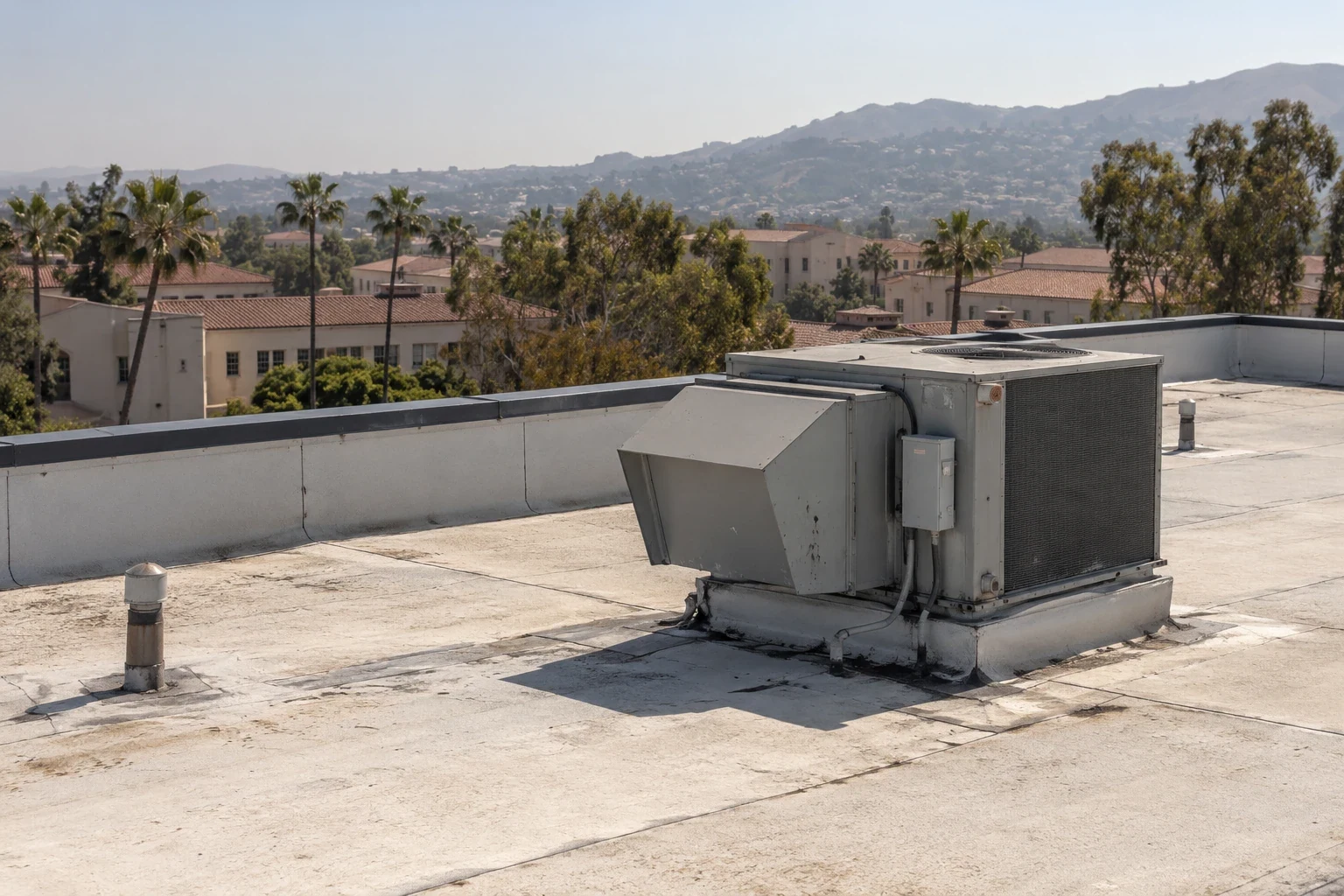
We inspect the membrane or roof panel, edge conditions, drains, overflow points, skylights, vents, and equipment curbs in the zone above the reported moisture. If a curb was replaced, its footprint may not match the old flashing. A seam that looks closed from a distance may still have a failed edge or an incompatible repair layer. The roof survey ties each photograph to a location on the plan.
Drainage work can be separate from membrane repair. We note whether debris, a high flange, or a nearby slope changes the water path. A drainage review before a roof repair helps the owner decide whether the outlet or the field membrane requires work. The final scope should identify the roof section, detail, and interior area affected instead of applying a generic school-wide label. Review drainage before a roof repair when outlet condition affects the affected bay.
Choose a Repair Boundary the District Can Review
A small puncture or failed transition may be repaired when adjacent membrane, attachment, and insulation remain serviceable. A larger area may be warranted if testing finds wet insulation or repeated failures. We document the reason for the boundary, the material removed, and the tie-in to retained roof. This gives the district a measurable repair instead of an open-ended description of a leak.
A repair limited to verified defects should include protection for the space below and a check at completion. If the roof has wider deterioration, the owner may consider replacement separately. We show where temporary cover is placed and what remains on a follow-up list so the building engineer can compare options without treating every roof section alike. A repair limited to verified defects makes the district decision easier to compare.
Use the School Calendar as an Access Input
School breaks may create useful work windows, but planning still depends on staff presence, summer programs, food service, athletics, and maintenance access. The site contact confirms which spaces remain occupied and which alarms or HVAC systems stay active. We match those constraints with material delivery, noisy tasks, cure restrictions, and weather protection. If the calendar changes, the contractor and site contact can reset the affected zone.
Menifee’s climate plan points to a warmer average and more days at extreme heat. For school work, the useful step is checking safe roof-walk hours and material storage before the crew arrives. This planning signal does not diagnose a campus roof; the forecast, substrate, and product data govern the day’s sequence. Keep photos and findings in a condition report with mapped photographs.
Give Facilities a Map for the Next Break
Closeout notes should show repaired areas, drains and curbs checked, test openings closed, and any roof zone that was not accessible. We mark which spaces below received protection and confirm when the school team can restore ordinary room use. Photos are organized by plan location so a facilities manager can compare them with work orders and later inspections.
A condition report with mapped photographs can be used across school-district facilities when buildings share a record system. The report does not assume all roofs have one assembly. It preserves the observed facts, repair edge, and follow-up need for each building so a future maintenance cycle starts with evidence rather than a fresh guess. The Community Core Economic Development Corridor is city planning context only.
Commercial Roofing Questions
Can school roof work happen during summer?
Sometimes, but summer programs, staff access, athletics, and deliveries may continue. The site contact confirms the calendar before a phase is set.
How should a classroom leak be investigated?
We compare the room and date with seams, drains, skylights, and equipment above. A stain alone does not locate the roof opening.
What should a school roof repair boundary show?
It should identify the confirmed defect, removed and retained materials, temporary cover, interior protection, and the point where the area is released.
Can students use the building while crews are on the roof?
That depends on campus rules, lift locations, access routes, noise, and the work zone. The school contact defines the allowed separation.
How does a district use closeout records?
A building-level map gives facilities staff a reference for later leaks, maintenance work, and capital review without assuming every campus has one roof system.
Related Roofing Work

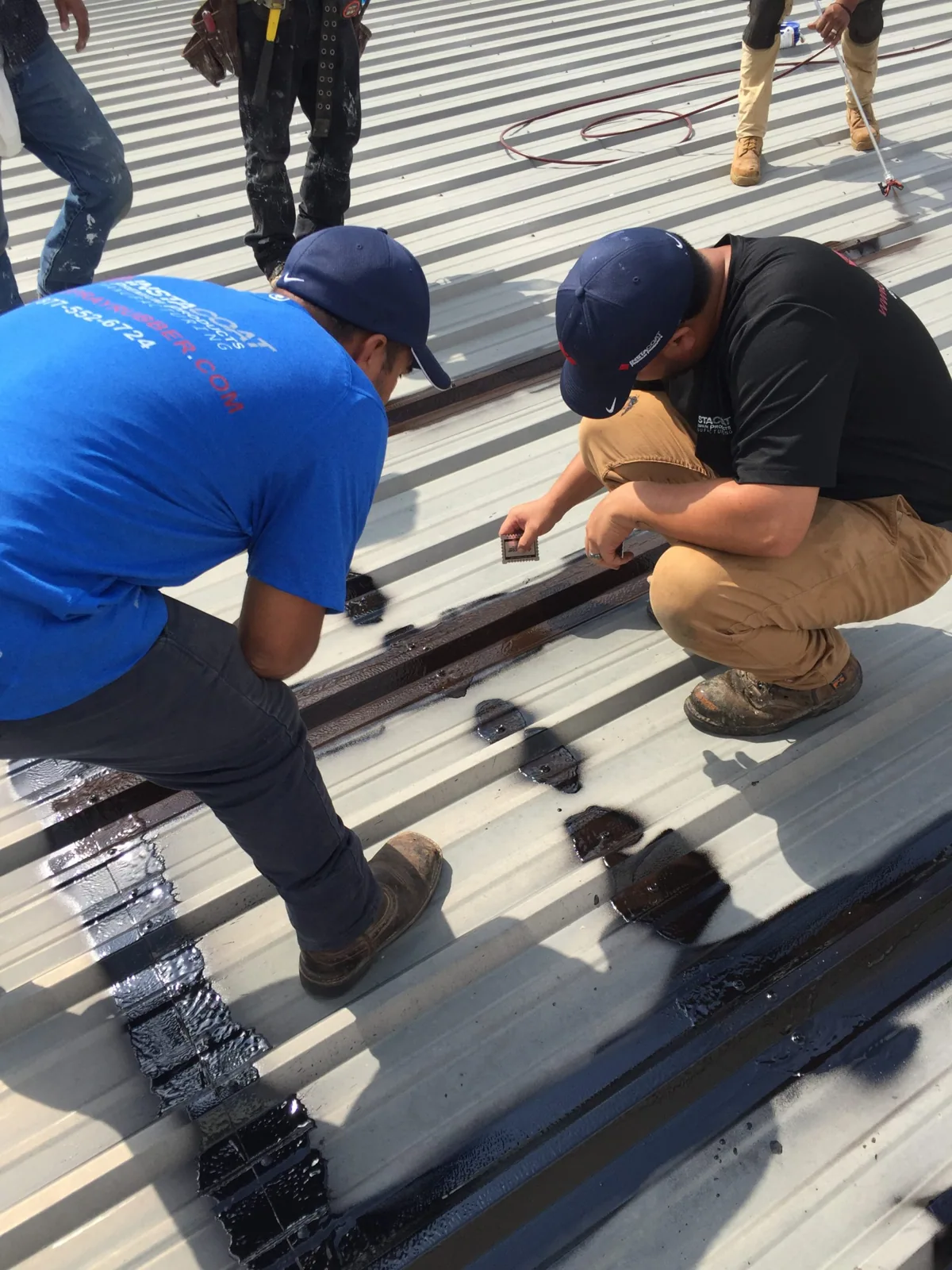
Arrange a roof condition review
Request a Roof Assessment
Set an inspection around building access and operating hours. We will map the roof condition, explain repair boundaries, and document the options that fit the assembly.
Service area
Menifee, Perris, Murrieta, Temecula, Hemet, Lake Elsinore and nearby Inland Empire communities
Quick contact
[email protected]
555-555-5555