Commercial Heat and UV Roof Damage Repair in Menifee
Home / Roof Damage Repair / Commercial Heat and UV Roof Damage Repair in Menifee
A chalky surface, brittle coating, or fine split after a hot season may indicate weathering, but the first visit should verify the roof layer and the depth of change. We inspect exposed field areas, seams, terminations, and rooftop details, then compare sun-facing and shaded zones. The report notes whether the condition is surface-only, reaches reinforcement, or exposes insulation. It does not call a roof failed from color change alone.
Menifee’s inland, naturally dry climate and hotter average temperatures are identified in City planning materials. Those facts make heat a reasonable inspection consideration, not a diagnosis for an individual assembly. The membrane, coating, and substrate must be checked. If water is visible inside, map the route independently; a seam defect may admit water even when surface aging is also present.
Surface Inspection
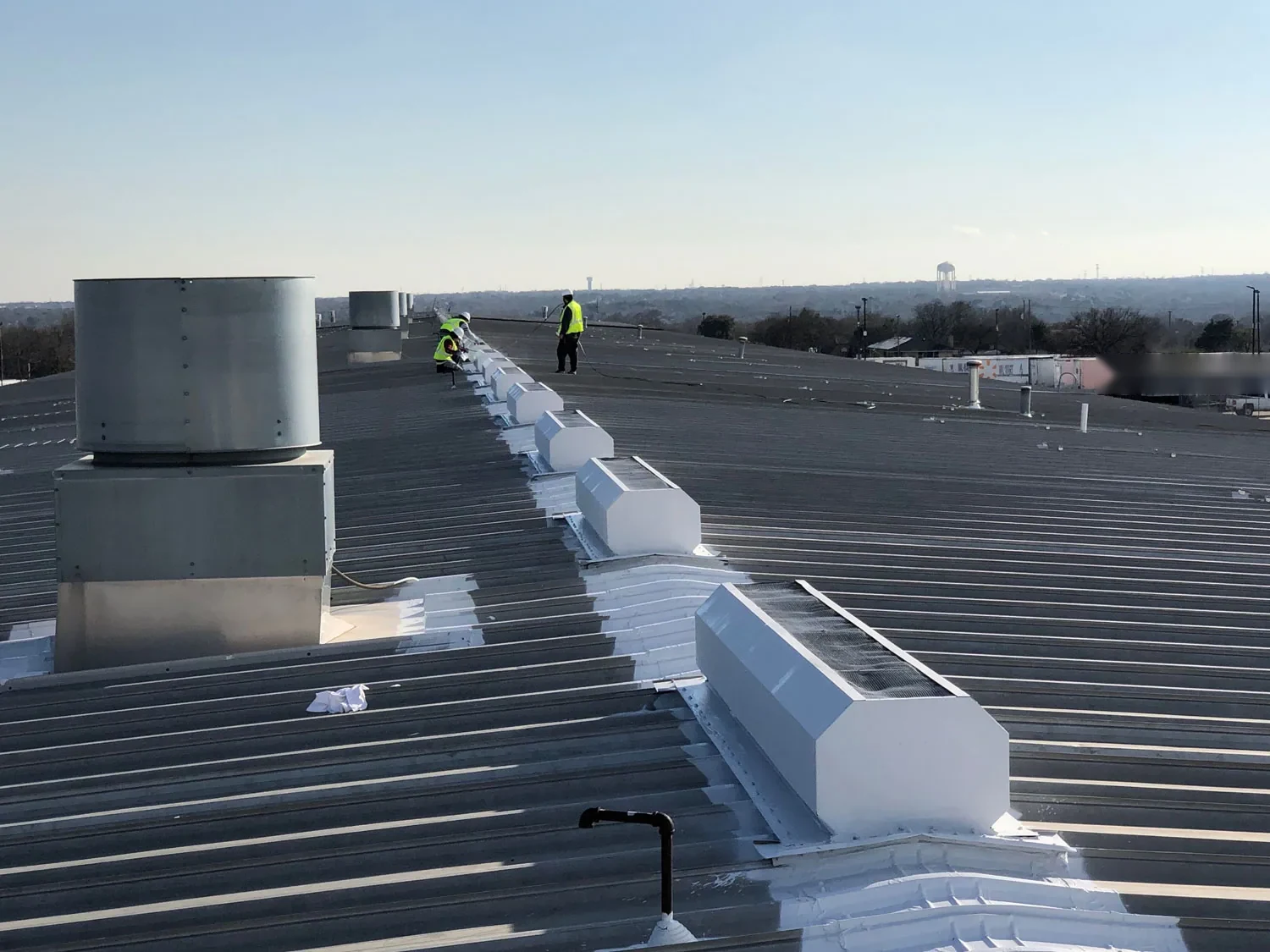
Start with a roof map that marks the most exposed areas, shaded portions, parapets, equipment shadows, and transitions. Record blistering, checking, erosion, loss of granules, exposed reinforcement, chalking, and open laps using consistent photo scale. A surface treatment can hide a defect, so identify prior coating layers and patches where visible. If the coating is loose or contaminated, testing may be needed before a new layer is considered.
Inspect roof edges and penetrations separately from field membrane. Heat can accelerate movement at a detail, while sealant age or substrate motion may contribute to the same gap. Check corners, termination bars, curb flashing, and exposed metal. Flashing condition should be recorded as its own repair boundary so a broad coating estimate does not overlook a failed transition.
Assembly And Moisture
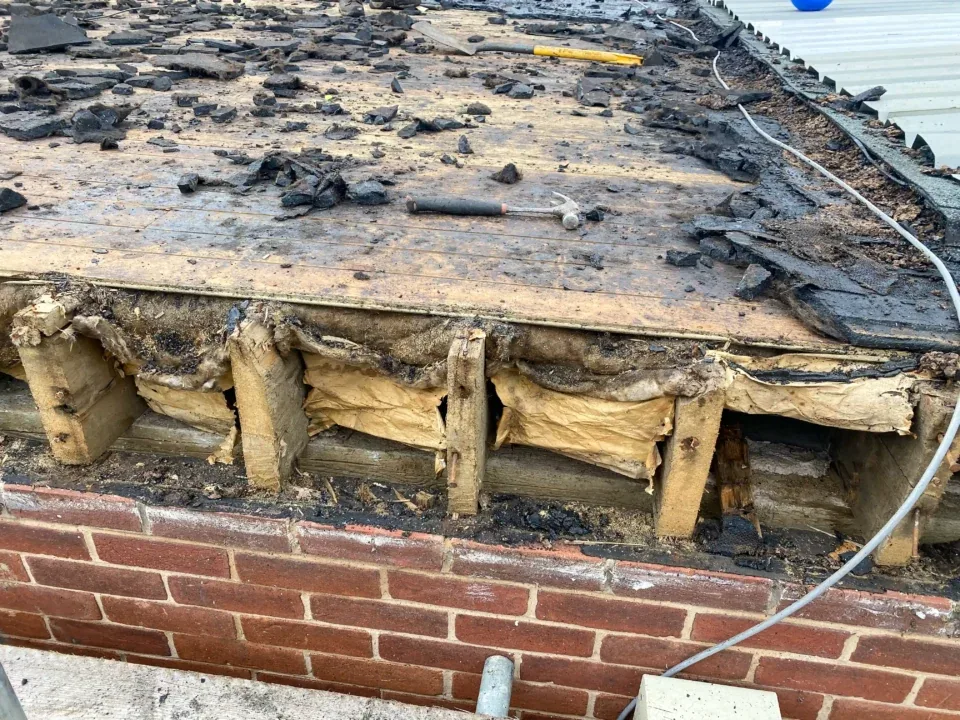
A surface that looks dry may cover wet insulation, while a discolored area may be weathering without moisture below. Use approved non-destructive testing or a controlled test opening when needed. Record the test method, limits, and conditions at the time. Do not infer the entire roof’s moisture state from one reading or from a hot surface. If an opening reveals a different assembly than documented, stop and update the scope before covering it.
Check attachment and membrane movement alongside surface wear. If an adhered system has lost bond, a new coating cannot restore the original attachment. If a reflective surface has degraded but the membrane remains sound, a compatible restoration may be possible after preparation and adhesion testing. The repair plan should state which condition the proposed work addresses and which condition remains outside its performance.
Options
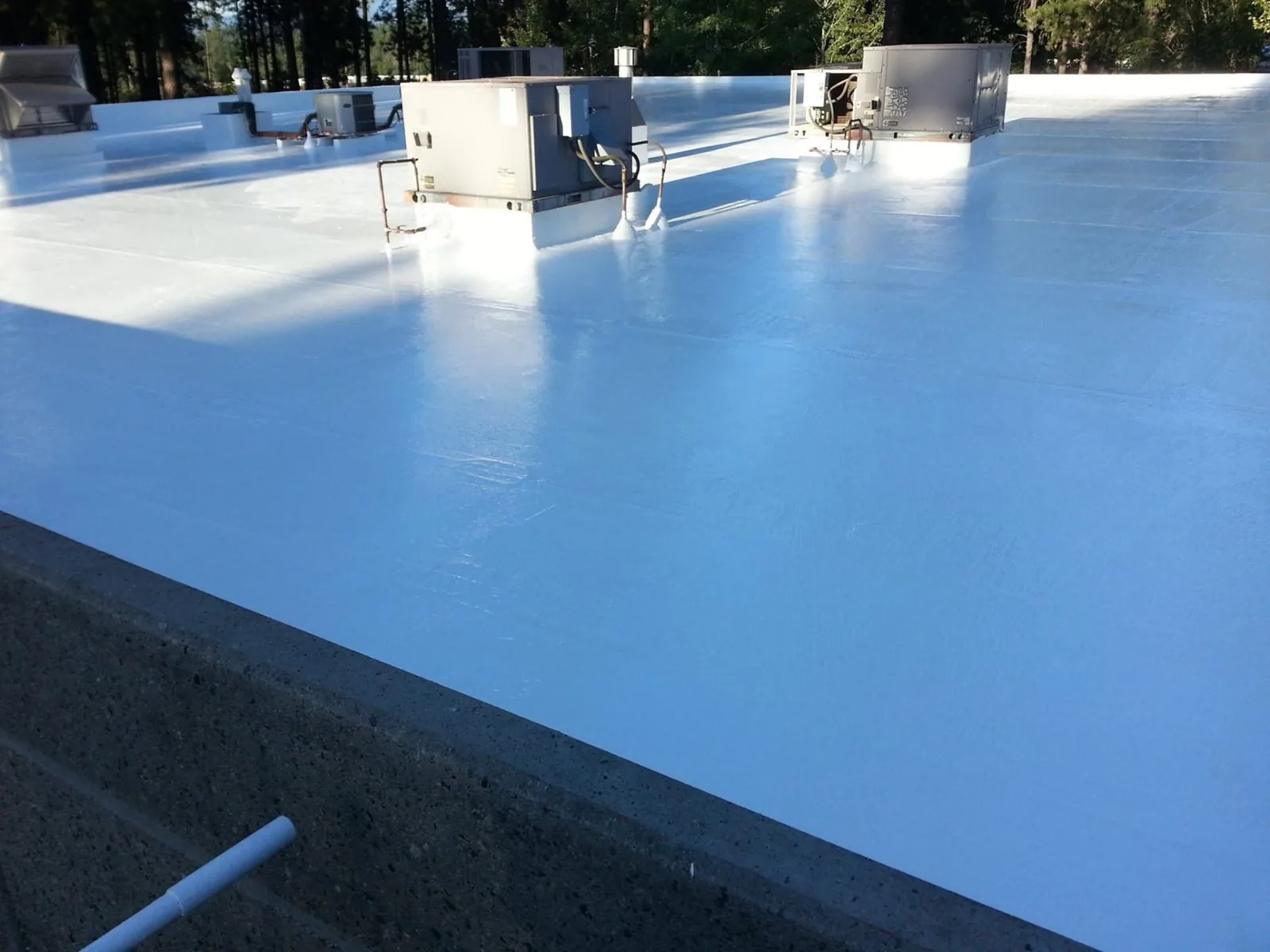
Potential options include a localized patch, seam repair, coating restoration, recover overlay, or replacement. Each requires a different substrate condition and moisture threshold. A coating may protect a sound surface but cannot correct ponding, wet insulation, or structural movement. An overlay can change load and drainage, so verify the existing assembly and design requirements. A replacement may be appropriate when damage is widespread, but the decision should follow measured condition and project economics.
Compare estimates by preparation, repairs to existing details, coating or membrane thickness specified, reinforcement, flashing, access, cure time, and inspection. Ask what the contractor excludes, such as drain correction, interior finish, equipment movement, or deck replacement. Coating restoration is one possible scope only if the existing surface and moisture conditions support the system.
Work Window
Surface temperature, shade, wind, and cure time affect preparation and application. The manufacturer’s product data and project specification set the allowable conditions; do not rely on a generic calendar month. The site contact can schedule access when rooftop equipment and the building’s operating needs are coordinated. Protect air intakes and adjacent surfaces from overspray where a coating is used. Confirm that pedestrians below are kept out of the work area.
A staged project should finish each shift with protected edges and a secure dry-in. If weather or temperature leaves a coating outside application conditions, pause rather than forcing a coat that may not bond. Record the temperature or surface condition where required by the system. Occupied-building sequencing can organize phases around interior use and equipment operation.
Menifee Context
The City describes Menifee as naturally dry and inland and identifies increasing average temperatures and more extreme-temperature days as risks. The field report should use that context only to explain scheduling and inspection attention, not as proof that heat caused a specific crack. Newport Road Economic Development Corridor and McCall Boulevard Economic Development Corridor are broad planning areas; neither maps roof condition or a contractor service boundary.
Menifee’s zoning map distinguishes business-park/light-industrial, office, retail, and manufacturing categories. Building form and roof assembly can vary across those uses. Confirm the individual roof system, owner, maintenance history, and access. If an exact design temperature or energy requirement affects a restoration, confirm the current project criteria with the design professional and authority having jurisdiction.
Maintenance
Keep a baseline photo set that revisits the same seams, coatings, penetrations, and exposed edges each inspection. Record surface condition and whether reinforcement or substrate is newly visible. Maintain drains and remove debris using an approved access method. Note any later installation of solar, antennas, or mechanical equipment because new penetrations may change the roof condition and warranty. A repeatable record supports a measured decision about repair timing.
If heat-related wear is limited, a targeted repair may extend service while a capital plan is prepared. If deterioration expands or moisture testing shows wet insulation, reevaluate the scope. Set a next inspection date and name the condition that would trigger earlier review. Preventive maintenance should capture evidence rather than apply a new surface layer automatically.
Compare exposed and shaded zones only when they share the same assembly and installation history. A change in color may reflect surface exposure, while a crack or loss of adhesion needs separate evaluation. Confirm that any proposed restoration is compatible with prior coatings and repairs, and test representative preparation before pricing a full area. Record what the sample demonstrated and which roof sections remain untested.
Handoff
The report should identify the system, test method, surface and subsurface findings, proposed boundary, preparation, compatible materials, cure requirements, and warranty implications. Include a roof map and dated photos. Separate cosmetic change from membrane failure and list any slope or drainage condition that remains. If manufacturer review is needed, record approval before application. The owner should receive both the repair record and the inspection limitation.
After work, inspect adhesion or seam continuity and confirm that drains, penetrations, and edges remain intact. Schedule the next check under the product requirements and owner’s maintenance plan. If the field condition changes, reopen the diagnosis instead of layering treatment over an unknown substrate. A clear closeout tells the property manager what was restored and what still requires monitoring.
Moisture or opening concerns should receive their own records, including drainage review and puncture testing. Community Core supplies broad land-use context only.
Commercial Roofing Questions
Does a faded roof surface mean the membrane failed?
Not by itself. Record cracking, exposed reinforcement, adhesion, seams, and any moisture findings before selecting a treatment.
Can a coating fix brittle insulation below the membrane?
No. A surface system cannot dry or replace wet insulation. Confirm the substrate condition and repair boundary before applying a coating.
What testing is useful before restoration?
Use surface preparation checks, adhesion testing, and moisture evaluation appropriate to the known assembly. State the test area and limitations.
When should application be scheduled?
Follow the approved product and project conditions for substrate temperature, dryness, wind, and cure. Do not substitute a generic seasonal rule.
How do future inspections compare surface wear?
Use dated photographs from consistent roof zones and track new cracks, open seams, or exposed material separately from color changes.
Related Roofing Work
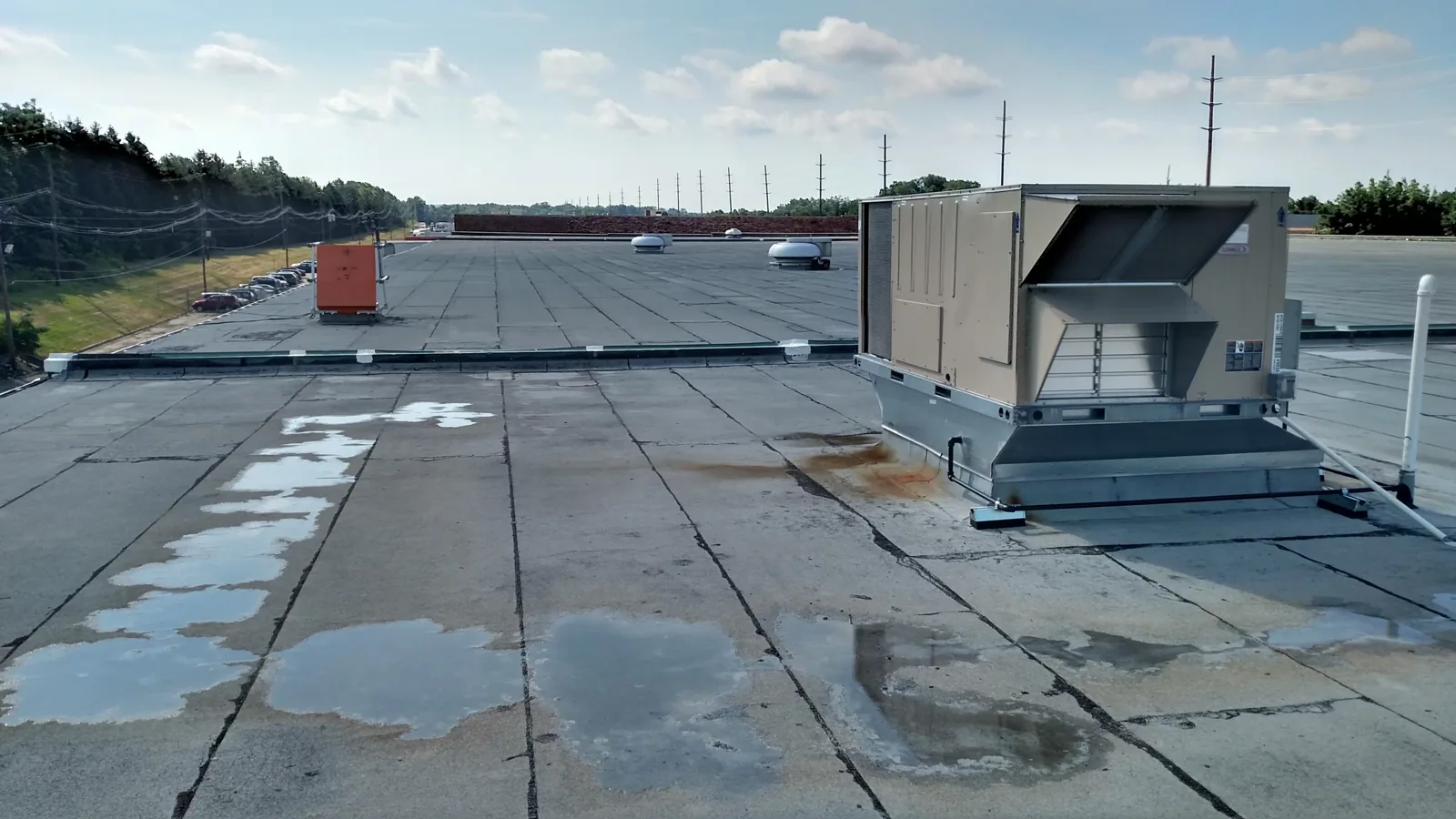
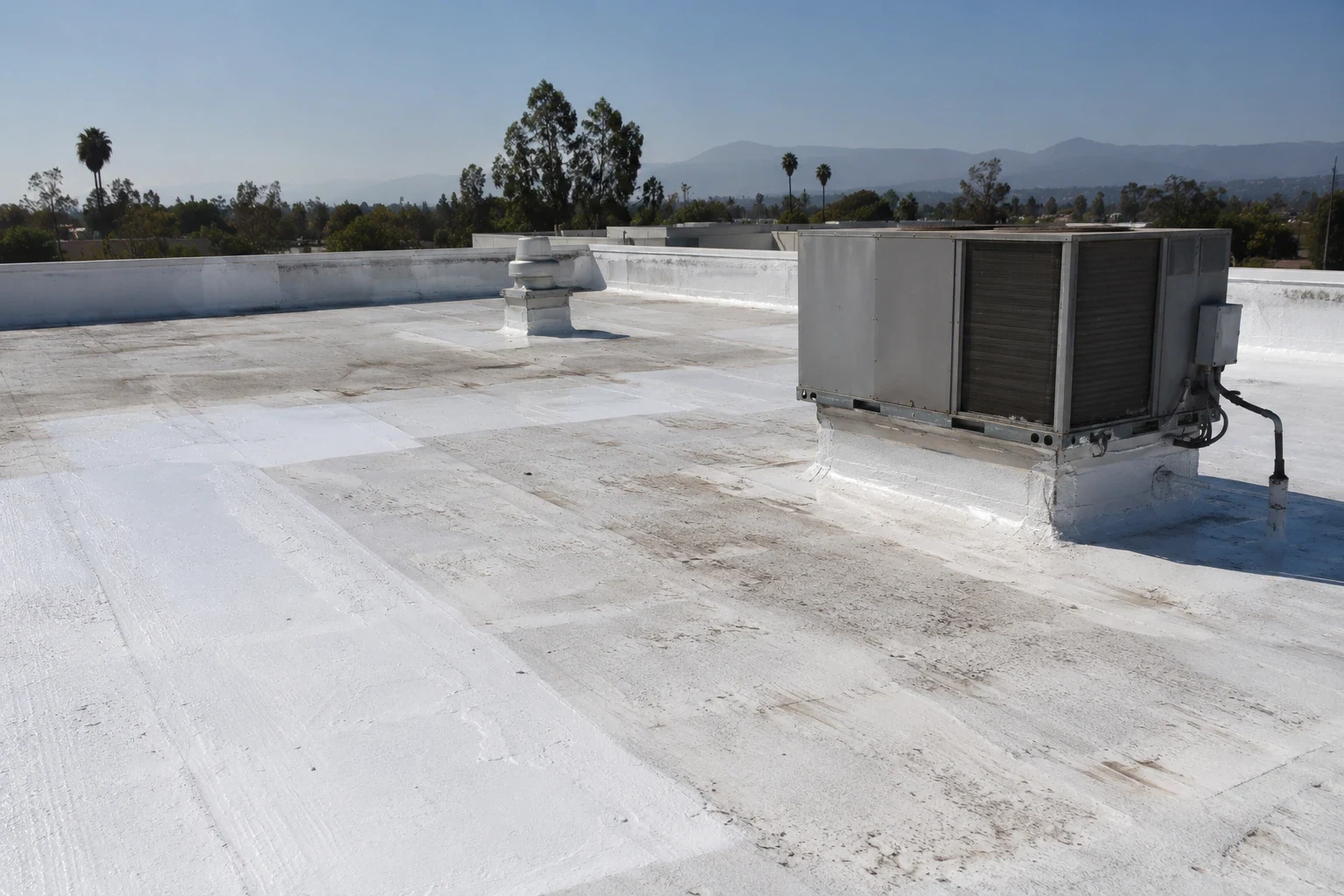
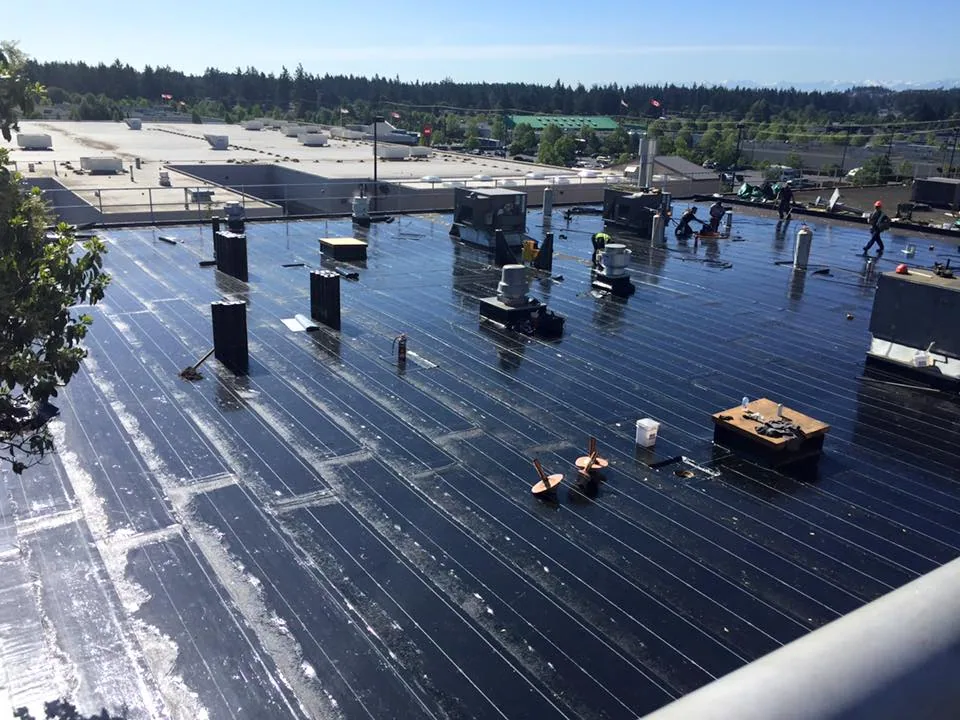
Coordinate a commercial roof inspection
Request a Roof Assessment
Arrange an inspection with the property contact. We can trace the reported condition, record the observed roof detail, define a repair boundary, and state what remains untested.
Service area
Menifee, Perris, Murrieta, Temecula, Hemet, Lake Elsinore and nearby Inland Empire communities
Quick contact
[email protected]
555-555-5555