
Commercial Roofing in Rancho Santa Margarita, CA
Home / Service Areas / Commercial Roofing in Rancho Santa Margarita, CA
A seam that opens beside a rooftop curb can let water travel under the membrane before a room below shows a mark. Rancho Santa Margarita reports more than 165 acres of developed commercial land across 11 shopping centers, along with light-industrial property. That broad mix makes the roof inspection a property-level task: identify the system, trace the water route, and note how access will work while the business is open. We photograph the first weak point and the surrounding details, then set a repair boundary that can be reviewed by facilities and ownership. A districtwide land-use figure does not tell us what any one building has above its ceiling.
Plan around commercial access
The City places most business-park centers along Santa Margarita Parkway and Antonio Parkway and reports substantial daily traffic on those arterials. For a roof project, that context makes delivery windows, lift placement, parking, and a clear pedestrian route worth confirming with the property contact. We do not infer a tenant schedule from traffic volume. We ask when the roof can be reached, which doors must stay open, and whether material staging can avoid customer and service paths.
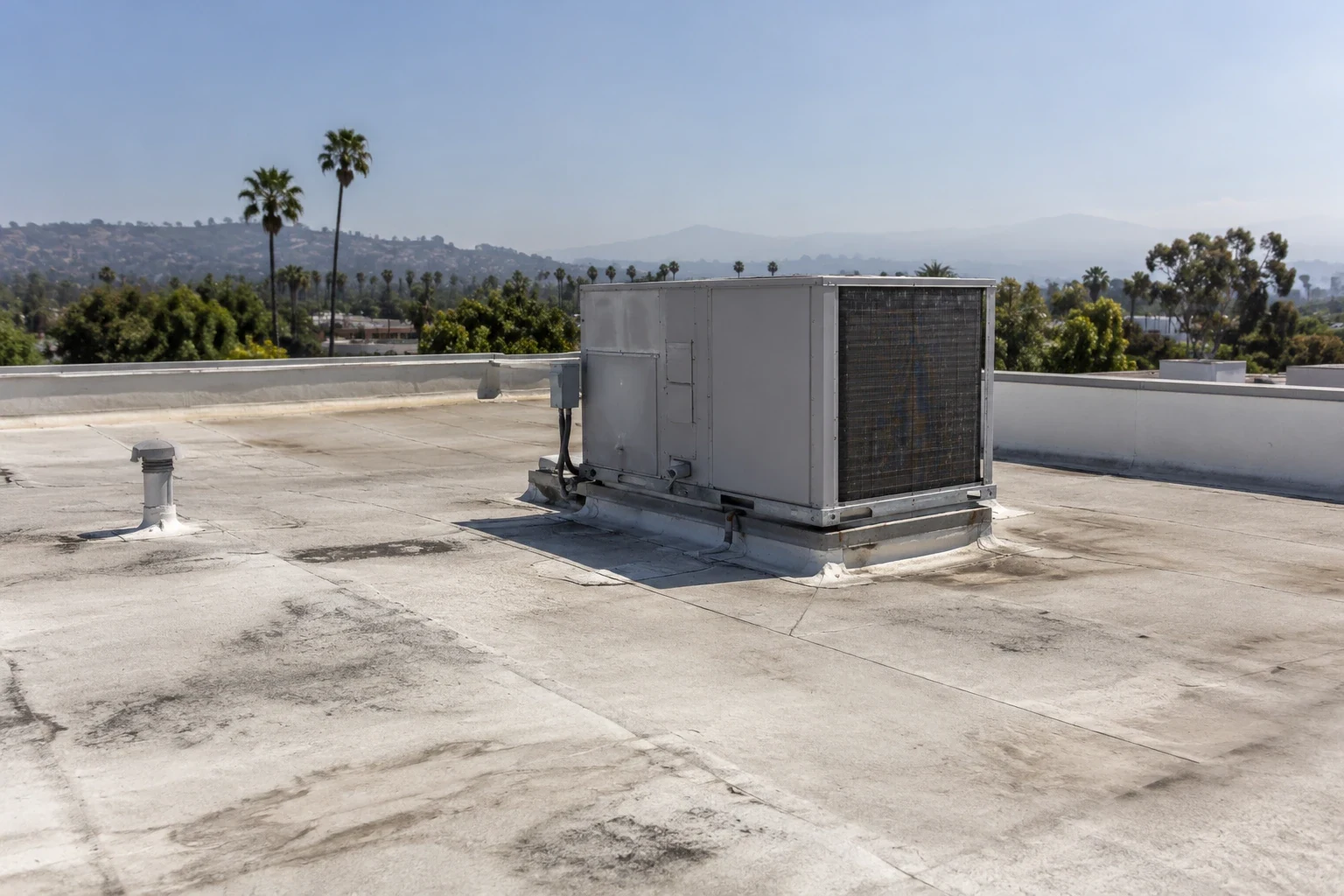
The City also reports more than 250 acres of light-industrial land and about 3.8 million square feet of industrial building area. Those figures describe the municipality's inventory, not the roof assembly of a specific property. On the site, we confirm whether the system is membrane or metal, look at edges and penetrations, and note equipment and drainage. If the building has additions, we record how the roof zones meet rather than assuming a single age or layer across the whole surface.
Find the first weak point
A leak mark inside may sit away from the actual opening. Water can track along a deck flute, insulation, or a seam before it appears in a room. We compare the interior clue with the roof area above it, then check nearby drains, curbs, wall transitions, and patches. A loose termination or split at a penetration can be the first weak point even if the membrane field looks intact. Each observation receives a location and photo so the owner can distinguish a confirmed defect from an area that needs more investigation.
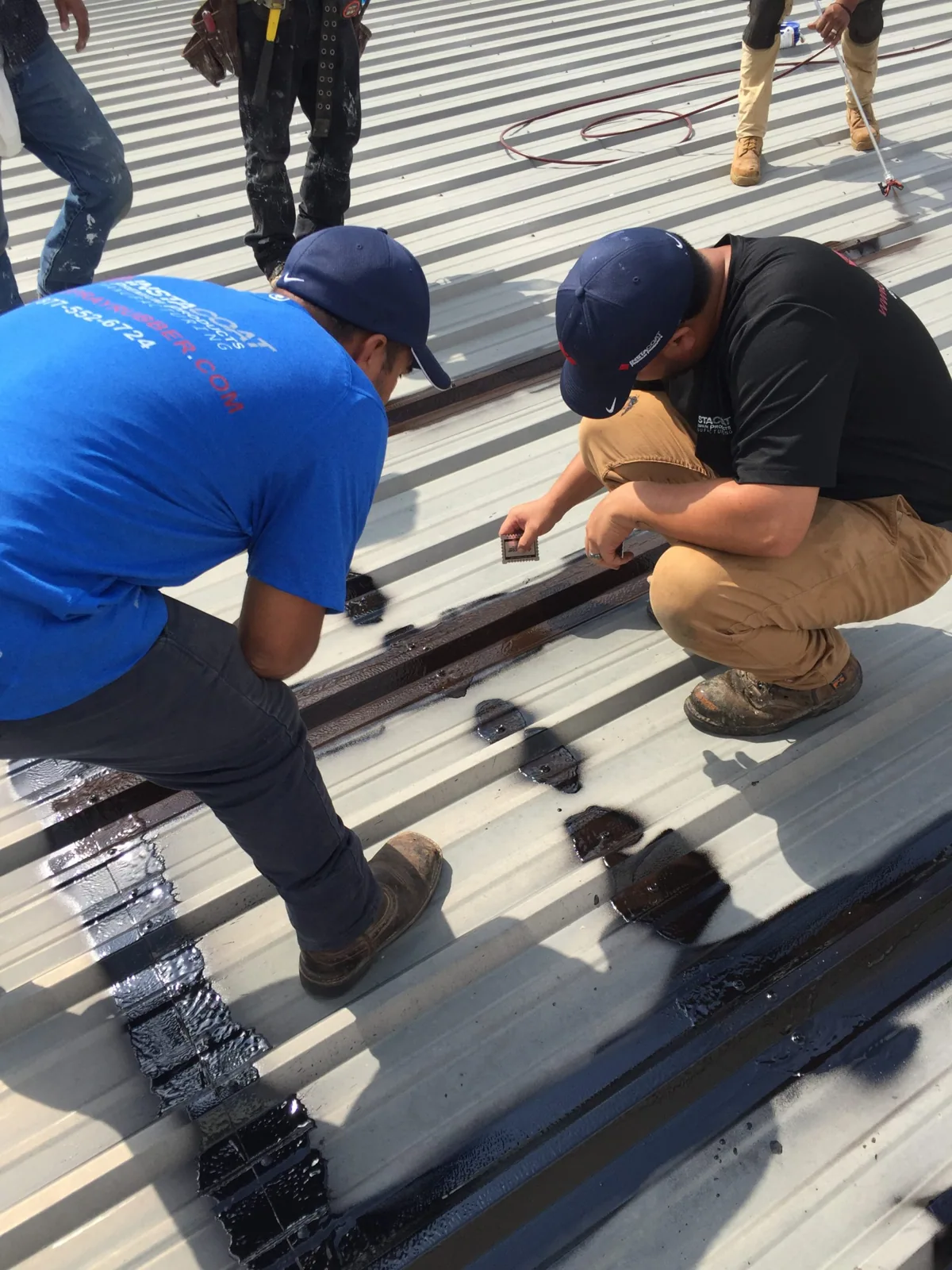
At a low-slope roof, we inspect laps, flashing, drain bowls, scuppers, and the membrane at equipment supports. On metal, we check fasteners, panel seams, edge closures, and penetrations. Ponding, debris, cracked sealant, lifted corners, and patch edges are recorded by roof zone. If moisture might extend below the visible surface, infrared review or a small approved core may help define the area. We explain what each method can answer before recommending a test, and we keep the inspection focused on a decision your team needs to make.
Keep the scope tied to the assembly
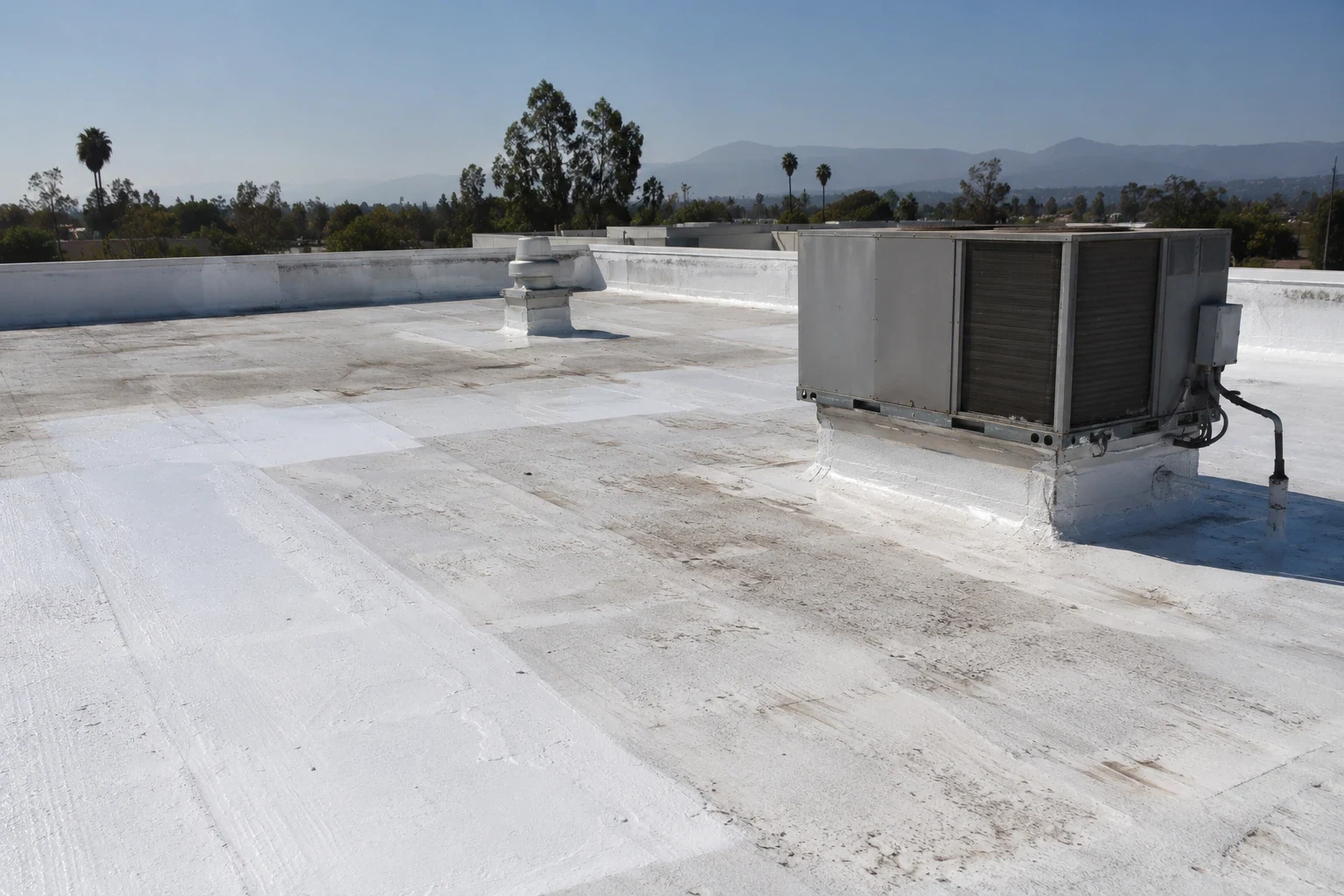
A localized repair can fit when the failure is bounded and surrounding material remains suitable for a compatible detail. We remove loose material inside the agreed edge, prepare the surface, install the repair, and check the transition. If moisture appears in several areas, seams have released across the field, or old repairs overlap, an additional patch may hide a pattern rather than solve it. We can map affected zones before comparing repair, coating, recovery, or replacement.
A coating needs a sound surface and controlled moisture. Recovery depends on attachment, existing layers, structural capacity, and whether the added height leaves drains and edges workable. Replacement may be clearer where wet insulation or unstable layers cannot be isolated. Cost and timing change with roof height, access, system type, staging, detail count, and hours the business can accommodate. The written scope lists those drivers and separates confirmed work from options that depend on testing, so a bid review does not confuse a possibility with an observed condition.
Set the work window before staging
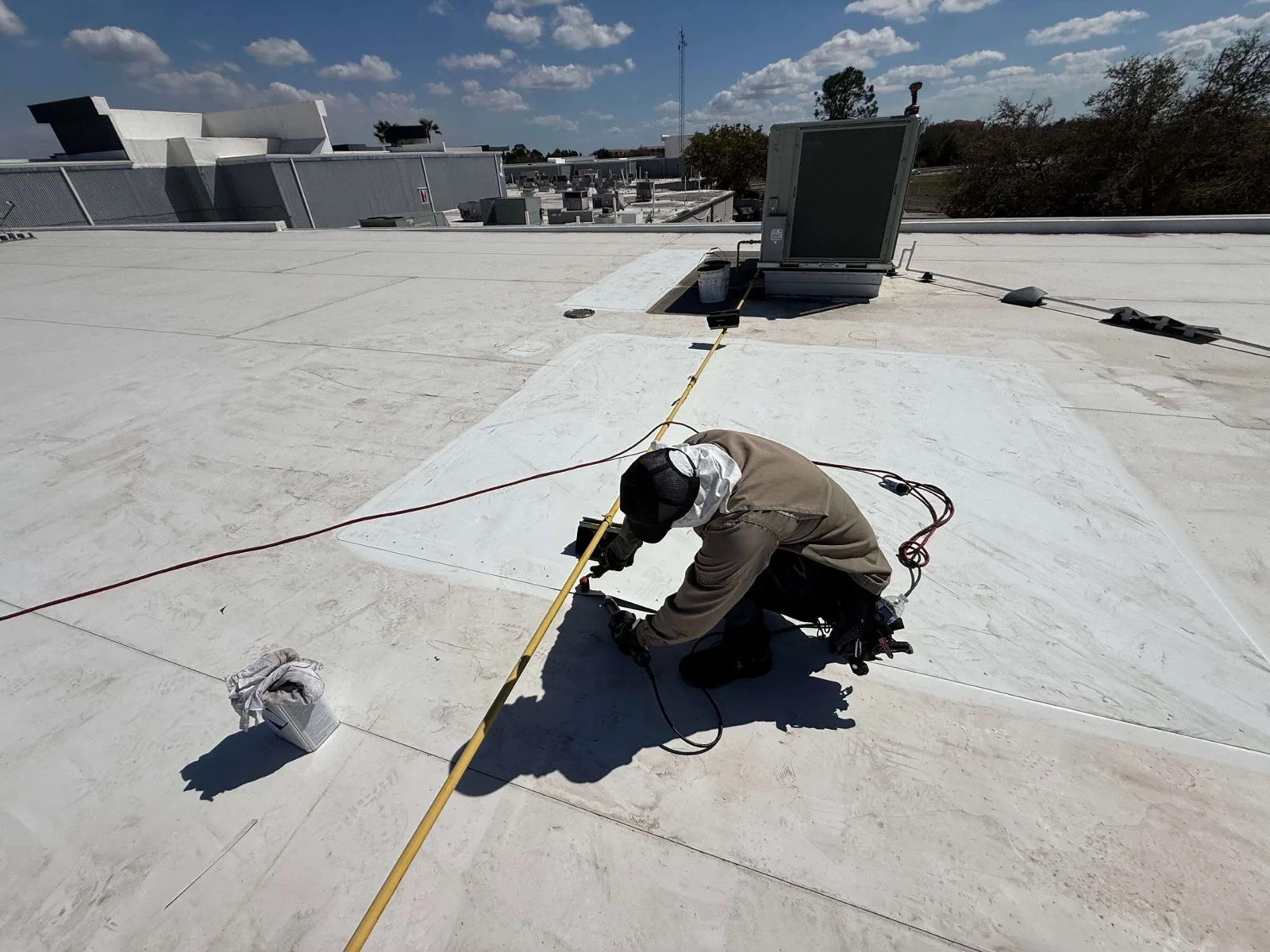
Before material arrives, we confirm roof access, loading conditions, lift location, fall protection, and any area below that needs protection. For a shopping-center property, the owner may need deliveries, customer access, or neighboring tenants kept clear. For industrial use, equipment operations may set a different window. We agree on the route and a stopping point for each shift so an open seam or penetration does not remain exposed overnight. Weather and material compatibility also affect when a repair surface is ready.
If a crew finds wet insulation, a deteriorated deck, or an incompatible prior patch, we photograph the condition and pause at a safe boundary before adding scope. The property contact receives the finding and a clear choice about how to proceed. At closeout, labeled photos show completed details, and the report lists any follow-up check. That record can help the same team review the area later without relying on an informal description of where water appeared.
Compare repair with future planning
Owners may need to control an active leak, plan around a tenant improvement, or decide whether to budget for a broader roof project. The inspection should give each choice a distinct scope. We record roof zones, visible moisture, failed details, drainage, and access limits. If a test could change the recommendation, we identify that test before presenting a larger option. If the roof needs immediate protection while a capital decision is pending, the report can define what a temporary correction will and will not address.
For a property in Rancho Santa Margarita, we keep the decision connected to the building’s access plan and the roof evidence collected during the visit. We record where water appears, inspect the nearby transitions, and note whether separate zones show similar symptoms. The owner can then distinguish a focused repair from a broader budget discussion without turning another city’s planning data into a property-specific finding. For a documented first step, arrange a commercial roof inspection and a condition report. If water is entering now, a focused leak repair can establish the immediate boundary.
When system condition warrants a wider comparison, we can discuss restoration, a replacement scope, or a membrane-specific TPO review. Nearby area context includes Old Town Temecula and Menifee's Northern Gateway corridor; neither replaces a building inspection in Rancho Santa Margarita.
Leave a dated record
A roof record is most useful when it ties a photo to a location, a finding, and an action. We label the repair zone and note whether the item is complete, needs testing, or should be monitored. If the building has a recurring leak, a follow-up can compare the same seam, curb, or drain with the first visit. A maintenance schedule can include roof access and operating hours so checks do not interfere with the property's use.
For a property in Rancho Santa Margarita, ask for a clear repair boundary and a next check that fits the site. We can pair a preventive maintenance visit with photos of drainage and flashing details. The final note tells the facility contact what changed on the roof and what should be reviewed next.
Commercial Roofing Questions
Can roof access be planned around customer hours?
Yes. We agree on the access window, lift or loading route, and areas that must remain open with the property contact before staging material.
Do citywide industrial figures tell us what roof is on a building?
No. Those figures describe the city inventory. We identify the roof system on site and note conditions at its edges, seams, penetrations, and drains.
How do you locate a leak that appears away from a seam?
A ceiling stain marks where water became visible, not necessarily where it entered. We compare the timing and location of the interior symptom with roof observations at nearby transitions, drains, and penetrations. Photos and a roof-zone label help separate a likely entry point from a route that may have carried water across the assembly.
When does a patch become a larger roof decision?
Several wet zones, recurring seam failures, or repeated patches can justify a condition map. We explain what is confirmed and whether testing would change the scope.
What should a repair closeout show?
It should identify the repaired zone, show the completed detail in photos, and list any follow-up item. We keep completed work separate from open questions.
Related Roofing Work
Set a property roof review
Request a Roof Assessment
Arrange an inspection around access and operating hours. We will document the roof condition, repair boundary, and options your Rancho Santa Margarita team can review.
Service area
Menifee, Perris, Murrieta, Temecula, Hemet, Lake Elsinore and nearby Inland Empire communities
Quick contact
[email protected]
555-555-5555