Commercial Roofing in Loma Linda, CA
Home / Service Areas / Commercial Roofing in Loma Linda, CA
A roof drain that backs up can leave water against a seam while the rooms below remain dry for hours. Loma Linda's General Plan identifies Redlands Boulevard, California Avenue, and Barton Road as important locations for commercial, office, and business-park development. The City also identifies health-related services, medical research, biotechnology, and research-and-development businesses as employment sectors. For a commercial property, those uses make access and interior protection part of the roof scope, but they do not reveal a building's system or condition. We inspect the surface and transitions, trace the water route, and give the property team a repair boundary with photos and next steps.
Coordinate around active use
Commercial and office development along named corridors may involve different operating hours, deliveries, and access needs. We confirm those details with the property contact instead of inferring them from city planning. Before the roof walk, we identify the hatch or ladder, any escort requirement, areas that must stay open, and the location for tools. If sensitive rooms sit below a repair zone, interior protection and dust control are discussed before material is opened.
The City's planning division reviews commercial projects and maintains a parcel map for land-use work. Those tools are useful context for the municipality, not a roof inventory. We inspect each building directly and note where one roof section meets another, whether earlier additions changed the drainage path, and how equipment curbs are flashed. A property can have several roof assemblies; we do not assume one system covers every wing or addition. The field record names the area and ties each finding to a photo.
Trace the source before opening the roof
When water appears inside, we compare the mark with the roof above and the path it could take through insulation or the deck. We check nearby drains, seams, curbs, parapets, pipe boots, skylights, and prior repairs. A small opening at a termination can move water along a hidden layer before it reaches a room. We mark the first weak point, but keep the likely entry route separate from conditions that are confirmed by inspection. That distinction helps a facility director decide whether a small repair is enough or whether testing should come first.
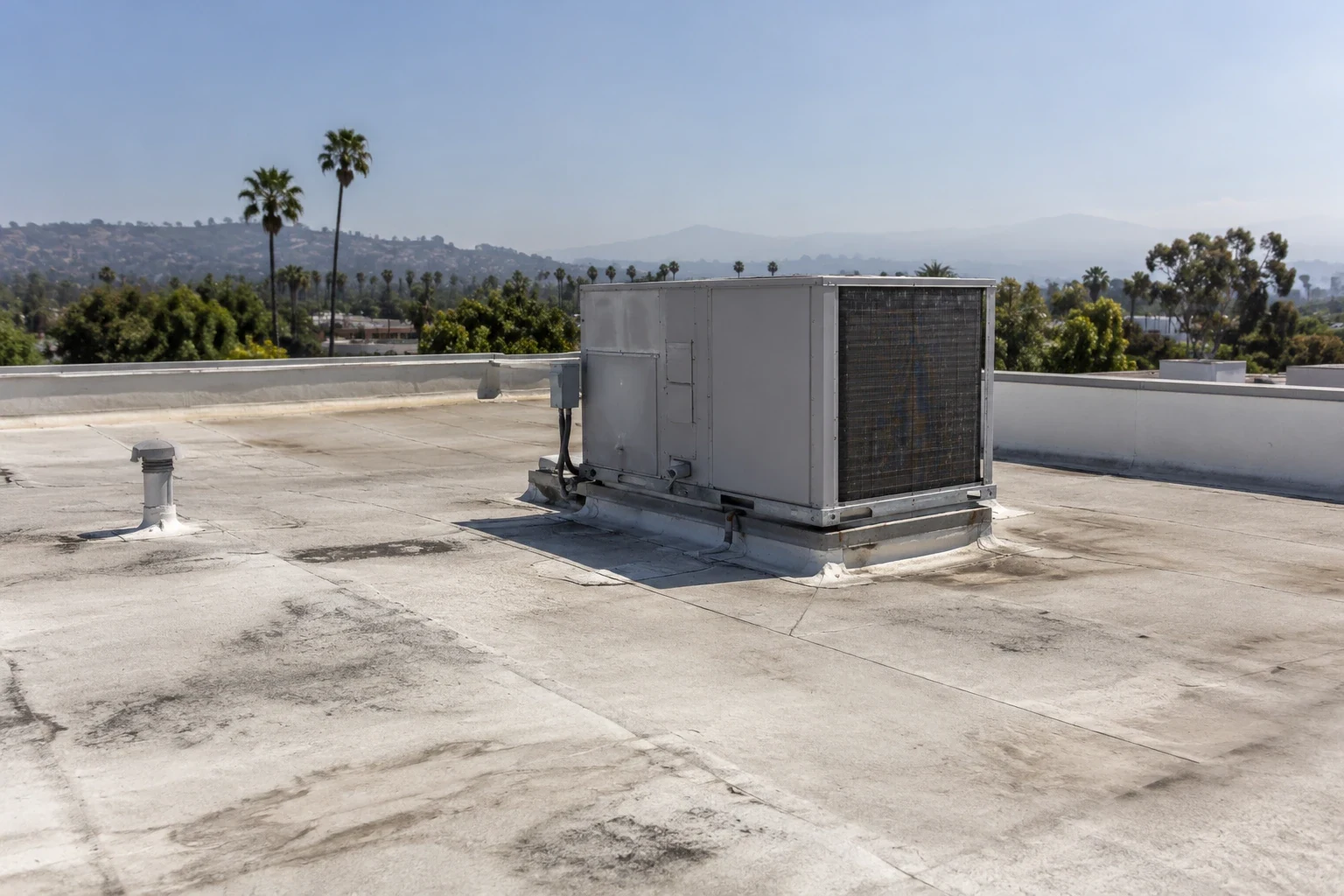
On membrane systems, the walk includes open laps, lifted corners, exposed reinforcement, coating separation, and flashing at penetrations. Metal roofs call for checks of fasteners, panel seams, end laps, and edge closures. We look at the drain path and note debris or ponding that can hold water near a detail. If the assembly is concealed, an approved core sample may confirm layers. Infrared review can help map moisture patterns. We explain what the method will answer and what approval is needed before any cut or test.
Separate a detail repair from broad moisture
A single failed boot or seam may have a clear repair boundary. Several wet areas, recurring patches, or interior marks in separate rooms may point to a larger condition that needs mapping. We document each roof zone and describe whether it should be corrected now, tested, or monitored. A dry ceiling on the inspection day does not close the question if staining or a prior leak shows a recurring path. The report gives the owner a dated baseline that can be compared after work or after the next storm.
Menifee's municipal planning describes an inland, naturally dry climate and identifies increasing average temperatures and more extreme-temperature days as risks in that city. We keep those conditions attached to Menifee rather than applying them as measurements for Loma Linda. Heat still matters when inspecting a roof: expansion and contraction can affect seams, perimeter metal, and sealant. We record the condition actually observed at those details, then set the recommendation from the assembly and evidence on the property.
Choose a compatible repair path
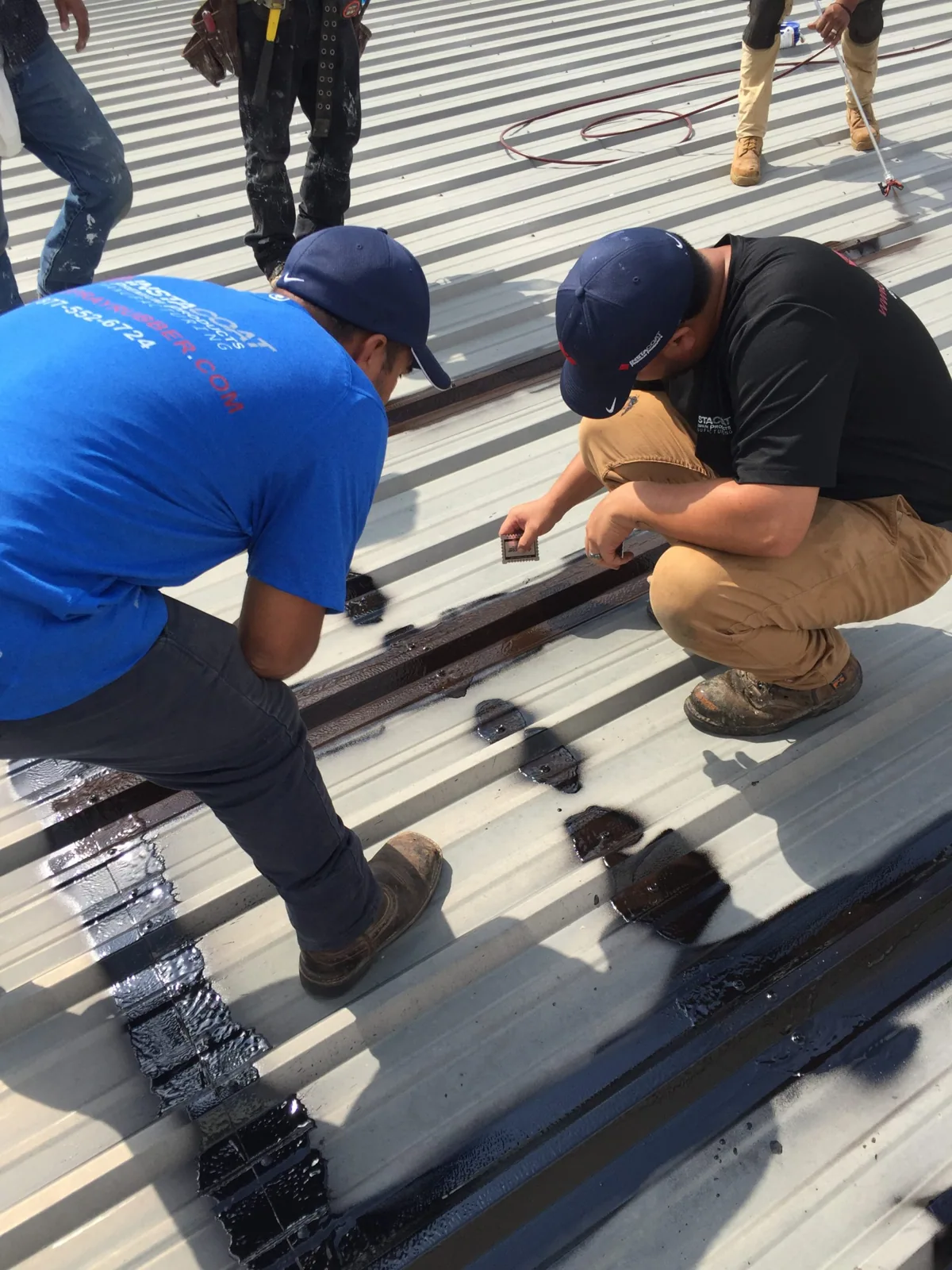
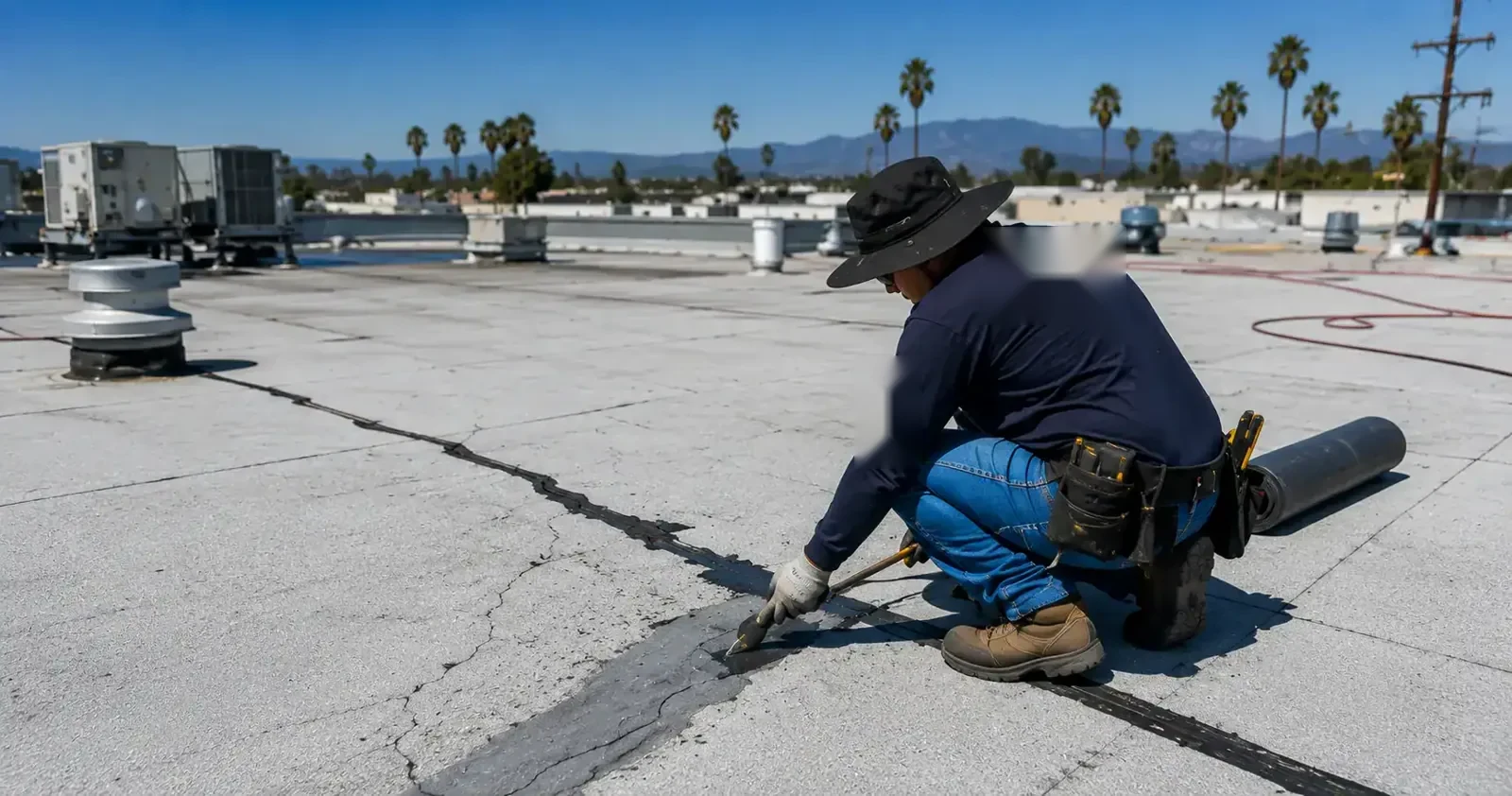
A localized repair may suit a confined failure when nearby material remains stable and compatible. We prepare the surface, remove loose material within a defined boundary, install the matching detail, and check its edge and adjacent seams. If wet insulation continues beyond the repair area, a surface patch will not correct the deeper condition. A core or additional moisture mapping may be appropriate when the result could change the option between repair, restoration, and removal.
Coating can be considered only when the existing surface and substrate are suitable. Recovery requires a sound assembly, usable drain elevations, and edges that can accommodate added height. Replacement may be the better comparison where layers are unstable or moisture is widespread. Cost and timing reflect the roof system, access, material staging, insulation work, equipment clearances, and operating hours. We show those factors in the scope and separate confirmed repairs from items that still depend on owner approval or testing.
Set a protected work sequence
Before work starts, we agree on the access route, staging area, crew hours, and any room or equipment that needs protection. If a property has research, clinical, or office operations, the facility contact can identify sensitive work periods and routes. We plan each roof section around the approved window and determine how openings will be closed before the end of a shift. Weather, system type, and material cure time can change that sequence, so the stopping point is agreed before a membrane is cut.
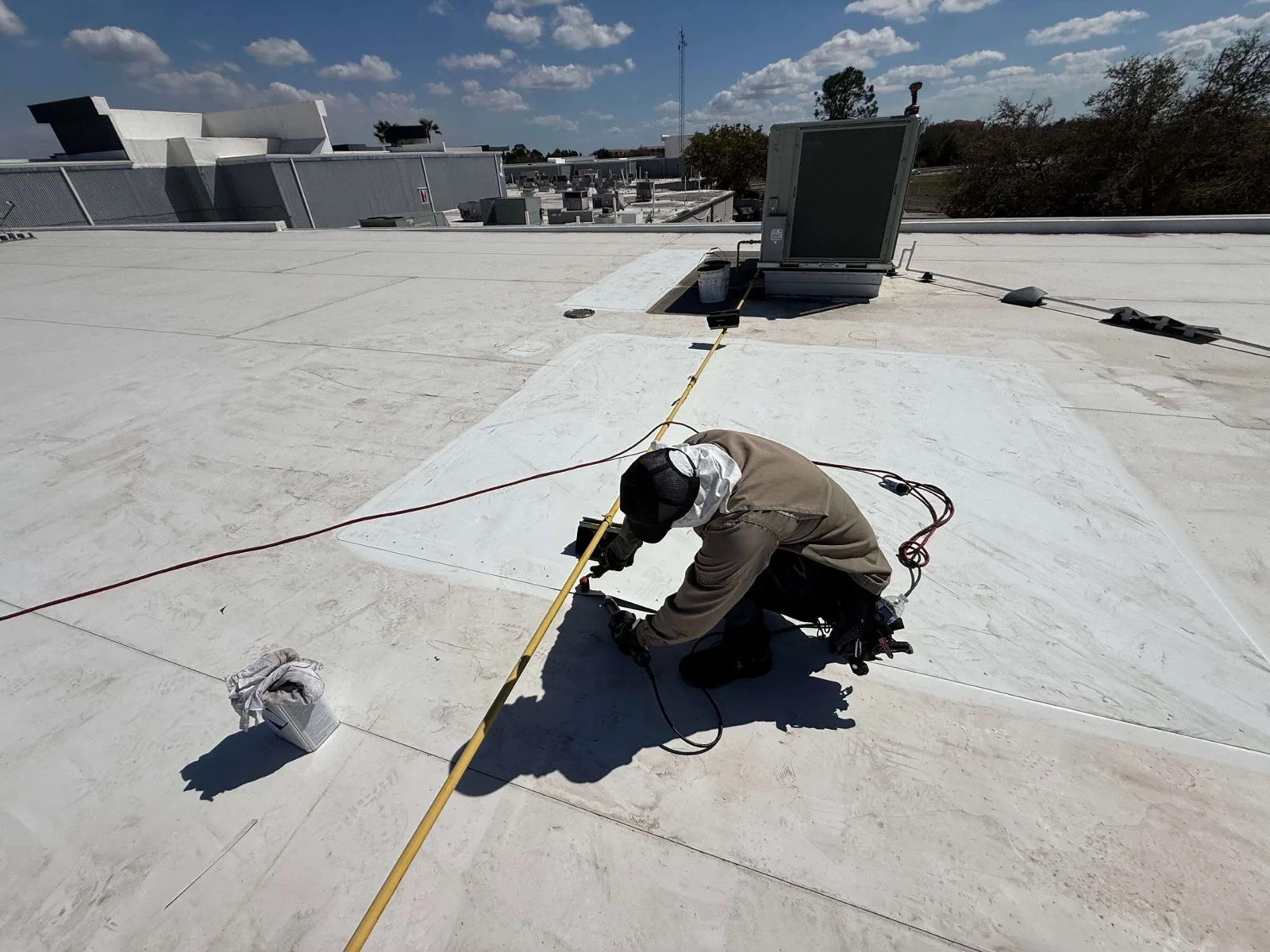
During the job, the crew follows the repair boundary and records concealed conditions that alter scope. Wet insulation, a damaged deck, or an incompatible prior layer is photographed and shared before additional work proceeds. At closeout, we document the completed edge, seam, or penetration and list any follow-up check. This keeps the roof record useful to maintenance, ownership, or a project team that will coordinate later work.
Build an owner-ready roof record
A roof report can support a maintenance budget, an occupied-building repair, or a capital decision. We group findings by location, urgency, and the evidence behind each option. If an owner is comparing a limited patch with a larger project, the report identifies what has been confirmed and what needs testing. A repair scope should explain roof access, the material transition, the work boundary, and how the interior will be protected. That information lets decision-makers review the roof without treating a possibility as a fact.
For a first assessment, schedule a commercial roof inspection and request a condition report with labeled photos. An active water route may need leak repair, while long-term choices can include maintenance planning or a replacement comparison. If the visible assembly is a single-ply membrane, system options include EPDM or TPO based on actual project requirements.
Loma Linda's Redlands Boulevard, California Avenue, and Barton Road planning context differs from the Downtown Village in Hemet and Menifee's Community Core corridor. The city name helps locate the discussion; the roof findings still come from the property itself.
Commercial Roofing Questions
Can the roof inspection work around research or clinic hours?
Yes. We coordinate the access window, sensitive areas, and interior protection with the facility contact before visiting the roof.
Does city planning identify a building's roof system?
No. We inspect the property to identify visible membrane, metal, seams, flashings, and drainage. Planning maps provide land-use context only.
What if the water mark is far from the roof entry?
We trace a likely path through the roof, insulation, and deck, then compare the clues above and inside. Photos show where the route is clear and where it remains uncertain.
When should we consider testing the roof?
Testing helps when moisture depth or assembly layers could change the repair choice. We identify the question, explain the method, and request approval before a core or other disturbance.
How can we compare a patch with replacement?
A report should separate the confirmed repair boundary from broader conditions, testing needs, and access constraints. We explain the assumptions behind each scope so ownership can review them.
Related Roofing Work
Schedule a roof condition review
Request a Roof Assessment
Set an inspection window around site access and building operations. We will trace the water path, document the assembly, and provide a repair scope for your Loma Linda property team.
Service area
Menifee, Perris, Murrieta, Temecula, Hemet, Lake Elsinore and nearby Inland Empire communities
Quick contact
[email protected]
555-555-5555