Commercial Roofing in Grand Terrace, CA
Home / Service Areas / Commercial Roofing in Grand Terrace, CA
A loose edge at a roof perimeter can admit water before a tenant sees a ceiling mark. Grand Terrace sits on the I-215 corridor between Riverside and San Bernardino, and city planning divides Barton Road into multiple project segments from Colton Bridge through Town Square and Mount Vernon to Preston. For a commercial roof, those corridor references help a property team identify where access and staging may need coordination; they do not describe any specific roof. We inspect the actual assembly, trace the water path, and photograph the detail that needs attention. The result is a repair boundary and a next step tied to the property rather than a general location assumption.
Coordinate access along a live corridor
When a building sits near a major road or commercial frontage, material delivery, lift placement, parking, and pedestrian routes need early review. We ask the owner which access points remain open and when a crew can work without blocking the property's operations. The City has described 2025 business openings and proposed commercial activity on Barton Road as part of corridor reinvestment. Those notices are dated context, not proof that every proposal is complete or that a particular property is changing. The roof scope still follows what is visible on site.
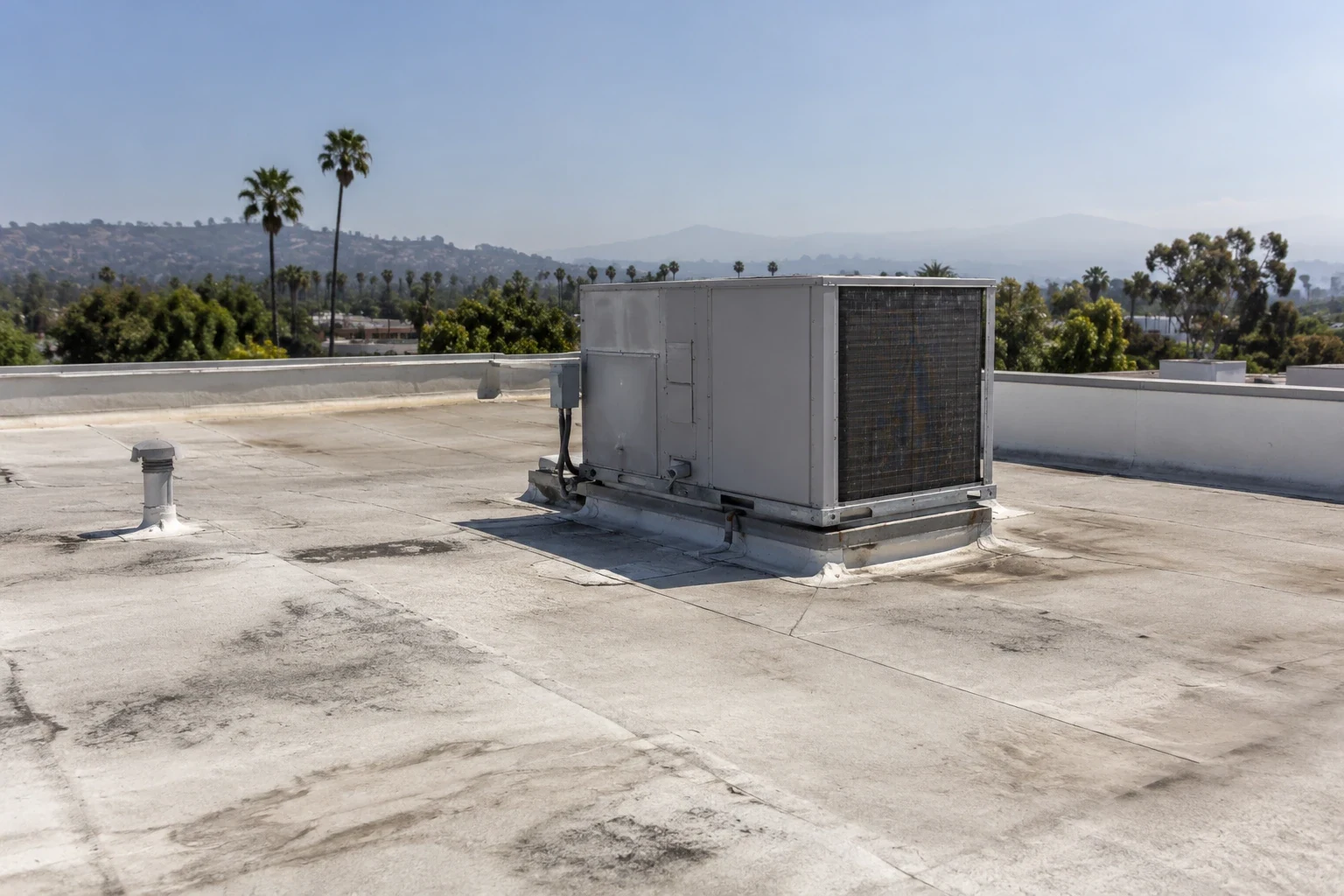
Before the visit, we confirm roof entry, safe access, equipment clearances, and any requirement to protect rooms below. If a tenant is operating, the property contact helps set the inspection window. If other construction is under way, the owner identifies the work boundary and schedule. We document roof zones separately when one section differs in surface or drainage from another. That gives the facility director a field record that can be shared with ownership or another trade without assuming a single assembly across the building.
Check the water path at transitions
A water stain is evidence that moisture reached the interior, not a map of the opening above. We compare the mark with the roof zone over it and nearby drains, curbs, flashing, seams, and perimeter edges. Water can move along insulation or a deck before it drops inside. We check for lifted laps, split sealant, loose counterflashing, punctures, and prior patches that have separated at the edge. Each finding is labeled by area and photographed so a repair addresses the path rather than the symptom alone.
At a membrane roof, we look at seam condition, penetration boots, wall transitions, scuppers, and drainage. A metal roof needs a check of fasteners, panel joints, closures, and flashing. We note ponding or debris that may hold water against a seam. If the surface hides the roof layers, we may recommend an approved core only when assembly information could change the next step. An infrared survey can help map moisture patterns when the question is extent. We explain the purpose and limits before recommending either method.
Separate isolated failure from repeat trouble
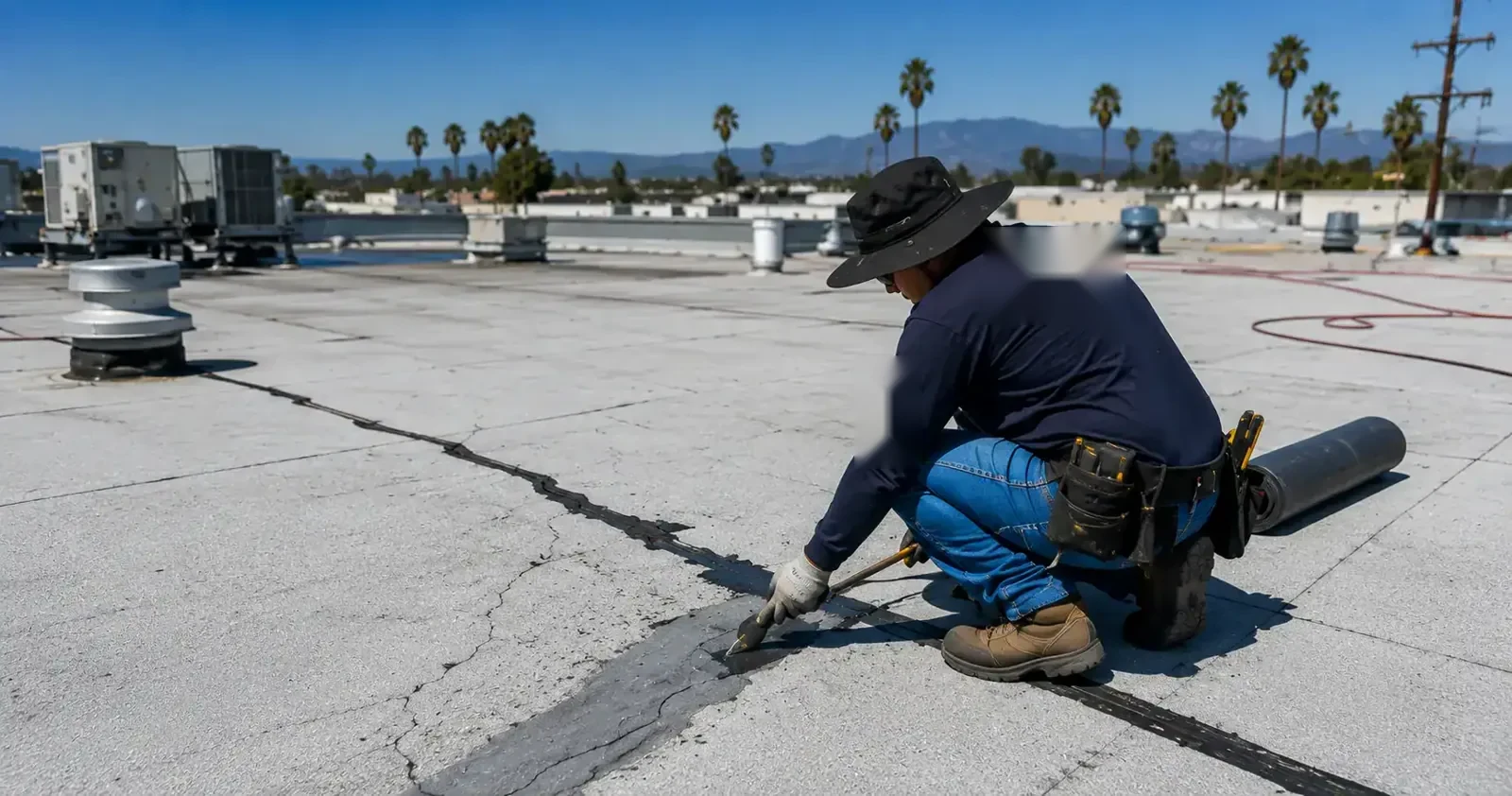
A repair can remain small when the failure is isolated and surrounding material can accept a compatible detail. Repeated leaks, patches in several zones, or wet insulation beyond a seam may justify broader mapping. We mark each location as an immediate correction, a planned repair, or a condition to monitor. If concealed damage appears after work begins, the crew documents it and returns to the property contact for approval before expanding the boundary.
Grand Terrace planning identifies Barton Road as a local corridor, which helps orient a service visit but says nothing about an individual roof’s age or condition. We identify the building’s assembly in person, then map the reported leak against drains, wall transitions, and penetrations. The written record distinguishes a confirmed opening from a possible route that still needs testing. That is especially useful when ownership is comparing a same-day correction with a separate capital decision.
Choose a scope the roof can support
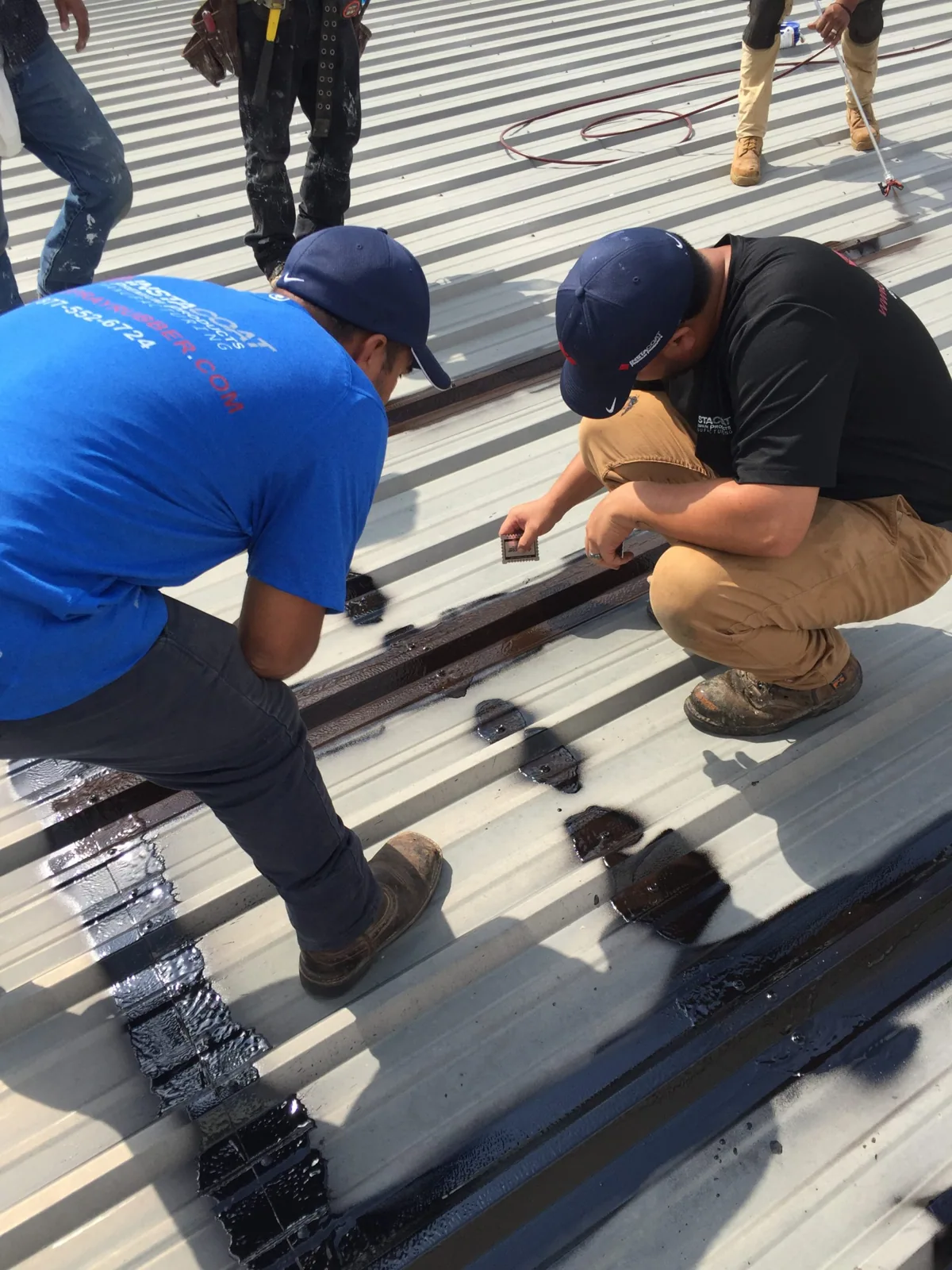
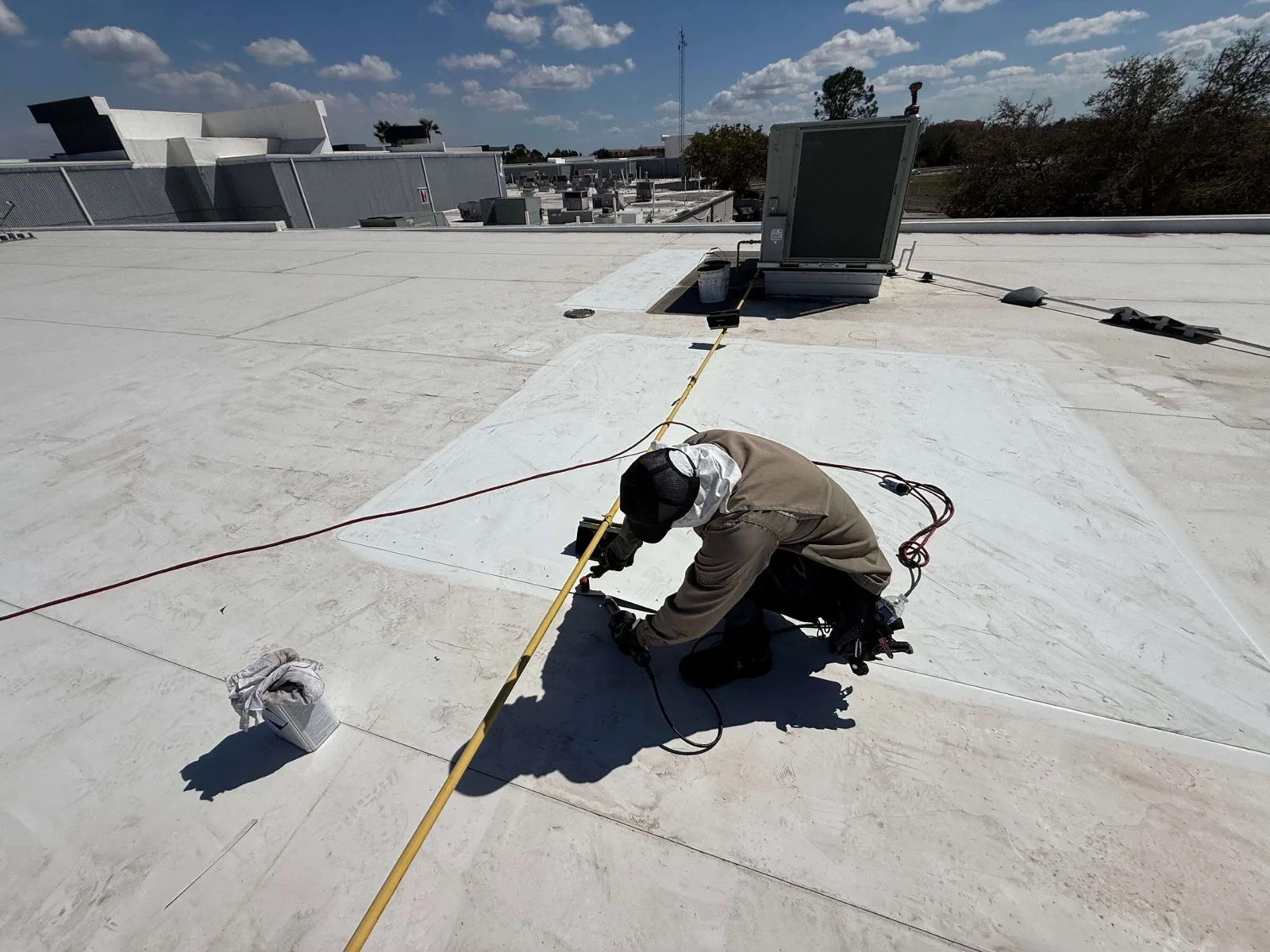
A patch or flashing repair fits when the failure is contained, the substrate is sound, and the existing system accepts the selected material. We prepare the surface, remove loose material within a controlled boundary, install the repair, and inspect the edge. When failures are widespread, a roof condition map can help compare restoration with replacement. A coating needs a stable surface and dry enough substrate; recovery depends on the existing assembly, drainage height, structural limits, and perimeter details.
Cost and timing change with roof access, system type, repair area, wet insulation, equipment, staging, and operating hours. If the building has several drains or transitions, each detail adds coordination and inspection time. We show what is confirmed and what depends on a test. That keeps a bid review focused on the actual roof and makes clear when a limited correction can be scheduled separately from a larger capital project.
Protect the building during repair
We plan the route from material drop to roof access before the crew begins. For work near an active corridor, the owner may need to coordinate a lift or temporary work area, while building staff identify doors and walkways that must remain clear. We confirm interior protection, equipment that must stay online, and the end-of-shift dry-in plan. If a rain risk changes the work sequence, the crew should have an agreed stopping point before the roof is opened.
During the repair, work remains inside the scope unless a concealed condition changes what can be supported. We record wet insulation, a damaged deck, or an incompatible patch before changing the boundary. At closeout, photos show completed seams, flashings, and edge work. The report notes any item for another visit, so the owner can compare the repaired area with its original condition and set a maintenance check around the property's schedule.
Turn the inspection into a clear decision
Owners may need to stop active water, plan around a tenant change, or compare a repair with a capital project. A useful roof record identifies the location, condition, urgency, and next decision. If testing is likely to affect the repair choice, we explain the question before suggesting it. For a building in Grand Terrace, city planning for Barton Road can help with area context, but a roof recommendation must rest on the actual assembly and access conditions.
A first step may be a commercial roof inspection with a condition report. An active leak can be scoped through leak repair; repeat issues may need maintenance planning or a replacement comparison. If a membrane system is present, a focused EPDM review can follow its compatibility and condition.
Nearby planning areas include Hemet's West Latham District, Temecula's Old Town, and Menifee's Community Core corridor. These names help locate separate local contexts; each property still needs its own roof walk.
Commercial Roofing Questions
Can material staging work around Barton Road traffic?
We coordinate the drop point, lift placement, and access route with the owner. Any traffic or sidewalk control is confirmed before work is scheduled.
Are announced commercial projects already complete?
A notice describes its status at that time. We do not treat a proposal as completed; the property owner confirms current work and access.
What does a roof stain tell the inspector?
It shows where water appeared indoors. We inspect the roof above and nearby details to trace the likely entry path and document anything that remains uncertain.
When should an owner consider moisture mapping?
Mapping can help when moisture may extend beyond an obvious leak detail. We recommend it when the results could change the repair boundary or broader roof choice.
What belongs in a roof repair record?
Include a location, photo, observed condition, completed work, and next check. We separate closed repairs from items that still need testing or monitoring.
Related Roofing Work
Set a commercial roof inspection
Request a Roof Assessment
Arrange roof access around building hours and site logistics. We will photograph the water path, check transitions and drainage, and outline a repair boundary for your Grand Terrace property.
Service area
Menifee, Perris, Murrieta, Temecula, Hemet, Lake Elsinore and nearby Inland Empire communities
Quick contact
[email protected]
555-555-5555