
Commercial Storm-Damage Roof Repair in Menifee, CA
Home / Commercial Roofing Services / Commercial Storm-Damage Roof Repair in Menifee, CA
A lifted edge or puncture can admit water before anyone sees a ceiling stain. After a storm report in Menifee, we start with what the roof shows: displaced metal, torn membrane, debris impact, blocked drainage, or a flashing that no longer closes. The first visit separates immediate water entry from damage that can be monitored or priced later. Emergency response is available around the clock, including holidays; temporary protection comes first when an opening threatens the interior. Then we record the roof zone, adjacent details, and affected rooms so permanent work follows evidence instead of a single wet tile. A focused commercial roof inspection can document the condition before the repair boundary is chosen.
Stabilize the Opening First
Water inside the building changes the order of work. We locate the affected room, note when the leak began, and trace upward to the roof area most likely to feed it. If a membrane is torn or an edge has lifted, temporary protection can limit additional entry while permanent materials and access are organized. The initial record should show where the protection begins and ends, what condition remains exposed, and whether water is still moving toward the interior. A tarp or temporary seal is a short-term control, not proof that the assembly beneath is dry. The next inspection checks adjacent seams, insulation, deck, and wall transitions, then identifies which permanent repair will restore the water path.
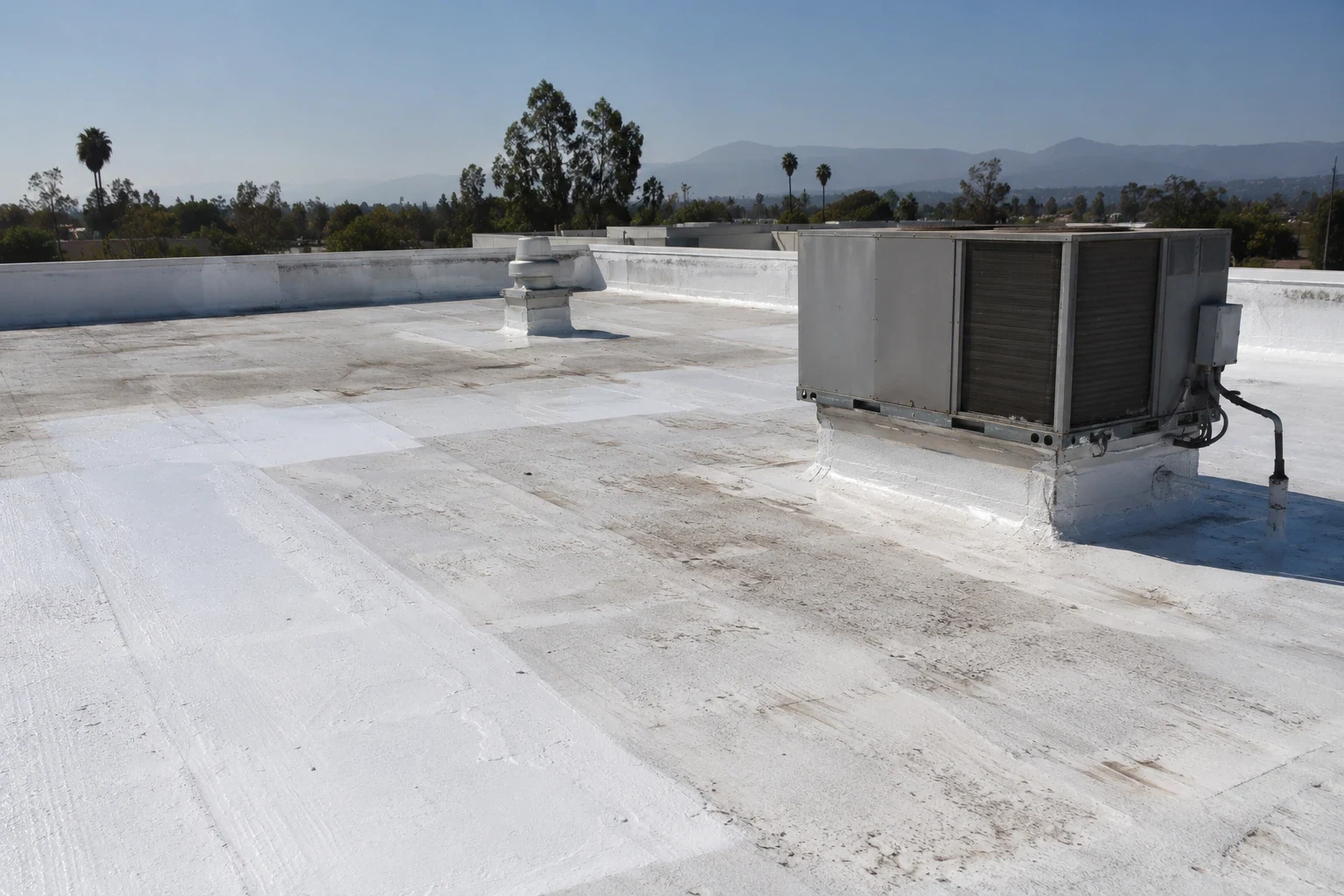
Separate Wind, Impact, and Water
Storm-related calls can involve several conditions that need different tests. Wind may lift perimeter metal or stress a termination; airborne debris can puncture a membrane or crack a skylight; heavy rain can reveal a blocked drain or an existing low point. We photograph each sign before moving debris where it is safe to do so, then inspect nearby fasteners, seams, penetrations, and drainage paths. A displaced object does not by itself establish the extent of hidden moisture. The report should map observed damage and note the limits of any area that was not opened. For a lifted edge or detached coping, a specific wind-damage repair review can define the attachment and substrate checks.
Trace Water Back to the Roof
The room with water is a clue, not a map of the entry point. We ask when the stain appeared, whether it changes with rainfall, and what equipment, walls, or roof penetrations sit above the area. Inside, we document the affected ceiling, insulation, finishes, and any equipment that needs protection. Above, we follow the drainage path and inspect laps, curbs, wall transitions, and roof openings. If water crossed several layers, the visible opening may be only one part of the repair. A commercial leak repair scope should state the tested area, the material removed, and any remaining moisture that needs another check rather than promise a dry interior before the assembly is verified.
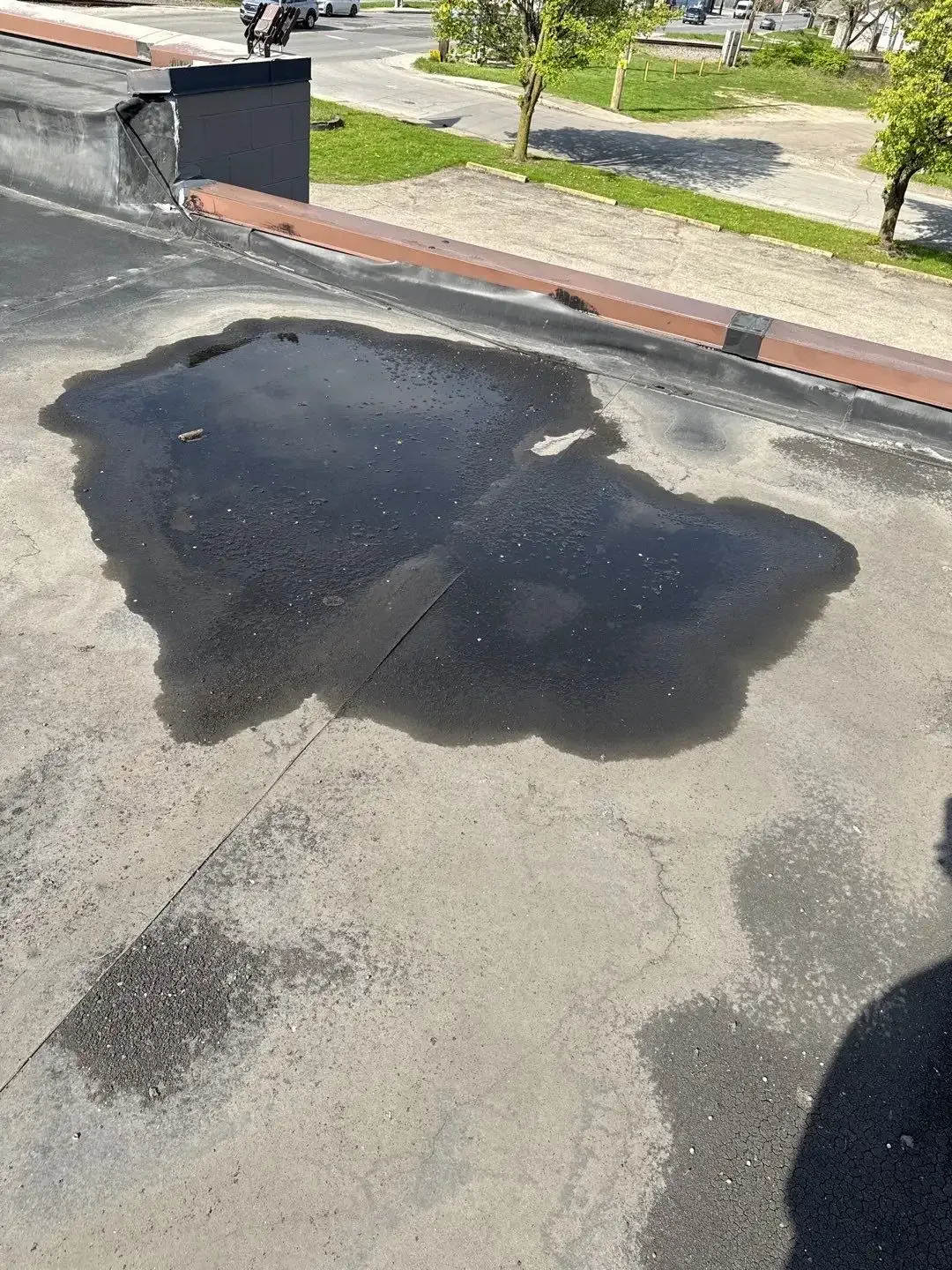
Check Drainage After Heavy Rain
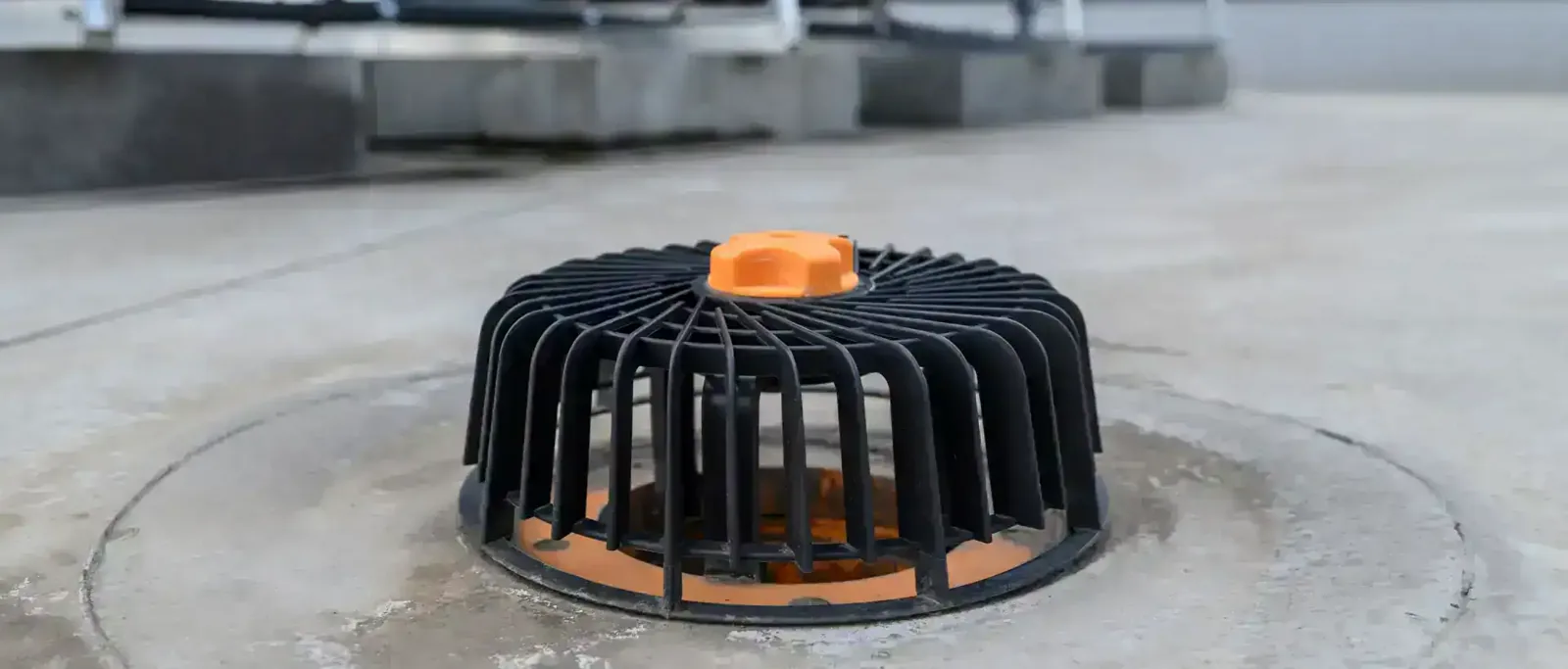
A storm can leave debris in strainers, scuppers, overflow outlets, or gutters, and a blocked path can keep water against otherwise repairable details. We clear accessible debris, confirm that water can reach the outlet, and inspect the surrounding membrane for open seams or damaged flashing. Persistent ponding after the outlet is clear calls for a slope or deflection review, not repeated drain cleaning. A repair plan may include a cricket, insulation adjustment, or drain correction where the roof geometry supports it. The distinction matters because retained water can complicate drying and material compatibility. For drain-body, scupper, and discharge defects, a separate drain and scupper scope keeps that work visible beside any storm opening.
Read Menifee's Weather Context Carefully
Menifee's safety planning recognizes severe rain events as a potential climate risk alongside hotter days. That context makes drainage and heat-exposed transitions useful items on a post-event walk, but it does not document damage at an individual property. The Northern Gateway Economic Development Corridor is planned as a business-park area with more industrial use, while the Community Core Economic Development Corridor is intended for civic and commercial activity. Those citywide planning roles can differ from building to building; the roof record must identify the actual assembly, use, access restrictions, and storm condition. We keep the repair tied to the observed defect, then return to check the adjacent details that could carry water beyond the first opening.
Move from Temporary Protection to Repair
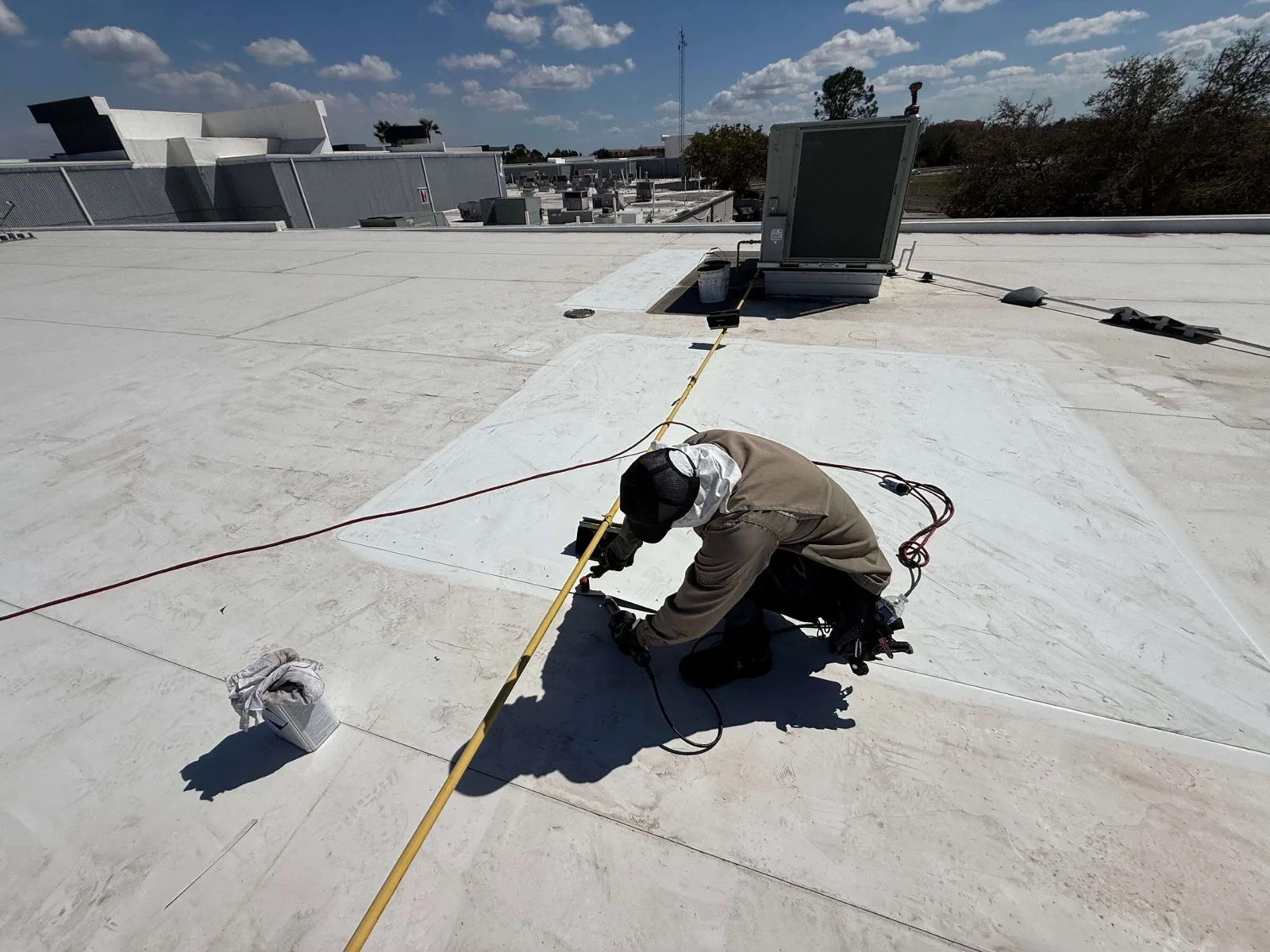
Permanent work begins after the field team confirms which layers are damaged and whether the substrate remains sound. A compatible patch can address an isolated puncture; a separated seam may require opening and resealing a longer run; damaged insulation or deck can require removal and replacement before the membrane is restored. We list materials, repair boundaries, tie-ins, and any items that remain outside the approved work. The scope should also state what weather or access conditions would pause installation. When multiple defects or widespread moisture appear, compare repair with a roof recover assessment or replacement using the same roof map and inspection findings. If the confirmed assembly is modified bitumen, material compatibility and reinforcement at the repair edge require system-specific review. Drying time, exposed-deck findings, and the availability of matching materials can alter the sequence, so the estimate should identify each assumption before the work area is opened. That prevents a temporary response from quietly becoming an undefined capital project.
Keep the Post-Storm Record Usable
A useful closeout preserves the timeline from the first call through permanent repair. We attach dated photos, mark temporary and final work areas, identify materials, and list any inspection or moisture check still due. A facility contact can match those entries with interior cleanup, tenant notices, and other building work without confusing roof repair with unrelated damage. The next visit should recheck the repaired seam, edge, drain, or curb under conditions suitable for inspection. The physical roof record should also separate storm observations from earlier maintenance entries so a repaired opening and an older stain do not become one undated claim. We include the inspection time and weather conditions in the Diligence Notes. Any temporary covering should be logged with its placement, attachment method, and limits, then inspected after wind or rain. The repair closeout should identify whether the assembly was opened, what moisture was found, and who owns the next observation so a remaining condition does not disappear between shifts.
Commercial Roofing Questions
What information helps after a roof starts leaking during a storm?
Share when water appeared, which rooms or equipment are affected, whether the leak is active, and any safe photos from inside. We use that timeline to plan access and prioritize protection. Do not enter a roof area or move damaged material if conditions are unsafe.
Will temporary protection finish the repair?
No. It reduces immediate exposure while the roof is inspected and permanent materials are selected. We document the protected area and return to test the surrounding assembly, because moisture or damage may extend beyond the visible opening.
How do you distinguish storm damage from an older roof defect?
We compare the reported timing with the roof's prior records, then inspect the affected detail and neighboring materials. Photos, attachment conditions, punctures, water paths, and moisture findings help define what can be supported. The report separates observed conditions from conclusions that still need testing.
Can repairs be scheduled while the building stays open?
Often the work can be divided into controlled roof zones, but equipment, access, noise, weather, and interior protection set the sequence. We coordinate the route and timing with the facility contact and identify any area that must remain clear during the repair.
Related Roofing Work
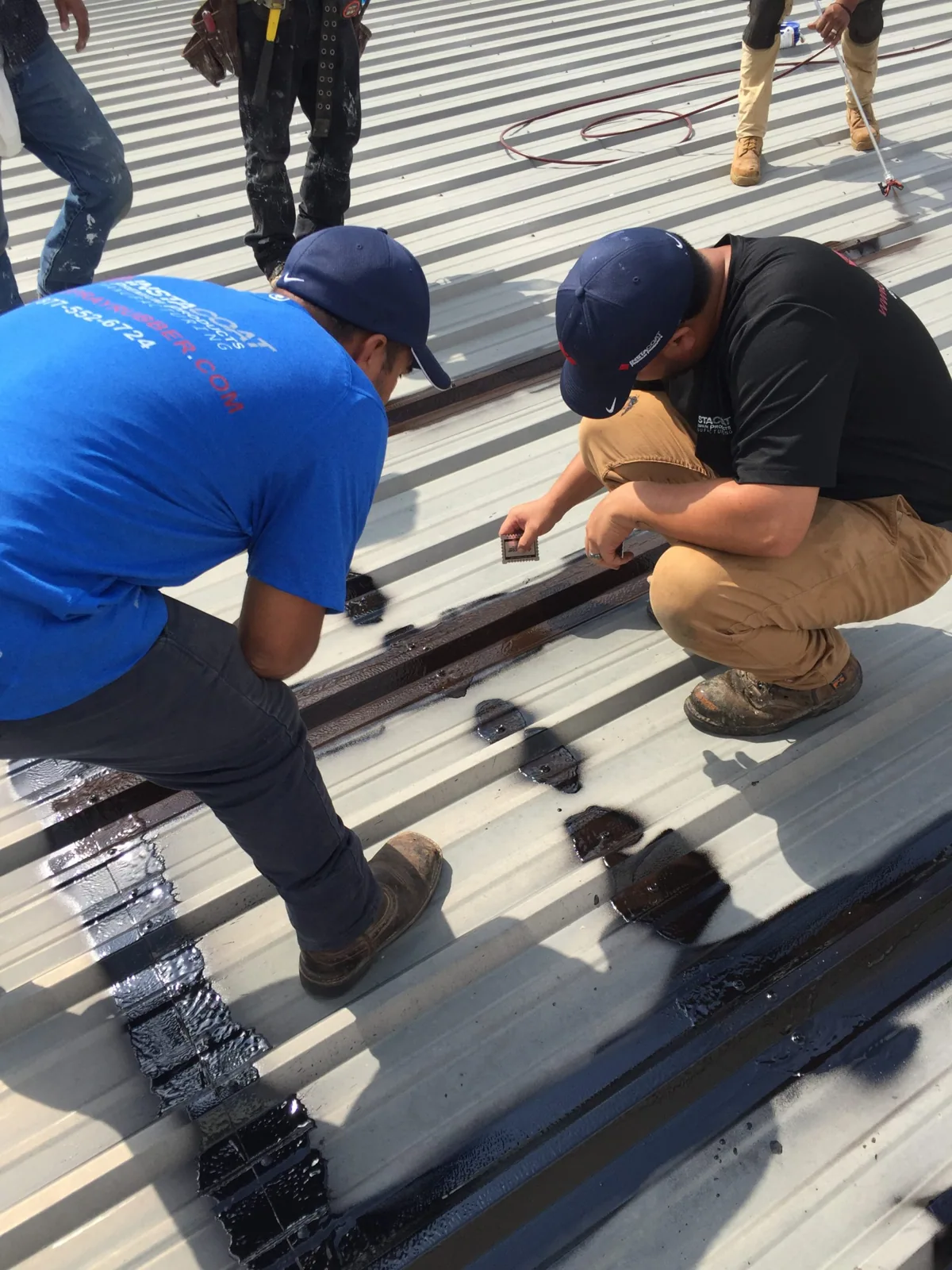
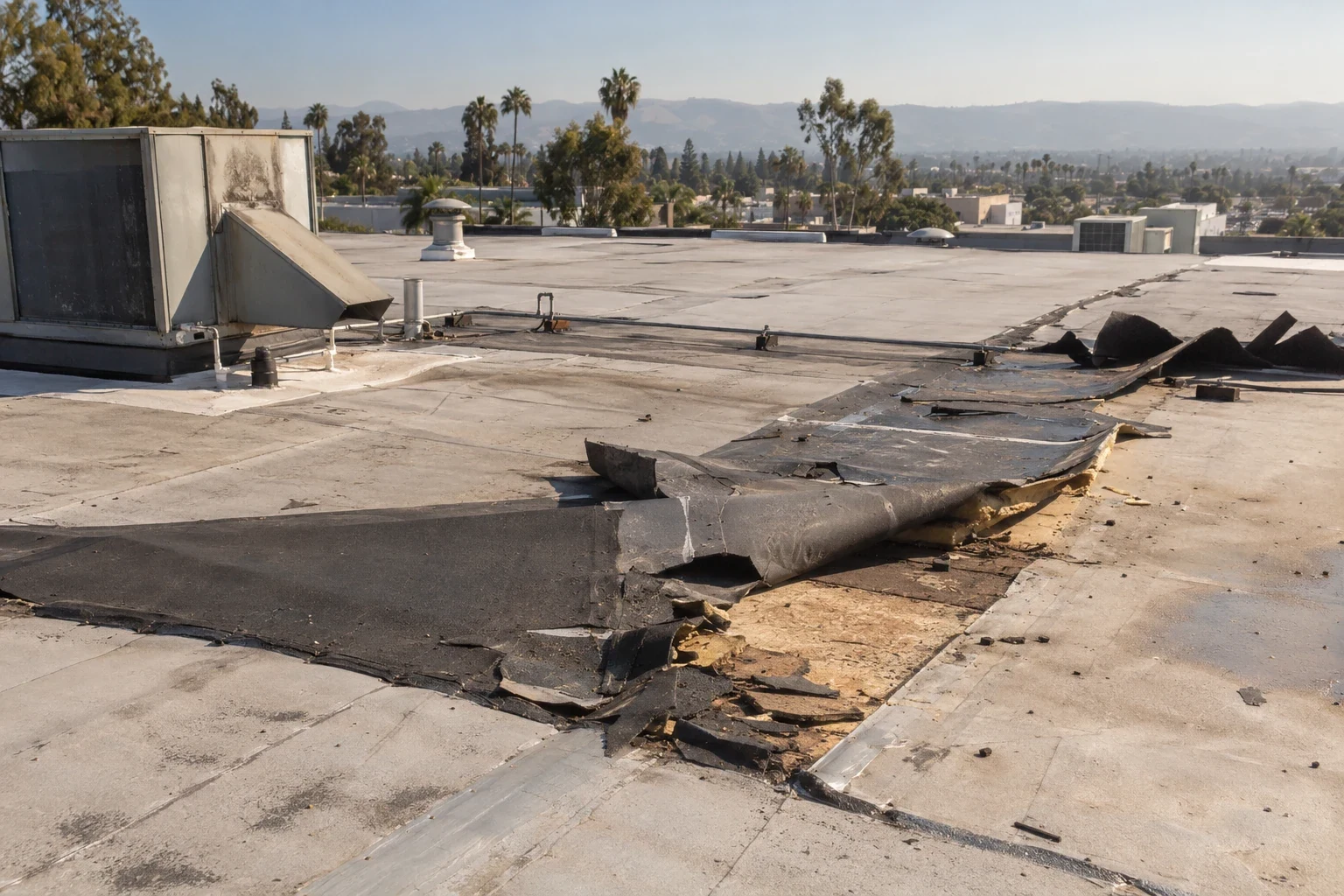
Document the Roof Before the Next Weather Shift
Request a Roof Assessment
Arrange a storm assessment that records the active leak, roof opening, interior impact, and temporary protection. We will separate urgent stabilization from permanent repair choices.
Service area
Menifee, Perris, Murrieta, Temecula, Hemet, Lake Elsinore and nearby Inland Empire communities
Quick contact
[email protected]
555-555-5555